


Some error occured while loading the Quick View. Please close the Quick View and try reloading the page.
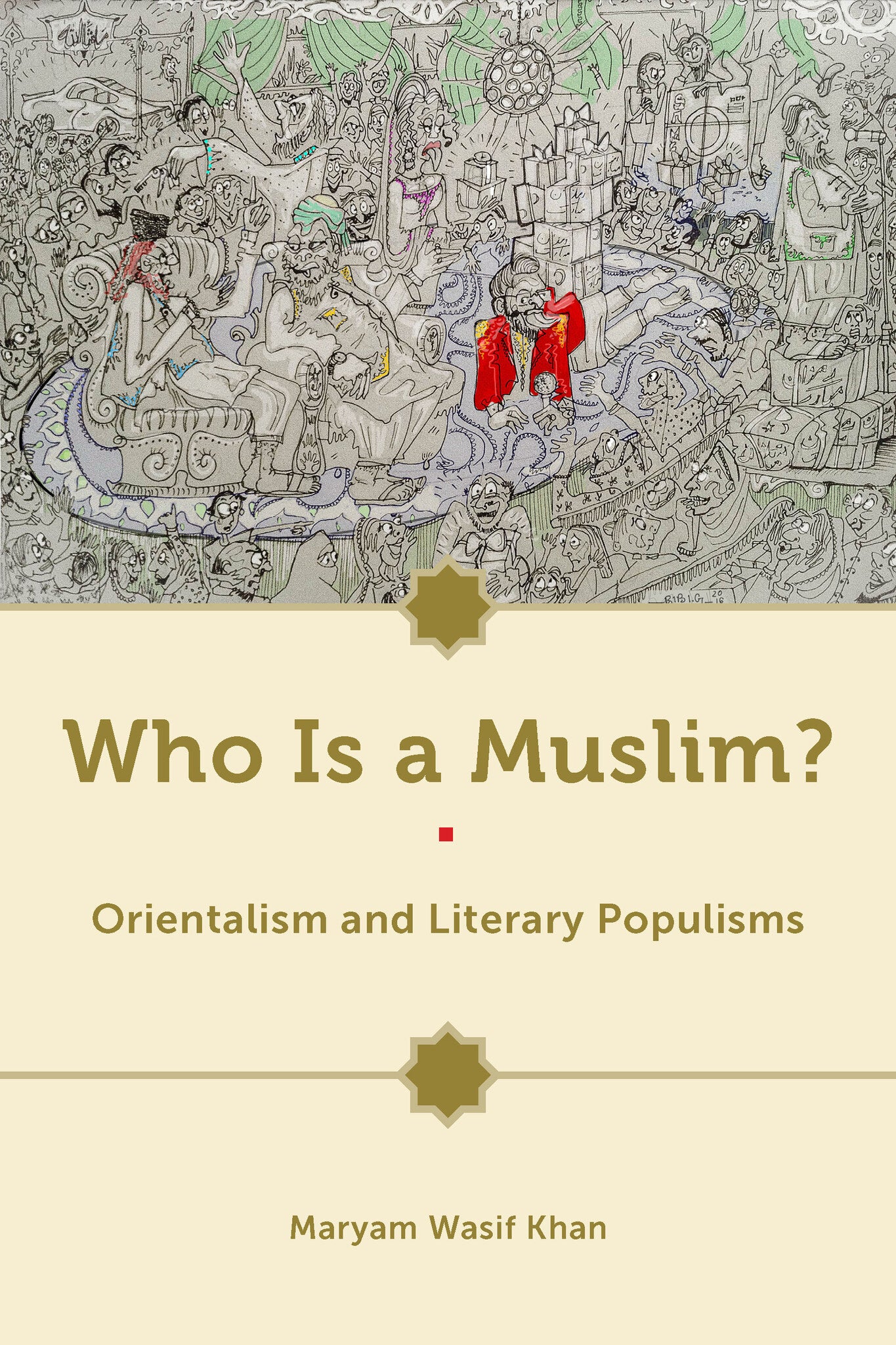
Who Is a Muslim? argues that modern Urdu literature, from its inception in colonial institutions such as Fort William College, Calcutta, to its dominant iterations in contemporary Pakistan—popular novels, short stories, television serials—is formed around a question that is and historically has been at the core of early modern and modern Western literatures. The question “Who is a Muslim?,” a constant concern within eighteenth-century literary and scholarly orientalist texts, the English oriental tale chief among them, takes on new and dangerous meanings once it travels to the North-Indian colony, and later to the newly formed Pakistan. A literary-historical study spanning some three centuries, this book argues that the idea of an Urdu canon, far from secular or progressive, has been shaped as the authority designate around the intertwined questions of piety, national identity, and citizenship.

Price: $43.00
Pages: 288
Publisher: Fordham University Press
Imprint: Fordham University Press
Publication Date:
19 January 2021
Trim Size: 9.00 X 6.00 in
ISBN: 9780823290130
Format: Paperback
BISACs:
LITERARY CRITICISM / Middle Eastern, HISTORY / Asia / South / General, RELIGION / Islam / History

Who Is a Muslim? is a pioneering contribution to Urdu scholarship. It is going to rewrite the field of Urdu studies, overturning commonly held assertions and forcefully arguing for new readings of canonical texts. The book will spark manifold conversations for a long time.---Jennifer Dubrow, University of Washington
As scholars of world literature reckon with the colonial legacies of philology and Orientalism, Khan’s Who Is a Muslim? provides an important critical history anchored in South Asian sources that sheds light on crucial questions regarding nation, language, and religion. Across its five chapters, it weaves together insightful engagements with literary form, narrative structure, and the emergence of modern social imaginaries. I can think of few books that offer such a rich account with such resonant implications for our field.---Michael Allan, University of Oregon
[A] beautifully written, fastidiously researched, and well-argued literary history...
As scholars of world literature reckon with the colonial legacies of philology and Orientalism, Khan’s Who Is a Muslim? provides an important critical history anchored in South Asian sources that sheds light on crucial questions regarding nation, language, and religion. Across its five chapters, it weaves together insightful engagements with literary form, narrative structure, and the emergence of modern social imaginaries. I can think of few books that offer such a rich account with such resonant implications for our field.---Michael Allan, University of Oregon
[A] beautifully written, fastidiously researched, and well-argued literary history...
Maryam Wasif Khan is Associate Professor of Comparative Literary and Cultural Studies at the Mushtaq Gurmani School of Humanities and Social Sciences, LUMS University, Lahore.
Note on Transliteration | ix
Introduction: Who Is a Muslim? | 1
1 Mahometan/Muslim: The Chronotope of the Oriental Tale | 21
2 Hindustani/Urdu: The Oriental Tale in the Colony | 53
3 Nation/Qaum: The “Musalmans” of India | 87
4 Martyr/Mujāhid: Muslim Origins and the Modern Urdu Novel | 126
5 Modern/Mecca: Populist Piety in the Contemporary Urdu Novel | 165
Epilogue: Us, People / People Like Us: Fehmida Riaz and a Secular Subjectivity in Urdu | 209
Acknowledgments | 221
Notes | 225
Index | 255