


Some error occured while loading the Quick View. Please close the Quick View and try reloading the page.
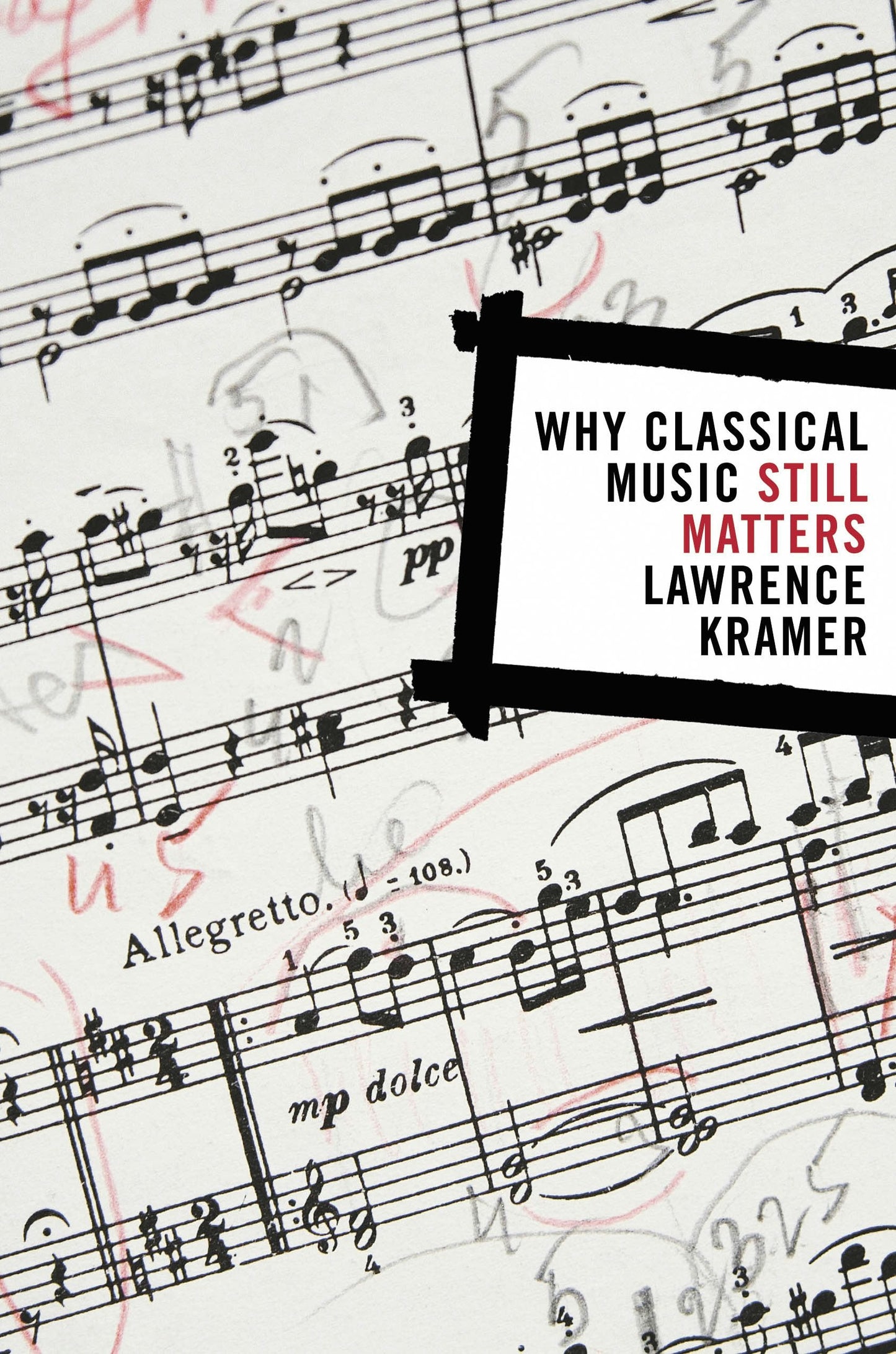
"What can be done about the state of classical music?" Lawrence Kramer asks in this elegant, sharply observed, and beautifully written extended essay. Classical music, whose demise has been predicted for at least a decade, has always had its staunch advocates, but in today’s media-saturated world there are real concerns about its viability. Why Classical Music Still Matters takes a forthright approach by engaging both skeptics and music lovers alike.
In seven highly original chapters, Why Classical Music Still Matters affirms the value of classical music—defined as a body of nontheatrical music produced since the eighteenth century with the single aim of being listened to—by revealing what its values are: the specific beliefs, attitudes, and meanings that the music has supported in the past and which, Kramer believes, it can support in the future.
Why Classical Music Still Matters also clears the air of old prejudices. Unlike other apologists, whose defense of the music often depends on arguments about the corrupting influence of popular culture, Kramer admits that classical music needs a broader, more up-to-date rationale. He succeeds in engaging the reader by putting into words music’s complex relationship with individual human drives and larger social needs. In prose that is fresh, stimulating, and conversational, he explores the nature of subjectivity, the conquest of time and mortality, the harmonization of humanity and technology, the cultivation of attention, and the liberation of human energy.
In seven highly original chapters, Why Classical Music Still Matters affirms the value of classical music—defined as a body of nontheatrical music produced since the eighteenth century with the single aim of being listened to—by revealing what its values are: the specific beliefs, attitudes, and meanings that the music has supported in the past and which, Kramer believes, it can support in the future.
Why Classical Music Still Matters also clears the air of old prejudices. Unlike other apologists, whose defense of the music often depends on arguments about the corrupting influence of popular culture, Kramer admits that classical music needs a broader, more up-to-date rationale. He succeeds in engaging the reader by putting into words music’s complex relationship with individual human drives and larger social needs. In prose that is fresh, stimulating, and conversational, he explores the nature of subjectivity, the conquest of time and mortality, the harmonization of humanity and technology, the cultivation of attention, and the liberation of human energy.

Price: $26.95
Pages: 251
Publisher: University of California Press
Imprint: University of California Press
Publication Date:
02 May 2007
ISBN: 9780520933644
Format: eBook

In Lieu of a Preface
1. Classical Music and Its Values
2. The Fate of Melody and the Dream of Return
3. Score and Performance, Performance and Film: Classical Music as Liberating Energy
4. But Not for Me: Love Song and the Heartache of Modern Life
5. The Ghost in the Machine: Keyboard Rhapsodies
6. Crisis and Memory: The Music of Lost Time
7. Persephone’s Fiddle: The Value of Classical Music
References
Index
1. Classical Music and Its Values
2. The Fate of Melody and the Dream of Return
3. Score and Performance, Performance and Film: Classical Music as Liberating Energy
4. But Not for Me: Love Song and the Heartache of Modern Life
5. The Ghost in the Machine: Keyboard Rhapsodies
6. Crisis and Memory: The Music of Lost Time
7. Persephone’s Fiddle: The Value of Classical Music
References
Index