


Some error occured while loading the Quick View. Please close the Quick View and try reloading the page.
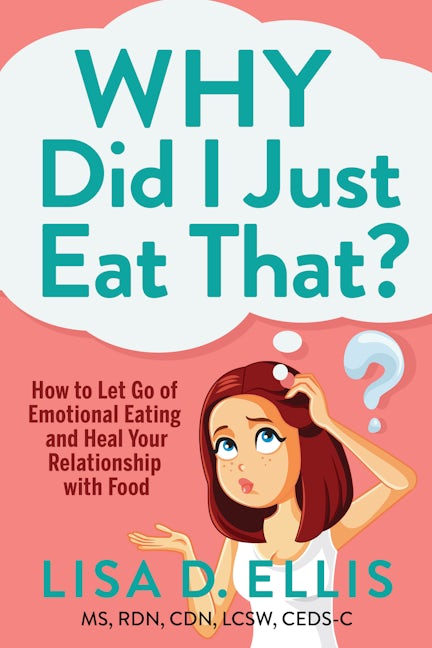
Get off the diet roller coaster and embark on a life-affirming journey towards a positive and sustainable relationship with food and your body.
In Why Did I Just Eat That? Registered Dietitian, Certified Eating Disorders Specialist, and food therapist Lisa D. Ellis offers nutritional and therapeutic support in this comprehensive guide to healthy eating. She promotes an all-foods-fit model and mindfulness to explain the connection between human emotions, habits, and physical satisfaction. She rejects the toxic constraints of diet culture and instead encourages self-acceptance, eating intuitively, and fundamentally redefining our relationship with food.
Why Did I Just Eat That? begins with removing the blame and shame associated with food by sharing a highly readable overview of how early human survival strategies influence our eating issues today. A self-administered quiz follows, designed to identify the specific types of eating behaviors. Finally, after real case studies and solutions are discussed, Why Did I Just Eat That? provides practical and achievable healing steps tailored to address the needs of each respective type of eater.
The science-backed wisdom, exercises, and activities will empower anyone struggling with food to let go of the idea of perfection and define their relationship with food on their own terms, paving the way for deeper self-discovery and a healthier way of living.


"Registered dietician Ellis offers a self-help guide for people with unhealthy eating patterns.
“Food Cuddler,” “Food Whisperer,” and “Procrastin-Eater” are just a few of the author’s creatively named categories in this book, which aims to help readers analyze and improve their dysfunctional relationships with food. Eating should be a simple process, she asserts; the main reason to eat is hunger, and fullness is the cue to stop. What Ellis terms “Emotion-Triggered Eating” is often subconscious, however. Early humans lived in a time of food scarcity, she notes, and anxiety was once a function of survival, making people hardwired to overeat and self-soothe with food. Ellis mixes biological and psychological concepts with empathy. Using anonymized composites of her own clients, she offers relatable studies that show how past and present family dynamics can play a role in disordered eating: “Kavitha,” a “Less-Structured Eater,” is a busy mother who never gives herself time to eat, making her a “professional grazer.” Widowed Annamaria, a “Food Cuddler,” uses comfort food to give her “a big hug from within,” numbing her grief; as a child, she was encouraged to eat in times of sadness or disappointment. Ellis’ writing is brisk and engaging, and the book contains a quiz to gain awareness of one’s eating patterns. Advice includes keeping a food diary, using a hunger/fullness meter, engaging in mindful eating practices, and keeping a record of one’s moods. Ellis also includes comforting affirmations for each category, always emphasizing that an important part of healing is self-love. After readers narrow down their own eating styles, they would do well to read sections for other categories as well, as there’s much wisdom to be found in these pages.
A compassionate book that provides intriguing insights and useful strategies." -KIRKUS REVIEWS