


Some error occured while loading the Quick View. Please close the Quick View and try reloading the page.
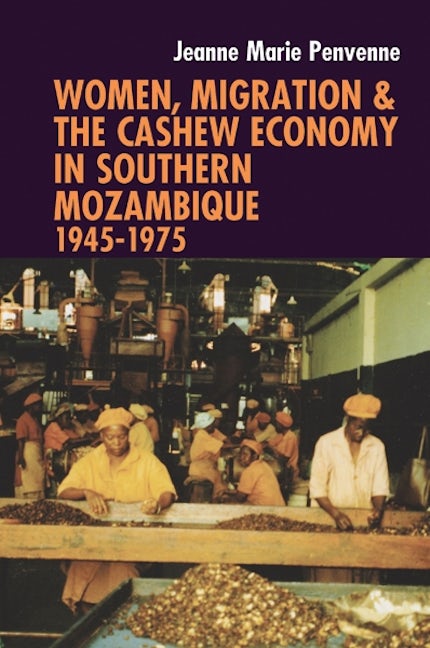
Analyses the lives and livelihoods of the female cashew shellers in Mozambique's capital in the colonial era, during which the industry grew to be a major export, and relates how the women played a fundamental, but previously underappreciated, role in the colony's economy.
JOINT RUNNER-UP FOR THE 2017 AIDOO-SNYDER BOOK PRIZE
Between the late 1940s and independence in 1975, rural Mozambican women migrated to the capital, Lourenço Marques, to find employment in the cashew shelling industry.This book tells the labour and social history of what became Mozambique's most important late colonial era industry through the oral history and songs of three generations of the workforce. In the 1950s Jiva Jamal Tharani recruited a largely female labour force and inaugurated industrial cashew shelling in the Chamanculo neighbourhood. Seasonal cashew brews had long been an essential component of the region's household, gift and informal economies, but bythe 1970s cashew exports comprised the largest share of the colony's foreign exchange earnings.
This book demonstrates that Mozambique's cashew economy depended fundamentally on women's work and should be understood as "whole cloth". Drawing on over 100 interviews, the rich narratives convey layered histories: the rural crises that triggered the flight of women, their lives as factory workers, widespread payment and wage fraud, the formation of innovative urban families, and the health costs that all African families paid for municipal neglect of their neighbourhoods.
Jeanne Marie Penvenne is Professor of History, and core faculty in International Relations, Africana and Women, and Gender and Sexuality Studies at Tufts University.. She is the author of the Herskovits shortlisted African Workers and Colonial Racism (James Currey/Heinemann, 1995)
JOINT RUNNER-UP FOR THE 2017 AIDOO-SNYDER BOOK PRIZE
Between the late 1940s and independence in 1975, rural Mozambican women migrated to the capital, Lourenço Marques, to find employment in the cashew shelling industry.This book tells the labour and social history of what became Mozambique's most important late colonial era industry through the oral history and songs of three generations of the workforce. In the 1950s Jiva Jamal Tharani recruited a largely female labour force and inaugurated industrial cashew shelling in the Chamanculo neighbourhood. Seasonal cashew brews had long been an essential component of the region's household, gift and informal economies, but bythe 1970s cashew exports comprised the largest share of the colony's foreign exchange earnings.
This book demonstrates that Mozambique's cashew economy depended fundamentally on women's work and should be understood as "whole cloth". Drawing on over 100 interviews, the rich narratives convey layered histories: the rural crises that triggered the flight of women, their lives as factory workers, widespread payment and wage fraud, the formation of innovative urban families, and the health costs that all African families paid for municipal neglect of their neighbourhoods.
Jeanne Marie Penvenne is Professor of History, and core faculty in International Relations, Africana and Women, and Gender and Sexuality Studies at Tufts University.. She is the author of the Herskovits shortlisted African Workers and Colonial Racism (James Currey/Heinemann, 1995)

Price: $95.00
Pages: 303
Publisher: Boydell & Brewer Inc.
Imprint: James Currey
Publication Date:
20 August 2015
Trim Size: 9.21 X 6.14 in
ISBN: 9781847011282
Format: Hardcover
BISACs:
HISTORY / Africa / East, African history, BUSINESS & ECONOMICS / Development / Economic Development, POLITICAL SCIENCE / Colonialism & Post-Colonialism, Development economics and emerging economies

Provides a crucial baseline for asking further gendered questions. More extensive case studies require a foundation to build on. Penvenne's pathbreaking book provides that foundation, both through the inclusion of women's narratives, songs, and broader cultural gendered practices in its analysis and through the powerful narratives revealing women workers' lives, dreams, and frustrations. Women, Migration and the Cashew Economy demonstrates the importance of these more eclectic research methods and the centrality of gender for understanding urban life in colonial Africa.
Introduction
A Century of Contestation around Cashews
Tarana: History from the Factory Floor
Migration: Pathways from Poverty to Tarana
Lives around Livelihoods: "Children Are Not Like Chickens"
African Urban Families in the Late Colonial Era: Agency
Conclusion: Gendered Perspectives on Work, Households and Authority
Epilogue: Mozambique's Cashew Economy, 1975 to 2014
A Century of Contestation around Cashews
Tarana: History from the Factory Floor
Migration: Pathways from Poverty to Tarana
Lives around Livelihoods: "Children Are Not Like Chickens"
African Urban Families in the Late Colonial Era: Agency
Conclusion: Gendered Perspectives on Work, Households and Authority
Epilogue: Mozambique's Cashew Economy, 1975 to 2014