


Some error occured while loading the Quick View. Please close the Quick View and try reloading the page.
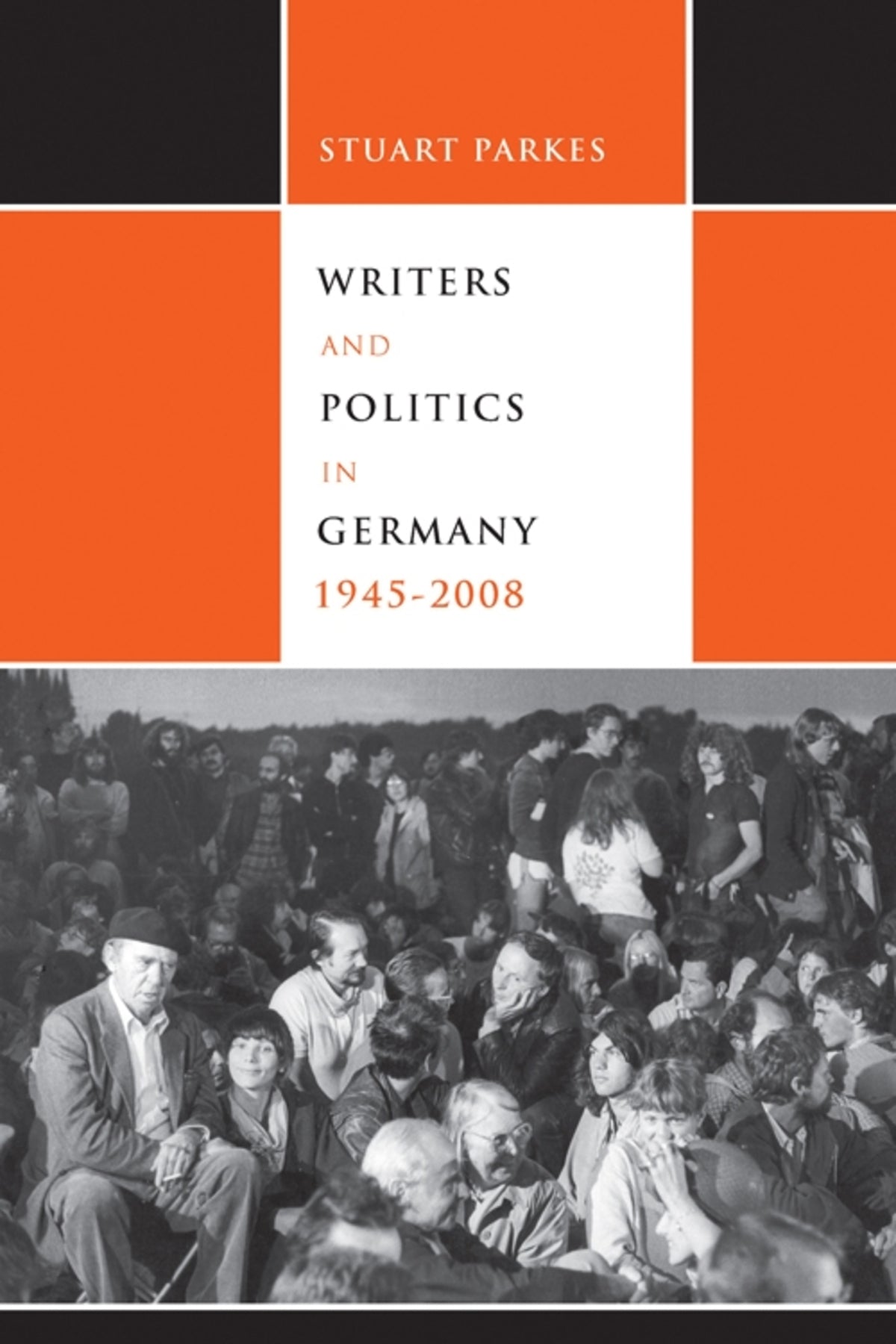
A comprehensive survey of German literary writers' political writing and involvement since 1945.
George Orwell said that all writing is political; but the writers of some nations and some periods are more political than others. German writers after 1945 have exemplified such heightened politicization, and this book considerstheir contribution to the democratic development of Germany by looking principally at their directly political, non-fictional writings. It pays particular attention to writers and the student movement of the 1960s and '70s, when some proclaimed the death of literature and called for a turn to direct political action. Yet writers in both parts of Germany gradually came to identify with their respective states, even if the idea of one Germany never entirelydisappeared. The unification of 1989-1990, in which this idea astonishingly became reality, posed a major (and some would say unmet) challenge to writers in both East and West. After looking at this period of intense political activities, the book considers the continuing East/West division and changing attitudes to the Nazi past, asking whether the intellectual climate has swung to the right. It also asks to what extent political involvement has been a generational project for the immediate postwar generation and is less important for younger writers who see the Federal Republic as a "normal" democratic state.
Stuart Parkes is Emeritus Professor of German from the University of Sunderland (UK).
George Orwell said that all writing is political; but the writers of some nations and some periods are more political than others. German writers after 1945 have exemplified such heightened politicization, and this book considerstheir contribution to the democratic development of Germany by looking principally at their directly political, non-fictional writings. It pays particular attention to writers and the student movement of the 1960s and '70s, when some proclaimed the death of literature and called for a turn to direct political action. Yet writers in both parts of Germany gradually came to identify with their respective states, even if the idea of one Germany never entirelydisappeared. The unification of 1989-1990, in which this idea astonishingly became reality, posed a major (and some would say unmet) challenge to writers in both East and West. After looking at this period of intense political activities, the book considers the continuing East/West division and changing attitudes to the Nazi past, asking whether the intellectual climate has swung to the right. It also asks to what extent political involvement has been a generational project for the immediate postwar generation and is less important for younger writers who see the Federal Republic as a "normal" democratic state.
Stuart Parkes is Emeritus Professor of German from the University of Sunderland (UK).

Price: $29.95
Pages: 250
Publisher: Boydell & Brewer Inc.
Imprint: Camden House
Series: Studies in German Literature Linguistics and Culture
Publication Date:
August 1, 2013
Trim Size: 9.00 X 6.00 in
ISBN: 9781571135803
Format: Paperback
BISACs:
LITERARY CRITICISM / European / German, Literature: history and criticism, POLITICAL SCIENCE / Commentary & Opinion, HISTORY / Europe / Germany, Politics and government

An important resource for undergraduates, postgraduates at the beginning of their research, and established colleagues wishing to refresh their knowledge of the period.. There is a surprising amount of detail in a book of little more than 200 pages, and Parkes is skilled in condensing broad trends and key issues into short, digestible paragraphs with apt and illuminating examples.
The author's particular achievement lies in the thorough treatment of the increasing cultural and ideological division of FRG and GDR perspectives, developments, and interactions.
[A] comprehensive and thorough study that provides an excellent overview of the relationship between literature and politics over more than 60 years in post-war Germany.
At the end of the Second World War, Thomas Mann described how many German intellectuals, including him, had tended to look down on politics and retreated from the real world into an abstract realm of inwardness. Stuart Parkes's useful survey of post-war German writers and politics examines how, against the background of the shadow cast by the Nazi past, German writers have since 1945 attempted to overcome this quintessentially German schism between Geist (intellect) and Macht (power).
[A] detailed, informative study, which traces writers' involvement with politics [and] probes how intellectuals have shaped public debates. . [A] comprehensive overview of the main literary and political lines.
An amazing accomplishment in a new, standard work on a difficult topic . . . Judicious in its balanced assessments of political positions . . . It is at the same time well written and rich in content. . . Exemplary.
The author's particular achievement lies in the thorough treatment of the increasing cultural and ideological division of FRG and GDR perspectives, developments, and interactions.
[A] comprehensive and thorough study that provides an excellent overview of the relationship between literature and politics over more than 60 years in post-war Germany.
At the end of the Second World War, Thomas Mann described how many German intellectuals, including him, had tended to look down on politics and retreated from the real world into an abstract realm of inwardness. Stuart Parkes's useful survey of post-war German writers and politics examines how, against the background of the shadow cast by the Nazi past, German writers have since 1945 attempted to overcome this quintessentially German schism between Geist (intellect) and Macht (power).
[A] detailed, informative study, which traces writers' involvement with politics [and] probes how intellectuals have shaped public debates. . [A] comprehensive overview of the main literary and political lines.
An amazing accomplishment in a new, standard work on a difficult topic . . . Judicious in its balanced assessments of political positions . . . It is at the same time well written and rich in content. . . Exemplary.