


Some error occured while loading the Quick View. Please close the Quick View and try reloading the page.
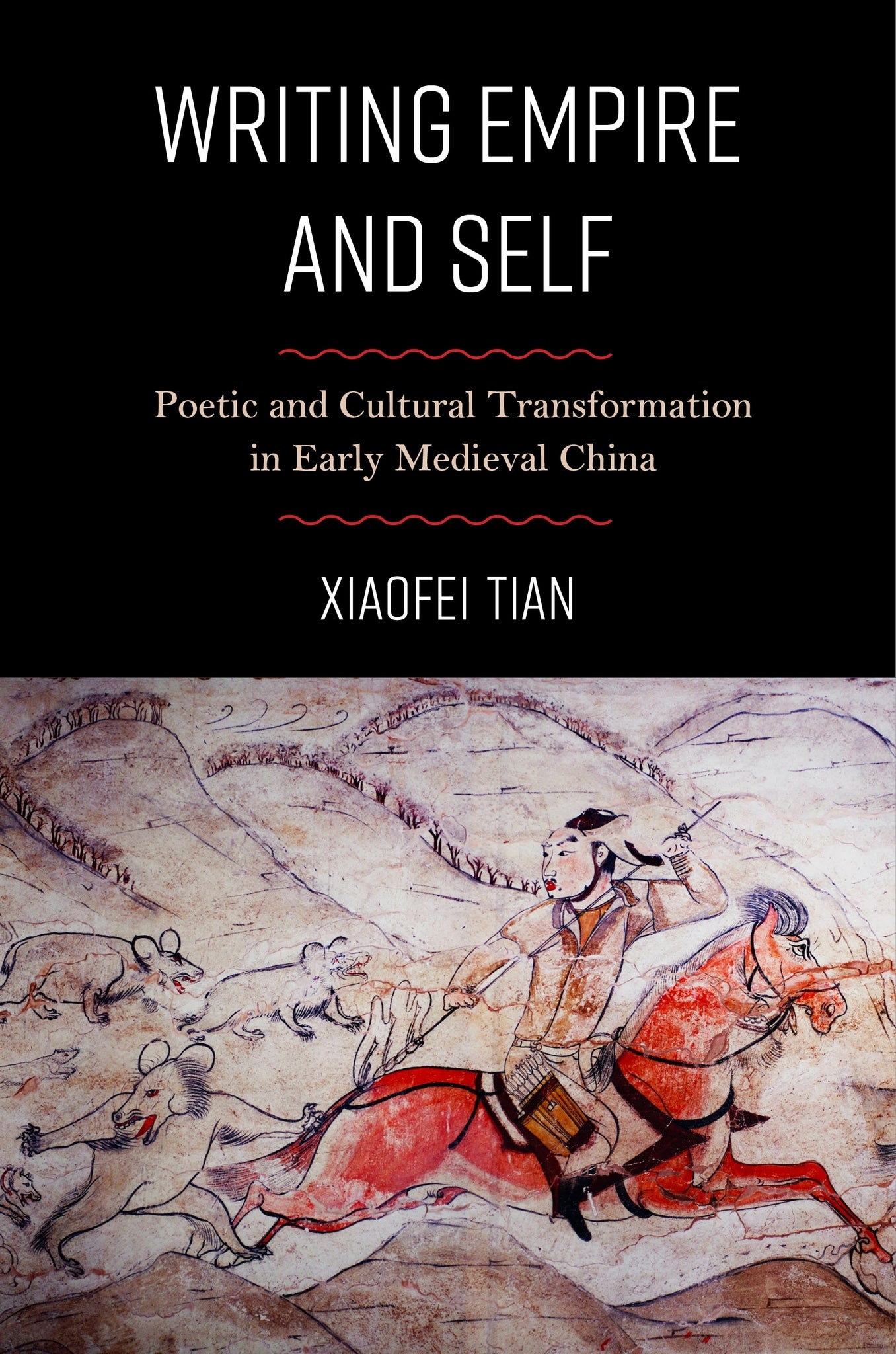
China’s early medieval period, from the fifth through the early seventh century, from the Northern and Southern Dynasties through the unified Sui, was a time of political fragmentation, military strife, and ethnic conflict. It also witnessed brilliant artistic creations as well as a full flowering of court culture, with poetry at its heart. How did poetry come to be regarded as the most potent form of cultural capital, a privileged literary genre, and a foundational skill for members of the elite? How was poetry transformed from an instrument of empire building to a venue for articulating personal trauma and voicing critique of the state?
Tracing the evolution of poetry’s role in Chinese society, Writing Empire and Self uncovers the profound cultural changes that took place in the early medieval era. Xiaofei Tian argues that in this period, a social community, eventually known as the “scholar elite” and treated as if it had always been a permanent fixture of the Chinese social order, came into being. She investigates the formation of this community, which left its mark on all later Chinese arts and letters, through a careful account of its history and textual production. Combining meticulous readings of numerous previously untranslated texts with a long-term, large-scale view of social and cultural history, Writing Empire and Self offers a fresh perspective on poetry’s intricate relationship with the state.


— Jack Chen, coeditor of Literary History in and beyond China: Reading Text and World
A landmark book in the study of early medieval Chinese poetry. Tian reaches beyond the usual limits of belles lettres to provide a rich, multidisciplinary picture of poetry and the court culture in which it flourished. Writing Empire and Self is filled with sensitive readings of texts and important revelations about the changing status and function of poetry during that crucial period of Chinese history.
— Paul W. Kroll, author of A Student’s Dictionary of Classical and Medieval Chinese
Acknowledgments
Timeline of Dynasties
Note on Sources and Translation
Introduction
Part I
1. Poetry and Empire
2. Limpidity of Being: The Courtly Poetics and the Courtly Self
3. A Day in a Courtier’s Life: Rituals and Ceremonies
4. Poetry as Relation
Interlude
Part II
5. Writing Failure, Trauma, and Violence
6. Snow Country: Double Talk with the Community
7. Patchwork Empire
Afterword
Notes
Bibliography
Index