


Some error occured while loading the Quick View. Please close the Quick View and try reloading the page.
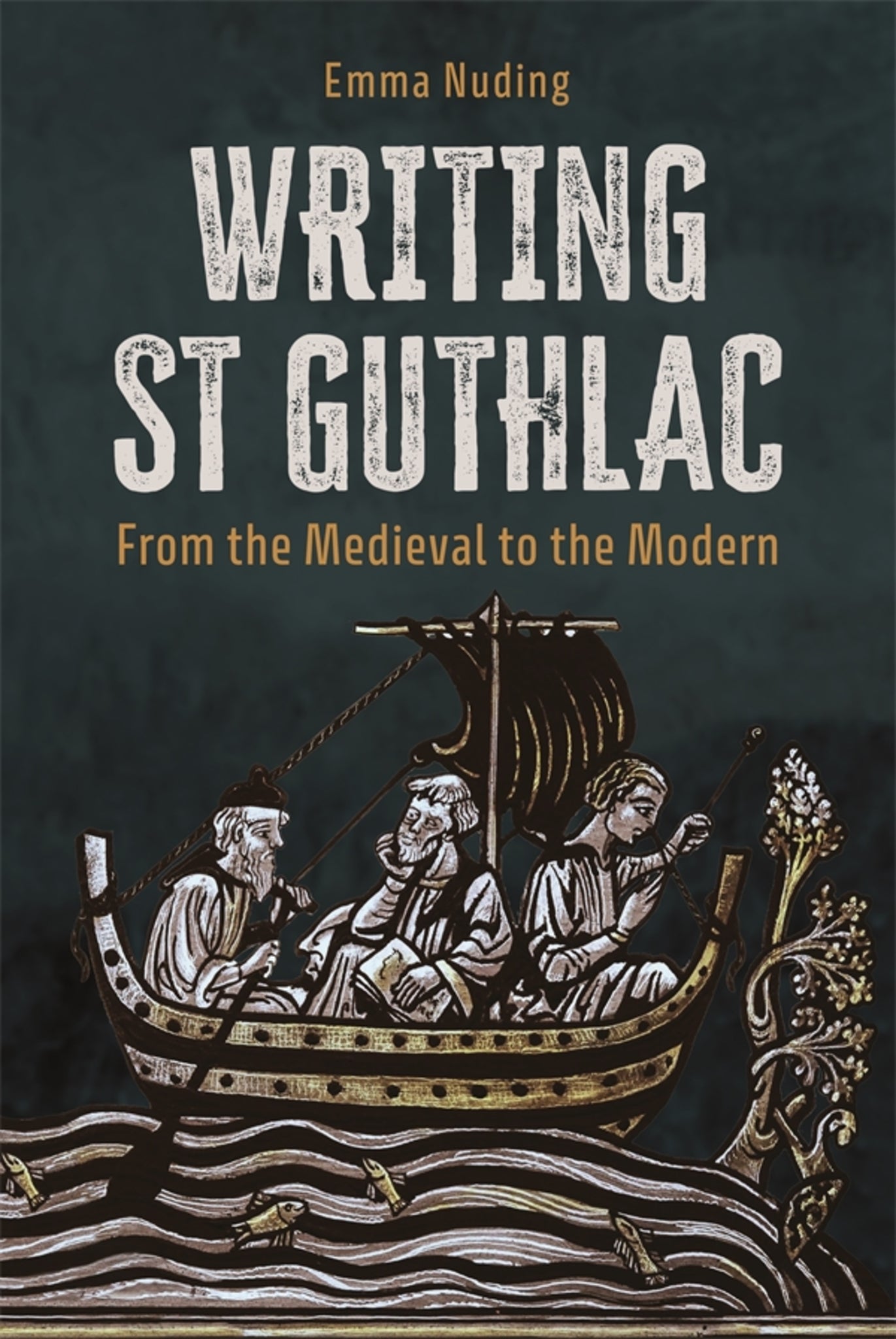
The first radically longitudinal study of a saint who had a significant cultural presence in early medieval England.
What happens when the Life of a medieval Fenland hermit is read (and rewritten) over a broad span of time? Which elements do writers keep returning to, what additions are made, and which aspects are translated into new and curious forms?
This book answers these questions by tracing the reception trajectory of St Guthlac of Crowland, from the eighth century through to the twenty-first. Guthlac is predominantly associated with the landscape of the Fens - the low, flat region on the east coast of England whose waterways wind out to the Wash estuary. By looking at how Guthlac's narratives are rewritten by those based in the Fens, as well as by those hailing from beyond it, this book argues for the spiritual potential of flat landscapes; it explores the relationship between reading and pilgrimage practice in all its forms; and it gives fresh insights into the role of women in Guthlac's cultural construction. Methodologically, it provides a model of how to bridge the divide between medieval studies and medievalism studies. By reading texts as varied as Old English Lives, Anglo-Latin accounts and Middle English romances, as well as the poetry and prose of later writers such as John Clare, Charles Kingsley and Graham Swift, this book offers the first radically longitudinal study of a saint whose story started in early medieval England - one whose legacy continues in the present day.
EMMA NUDING is a Teaching Fellow in Medieval Literature at the University of Birmingham.
What happens when the Life of a medieval Fenland hermit is read (and rewritten) over a broad span of time? Which elements do writers keep returning to, what additions are made, and which aspects are translated into new and curious forms?
This book answers these questions by tracing the reception trajectory of St Guthlac of Crowland, from the eighth century through to the twenty-first. Guthlac is predominantly associated with the landscape of the Fens - the low, flat region on the east coast of England whose waterways wind out to the Wash estuary. By looking at how Guthlac's narratives are rewritten by those based in the Fens, as well as by those hailing from beyond it, this book argues for the spiritual potential of flat landscapes; it explores the relationship between reading and pilgrimage practice in all its forms; and it gives fresh insights into the role of women in Guthlac's cultural construction. Methodologically, it provides a model of how to bridge the divide between medieval studies and medievalism studies. By reading texts as varied as Old English Lives, Anglo-Latin accounts and Middle English romances, as well as the poetry and prose of later writers such as John Clare, Charles Kingsley and Graham Swift, this book offers the first radically longitudinal study of a saint whose story started in early medieval England - one whose legacy continues in the present day.
EMMA NUDING is a Teaching Fellow in Medieval Literature at the University of Birmingham.

Price: $120.00
Pages: 276
Publisher: Boydell & Brewer Inc.
Imprint: D.S.Brewer
Publication Date:
05 May 2026
Trim Size: 9.21 X 6.14 in
ISBN: 9781843847892
Format: Hardcover
BISACs:
HISTORY / Europe / Great Britain / Norman Conquest to Late Medieval (1066-1485), Literary studies: ancient, classical and medieval, LITERARY CRITICISM / Medieval, LITERARY CRITICISM / European / English, Irish, Scottish, Welsh, Literature: history and criticism, Literary studies: c 1900 to c 2000

Introduction: Reception Trajectories
1: Eremitic Guthlac: The Roots of the Hermit-Saint
2: Monastic Guthlac: Crowland Abbey's Saintly Remaking
3: Secular Guthlac: Lay Readers and their Saintly Knights
4: Ruined Guthlac: From the Reformation to the Romantics
5: Modern Guthlac: A Textual Effloresence
Guthlac the Boatsman: A Conclusion
1: Eremitic Guthlac: The Roots of the Hermit-Saint
2: Monastic Guthlac: Crowland Abbey's Saintly Remaking
3: Secular Guthlac: Lay Readers and their Saintly Knights
4: Ruined Guthlac: From the Reformation to the Romantics
5: Modern Guthlac: A Textual Effloresence
Guthlac the Boatsman: A Conclusion