


Some error occured while loading the Quick View. Please close the Quick View and try reloading the page.
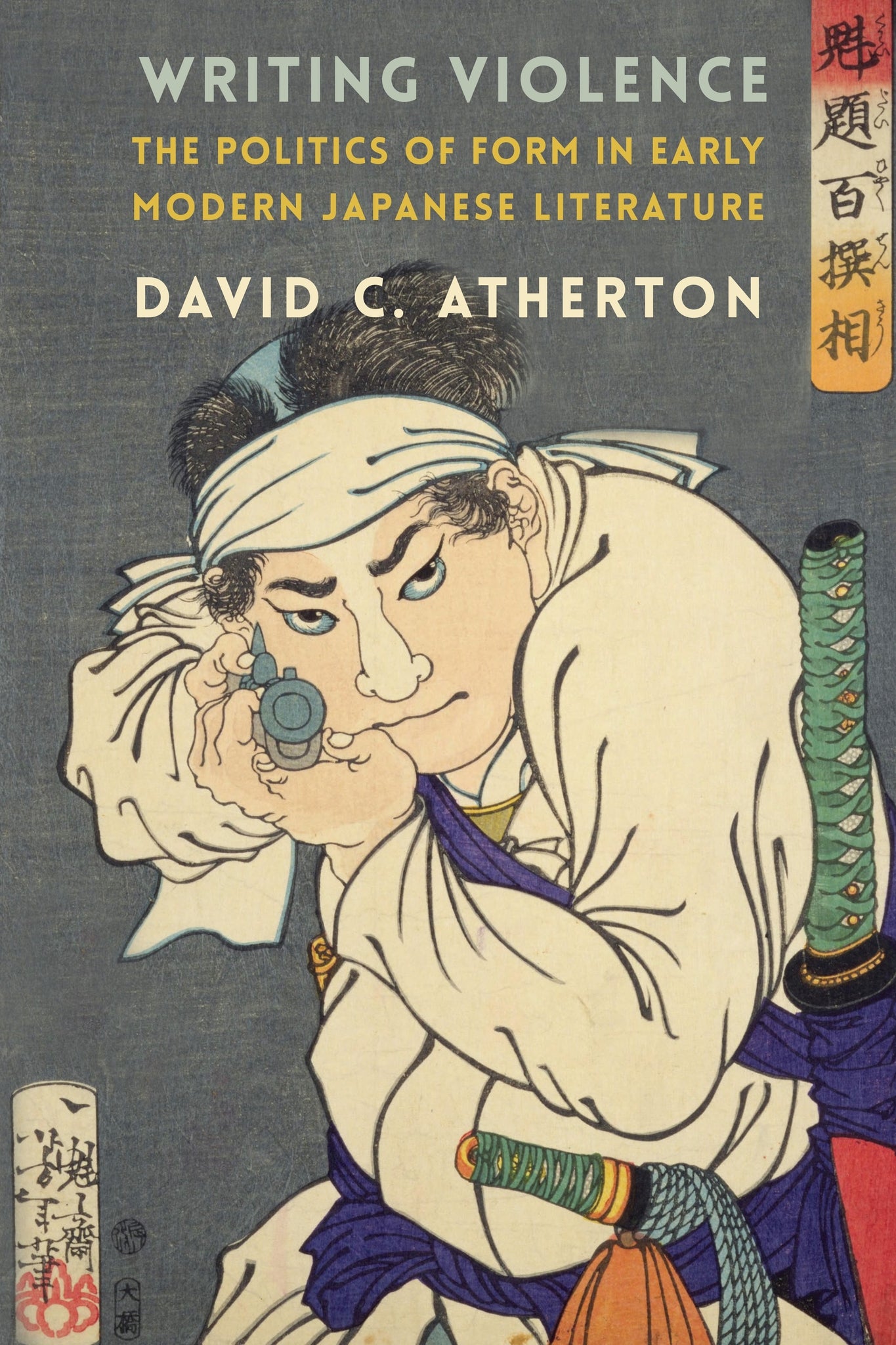
Edo-period Japan was a golden age for commercial literature. A host of new narrative genres cast their gaze across the social landscape, probed the realms of history and the fantastic, and breathed new life into literary tradition. But how to understand the politics of this body of literature remains contested, in part because the defining characteristics of much early modern fiction—formulaicness, reuse of narratives, stock characters, linguistic and intertextual play, and heavy allusion to literary canon—can seem to hold social and political realities at arm’s length.
David C. Atherton offers a new approach to understanding the relationship between the challenging formal features of early modern popular literature and the world beyond its pages. Focusing on depictions of violence—one of the most fraught topics for a peaceful polity ruled over by warriors—he connects concepts of form and formalization across the aesthetic and social spheres. Atherton shows how the formal features of early modern literature had the potential to alter the perception of time and space, make social and economic forces visible, defamiliarize conventions, give voice to the socially peripheral, and reshape the contours of community. Through careful readings of works by the major writers Asai Ryōi, Ihara Saikaku, Chikamatsu Monzaemon, Ueda Akinari, and Santō Kyōden, Writing Violence reveals the essential role of literary form in constructing the world—and in seeing it anew.


— Choice Reviews
A revelatory work, one that will surely become a milestone in the study of early modern Japanese literature. It is very readable, with an arresting blend of elegant description and sharp analysis that will appeal to undergraduates, graduate students, and faculty alike.
— Monumenta Nipponica
[An] elegantly written, richly theorized, and deeply thought-provoking monograph.
— Journal of Japanese Studies
By producing a theoretically engaged and thematically unified monograph spanning the conceptual chasm normally separating studies of early and late Tokugawa literature, Atherton has accomplished a major feat.
— Harvard Journal of Asiatic Studies
Lucid, eloquent, nuanced, and deeply grounded, Writing Violence offers a new vision of what it meant to be "creative" in early modern Japan and new tools for teasing out the politics of early modern narrative works. It’s hard to overstate what a revelation this book is.
— Michael Emmerich, author of The Tale of Genji: Translation, Canonization, and World Literature
Writing Violence is a deeply thoughtful and insightful rumination on early modern Japanese literature in its sociohistorical contexts. By addressing issues of cultural, political, and literary form in selected works from the seventeenth through nineteenth centuries, Atherton suggests brilliant new ways of reading and understanding the popular fiction of the age.
— Keller Kimbrough, author of Preachers, Poets, Women, and the Way: Izumi Shikibu and the Buddhist Literature of Medieval Japan
Freeing early modern revenge and disaster stories from readings of political praise or subversion, Atherton’s bold and theoretically innovative study argues that their form was not formulaic, but an incubator of new perceptual possibilities. In prose that delights and surprises, Atherton shows that Edo authors re-signified violence, remade form, and rethought the power of fiction.
— Vyjayanthi R. Selinger, author of Authorizing the Shogunate: Ritual and Material Symbolism in the Literary Construction of Warrior Order
This beautifully written book offers a fresh perspective on the literary politics of the Edo period. While it focuses on accounts of violence—fires and fights, theft and murder—it is also a lively and humorous introduction to the joys of early modern literature.
— Amy Stanley, author of Stranger in the Shogun’s City: A Japanese Woman and Her World
With its rich close readings, Writing Violence clearly shows the importance of modular construction and “form” to the literature of early modern Japan and provides us with new ways of thinking about the relationship between a text and the outside world.
— Matthew Fraleigh, author of Plucking Chrysanthemums: Narushima Ryūhoku and Sinitic Literary Traditions in Modern Japan
Acknowledgments
Note to Readers
Introduction: The Problem, Promise, and Politics of Early Modern Literary Form
1. Creative Destruction: Remaking the World in Seventeenth-Century Disaster Literature
2. The Vengeance Variations: Revenge as Form in the Fiction of Ihara Saikaku
3. The (Un)crucified Lovers: Adultery, Punishment, and the “Truth” of Transgression
4. Ueda Akinari and the Form of Fiction: In Which a Brother is Celebrated for Beheading His Sister
5. Frontier Violence: Late Yomihon Form and the Bodies and Bounds of the Realm
Epilogue: Forms in Context, Forms Beyond Context
Notes
Bibliography
Index