


Some error occured while loading the Quick View. Please close the Quick View and try reloading the page.
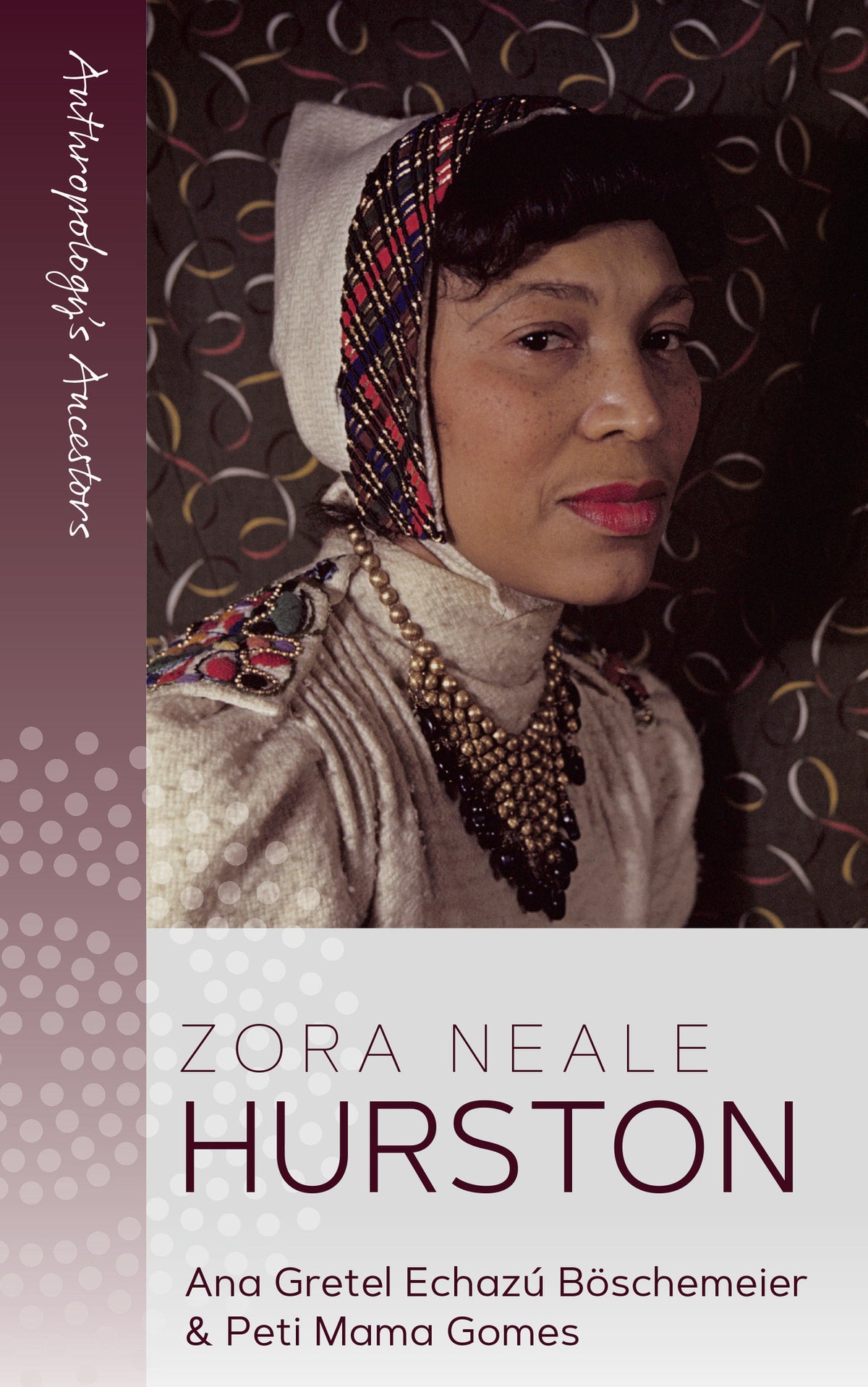
Exploring Zora Neale Hurston’s life and work through a decolonial lens, this book traces Hurston’s journey from her early life (1891–1919) and struggles at the margins (1920–1930) to her peak as a pioneering ethnographer and writer (1931–1956) and her later years (1957–1960). Examining her navigation of a hostile academic environment, it highlights her redefinition of Black autonomy and diasporic identity. Through personal and political narratives, including Barracoon, it underscores Hurston’s enduring influence on Anthropology and contemporary Black thought.


“This book offers an insightful and innovative approach to Hurston’s oeuvre. By applying a transatlantic and decolonial reflexivity, it sheds new light on Hurston’s work through a Black feminist lens from the Global South.” • Gabriel Chagas, University of Miami
Ana Gretel Echazú Böschemeier is a tenured researcher at Fiocruz Brasília and an active member of the IUAES Commission on Human Rights, as well as a part of the leadership board of the ITD Alliance. She is a former tenured professor at the Federal University of Rio Grande do Norte (UFRN) and a former scientific assistant at the Brazilian Ministry of Racial Equality (MIR). She was awarded the TWAS-UNESCO Fellowship (2022–2025) and was a visiting professor at the Gender and Development Department at the Asian Institute of Technology and Thammasat University (both in Thailand). She is the leader of the “Best Practices for Epistemic Justice” of the Brazilian National Council (CNPq) and serves as a Global Youth for Peace Fellow (2025–present), working with youth displaced by the climate crisis. Her work bridges anthropology, decoloniality, human rights, and intercultural knowledge production. She has written, translated, and published numerous essays, scientific articles, book chapters and books in English, Spanish, Tupi Nheengatu, Finnish, and Portuguese.
List of Figures
Foreword
Kimberley D. McKinson
Acknowledgements
Introduction: Tracing Diasporas in a Colonised World
Chapter 1. Steps of a Chronology
Chapter 2. Early Life (1891–1919)
Chapter 3. At the Margins (1920–1930)
Chapter 4. A Glass Ceiling (1931–1956)
Chapter 5. Barracoon, a Case Study
Chapter 6. Her Last Days (1957–1960)
Conclusion
References
Index