-
Antiques & Collectibles
-
Architecture
-
Art
-
Bibles
-
Biography & Autobiography
-
Body, Mind & Spirit
-
Business & Economics
-
Comics & Graphic Novels
-
Computers
-
Cooking
-
Crafts & Hobbies
-
Design
-
Education
-
Family & Relationship
-
Fiction
-
Foreign Language Study
-
Games & Activities
-
Gardening
-
Health & Fitness
-
History
-
House & Home
-
Humor
-
Juvenile Fiction
-
Juvenile Nonfiction
-
Language Arts & Disciplines
-
Law
-
Literary Collections
-
Literary Criticism
-
Mathematics
-
Medical
-
Miscellaneous
-
Music
-
Nature
-
Performing Arts
-
Pets
-
Philosophy
-
Photography
-
Poetry
-
Political Science
-
Psychology
-
Reference
-
Religion
-
Self-Help
-
Science
-
Social Science
-
Sports & Recreation
-
Study Aids
-
Technology & Engineering
-
Transportation
-
Travel
-
True Crime
-
Young Adult Fiction
-
Young Adult Nonfiction
-
Antiques & Collectibles
-
Architecture
-
Art
-
Bibles
-
Biography & Autobiography
-
Body, Mind & Spirit
-
Business & Economics
-
Comics & Graphic Novels
-
Computers
-
Cooking
-
Crafts & Hobbies
-
Design
-
Education
-
Family & Relationship
-
Fiction
-
Foreign Language Study
-
Games & Activities
-
Gardening
-
Health & Fitness
-
History
-
House & Home
-
Humor
-
Juvenile Fiction
-
Juvenile Nonfiction
-
Language Arts & Disciplines
-
Law
-
Literary Collections
-
Literary Criticism
-
Mathematics
-
Medical
-
Miscellaneous
-
Music
-
Nature
-
Performing Arts
-
Pets
-
Philosophy
-
Photography
-
Poetry
-
Political Science
-
Psychology
-
Reference
-
Religion
-
Self-Help
-
Science
-
Social Science
-
Sports & Recreation
-
Study Aids
-
Technology & Engineering
-
Transportation
-
Travel
-
True Crime
-
Young Adult Fiction
-
Young Adult Nonfiction
America's Hidden Treasures
Regular price $75.00 Sale price $60.00 Save $15.00America's Hidden Treasures offers a richly illustrated journey through the cultural fabric of the United States, spotlighting 101 lesser-known museums and collections across the country.
Moving beyond the familiar landmarks of New York, Washington, and Los Angeles, the book uncovers a surprising and diverse landscape of art, history, and Americana found in small towns and unexpected urban corners - from the National Music Museum in Vermilliion, South Dakota, to the Stark Museum of Art in Orange, Texas, the Alaska Native Heritage Center in Anchorage, and the Hill-Stead Museum in Farmington, Connecticut.
What distinguishes this volume is its authoritative and deeply personal approach. Arnold Lehman, Director Emeritus of the Brooklyn Museum, invited scores of museum colleagues and collectors to recommend institutions they felt deserved wider recognition. The result is a carefully curated selection shaped by the insights of those closest to America's cultural heritage. Each featured museum is chosen for its individuality, curatorial excellence, or remarkable holdings. Some occupy architecturally significant buildings, while others are modest spaces housing extraordinary collections. Rather than offering exhaustive surveys, the book highlights select works from each institution - singular artworks, rare artefacts, and intriguing objects - accompanied by concise, engaging commentary that brings their stories to life.
Celebrating the local, the independent, and the unexpected, America's Hidden Treasures reveals cultural institutions often overlooked yet rich in meaning and visual wonder. With more than 750 images, it is an essential volume for museum lovers, cultural travellers, and anyone curious about America's hidden heritage - published fittingly during the 250th anniversary of American independence.
- Showcases 101 lesser-known museums across the United States, revealing extraordinary collections beyond the major cultural centers.
- An authoritative, expertly curated selection, based on recommendations from museum professionals and collectors.
- Features over 750 images and engaging commentary, highlighting standout objects and stories.
Royal Festival Hall
Regular price $65.00 Sale price $52.00 Save $13.00Published to coincide with the 75th anniversary celebrations of the Royal Festival Hall.
The Royal Festival Hall (RFH) - an important example of modernism architecture and one of London's best-loved buildings - was built as a beacon of hope and renewal after the Second World War, and quickly became popular. In this new book, a selection of contributors - architects, technicians, musicians, historians, and cultural programmers - tell the varied stories of the building and the people who use it. The book is illustrated with photography specially commissioned from the renowned architectural photographer, Edmund Sumner, and contains 21 written contributions on different aspects of the RFH, from its history as a piece of architecture to the story of the famous organ, from the approach to literature and spoken word to the life of the production team. The building's emergence as a destination for all, whether to enjoy a performance by a world-famous symphony orchestra, a dance class, a poetry reading, or just a cup of coffee, is considered in the context of the intentions of its original planners and those who have led, maintained, and refurbished it since.
This book offers an invaluable record of the history of this celebrated building in the first 75 years of its life, and looks to its future as a center of cultural programming - both weathering and shaping change - for many more decades to come.
- Published to coincide with the 75th anniversary celebrations of the Royal Festival Hall
- Written by architects, musicians, and technicians who have been closely involved with the building and its renovation.
- A fascinating and thought-provoking book for anyone interested in the development of London's cultural life.
The Coloring Book of Pueblo Pottery
Regular price $14.99 Sale price $11.99 Save $3.00<b>A new coloring book featuring 30 drawings of beautiful Pueblo pottery designs for you to complete</b><p>Pueblo pottery is renowned for its extraordinary beauty and craftsmanship. Pueblo is a Spanish word meaning ‘town’ or ‘village’. When the Spanish arrived in 1540 in what is now known as the American Southwest, they referred to the Indigenous communities and their settlements as Pueblos. The Pueblos are among the oldest settlements in North America, and their pottery-making tradition is as old as the ancient Pueblos themselves.<p/><p>Pottery is used throughout the life of a Pueblo person, and various forms are made for cooking, gathering water, food storage, and ceremonial use. The Coloring Book of Pueblo Pottery features more than 30 drawings for you to complete, whether by reproducing the traditional palettes or by finding inspiration in the swirling or geometric patterns and stylized motifs for a unique design of your own. Made predominantly by women, the pots are created from natural clay using a coil method; they are hand-painted and then fired outdoors. Designs vary from one Pueblo to another, but symbols and motifs relating to the natural world – birds, deer, plants, and water – are common. Today, such pottery is highly collectible and is found in museums and private collections around the world. This delightful coloring book allows you to create your very own masterpieces of this celebrated and cherished art form.<p/>
The Nature of Creativity
Regular price $35.00 Sale price $28.00 Save $7.00
The RIBA Stirling Prize 20
Regular price $75.00 Sale price $60.00 Save $15.00Insightfully written by Tony Chapman, the former Head of Awards at the RIBA, this book honors all the shortlisted and winning buildings from the first 20 years of the prize. Authoritative, detailed commentaries explain how each winning building was planned and constructed, and reveal the thoughts of the Stirling jury; commentaries are also included for the shortlisted buildings from the most recent decade of the prize, 2006-15. Chapman's introduction reviews the history of the award from its low-key beginnings at a time when Britain was just emerging from a period of economic recession to the present day, when the prize, and indeed architecture in general, has a far greater public profile. Illustrated throughout with photographs, drawings and plans, The RIBA Stirling Prize 20 is a true celebration of British architectural talent.
Type Matters!
Regular price $29.95 Sale price $23.96 Save $5.99Once upon a time, only typesetters needed to know about kerning, leading, ligatures, and hanging punctuation. Today, however, most of us work on computers, with access to hundreds of fonts, and we’d all like our letters, reports and other documents to look as good – and as readable – as possible.
But what does all the confusing terminology about ink traps, letter spacing, and visual centering mean, and what are the rules for good typography? Type Matters! is a book of tips for everyday use, for all users of typography, from students and professionals to anyone who does any layout design on a computer. The book is arranged into three chapters: an introduction to the basics of typography; headline and display type; and setting text.
Within each chapter there are sections devoted to particular principles or problems, such as selecting the right typeface, leading, and the treatment of numbers. Examples throughout show precisely what makes good typography – and, crucially, what doesn’t. Authoritatively written and designed by a practitioner and teacher of typography, Type Matters! has a beautifully clear layout that reinforces the principles discussed throughout.
Signs of Our Times
Regular price $70.00 Sale price $56.00 Save $14.00Signs of Our Times: From Calligraphy to Calligraffiti covers six decades of an art trend led by artists from the Arab world and Iran. Starting in the early 1950s, this alternative and original approach to modernism began with artists who took inspiration from their own cultural sources and combined them with international aesthetics and concepts.
This publication considers the work of 50 key artists, ranging from important pioneers of the calligraphic movement to those who use the written word in their work today. The book begins with a contribution from Venetia Porter, curator of Islamic and contemporary Middle Eastern art at the British Museum, who provides a historical contextualization of the movement and its relationship to lettrism in Europe. In a second essay, the writer and curator Rose Issa presents an overview of 60 years of the art movement in Arab countries and Iran, from the independences of the late 1940s and 1950s to the present day. A timeline by Juliet Cestar, an expert on contemporary Middle Eastern art, then sets out major cultural and historical events in the Middle East over the course of the last 60 years.
The main part of the book is divided into three sections, each devoted to a different generation of artists: the first generation of pioneers, who created a new aesthetic language following the independence of their countries; the second generation of artists, who mostly live in exile and who reference their own cultures and languages in their work; and the third generation, comprising contemporary artists who have absorbed international aesthetics, concepts and languages and who occasionally use Arabic and Persian script, or the morphology of letters, in their work. The entry for each artist includes a concise biography and a statement from the artist about their work. The artworks, in a variety of media, are also interspersed with poems and relevant literature, putting into personal and historical contexts the innovative use of words in art.
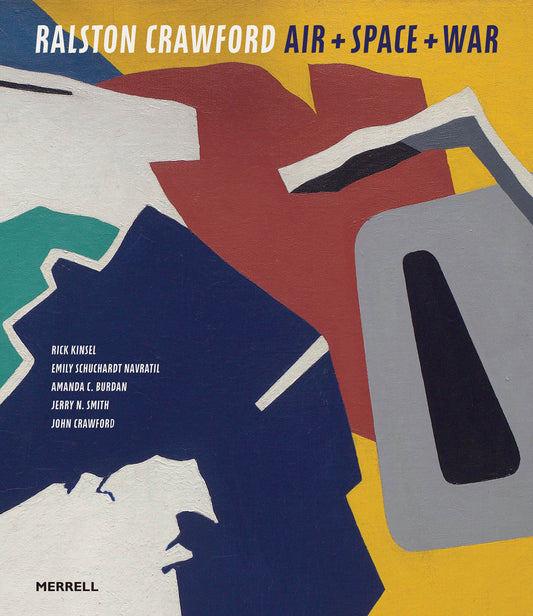
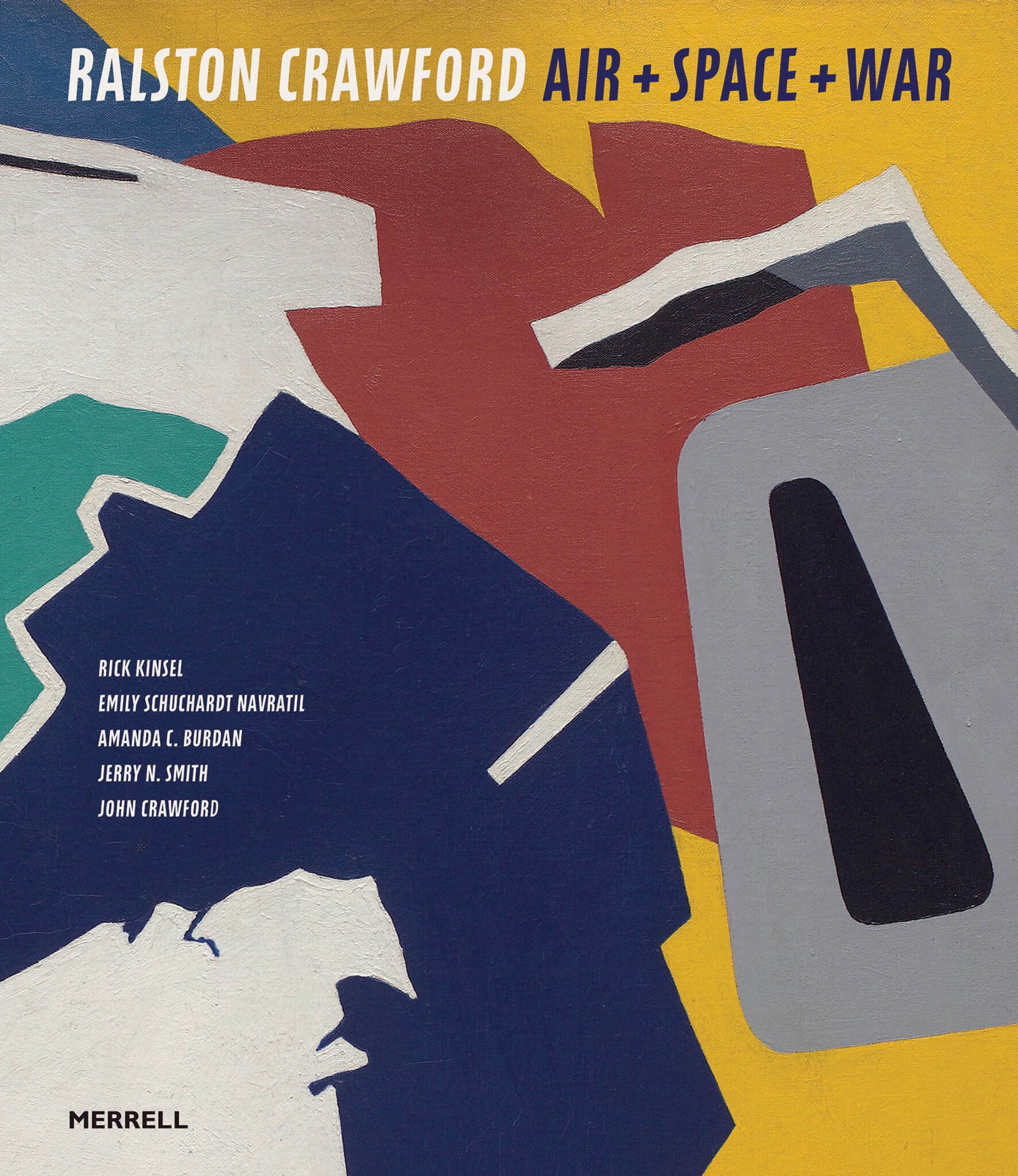
Ralston Crawford: Air + Space + War
Regular price $70.00 Sale price $56.00 Save $14.00
More Dream Homes
Regular price $32.95 Sale price $26.36 Save $6.59
Conflict and Costume
Regular price $50.00 Sale price $40.00 Save $10.00
The Mormons
Regular price $34.95 Save $-34.95
Jonny Hannah
Regular price $50.00 Sale price $40.00 Save $10.00
Marsden Hartley
Regular price $70.00 Sale price $56.00 Save $14.00Marsden Hartley (1877–1943) was proud to call himself an American artist, but he dreamed of travel to Europe, believing instinctively that he would learn more there than would be possible in his home state of Maine or even in New York.
In 1909 Alfred Stieglitz gave Hartley his first solo exhibition in New York, and a second successful show three years later enabled him to head to Europe, where he spent time in Paris, Berlin and Munich. His rise to prominence as a specifically American modernist was based largely on the visual ideas and influences that he encountered in these vibrant cities, which he then synthesized through his own New England point of view. Hartley, who was by nature something of a loner, never lost his wanderlust, and throughout his life found inspiration in many other landscapes and cultures, including in southern France, Italy, Bermuda, Mexico and Canada.
Marsden Hartley: Adventurer in the Arts, published to coincide with an exhibition opening at the Vilcek Foundation in New York, offers a fresh appraisal of a pioneering modernist whose work continues to be celebrated for its spirituality, experimentation and innovation. Rick Kinsel’s introduction provides an overview of the manifold ways in which Hartley’s travels shaped his artistic vision, from experiencing the latest art in Paris and finding a mentor there in Gertrude Stein to meeting members of the Blaue Reiter group in Germany and developing an interest in both Prussian military pageantry and Bavarian folk art; from becoming fascinated with ancient Aztec and Mayan cultures while in Mexico to being inspired by the traditional pueblo life of the Native Americans of the Southwest.
William Low surveys items from the Marsden Hartley Memorial Collection of Bates College Museum in Maine – including memorabilia from the artist’s travels and artefacts reflecting his diverse spiritual interests – and explains how they aid our understanding of Hartley’s motivation and passions. Among them are a photograph album tracing the course of Hartley’s peripatetic life from 1908 to 1930 and a notebook of ‘Color Exercises’, both of which are reproduced in full. Emily Schuchardt Navratil considers how Hartley’s desire for escape was reflected in his love of the circus, a recurrent theme in his paintings, drawings and writings. He was enthralled by the spectacle and the nomadic existence, and he imagined circus performers to be members of his own wandering troupe. For fifteen years he worked on a book devoted to the subject, but it was left unfinished at his death; an 18-page typescript version is reproduced here in its entirety.
Kinsel then explores Hartley’s painting Canoe (Schiff), created in Berlin in 1915 as part of his Amerika series of brightly coloured works defined by imagery drawn from both Native American material culture and German folk art. For Hartley, these paintings represented a dual cultural identity. The main part of the book, by Navratil, features some 100 paintings, drawings, photographs and postcards, arranged into seven country- or state-themed sections, with a concluding section on Hartley’s personal possessions, which – because he had no permanent home of his own – held extraordinary significance for him.
Borde Hill Garden
Regular price $70.00 Sale price $56.00 Save $14.00
The Livery Halls of the City of London
Regular price $80.00 Sale price $64.00 Save $16.00For more than 600 years the Livery Companies have played a leading role in commercial activities and social and political life in the City of London. These trade associations, each representing a particular craft or profession, were originally responsible for controlling, for example, wages and working conditions. As the Companies were established and incorporated by royal charter, largely in the 14th and 15th centuries, they began acquiring and adapting buildings from which to operate. The Companies’ headquarters – the Livery Halls – gradually evolved from large medieval town houses to become an identifiable building type matched in scale and ambition only by the guild houses of northern European mercantile cities and the Venetian scuole. By the time of the Great Fire of London in 1666, there were at least 53 Livery Halls. Of the 40 Halls standing today, half remain on their medieval sites, but all have been rebuilt several times. To give only two examples: there have been six incarnations of Clothworkers’ Hall on Mincing Lane and six Salters’ Halls on three different City sites. This beautiful book is the first major exploration of these architecturally significant yet under-researched buildings.
Dr Anya Lucas, who has studied the Halls in depth, provides an introduction and an illustrated history of the buildings that have been lost over the centuries. The Great Fire, in particular, resulted in a period of energetic reconstruction. Companies rebuilt and beautified their Halls in recognition that the image they projected was as crucial as their wealth and regulatory powers. More building activity took place in the 18th and 19th centuries as Halls were required to accommodate new functions. Many of the Restoration Halls did not survive these years, and, where they did, alterations continued apace. Only 3 out of 36 Halls remained untouched after the Blitz of 1940–41, leading to another wave of reconstruction, the buildings being predominantly traditional or neo-Georgian in style.
Henry Russell surveys each of the 40 present-day Halls, no two of which share an identical plan. Sited across the City from east to west, they range from the London Proof House, the home of the Worshipful Company of Gunmakers, on Commercial Road, outside the old City walls, to HSQ Wellington, headquarters of the Honourable Company of Master Mariners, moored on the Thames at Victoria Embankment. All existing Livery Halls have been photographed especially for the project by the renowned interiors photographer Andreas von Einsiedel, making this a truly outstanding publication.
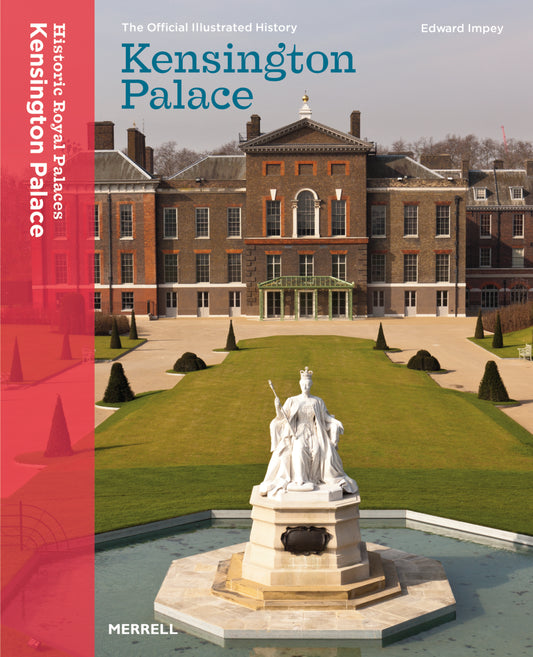
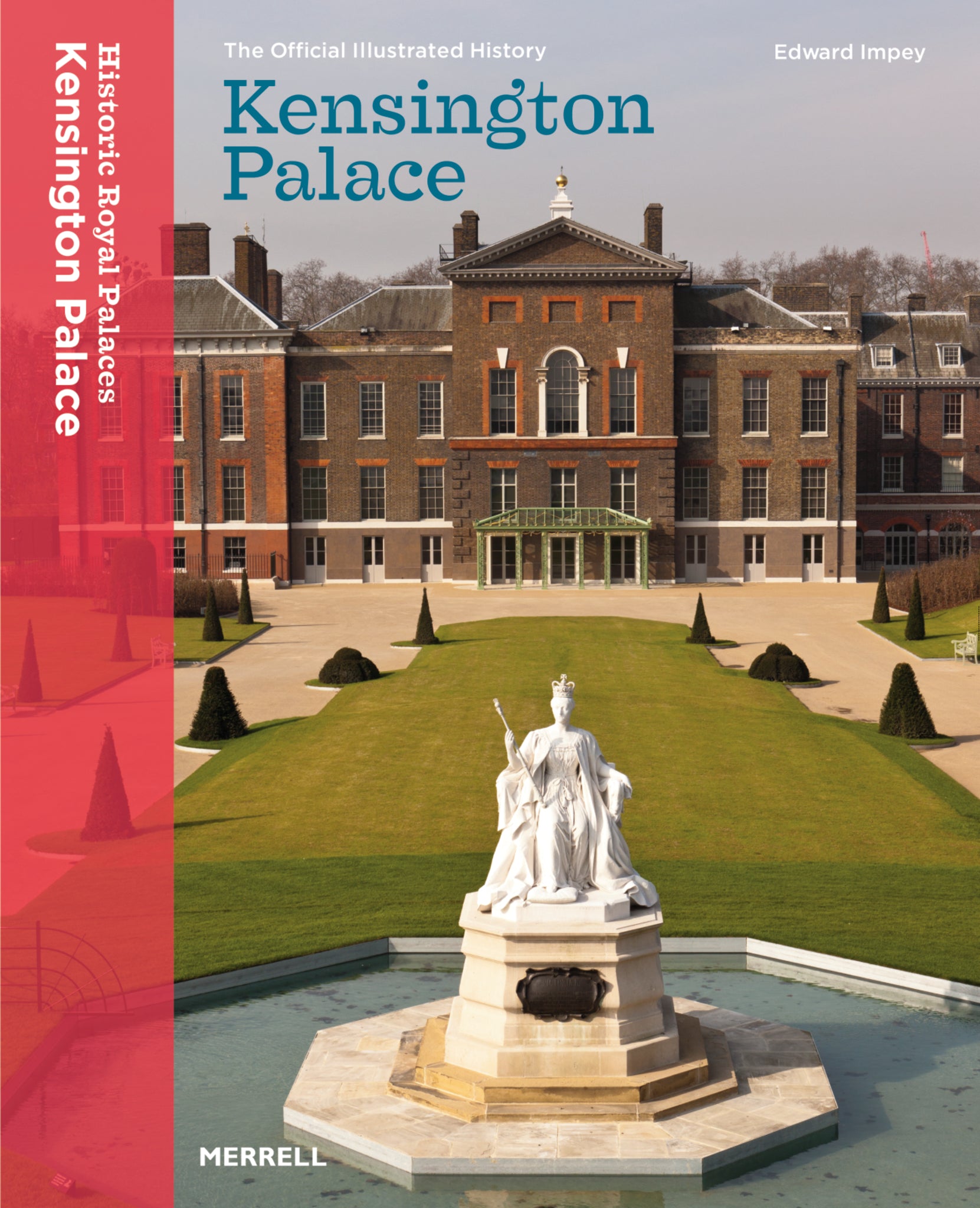
The Story of Kensington Palace
Regular price $34.95 Sale price $27.96 Save $6.99Formerly a private house enlarged by Christopher Wren in the late 17th century to suit the needs of William and Mary, Kensington Palace was the favoured home of five sovereigns until the death of George II in 1760. William and Mary were attracted by its location in what was then a small village to the west of London, with easy access to the capital but with much cleaner air. This remained its greatest advantage for the following two centuries, before it was overtaken by London's rapid expansion. Nonetheless, surrounded by its gardens, the palace still offers the same privacy and tranquillity that so appealed to its original royal owners.
Even after its conversion into a royal residence, the palace remained a rather unprepossessing building, fashioned out of reddish-grey brick. However, this belied its architectural significance, for it was shaped and decorated by some of the country's leading architects, artists, craftsmen and designers, and is now a major national monument. The palace's social and political significance is arguably even greater. Kensington has played host to some of the most important personalities and events in the long history of the royal family. It was the birthplace and childhood home of Queen Victoria, and it was here that she held her first council meeting as monarch in 1837. During the previous century, Kensington had been divided into apartments for the younger generation of royals - an arrangement that continues today. From the late 19th century onwards, it became a visitor attraction, a museum and home to the Royal Ceremonial Dress Collection. Today the palace attracts more than 400,000 visitors a year.
In this new illustrated account, Tracy Borman tells the fascinating story of Kensington from private residence to modern-day royal palace, describing not only the development of the building and its magnificent gardens, but also the dramas and intrigues of court life. Its history is set against a backdrop of events that shaped both Britain and its monarchy: from the Jacobite uprisings of the mid-18th century to the rise of industrialization in the 19th, and the turbulence of world war in the 20th. Here, in the domestic surrounds of the palace, the monarchy evolved and modernized in tandem with the times. The story of Kensington Palace is, in short, the story of the modern monarchy.
Benjamin West and the Struggle to be Modern
Regular price $60.00 Sale price $48.00 Save $12.00West remains today the most neglected and misunderstood of Britain’s great eighteenth-century artists, lacking the social bite of Hogarth, the bravura of Reynolds or the easy elegance of Gainsborough. Nor was he a forceful writer (unlike Hogarth and Reynolds), and he did not possess the intellectual credentials to which so many of his fellow artists aspired. And yet, as Loyd Grossman asserts in his new book, West was extraordinarily in tune with the artistic and intellectual currents that swirled through his turbulent times. He was in the vanguard of both Neoclassicism and Romanticism, and among the very first artists to give visual expression to the exciting and heroic qualities of contemporary events, as opposed to episodes dredged up from the biblical, classical or mythological past, which had long enjoyed the highest artistic status. West’s Wolfe was painted at a time when Europeans were just beginning to abandon the tendency to look backwards. Men and women of letters, philosophers and historians were increasingly convinced that modernity could equal and even surpass the achievements of the ancient Greeks and Romans. This new-found ability to believe in the value of the present and to look forward to a progressive future is very much the foundation of the modern’ attitude that has affected the way we live and think ever since.
While acknowledging that West’s reputation is still precarious, Grossman explains why Wolfe was such an instant success and why this thrilling work of art continues to exercise such a strong grip on our imaginations nearly 250 years after it was first shown to the public. He situates West in the midst of Enlightenment thinking about history and modernity, and seeks to demolish some of the prejudices about the talent and intentions of the young man from the Pennsylvania frontier who attained such eminence at the British court.
Horst
Regular price $50.00 Sale price $40.00 Save $10.00
Basquiat
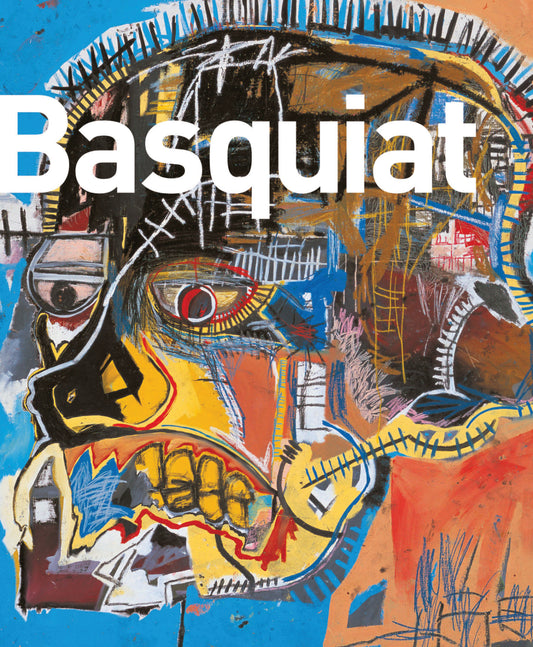
Regular price $24.95 Sale price $19.96 Save $4.99Jean-Michel Basquiat was only twenty-seven when he died in 1988, his meteoric and often controversial career having lasted for just eight years. Despite his early death, Basquiat's powerful œuvre has ensured his continuing reputation as one of modern art's most distinctive voices.
Borrowing from graffiti and street imagery, cartoons, mythology and religious symbolism, Basquiat's drawings and paintings explore issues of race and identity, providing social commentary that is shrewdly observed and biting. This bestselling book, now available in a compact edition, celebrates Basquiat's achievements in the contexts of the key influences on his art. It not only re-evaluates the artist's principal works and their meaning, but also explains what keeps his painting relevant today.
Interior: Louise Bradley
Regular price $80.00 Sale price $64.00 Save $16.00Louise Bradley has been designing timeless, elegant interiors for thirty years. Her distinctive style – combining classic influences with a contemporary edge – has secured her position as one of the UK’s leading interior designers, and has won her international recognition.
Today, Louise’s name is synonymous with relaxed luxury, and she has designed significant residential projects across the globe. Richly illustrated throughout, Interior: Louise Bradley is the first in-depth exploration of Louise’s work, and provides a fascinating insight into her design process and the thinking behind a variety of her most accomplished projects. The featured homes include historic London townhouses, a lofty apartment, sophisticated pieds-à-terre, an Edwardian country house, opulent villas in Kuwait and an Alpine ski chalet, as well as Louise’s own homes – an oasis of calm in the city and a cosy country retreat.
Regardless of the type of project, Louise seeks always to be respectful of the architecture and to uphold and enhance the context and natural setting of a building. Her approach is to create tranquil, supremely comfortable and harmonious spaces that effortlessly combine custom-made furniture and accessories, unique finishes and state-of-the-art technology. While each project is individual, Louise generally prefers a muted, neutral colour palette, one that allows the beauty of a room to unfurl through the use of carefully layered materials, beautiful lighting and strategically placed signature pieces, such as an oversized mirror. Louise’s renowned eye for detail is explored here in four ‘Elements’ sections that focus on Texture, Scale, Function and Reflection.
Louise has long and proudly collaborated with a range of British and European artisans and craftspeople, and the book concludes with brief overview of her London showroom, which displays an extensive selection of her furniture, soft furnishings and accessories. Devotees of Louise’s ‘classic contemporary’ aesthetic will be enthralled to find in Interior: Louise Bradley the opportunity to discover more about her inimitable design vision and her most captivating projects.
The Vanishing Stepwells of India
Regular price $60.00 Sale price $48.00 Save $12.00Some of the most stunning architectural structures in India are to be found below ground: these are its stepwells, ancient water stores.
Stepwells are unique to India and from around the 3rd century CE were built throughout the country, particularly in the arid western regions. Excavated several stories underground in order to reach the water table, these cavernous spaces not only provided water all year long but also fulfilled other functions; they offered pilgrims and other travelers a respite from the heat, and became places in which villagers could socialize. Stepwell construction evolved so that, by the 11th century, the wells were amazingly complex feats of architecture and engineering.
The journalist Victoria Lautman first encountered stepwells three decades ago and now, a seasoned traveller to India, she has devoted several years to documenting these fascinating but largely unknown edifices before they disappear. Of the thousands of stepwells that proliferated across India, most were abandoned as a result of modernization and the depletion of water tables. Often commissioned by royal or wealthy patrons, the wells vary greatly in scale, layout, materials and shape. Those in what is now Gujarat state also served as subterranean Hindu temples that featured columned pavilions and elaborate stone carvings of deities. Islamic wells were generally less flamboyant, but incorporated arched side niches. Today, few stepwells are in use. The majority have been left to silt up, fill with rubbish and crumble into disrepair. Gradually, however, the Indian government and heritage organizations have come to recognize the need to preserve these architectural wonders. In 2014 India’s best-known stepwell, the Rani ki Vav in Patan, northern Gujarat, became a UNESCO World Heritage site.
In her introduction, Lautman discusses why and where the stepwells were built. She reflects on the reasons they became derelict and considers how the appreciation of stepwells is changing with the work of organizations and individuals who aim to protect and restore them. The main part of the book is arranged in a broadly chronological order, with up to six pages devoted to each of c. 80 stepwells, every one unique in design and engineering. The name, location (including GPS coordinates) and approximate date of each well accompany color photographs and a concise commentary by Lautman on the history and architecture of the well and her experience of visiting it. While many of the stepwells are rather decrepit, their magnificent engineering and great beauty cannot fail to impress.
The Gardens of Luciano Giubbilei
Regular price $35.00 Sale price $28.00 Save $7.00
The Vanishing Stepwells of India
Regular price $35.00 Sale price $28.00 Save $7.00Some of the most stunning architectural structures in India are to be found below ground: these are its stepwells, ancient water stores.
Stepwells are unique to India and from around the 3rd century CE were built throughout the country, particularly in the arid western regions. Excavated several stories underground in order to reach the water table, these cavernous spaces not only provided water all year long but also fulfilled other functions; they offered pilgrims and other travelers a respite from the heat, and became places in which villagers could socialize. Stepwell construction evolved so that, by the 11th century, the wells were amazingly complex feats of architecture and engineering.
The journalist Victoria Lautman first encountered stepwells three decades ago and now, a seasoned traveller to India, she has devoted several years to documenting these fascinating but largely unknown edifices before they disappear. Of the thousands of stepwells that proliferated across India, most were abandoned as a result of modernization and the depletion of water tables. Often commissioned by royal or wealthy patrons, the wells vary greatly in scale, layout, materials and shape. Those in what is now Gujarat state also served as subterranean Hindu temples that featured columned pavilions and elaborate stone carvings of deities. Islamic wells were generally less flamboyant, but incorporated arched side niches. Today, few stepwells are in use. The majority have been left to silt up, fill with rubbish and crumble into disrepair. Gradually, however, the Indian government and heritage organizations have come to recognize the need to preserve these architectural wonders. In 2014 India’s best-known stepwell, the Rani ki Vav in Patan, northern Gujarat, became a UNESCO World Heritage site.
In her introduction, Lautman discusses why and where the stepwells were built. She reflects on the reasons they became derelict and considers how the appreciation of stepwells is changing with the work of organizations and individuals who aim to protect and restore them. The main part of the book is arranged in a broadly chronological order, with up to six pages devoted to each of c. 80 stepwells, every one unique in design and engineering. The name, location (including GPS coordinates) and approximate date of each well accompany color photographs and a concise commentary by Lautman on the history and architecture of the well and her experience of visiting it. While many of the stepwells are rather decrepit, their magnificent engineering and great beauty cannot fail to impress.
Watch Me Move
Regular price $39.95 Sale price $31.96 Save $7.99
The Coloring Book of American Modernist Artists
Regular price $14.99 Sale price $11.99 Save $3.00
Books Do Furnish a Room
Regular price $29.95 Sale price $23.96 Save $5.99
The Painted Hall
Regular price $65.00 Sale price $52.00 Save $13.00Published to mark the reopening of the spectacular baroque interior of the Old Royal Naval College in Greenwich after a landmark conservation project, The Painted Hall is a wonderful celebration of what has been called ‘the Sistine Chapel of the UK’. The ceiling and wall decorations of the Painted Hall were conceived and executed by the artist Sir James Thornhill between 1707 and 1726 – years that witnessed the Act of Union during the reign of Queen Anne and Great Britain’s rise to become a dominant Protestant power in a predominantly Catholic Europe. The accessions to the throne of William III and Mary II in 1688 and George I in 1714 form the central narrative of a scheme that also honours Britain’s maritime successes and mercantile prosperity. The artist drew on a cast of around 200 figures – a mixture of historical, contemporary, allegorical and mythological characters – to tell a story of political change, scientific and cultural achievements, naval endeavours, and commercial enterprise against a series of magnificent backdrops.
In the first part of the book, Dr Anya Lucas describes the history and architecture of the building and the background to Thornhill’s commission. The grandeur of his composition, which covers 40,000 square feet, reflects the importance of the space that the paintings adorn: the hall of the new Royal Hospital for Seamen. The Hospital was established in 1694 at Queen Mary’s instigation for men invalided out of the Navy, and was designed by Sir Christopher Wren and Nicholas Hawksmoor. The Painted Hall was originally intended as a grand dining room, but it soon became a ceremonial space open to paying visitors and reserved for special functions. The last naval pensioners left the site in 1869, when it became home to the Royal Naval College, an officers’ training academy.
The passage of nineteen years from the start of the commission to its completion, and the need to navigate contemporary political events, meant that Thornhill was required to rethink the design of his paintings several times. His preparatory sketches for the Painted Hall reveal how carefully he experimented with and planned the content. When he had finished his work, Thornhill wrote An Explanation of the paintings, which was published by the Hospital directors and sold to visitors. This guide is the subject of the second part of our book, by Dr Richard Johns. Johns also explores image and meaning in Thornhill’s decorative scheme, which stretches across three distinct but connected spaces: the domed Vestibule, the long Lower Hall, and the Upper Hall, together presenting a vivid and compelling picture of Britain’s place in the world according to those who governed it at the start of the 18th century.
During the last 300 years, smoke and dirt built up on the fragile painted surfaces of the Hall, and varnish layers fractured under the effects of heat and humidity. In the final part of the book, the specialist conservators Sophie Stewart and Stephen Paine consider historic restorations of the Painted Hall from the 18th century to the Ministry of Works campaign of the late 1950s. The spring of 2019 sees the completion of a ground-breaking conservation programme that has reversed decades of decay and ensured the long-term preservation of the paintings. Now that every inch of decorated surface has been lovingly cleaned and conserved, new photography brings the colour, clarity and vibrancy of Thornhill’s masterpiece to life.
Abstract Expressionists: The Women
Regular price $65.00 Sale price $52.00 Save $13.00This magnificent publication surveys the vital role of women in the development of Abstract Expressionism by looking at more than 50 paintings, collages, and sculptures all accompanied by carefully selected quotes from the artists themselves.
The dominant movement of the New York and San Francisco art scenes of the mid-20th century, Abstract Expressionism is celebrated as the first development in American art to gain international status. The movement is synonymous with the work of Jackson Pollock, Mark Rothko, and Willem de Kooning, but also belonging to this generation who changed the course of modern art were numerous female artists; only in recent years have their contributions received the recognition they deserve. The remarkable women in this exciting new book - among them Perle Fine, Helen Frankenthaler, Sonia Gechtoff, Lee Krasner, and Joan Mitchell - studied at the same art schools as the men, exhibited at the same galleries, and were part of the same social scene. But their work was not shown and reviewed as widely or considered as valuable as that of the men.
This beautiful book presents the works of the Levett Collection, an unparalleled private collection of paintings, drawings, and sculpture by women Abstract Expressionists. Richly illustrated essays by the scholars Ellen G. Landau and Joan M. Marter, leading authorities on the subject, consider, respectively, the vital role of women in the development of Abstract Expressionism and the work of women sculptors of the movement. Full of exuberant, explosive color and densely layered expression, the main part of the book is devoted to more than 50 paintings, collages, and sculptures, all accompanied by pertinent quotes from the women about their artistic practice and concerns.
An illustrated timeline and 35 artist biographies provide further insight, making this volume an essential addition to the study of Abstract Expressionist women, innovators in their own right, whose time in the art-historical spotlight has finally come.
Edward Weston
Regular price $60.00 Sale price $48.00 Save $12.00Presenting Weston's earliest work from a recently discovered family album, Edward Weston: Portrait of the Young Man as an Artist compares the artist's naive first artistic efforts with his latest masterworks to show the persistence and evolution of his singular vision to find essential form in the vernacular with an ever-increasing intensity.
As a young man deeply intuitive and original in his creative expression, Edward Weston demonstrates that his teenage work, beginning with his amateur snapshots, embrace the same significant form as the later work for which he is now considered a master.
City of Wooden Houses
Regular price $60.00 Sale price $48.00 Save $12.00
Branding Terror
Regular price $34.95 Sale price $27.96 Save $6.99Terrorist groups are no different from other organizations in their use of branding to promote their ideas and to distinguish themselves from groups that share similar aims. The branding they employ may contain complex systems of meaning and emotion; it conveys the group's beliefs and capabilities.
Branding Terror is the first comprehensive survey of the visual identity of the world’s major terrorist organizations, from al-Qaeda and the Popular Front for the Liberation of Palestine to the Tamil Tigers. Each of the 60-plus entries contains a concise description of the group’s ideology, leadership, and modus operandi, and a brief timeline of events. The group’s branding — the symbolism, colors, and typography of its logo and flag — is then analyzed in detail.
Branding Terror does not seek to make any political statements; rather, it offers insight into an understudied area of counter-intelligence, and provides an original and provocative source of inspiration for graphic designers.
American Art
Regular price $70.00 Sale price $56.00 Save $14.00For the serious collector and connoisseur of the field of American art of the nineteenth and twentieth centuries, this series of essays will be invaluable.
Twenty-eight writers, each of them highly experienced and an acknowledged expert in their field, examine every aspect of the subject and contribute illuminating and often thought-provoking examinations of a wide variety of topics.
The book is divided into three sections. Part I, The Historical Overview, contains fourteen essays. Their subjects range from the Hudson River School to the art of the American West, American artists in Europe, American Impressionism, Modernism, examinations of the major artists Marguerite Zorach, John Sloan, Everett Shinn, Marsden Hartley, Stuart Davis, Arshile Gorky, John Graham, Willem de Kooning, Guy Pène du Bois and his relationship with the collector Gertrude Vanderbilt Whitney, African American Art, figurative sculpture, and period frame connoisseurship.
Part II deals with Connoisseurship and the Collector, and covers such topics as developing an instinct for quality; dealing in fine art; conservation; choosing wisely in making a collection; the pleasures and perils of collecting art works on paper; researching paintings you may be considering acquiring; the role of qualified art advisors; the anatomy of an auction; knowing the law when buying art; and legal issues for the collector selling art. There are glimpses of the prominent collectors who have contributed so greatly to the American art scene over many years.
Part III covers Current Themes in the Art Market, and what to look out for, examining how to make historical American art relevant to the modern age and avoiding misinterpretation of what could be seen as sensitive subjects such as race; pointers to ways of connecting historical American art and the modern world; a look at why galleries matter; and discussing shifting tastes in American art.
The Gardens of Ulf Nordfjell
Regular price $60.00 Sale price $48.00 Save $12.00The internationally renowned garden designer Ulf Nordfjell has created many stunning and celebrated gardens and parks. He has won numerous awards (including RHS Chelsea Gold Medals) for his gardens, which combine the sweep and presence of masterful place-making with a keen plantsman’s eye for the detail that can be enjoyed through variety, combination, and interest in color, texture, and movement.
The ten new projects presented in this book – from an island garden in coastal Sweden to a Stockholm town garden to a villa in the South of France – are more than just a selection of beautiful gardens, however. They also provide the opportunity to consider how parks and gardens are affected by a changing climate as well as the changing seasons. The book takes the form of an incomparable garden journey from northern Sweden to the Mediterranean, a journey that passes through many latitudes and climate zones. The informative text gives an insight into the ideas behind the design of estates, urban parks and domestic gardens. But Nordfjell also grapples with the great question of our time: the changes in the climate that will affect – that are already affecting – our parks and gardens in the short and long term.
Tricia Guild: In My View
Regular price $65.00 Sale price $52.00 Save $13.00As one of the world’s foremost interior designers, Tricia Guild has a passionate belief that the way we choose to live has a significant impact on our well-being and happiness. The homes that we live in, the things that we surround ourselves with, and the everyday choices we make, can profoundly affect our outlook and positivity. It is no surprise, then, that Tricia practices what she preaches: she finds it impossible to separate her work as a designer from other aspects of her life, and she believes that, in seeking creative inspiration in each experience, especially in enjoying the things that bring pleasure to our lives, we can perfect the art of living.
For Tricia, Italy is a particularly enduring passion: the culture, landscape, architecture, food and music all strike a creative chord. She has had a house there for many years. The last home was a rustic farmhouse, but when Tricia and her family began the search for a new property, she knew it would be decidedly different. In this new Italian home, Tricia found the perfect opportunity to create a contemporary interior reflecting a love of modernity and simplicity that has evolved over the years. In Tricia’s view, modernity does not mean a lack of colour, pattern or texture; a contemporary interior can be both decorative and minimal – in fact, a confident use of colour and pattern can be the very thing that makes it even more wonderful. Here, working with the architect Stephen Marshall and the garden designer Arne Maynard, Tricia has created a special home – a contemporary interpretation of the local vernacular – that represents her kind of modern.
In In My View, Tricia charts the creation of her stunning Italian home set amid verdant oil groves. We are taken on an extensive tour of the breathtaking property, right from the entrance steps and the rooms/spaces in the main house to the outdoor dining areas, studio, guest accommodation, kitchen garden and pool house. Stephen and Arne offer insight into their collaboration with Tricia, describing, among other things, the selection of materials – local stone, concrete, glass and galvanized metal – for the house, and the planting on the terraces and around the rolling lawns of the garden. Local artisans and craftspeople also played a crucial role in bringing this truly magnificent yet relaxing and comfortable home to life.
Tricia also presents her new London home – a Victorian townhouse in a corner plot, where, with the same team of Stephen and Arne – she set about creating an urban retreat comprising three distinct areas to accommodate living, dining and resting. While life in Italy for Tricia is about seasonality and nature, her life in London is centred on her work at Designers Guild, the company she founded in 1970. Her London home therefore is, she says, ‘sharply experimental’, her version of a lab, where she tests designs and assesses how colours work together. In this section of the book, Tricia provides a glimpse of working life and the design process at the company headquarters in west London.
Throughout the book, Tricia shares the moodboards that helped her to realize her dream homes in Italy and London. For Tricia, moodboards are vital in the early stages of any project, large or small, because they help to stimulate the creative process, even define how one wishes to live, by establishing the language, rhythm and style of each space. The choices that one makes here, the process of selection and careful editing, lie at the heart of finding one’s own style. In My View reveals the personal choices have shaped the way Tricia lives now, and will inspire the reader to develop their individual style and thus create their own special view.
Scott Brownrigg: Architecture + Progression
Regular price $70.00 Sale price $56.00 Save $14.00For over a century, Scott Brownrigg has been at the forefront of architectural innovation, designing the spaces where we live, work, and learn.
With studios across the UK and in the US as well as worldwide, the award-winning practice is renowned for its creative, client-focused, and environmentally responsible approach to architecture. This new book offers an in-depth look at the company's evolution, its design ethos, and the landmark projects that continue to push boundaries across sectors and continents.
From large-scale masterplans and advanced science parks to cutting-edge workplaces and inspiring schools, the work of Scott Brownrigg reflects a unique blend of technical rigor, aesthetic sensitivity, and visionary thinking. Illustrated with high-quality photography, concept sketches, and detailed plans, this volume showcases the breadth and depth of the practice's portfolio. Chief Executive Darren Comber's introduction presents an insider's view of the collaborative processes and multidisciplinary thinking that drive Scott Brownrigg's work, from initial concept to completion. Essays and concise project texts explore notable buildings across a wide range of sectors: aviation, offices, interior design, business and science parks, rail, defense, education, residential, and mixed use. Each thematic chapter concludes with a 'Future Thinking' text that considers ways to address the complex challenges and opportunities ahead. Whether seeking to deliver urban regeneration, net-zero ambitions or future-ready infrastructure, the practice demonstrates a commitment to shaping a better built environment. Scott Brownrigg: Architecture + Progression is both a celebration of the firm's achievements and a forward-looking vision for the future of architecture in a changing world.
- Celebrates over 100 years of history of the internationally acclaimed architecture practice Scott Brownrigg
- Combines over 40 project texts and eight essays on the practice's key sectors, including aviation, offices, defense, and business and science parks
- 'Future Thinking' texts explore the opportunities and challenges in the years ahead
- Includes over 25 sketches and plans alongside more than 130 photographs
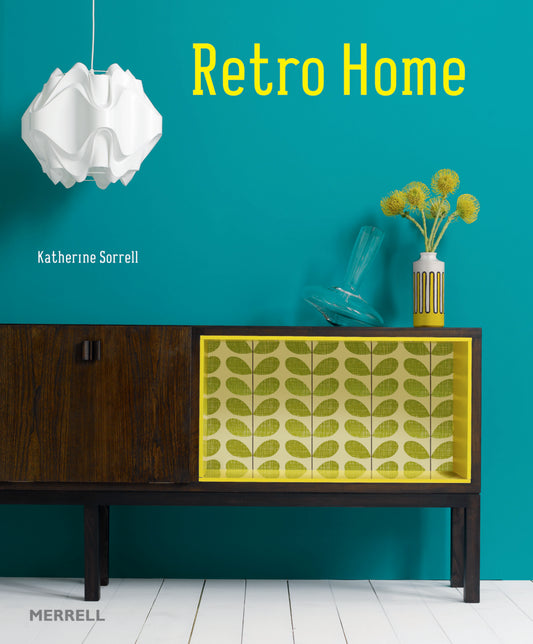
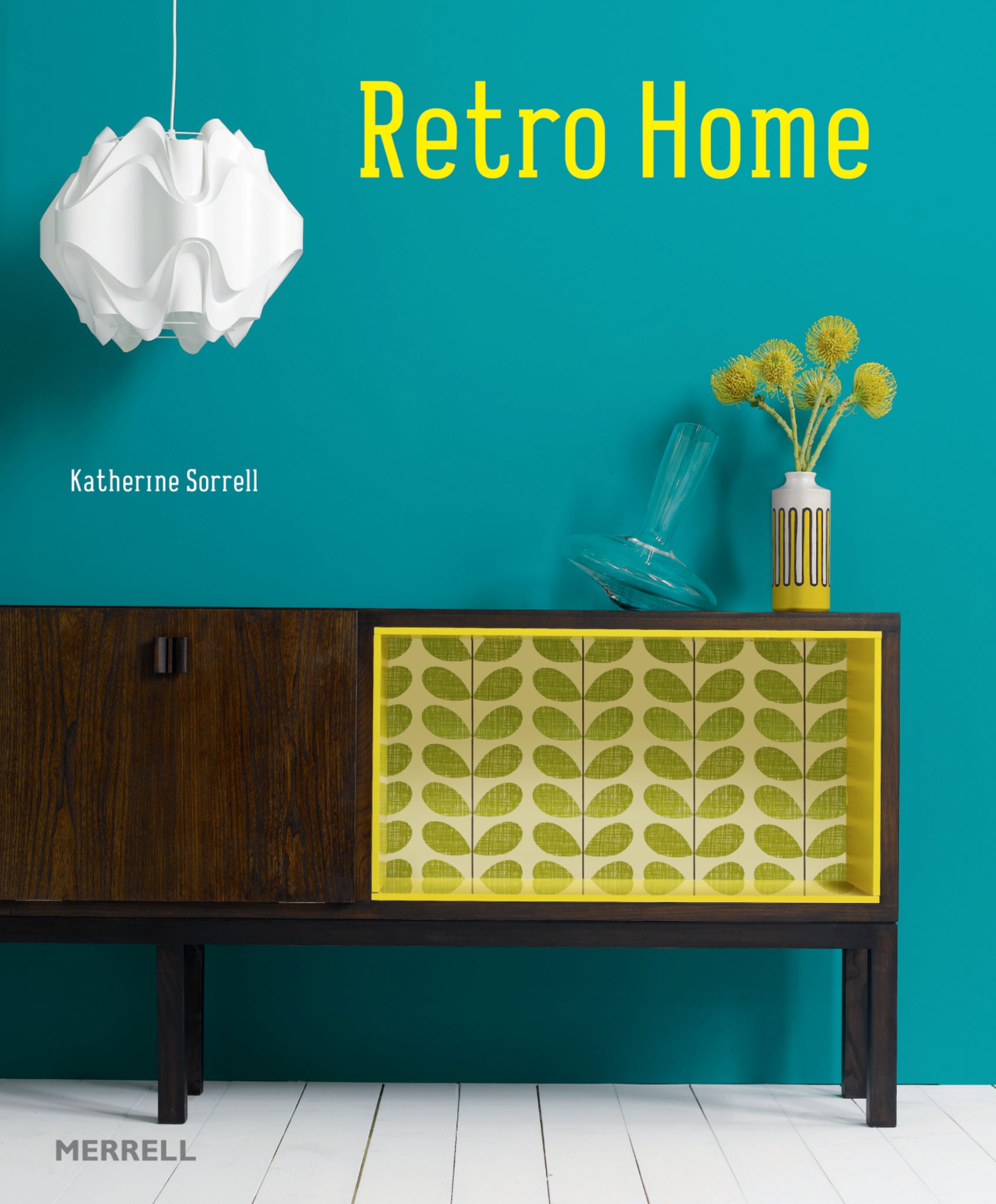
Retro Home
Regular price $39.95 Sale price $31.96 Save $7.99
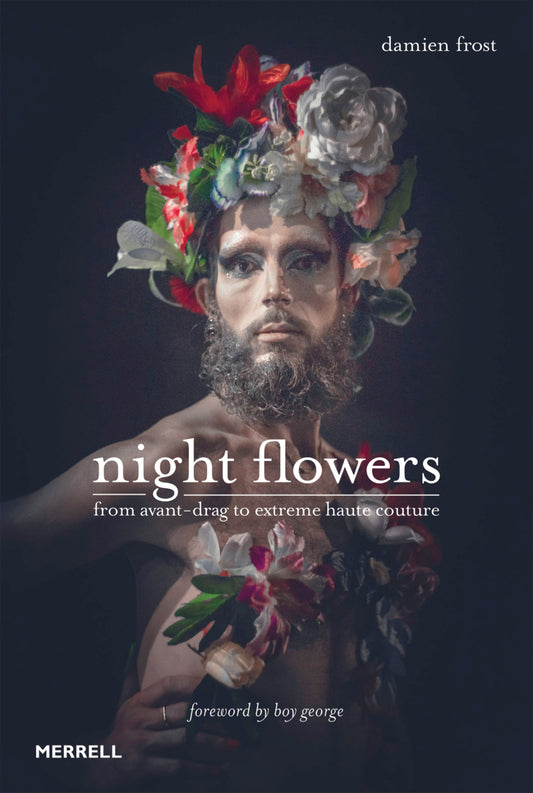
Night Flowers
Regular price $29.95 Sale price $23.96 Save $5.99These portraits are the result of a project begun by Damien Frost in early 2014 where he went out every night to wander the streets of London in search of its most colourful inhabitants. In so doing, Damien first stumbled across the world of the 'Night Flowers' and he began documenting the people and their wild array of looks and creative expresssion.
For the most part, the photographs are incidental portraits taken after chance encounters on the streets, down dark alleys or backstage in a club and often in cramped and crowded circumstances - the poise and grace of the subjects belying the quizzical looks or comments or event taunts thrown at them by passers-by. Damien's photographs reveal a massive array of artists, dancers, designers, performers and others who were turning themselves into an ephemeral artwork that would last for a few hours at most.
Cult Perfumes
Regular price $49.95 Save $-49.95
Buckfast Abbey: History, Art and Architecture
Regular price $90.00 Sale price $72.00 Save $18.00
Future Beauty
Regular price $59.95 Sale price $47.96 Save $11.99
Alvar Aalto: Architect
Regular price $65.00 Sale price $52.00 Save $13.00This new biography of Aalto is the first to comprehensively cover his life, from the backwoods of Ostrabothnia to international fame and all of his buildings, from the early alterations and extensions to shops and houses in Jyvaskyla to Finlandia Hall. It draws on Aalto’s archive, recollections of former employees and contemporaneous publications to fully explore Alvar Aalto the architect, rather than simply Alvar Aalto’s architecture. For the first time, his life is set in the context of the events that surrounded and shaped it the Finnish Civil War, the Great Depression, The Winter and Continuation Wars, the post-war boom in education, Finland’s industrialisation and eventually the social revolution of the 60s which led to his characterization as a member of a Finnish elite and temporary unpopularity. It covers his life from his childhood, growing up in regional Jyvaskyla and Alajarvi, his architectural studies in Helsinki, combat in the Civil War through to the founding of his first office, his early neo-classical work and his international breakthrough with the completion of Paimio Sanatorium and Viipuri Library. It deals with his personal life, his marriage to Aino, what working life in his first office was like, the architectural competitions, his key friendships and continuous financial difficulties. As his career progressed, it explores the patrons who were so important to him the Gullichsens and the founding of Artek, his new American friends, professorship at MIT. After the war, the death of Aino, marriage to Elissa and the period of his greatest architectural achievements - Saynatsalo Town Hall, Otaniemi University and Imatra Church. It considers the organisation of his new office in Helsinki, his expanding team, fame and eventually vanity. The book seeks to understand what drove him, the combination of skills, talents and character traits, which led to his extraordinary global success.
As you will be aware, there is no shortage of books on Alvar Aalto, or to be more precise, there is no shortage of books on Alvar Aalto’s Architecture. (Only one previous biography exists, published first in 1984 and now out of print). This book is about an architect and his architecture, written by another architect, not an architectural historian. It is the first, frank and fully-comprehensive biography of Alvar Aalto.
Fragile: Birds, Eggs and Habitats
Regular price $60.00 Sale price $48.00 Save $12.00Birds’ eggs are true wonders of the natural world: they are strong enough to protect the embryo as it grows and to withstand incubation by the parent, yet sufficiently fragile to allow the chick to hatch. Little wonder that the enormous diversity of avian eggs – the amazing range of shapes, sizes, colours, textures and patterns – has long fascinated us. Since boyhood, the renowned landscape photographer Colin Prior has had a passion for wild birds. For him, birds are the embodiment of nature, and fundamentally enrich the experience of being outdoors. This stunning new book presents Prior’s remarkable images of birds’ eggs side by side with his dramatic photographs of the birds’ natural habitats. At a time when many human influences are having an adverse impact on the environment, these habitats are equally fragile and vulnerable to change. Loss of habitat is, in turn, a major factor in the decline of wild bird populations.
It has been illegal to take any birds’ eggs from the wild in Great Britain since 1954, and since 1982 it has been against the law to possess the egg of any wild bird. The eggs featured in this book belong to the National Museum of Scotland in Edinburgh, which holds one of the world’s largest collections of birds’ eggs. The eggs were collected legally during the late 19th and early 20th centuries and bequeathed to the museum by private collectors. Prior set up a studio at the museum and spent five weeks photographing more than 300 eggs using the latest digital technology. Each photograph is a compilation of between 40 and 80 separate exposures that were then blended into a single image using specialist software. The final image is an exquisite, almost three-dimensional rendition of the egg, pin-sharp from the front to the back. The eggs vary in size from that of the tiny goldcrest, the UK’s smallest bird, to that of the mute swan.
In his introduction, Prior describes how his love of the natural world was nurtured by the endless hours he spent in the countryside around the Glasgow suburb where he grew up; how he overcame the technical challenges of photographing the eggs; how the featured eggs were selected from the museum’s collection; and how the photography of each bird’s habitat was completed. In his essay, the Scottish environmentalist Professor Des Thompson reflects on the state of nature and the relationship between nesting and habitats. In the main part of the book, the birds’ eggs are arranged into chapters according to the species found in a particular habitat, such as ‘Mountain and Moorland’ and ‘Seashore and Estuary’. The caption beneath each egg details the common and scientific name of the bird, the date the egg was collected, the size of the clutch, and the egg’s dimensions. Each egg is presented in a diptych with a photograph of the bird’s habitat, painstakingly captured at a time of year when the dominant colours of the landscape most closely resemble those of the egg. Fragile – the culmination of ten years’ work – not only showcases the inherent beauty of birds’ eggs, but also serves as a powerful reminder to protect the birds’ natural habitats and thereby the birds themselves.
Made in London
Regular price $65.00 Sale price $52.00 Save $13.00A fascinating look behind the doors of the workshops and factories of London that make everything from glass eyeballs to automobiles.
|
Walking through London’s busy streets, you would not imagine that the city boasts one of the world’s most diverse manufacturing scenes. But throughout its 32 boroughs, people are making propellers, bicycles, ballet shoes, military uniforms, cardboard packaging, neon signs, umbrellas, chocolate truffles, craft beer and much more. Today there are around 4000 manufacturers based in Greater London, building on the city’s rich heritage of making. While producing world-class goods, they are all jostling for space and dealing with familiar challenges, such as rising rents and trying to keep developers at bay.
This book provides a fascinating glimpse behind the doors of London’s making and manufacturing companies: the processes and spaces that are so often hidden from view, and the people who work there, from sole traders to workforces numbering in the hundreds. The introduction is written by Mark Brearley, an architect and Professor of Urbanism at London Metropolitan Museum who also owns the London-based tray and trolley manufacturer Kaymet. The main part of the book is arranged into chapters grouping similar types of manufacturer. In total, 50 businesses are featured, ranging from the Ford Motor Company in Dagenham, the biggest factory in London; to William Say, third-generation tin-can makers, in Bermondsey; Nichols Brothers, bespoke woodturners, in Walthamstow; Growing Underground, a salad farm in old air-raid shelters under the streets of Clapham; and Jost Haas, Britain’s last glass-eye maker, in Mill Hill. Specially commissioned photography by Carmel King captures the making process, the materials, the finished products and the staff at each manufacturer, while concise, engaging descriptions are provided by the design and architecture journalist Clare Dowdy. Made in London is a timely celebration of the vibrant manufacturing scene that contributes so much to the creativity, vitality and economy of the city.
|
Danger! Women Artists at Work
Regular price $39.95 Sale price $31.96 Save $7.99
The Gardens of Luciano Giubbilei
Regular price $69.95 Sale price $55.96 Save $13.99The name and reputation of Luciano Giubbilei have been growing steadily since first publication of this book in 2010. His list of American clients rises year on year and we are bringing this title back into print in May to coincide with a major speaking tour in the US and abroad.
Luciano has been creating serenely beautiful gardens in locations on three continents since 1997. He is best known for the understated elegance of his designs, paying careful attention to the composition of space and constantly evolving his approach both in response to his clients and as his ideas develop.
This book examines 12 significant gardens from Luciano’s portfolio, and fully documents each project, from the preparation of mood boards to final planting and finishing. The book includes sections on site development, nursery production and the sourcing of plants, and the artists and craftsmen with whom Luciano works, detailing his working methods and sources of inspiration. Featuring planting plans, documentary images and photographs from award-winning gardens photographer Steven Wooster, the book paints a detailed portrait of this acclaimed garden designer.
Russian Icons
Regular price $120.00 Sale price $96.00 Save $24.00A beautifully and lavishly illustrated book on an important private collection of late Russian icons written by distinguished art historians.
The artistic quality and historical significance of Russian icons - religious paintings of characters and scenes from the Eastern Orthodox Bible - have been of a consistently high order ever since they first emerged in that country in the eleventh century CE. Less constant, however, have been the care with which these works have been treated and their commercial value. Russian icons were at various times encouraged, then vandalized, then exported, then banned from export; during the worst privations under the Tsars and the Bolsheviks, people felt forced to use them as bartering counters and even sometimes as firewood.
After the collapse of Communism and the disintegration of the Soviet Union in the 1990s, Oleg Kushnirskiy (born 1960) came to the West and set about assembling a collection of Russian icons in the United States, where they would be well protected from physical decay and safe from further religious and political upheavals. Acquired from a variety of sources - ecclesiastical, civic, and domestic - the Kushnirskiy Collection is now stored in New York and exhibited periodically in universities, galleries, and museums in numerous locations, thus fulfilling the collector's ambition to bring these masterpieces to a wider audience than ever before.
This complete catalog features sixty works, the oldest created in the mid-seventeenth century, the most recent in the early twentieth. Accompanying the images are insightful analytical commentaries by distinguished art historians.
- A clear conspectus of 300 years of Russian religious art
- Beautifully illustrated throughout with over 400 photographs of complete icons and details
- Readable text that explains the artistic processes and the historical context
Kiftsgate Court Gardens
Regular price $69.95 Sale price $55.96 Save $13.99Equally remarkable is the fine balance between continuity and gentle evolution that the visitor finds at Kiftsgate. This is largely because the garden has belonged to the same family since its creation 100 years ago. Three women have tended Kiftsgate, each one its driving force for a third of a century, and each building on the legacy of the previous generation. In 1919 Heather Muir and her husband, Jack, bought the house, which stands on a relatively narrow plateau from which a bank plunges 100 feet. Heather gave Kiftsgate its structure, laying out the semi-formal gardens by the house, planting the tapestry hedge and rose garden, and terracing the banks. In 1954 Heather was succeeded by her daughter, Diany Binny, who extended and developed her mother’s planting, made more borders and paths, and refashioned the White Sunk Garden. Since the late 1980s Diany’s daughter, Anne Chambers, has been at the helm, further modernizing the garden and its planting, creating new areas of interest, and opening more often to the public. As Robin Lane Fox, who has written the foreword, comments: ‘There is nowhere else in Britain that has such a family tradition of planting and dedication … It is intimate but many-sided, evolving but with roots in a remarkable past.’
This beautiful new book – the first dedicated to Kiftsgate – is structured in two main parts. For the first, ‘The History’, Vanessa Berridge has had exclusive access to the Kiftsgate archive, which contains not only family photographs but also letters from their gardening friends, helping us to understand why and how Heather, Diany and Anne have gardened. Among the circle of friends and acquaintances who feature are Lawrence Johnston of Hidcote Manor (Kiftsgate’s neighbour); Vita Sackville-West, the creator of Sissinghurst Castle Garden; and the horticulturalist Graham Stuart Thomas, gardens adviser to the National Trust.
The second part of the book takes the reader on an extended tour of the garden, illustrated by the glorious photography of Sabina Rüber. The tour concludes with notes on Kiftsgate’s signature plants and Anne Chambers’s personal reflections on this, one of the great gardens of England.
London of the Future
Regular price $59.95 Sale price $47.96 Save $11.99The proposals in London of the Future aim to predict and prescribe how the metropolis might be governed, organized, and designed in years to come and to provoke debate among planners, architects, and developers not only in London but in all major cities throughout the world.
Over the course of eighteen essays, experts in various fields - urbanism, architecture, engineering, manufacturing, futurology, journalism, and more - examine possibilities for reimagining and improving many aspects of the city. These writers consider changes both radical and minor that could shape London into a more resilient city and a fairer, healthier place to live.
- The architectural commentator Peter Murray provides an engaging introduction. Discussing some of the more interesting and, in some cases, eccentric proposals of the earlier book, he paves the way for an entirely new and up-to-date collection of ideas for the twenty-first century and beyond.
- The architectural critic and consultant Hugh Pearman ponders the dangers and uses of prediction while proposing that London be improved and made more liveable, rather than expanded and developed.
- The architect Carolyn Steel continues the focus on making the city a more pleasant place to live by discussing the future of its food supplies, considering the place of farming within the city's boundaries to spearhead urban renewal in a newly environmental age.
- The engineer Roma Agrawal advocates increasing cross-disciplinary understanding in the building and engineering world so that tomorrow's engineers can be curious without boundaries.
- Yvonne Farrell and Shelley McNamara of the architectural practice Grafton interrogate the meaning of permanence,, and what London's inhabitants will need from their buildings.
- Urbanist Kat Hanna discusses the future of two of London's identities: the Central Business District and the Financial Services Hub.
- Mark Brearley, an architect and proprietor of a long-established London manufacturer, writes on the subject of the local high street and how the city is strengthened by these social, commercial hubs.
- Gillian Darley, a writer and historian, looks at the future of heritage and how the city's past can be conserved and contribute towards its future.
- Sarah Ichioka is an environmental and social consultant, and her approach focuses on the climate emergency and natural solutions to make the city more resilient.
- The architect Indy Johar puts forward radical ideas about the shift that is required of all London's inhabitants if the city is to transform itself for the future.
- Smith Mordak, an architect and engineer with Buro Happold, advocates for large infrastructural changes for sustainability.
- The cultural practitioner and writer Yasmin Jones-Henry, meanwhile, advocates for the value of cultural activities, powered by diversity.
- The theatre director Jude Kelly calls for London's broadly inclusive cultural past to be put at the center of future plans and imagines a place for AI in that future.
- Dame Baroness Lawrence, a campaigner who has promoted reforms in the police service, uses housing, education, policing, and racial equality to put forward her vision for a more equitable London.
- The journalist Anna Minton sets the extraordinarily high values of property in certain areas of the city against a crisis of social housing and the poor quality of low-income housing and asks how the problem of housing inequality can be solved.
- The architect Claire Bennie also examines how housing can be made fairer and available to more people.
- The futurologist Mark Stevenson imagines a commercial, building-focused solution to the problem of climate change.
- The journalist Tony Travers imagines London's future in relation to its survival of past crises.
- Neal Shashore, an architectural historian, focuses on the approach to educating future designers of the capital, to champion inclusivity and focus on the needs of people and communities.
Design Between the Lines
Regular price $50.00 Sale price $40.00 Save $10.00The car industry and the way in which cars are created have changed beyond all recognition over the last half-century. Automotive styling was once the grudging afterthought when the engineers had finished their work. Now, following a short flirtation with exotic Italian design houses, it has evolved into sophisticated design carried out by multitalented in-house teams honing carefully crafted brand identities.
One of the visionary designers at the forefront of that revolution has been Patrick le Quément. Most widely acclaimed for his 22 years in charge of Renault Design, resulting in such standout models as the Twingo, Scénic and Avantime, le Quément has enjoyed a 50-year career that has also taken in Simca, Ford and Volkswagen-Audi. In his foreword to the book, Stephen Bayley calls le Quément ‘perhaps the very most original designer working in the conservative car business at the turn of the millennium’. Some 60 million cars across the world now bear the unmistakable stamp of le Quément.
Design: Between the Lines is not a straightforward autobiography; rather, le Quément charts his journey through five decades of thoughts, actions, failures and successes. He offers fascinating commentaries on design and the creative process, and on some of the extraordinary automotive brands that make up our shared cultural heritage. As Bayley notes, for le Quément, design is ‘as much a matter of thinking as a matter of drawing’. On a broader, more philosophical level, le Quément also shares his views about life in general and that remarkable contraption called ‘the automobile’, which has so influenced the lives of millions of people the world over from the late 1800s to the present day.
Presented as a series of 50 brief essays or ‘perspectives’, le Quément’s thoughtful and astute observations from the street, from the design studio and from his seat in the boardroom give the reader a penetrating and often amusing insight into the high-level workings of a global industry, its triumphs and tragedies, and the foibles of the decision-makers responsible for running it. A lively complementary text by the automotive journalist Stéphane Geffray accompanies each of le Quément’s perspectives, and illustrations are provided by the automobile designer Gernot Bracht. Design: Between the Lines will appeal to all motoring fans and enthusiasts of good design. As Chris Bangle, the former Director of BMW Design, remarks: ‘Few car designers have had a career so filled with innovative successes that they have inspired a whole industry; fewer still have the skills to share it. Engaging and revealing, Patrick relates his personal experience and deep knowledge of car design in a very enjoyable manner.’
California Concrete: A Landscape of Skateparks
Regular price $50.00 Sale price $40.00 Save $10.00Southern California is the birthplace of skateboard culture and, even though skateparks may be found worldwide today, it is where these parks continue to flourish as architects, engineers and skateboarders collaborate to refine their designs.
The artist Amir Zaki grew up skateboarding, so he has an understanding of these spaces and, as someone who has spent years photographing the built and natural landscape of California, he has a deep appreciation of the large concrete structures not only as sculptural forms, but also as significant features of the contemporary landscape, belonging to a tradition of architecture and public art. To capture the images in this book, Zaki photographed in the early-morning light, climbing inside the bowls and pipes while there were no skaters around.
Each photograph is a composite of dozens of shots taken with a digital camera mounted on a motorized tripod head. The resulting images are incredibly high resolution and can be printed at a large scale with no loss of detail. Their look is unusual in that Zaki’s lens is somewhat telephoto, which has the effect of flattening space, yet the angle of view is often quite wide, which exaggerates spatial depth. The technology also allows Zaki to photograph certain areas from difficult positions that would otherwise be impossible to capture. Zaki makes the point that, by climbing deep inside these spaces, the visual experience is fundamentally different from viewing them from outside. In his text, Tony Hawk – one of world’s best-known professional skateboarders – describes how Zaki’s photographs of empty skateparks and open skies evoke memories of the idyllic freedom and the sense of potential that he felt when he first visited a skatepark as a child and saw skaters flying like birds in and out of the concrete pools and bowls.
Hawk has skated in some of the parks featured in this book, and for him several of Zaki’s images, taken from the skater’s perspective, recall the experience of trying to learn a particular trick. A beautiful full pipe that looks like a barrelling wave may be, for Hawk and other seasoned skateboarders, a perfect example of function and form fitting together flawlessly in a well-designed skatepark.
In his essay, the Los Angeles-based architect Peter Zellner offers a different perspective. Skateparks are made by excavating large open areas of land within city parks. The forms inside them may represent ocean waves, mountainous terrain and other features from nature, but they are permanently frozen in cement like Brutalist architecture. Every shape, line, transition, hip, tombstone, coping, stair, flow, tile, bowl, pipe, spine, rail, ledge, roll-in, kidney, clover, square and bank serves a specific purpose – to provide a challenging thrill and maximum pleasure for the rider. In this sense, skateparks epitomize function over form. In Zaki’s mesmerizing photographs, however, these concrete landscapes suggest a more complex and integrated relationship with the history of design and architecture in Southern California.
Ed Kluz
Regular price $55.00 Sale price $44.00 Save $11.00
Evocations of Place
Regular price $45.00 Sale price $36.00 Save $9.00
FAMM: Female Artists of the Mougins Museum, France
Regular price $75.00 Sale price $60.00 Save $15.00A breathtaking sanctuary dedicated exclusively to the work of extraordinary women artists
For centuries, art history has largely overlooked the accomplishments of women artists. With the opening of the Female Artists of the Mougins Museum in France—or FAMM for short—this imbalance in the recognition and appreciation of women's art from around the world is being redressed. Through its paintings, sculptures, and photographs drawn from the remarkable Levett Collection, FAMM is proud to tell the story of female creativity from Impressionism to the present day.
Written by a range of female curators, academics, and art historians, this superb book presents more than 230 spectacular artworks from FAMM and the wider Levett Collection.
This publication is bookended by a lively introduction and an illustrated timeline that highlights significant events involving women artists and some of the most important stylistic and thematic currents in the visual arts since the mid-19th century. In the main part of the book, the featured works are divided into six themed sections that represent a compelling artistic journey: from visionary Impressionists such as Berthe Morisot and Mary Cassatt, and daring Surrealists such as Leonora Carrington, Leonor Fini, and Dorothea Tanning; through bold figuration by Elaine de Kooning, Alice Neel, Jenny Saville, and Sahara Longe, and powerful abstract works by Lee Krasner, Joan Mitchell, Helen Frankenthaler, Alma Thomas, and Lalan. The final two sections, devoted to sculpture and contemporary art, include Barbara Hepworth, Louise Bourgeois, Sarah Lucas, Howardena Pindell, Tracey Emin, Marina Abramovic, and Stacey Gillian Abe, among many others. The author of each section contributes a concise overview essay as well as extended captions that provide an engaging commentary on each selected artwork and the artist behind its creation.
An authoritative book on an outstanding collection, this is a true celebration of women in art - whether revered innovators from the last 150 years or newly emerging stars.
Bikinis, Bell-bottoms and Little Black Dresses
Regular price $27.95 Sale price $22.36 Save $5.59
Out There: New Architecture Across America
Regular price $85.00 Sale price $68.00 Save $17.00Each day, architects across the United States are busy planning and constructing individual homes, public buildings, and civic spaces rooted in local culture and context. Yet, to many, the perception prevails that American architecture is driven largely by the traditional centres of power on the East and West coasts. Out There challenges that notion, spotlighting practices throughout the whole of the US that are deeply grounded in place and community. What unites the firms featured in this volume is a commitment to architecture’s civic, social, and environmental responsibilities. Many prioritize sustainability, adaptive reuse, housing, and social justice. Even in an increasingly homogenized, hyper-connected world, these architects remain locally focused.
The book begins with a foreword by Marlon Blackwell, recipient of the 2020 Gold Medal of the American Institute of Architects, and an introduction by Robert Ivy, former editor-in-chief of Architectural Record. Essays by Cathleen McGuigan, also a former chief editor of Architectural Record, and Peter MacKeith, Dean of the Fay Jones School of Architecture in Fayetteville, AR, consider, respectively, key figures in the rise of architectural regionalism in the United States over recent decades, and contemporary regional architecture in other countries. The book’s main section profiles 50 US practices and 170 projects, including Observation Studio (Oregon), Modus Studio (Arkansas), Rand Elliott Architects (Oklahoma), Renée del Gaudio Architecture (Colorado), Salmela Architect (Minnesota), and Duvall Decker (Mississippi), recipient of the 2026 AIA Architecture Firm Award. The texts explore the ethos and design philosophy of each firm, as well as selected projects from the last ten years. Out There presents a varied, vibrant picture of architectural excellence anchored in local culture, geography, and community needs all across the US. It affirms a timeless truth: where we work profoundly influences what we create. Ultimately, architecture remains inseparable from place.
- A definitive and authoritative survey of contemporary American regional architecture
- Features 170 projects by 50 practices, all fully illustrated with over 750 photographs and plans
- A vital resource for architects, design professionals, urban planners, academics, and anyone interested in the future of architecture across America
Art of the Middle East
Regular price $39.95 Save $-39.95
Fashion Futures
Regular price $59.95 Sale price $47.96 Save $11.99
Grounded in Clay: The Spirit of Pueblo Pottery
Regular price $70.00 Sale price $56.00 Save $14.00No art form is more associated with the Native Americans of the Southwest than pottery.
For centuries, Pueblo people have made beautiful pottery, often painted with intricate designs, for everyday activities such as cooking, food storage and gathering water, and for ceremonial use. Vessels of these types have been found at ancient sites including Chaco Canyon and Mesa Verde. The tradition of pottery-making continues to thrive among Pueblo communities in the Southwest, and while pottery is still made for practical purposes, it is also commonly produced for the art market. Since the time of the Ancestral Puebloans, pottery has been made predominantly by women. The pots are created from natural clay using a coil method; they are hand-painted and then fired outdoors. Designs vary from one Pueblo to another, but many symbols and motifs are shared by the Pueblos.
An impressive survey of more than 100 pieces of historic Pueblo pottery, Grounded in Clay is remarkable for the fact that its content has been selected by Pueblo community members. Rather than relying on Anglo-American art historical interpretations, this book foregrounds Native American voices and perspectives. More than 60 participants from 21 Pueblo communities in the Southwest – among them potters and other artists, as well as writers, curators and community leaders – chose one or two pieces from the collections of the Indian Arts Research Center at the School of Advanced Research in Santa Fe, New Mexico, and the Vilcek Collection in New York. They were then given the freedom to express their thoughts in whichever written form they wished, prose or poem. Their lively, varied contributions reveal the pottery to be not only a utilitarian art form but also a powerfully intangible element that sits at the heart of Pueblo cultures. With magnificent photography throughout, Grounded in Clay showcases the extraordinary history and beauty of Pueblo pottery while bringing to life the complex narratives and stories of this most essential of Native American arts.
Torn Signs
Regular price $60.00 Sale price $48.00 Save $12.00This new book, published to accompany an exhibition at the Vilcek Foundation in New York focuses on two series of works – ‘Torn Signs’ and ‘Semana Santa’ – that Crawford developed mostly over the course of the last 20 or so years of his life (although his first ‘Torn Signs’ photographs date from the late 1930s, thus making this Crawford’s most enduring theme or motif). Rick Kinsel, President of the Vilcek Foundation, begins by considering how and why his travels to Europe, especially to Andalusia in Spain, were so inspiring to Crawford. Semana Santa, or Holy Week, the last week of Lent, is observed in Seville with public processions of penitential confraternities through the streets. Witnessing this event proved to be a moving experience for Crawford, and he revisited the subject of the penitents, with their distinctive conical hats, multiple times across a number of years.
The art historian William C. Agee provides a biographical essay on Crawford’s peripatetic life, examining in particular the relation between the ‘Torn Signs’ and ‘Semana Santa’ bodies of work and the artist’s later decades, after the Second World War, when Crawford was interested less in the life-affirming view of modernity associated with Precisionism, and more in giving expression to disillusion and decay. Crawford’s son John writes about the complex interrelationship of the two series, with emphasis on the way in which Crawford’s photography relates to his painting and printmaking. Individual works in both series are then explored in depth in the main part of the book by Emily Schuchardt Navratil, Curator of the Vilcek Foundation.
Reproductions of the pages of sketchbooks from 1971 (the year he was diagnosed with leukaemia) illuminate Crawford’s approach to remembering colour through writing and his incredible visual memory; here, drawings of torn signs, Semana Santa and the streets of Seville are interspersed with the artist’s thoughts on colour, the connection between drawing and writing, and his own life and death.
Masterpieces of American Modernism
Regular price $85.00 Sale price $68.00 Save $17.00Art historian Lewis Kachur explores almost 100 rarely seen paintings, works on paper, and sculptures by more than 20 leading artists active during the first half of the last century, while William C. Agee contributes an authoritative introduction. Lavishly illustrated throughout, Masterpieces of American Modernism offers an outstanding overview of the radical shift in art that this movement represents.
The Crown in Focus
Regular price $45.00 Sale price $36.00 Save $9.00Crown on Camera traces the remarkable relationship between the British Royal Family and photography over the course of nearly 200 years. From Queen Victoria and Prince Albert’s enthusiastic adoption of the emerging technology in the mid-19th century to the use of Instagram by the modern monarchy. Today, photographs of the British Royal Family remain some of the most widely distributed images across the world. Featuring iconic formal portraits alongside little-known pictures from private collections, this fascinating book explores how each new development of the medium has been embraced to record royal life.
Since its invention almost two centuries ago, photography has created an unprecedented intimacy between monarch and subject. Where previously royal painted portraiture allowed a degree of control and an element of creative licence and negotiation between artist and sitter, the development of the photographic image provided the public with a more personal window on to the lives of the people behind the pageantry. Over the years, the medium has helped to shape the role and purpose of the Royal Family – to the point where, in a rapidly changing society, the close connection between Crown and camera has ensured the continued survival and popularity of the British monarchy.
The book also considers the art of royal photography through the monarchy’s patronage of such major 20th-century photographers as Cecil Beaton and family members Lord Snowdon and Patrick Lichfield, and such contemporary photographers as Chris Jackson. Members of the Royal Family have always been keen photographers themselves. Crown on Camera includes pictures from their private albums, and looks, too, at the publication of photographs by the royals, from Queen Alexandra to the Duchess of Cambridge, where the personal view has become the public image. Written by an expert curator from Historic Royal Palaces and published to coincide with a major new exhibition at Kensington Palace, the book combines an introductory essay with 200 extraordinary royal images and engaging extended captions that reveal the story behind each photograph.
Metroburbia: The Anatomy of Greater London
Regular price $55.00 Sale price $44.00 Save $11.00The first chapter, The Foundations of Metroburbia, explains the foundation and development of Metroburbia and looks at how topography and geology influenced the siting of the villages that would become part of Greater London. The River Thames, of course, is one of London’s most important and well-known structural elements, and in this chapter Knox examines how its meanders and bends have produced distinct patterns of settlement and development. He also describes in detail the seven distinctive sectors of London, which are (running clockwise from the west) the Thames Valley, Northwest London, North London, the Lea Valley, Northeast London, the Thames Estuary and South London. Finally, he looks at how early settlements, country estates and royal palaces shaped Metroburbia, and how the increase in roads and industry consolidated the development of what would become suburbia.
Chapter 2, Pattern-book London, looks at Victorian and Edwardian suburbs the first developments to be given that name. The building booms and their effect on employment in the city, and the difference in style and purpose between the various suburbs, are discussed, and Knox also examines the effects of immigration and industrialization on the city’s housing requirements. He also describes the genesis of the parks, cemeteries and garden villages that now provide such valuable green space for Londoners, and the creation of the impressive industrial, civic and institutional buildings that are still striking parts of the city’s infrastructure.
Chapter 3, Inter-war Suburbia: Metro-Land and the Universal Plan, describes the acceleration of building projects between the wars and the beginning of the transition from Edwardian society to the modern welfare state. The term Metro-Land’, introduced by the Metropolitan Railway Company in the early twentieth century, gives the chapter its title, and describes the expansion of residential London along the route of the Underground lines into Buckinghamshire. The effect of widespread car ownership is discussed, and the various housing styles Stockbroker Tudor, Suburban Moderne, the mansion block, and so on are described. The fourth chapter, Secular Reformation and Modernism, covers the thirty years from the end of the Second World War, during which time the welfare state brought about radical changes to life in London and the architecture of the city.
Chapter 5, Counter-Reformation, describes the changes wrought on the country by the new neo-liberal agenda, as the welfare state was overtaken by a market-driven economy that fostered free-for-all development. By this time Metroburbia had spread outwards to incorporate Chelmsford, Southend-on-Sea, Maidstone, Guildford, Reading and Luton. This was an era of radical new infrastructure projects from the rise of the suburban shopping centre to the construction of the new Thames Barrier and huge increases in house prices. The regeneration of the Isle of Dogs into the Docklands commercial area is one of the most high-profile developments of the era, but infill house-building and small-scale environmental developments were also produced, and social housing regenerated. Finally, the last chapter, Megapolitan Futures, explores the various theories about the capital’s future and conjectures about the shape of the city in the twenty-first century.
Japandi Style
Regular price $35.00 Sale price $28.00 Save $7.00Japandi is the newest and hottest trend in interiors: a harmonious combination of functionality, comfort, and the minimalist look that characterizes Scandinavian design, with the purest elegance of traditional Japanese craftsmanship.
Japandi harmoniously blends Scandinavian hygge with wabi-sabi, a concept derived from Zen Buddhism that advocates peaceful sobriety and invites us to admire the beauty hidden in slight imperfections in nature. This first major survey of Japandi style will introduce the reader to the fundamentals, and to iconic objects that will transform and interior into a Japandi-inspired retreat.
Chapter one of the book examines the converging principles that have contributed to the emergence of Japandi Style such as functionality, neutral colors, the importance of organic materials, and the thoughtful simplicity of shapes. Chapter two presents some of the most emblematic works of Japandi Style, and the design studios behind them. Chapter three gives examples of how to decorate and furnish rooms – the living room, dining room, bedroom, bathroom, winter garden, or home office – in Japandi Style.
Mark Hearld's Work Book
Regular price $39.95 Sale price $31.96 Save $7.99
The Gardens of Arne Maynard
Regular price $50.00 Sale price $40.00 Save $10.00The new compact hardcover edition of the first book devoted to the work of one of today's most celebrated garden designers.
Arne Maynard is known for his award-winning gardens at the Chelsea Flower Show, and for his elegant and sympathetic gardens for private houses worldwide including in the USA.
Central to his work is his ability to draw out the essence of a place - a talent that lends his gardens a particular sense of harmony and belonging. A passionate gardener himself, Maynard is in the process of transforming the garden around his house, Allt-y-bela, in rural Wales. This garden is featured in the book, offering insights into the work in progress and Maynard's design methods. Also included is Maynard's very first garden of his own, at Guanock House in Lincolnshire, where he spent 10 years creating from a flat field a formal layout, with a kitchen garden, knot garden, and herbaceous borders.
A total of 12 gardens have been specially photographed, and each is described through the seasons in personal text by Maynard, including details of the brief and the plant selection. The Gardens of Arne Maynard is completed by illustrated features on various topics close to the designer's heart, such as growing and using roses, planting borders, creating productive kitchen gardens, incorporating sculpture in the garden, and training trees and shrubs.
Jacqueline Lamba: The Forgotten Surrealist
Regular price $38.00 Sale price $30.40 Save $7.60This new biography repositions Jacqueline Lamba as one of the pioneers and finest exponents of Surrealist painting.
Jacqueline Lamba (1910-93) defied categorization. She is remembered only as the wife of André Breton, French poet, founder of Surrealism, but she was not just his spouse, she was a painter in her own right. A long overdue revaluation of her life and contribution to Surrealism has brought her out of the shadow into her rightful place.
After divorcing Breton, she was married for 14 years to American sculptor David Hare. Lamba's extraordinary life brought her into contact with many leading artists of the period: Leonora Carrington, Alberto Giacometti, Roberto Matta, Dora Maar, Yves Tanguy, Pablo Picasso, and Diego Rivera. And as Salomon Grimberg here reveals for the first time in previously unpublished letters, she had an affair with Frida Kahlo.
Thanks to exclusive interviews with people who knew her throughout her life, Grimberg uncovers Lamba's complex personality: often impossible to deal with, she had a habit of destroying those of her paintings with which she was not completely satisfied. But enough works survive to make an impressive oeuvre, and Grimberg interprets her painting with an authority that makes this biography essential reading for anyone interested, not just in feminism and Surrealism, but in the whole history of art in the twentieth century.
- Written by an art expert previously the author of celebrated works on Frida Kahlo.
- Repositions Jacqueline Lamba as a leading light of 20th-century art rather than a footnote to it.
- Plate section features numerous high-quality images of Lamba's finest extant works as well as photographs of Lamba with Breton, Dora Maar, Picasso, and others.
- Salomon Grimberg lives in Texas.
The Country House Ideal
Regular price $70.00 Sale price $56.00 Save $14.00Robert Adam co-founded the practice (as Winchester Design) in 1986, and has worked with technical director Paul Hanvey for more than 30 years (including at a previous incarnation of the practice). Adam now works with three other architect-directors Nigel Anderson, Hugh Petter and George Saumarez Smith to build country houses that are not period reproductions but creative interpretations of past traditions. Each director has his own architectural personality, together producing a body of work that uses historical precedents, including construction techniques, materials, layout and details, to give expression to thoroughly modern works. Their schemes address the modern-day realities of energy conservation, climate control, internet access, computer-managed systems and security all prerequisites in contemporary house design. Unlike country houses of the past, today’s houses must be functional without live-in staff. Kitchens are now the focus of much family life and entertaining, rather than spaces to be kept from sight. These and numerous other practical considerations receive meticulous attention in an ADAM Architecture country house.
The book begins with two forewords, with Clive Aslet and Calder Loth offering their interpretations of the ideal country house from a British and an American perspective respectively. The introduction provides an overview of the rich and varied tradition of the English country house, from the medieval manor house to houses of the Elizabethan and Jacobean periods, and the Classically inspired designs of the seventeenth and eighteenth centuries through to the architecture of the Gothic Revival and then the Arts and Crafts Movement. Architects associated with the country house throughout the ages include, among others, John Vanburgh, William Chambers, Robert Adam, John Nash and Sir Edwin Lutyens. And now, today, ADAM Architecture is one of the leading practices designing and building new country houses.
The Making of Three Gardens
Regular price $70.00 Sale price $56.00 Save $14.00
Women Artists in Their Own Words
Regular price $34.95 Sale price $27.96 Save $6.99Quotations from leading women artists paired with iconic artworks, offering powerful insights into their creative journeys and the challenges they've faced over 150 years.
Art is a language beyond words - and for women artists, it has long been a way to comment, dream, and demand to be seen. But that does not make the written and spoken words of these women any less eloquent and insightful. Women Artists in Their Own Words is a rich and inspiring collection of quotations from female artists spanning Impressionism, Surrealism, Abstract Expressionism to the present day. Here, the thoughts of 95 painters, sculptors, and photographers offer glimpses into the hearts and minds behind provocative, dynamic, and captivating art from the last 150 years. Alongside the words of each artist is one of her iconic works in the remarkable collection of Christian Levett, founder of FAMM, the museum of art devoted solely to women.
From the quiet strength of Mary Cassatt and the revolutionary spirit of Frida Kahlo to the fierce independence of Lee Krasner; from the fearless honesty of Alice Neel and the unflinching lens of Nan Goldin to the raw intensity of Marina Abramović, this book captures the essence of what it means to create - not only with hands but also with conviction and resilience. These quotations reveal the artists' joys, struggles, philosophies, and commitment to their visions. In her introduction, Jennifer Samet explores the state of 'flow' - an all-consuming engagement in the art-making process - experienced by many of these women.
Whether you seek a spark of inspiration or a deeper understanding of the challenges and triumphs that have shaped modern art, this collection brings together the vivid, thought-provoking voices of women who have expressed their inner worlds through powerful acts of creation.
The Karakoram: Ice Mountains of Pakistan
Regular price $70.00 Sale price $56.00 Save $14.00"The definitive photographic record of the Karakoram."—The Scotsman
The ice mountains of the Karakoram are among the world’s greatest natural treasures. At 8611 metres (28,251 ft), K2 is the second tallest mountain on Earth. There are three other mountains in the range that top 8000 metres (26,247 ft) – Gasherbrum I, Broad Peak and Gasherbrum II – and more than 60 peaks above 7000 metres (22,966 ft). Extending in a south-easterly direction from the north-eastern tip of Afghanistan and spanning the borders of Pakistan, India and China, the Karakoram is part of a complex of ranges in Central Asia that includes the Hindu Kush to the west and the Himalayas to the south-east.
These mountains, however, are distinctive. This is the most glaciated region on the planet outside the Arctic and Antarctic. But while most of the world’s great peaks are almost blanketed in snow and ice, the Karakoram is an exception: the mountains are so vertical that they rapidly shed snow, leaving their bold, jagged outlines of black granite glistening in the sun. The name of the range comes from the Turkic term for ‘black rock’ or ‘black gravel’.
The well-known landscape photographer Colin Prior was initially inspired to visit the Karakoram in his early twenties: in his local library he picked up the book In the Throne Room of the Mountain Gods (1977) by the American climber and photographer Galen Rowell, and was instantly captivated by images of the sharp, fractured peaks and vast glaciers. His first trip to the Karakoram came in the mid-1990s, and he has been passionate about these mountains ever since.
Prior’s new book is the result of six expeditions he has made to the Gilgit-Baltistan region of north-east Pakistan over the last six years. Because the region is so remote, there are no established base camps, and each expedition requires careful planning and miles of trekking with a large team of guides, porters and ponies to carry the equipment and provisions. There are regular rock falls and perilous snow-covered crevasses to contend with. The reward for Prior is what he calls the ultimate mountain landscape: ‘The scenery is graphic, with towers, minarets and cathedrals of rock.’ This beautifully produced volume showcases the breathtaking beauty of the Karakoram in some 130 duotone and colour photographs. The images are largely arranged to follow Prior’s progress up the glaciers, and are accompanied by well-chosen quotations from accounts of historical expeditions to the region. A selection of ‘making of’ images at the end of the book highlights the challenges of documenting the most exceptional mountain range in the world.
The Coloring Book of Armor
Regular price $14.99 Sale price $11.99 Save $3.00
New Architects 3
Regular price $60.00 Sale price $48.00 Save $12.00The book arranges the featured practices in alphabetical order, and provides a comprehensive, independent expert assessment of each practice, along with contact details and a total of 450 colour illustrations of recent projects. Offering both practical information on how to get the most out of the client/architect relationship and an overview of the architecture scene in the UK, this book will not only serve as a reference for clients, advisers and urban planners, but also as resource to inspire readers and celebrate the value of high-quality contemporary architecture.
Designs for Children
Regular price $35.00 Sale price $28.00 Save $7.00As many parents know, decorating and furnishing a child’s room can be both a pleasure and a problem: you have somehow to find a balance between practicality, playfulness, comfort, safety, originality, and making the most of the space available. Some of the world’s best-known designers and design companies have risen to the challenge of creating furniture and accessories specifically for children. Rather than being merely scaled-down adult designs, the best designs for children should respond to their express needs: as well as being durable, safe, and easy to clean, they should nurture a child’s development and encourage creativity and the use of imagination.
From Charles and Ray Eames, Eero Aarnio, and Nanna Ditzel through to Marcel Wanders and Javier Mariscal, and from Knoll and Artek to Alessi, MDF Italia, and Magis, the biggest names in design have produced beds, tables, chairs, storage, rugs, cutlery and playthings that can be used from children’s earliest days through to the start of adolescence.
With a fresh, appealing layout, the book is divided into three main sections – furniture, accessories, and toys – within which the designs are further arranged into such categories as cribs and cots, bookcases, mirrors, mobiles, and rocking horses. Throughout, concise descriptions are accompanied by colorful and lively illustrations. Whether you are a style-conscious parent seeking ideas for a functional yet fun nursery, bedroom, playroom, or study, a design professional, or simply a fan of contemporary design, this is an enchanting survey of excellent, clever, child-friendly design.
Hunting with Eagles
Regular price $50.00 Save $-50.00The special bond between a hunter and his eagle begins when the hunter takes an eagle pup from a nest high on the rock face. The pups are usually about four years old (a golden eagle can live to 30 years of age). It’s important that the pup has learned to hunt and is not still dependent on her mother; but neither can she be too old nor experienced, or she will not learn to live with humans. The hunters take only female pups from the nest, as females are larger and more powerful and aggressive than the males. Adult female golden eagles can have a wingspan of up to 9 feet, and weigh over 15 pounds.
The eagle pup gradually learns to accept food from the hunter, and once trust has been established, the hunter begins to train the bird. The hunters describe the eagle as part of their family. The eagle takes pride of place in the home most of the time except during the day in the summer months or the warmest part of the day in the winter months. While all the men in the family handle the eagle, only the man who took her from the nest hunts with her.
Hunting takes place in winter, when temperatures can plummet to minus 40 degrees Farenheit. The birds are carried in swaddling, which the hunters claim keeps them both warm and calm. The strong bond between hunter and eagle is strengthened by the amount of time they spend together. Hunting trips can last many days, as the hunter and eagle trek up to a mountain ridge to obtain a good view across the landscape. Once the prey usually a fox is spotted, the hunter charges towards it to flush it into the open, then releases the eagle to make the kill. Hunters traditionally wear fur coats made from the skins of the prey their eagle has caught.
The relationship between hunter and eagle typically lasts six to eight years, then the eagle is released back into the wild to breed. One hunter tells Mohan: You love them as your own, even when you set them free at the end.’
In his book, which comprises an introductory essay and 90 dramatic duotone images, Mohan explains how the burkitshis are slowing dying out. Rather than endure the brutal winters, their children choose to move to the capital, Ulan Bator, for a better way of life. There are also fewer golden eagles in the Altai Mountains. Although the Golden Eagle Festival’ takes place every October to showcase the ancient art of hunting with eagles, attracting tourists from across the world, there are only between 50 and 60 true’ hunters left. This book is therefore a timely, important record of these proud men and their magnificent eagles in a remote, unforgiving part of the planet.
The Private Gardens of SMI Landscape Architecture
Regular price $70.00 Sale price $56.00 Save $14.00The garden design firm of SMI Landscape Architecture is known for its estate masterplanning, its public gardens and streetscapes, and its thoughtful private gardens for clients across the United States, particularly in Florida, and in the Bahamas. The firm’s philosophy incorporates a “botanic garden” approach with exotic planting and elements of classical European design to create beautiful, usable spaces, and it is also known for its preservation and restoration of old landscapes.
This book presents 15 new gardens, never before published in any book, that show the range of the firm’s work. Each client has different requirements, and so each garden turns out differently – but each shows the firm’s hallmarks of lush planting, luxurious garden “rooms,” and immaculate hardscaping. As Jorge Sánchez puts it in the Preface, “This book shows how not one individual but many make a firm successful.”
For each garden, practical information about the design approach and details of the planting are combined with an account of the process, the firm’s relationship with the client, and the reasons for the design decisions. Through the narrative—often personal, always descriptive, always detailed—a picture builds up of the approach to each set of circumstances.
Many of the projects are in Palm Beach, where a boom in the building of new houses and their attached estates in the early twentieth century left a legacy of stunning—if sometimes neglected—homes and landscapes ripe for restoration. Local architects such as Addison Mizner and Maurice Fatio designed houses that are now being rejuvenated and sympathetically modernized to fit the requirements of twenty-first-century families, and firms such as SMI are at the forefront of the re-creation of their gardens. The Weisfisch Garden in Palm Beach, for example, was carefully restored and given the surroundings its architecture and its owners deserved, and the whole project was recognized with a prestigious award from the Palm Beach Preservation Foundation.
The firm of SMI also works in temperate planting zones, and projects in more northerly states provide an opportunity to work with an entirely different palette of plants. For the Plumb Garden in Chadds Ford, Pennsylvania, for example, the firm was commissioned to remodel a small estate attached to an old pleasure house. The landscape here is much wilder and more temperate than in Florida, and the firm’s job was to work with the natural flora and contours of the land while quietly intervening to personalize the areas nearest the house. Simple manipulations of form and slope along with water features and some much more intimate spaces have created a garden that fits impeccably into its wider context and yet is capable of being used and enjoyed by the family.
Throughout the book there is a strong sense of participation—with the climate, with the local flora, with the clients, and with other designers, whether architects, artisans, or interior designers. To be part of such collaborative efforts is hugely satisfying for Sánchez and the members of his team, as well as producing the best possible result for each set of clients.
This beautiful book will appeal to garden lovers everywhere, as well as to design aficionados seeking a deeper understanding of the creative process behind making a garden. It will also appeal to garden designers and horticultural students.
Gardens featured include:
- Casa Bendita, Palm Beach, FL
- Fisher Garden, Palm Beach, FL
- Nason Garden, Coral Gables, FL
- Patterson Garden, Palm Beach, FL
- Vila Alberi, Palm Beach, FL
- Plumb Garden, Chadds Ford, PA
- Rakolta Garden, Palm Beach, FL
- La Salona, Palm Beach, FL
- El Lido, Palm Beach, FL
- Shiverick Garden, Palm Beach, FL
- Weisfisch Garden, Palm Beach, FL
- Winkelried Garden, Jupiter Island, FL
- Worth Avenue Garden, Palm Beach, FL
Happy Home
Regular price $39.95 Sale price $31.96 Save $7.99
The Coloring Book of Latinx Artists
Regular price $14.99 Sale price $11.99 Save $3.00The Coloring Book of Latinx Artists features the artwork of more than a dozen leading Latinx artists currently living and working in the United States.
This is the first coloring book devoted to the great diversity of Latinx artists, and it celebrates their new perspectives and stylistic innovations as well as social and political dialogue with contemporary art and visual culture. Rita Gonzalez curated the cohort of artists and artworks included in the book, and also provides the book’s introduction. Her introduction contextualizes the genre of Latinx art, and provides insight into the artists and works selected and showcased in the book. The coloring book format enables users of all ages to study and explore the work of the artists included. The Coloring Book of Latinx Artists inspires users to play, create, and contemplate.
An Alphabet of Architectural Models
Regular price $37.95 Sale price $30.36 Save $7.59
The Coloring Book of the Art of Marsden Hartley
Regular price $14.99 Sale price $11.99 Save $3.00The first coloring book devoted to the art of Marsden Hartley, the key figure in the development of American Modernist Art.
Throughout his career as a painter he loved being in Nature, and felt most at home there. Making art was so important to him that he lived very simply, and mostly alone. He wrote poems about the experiences he was having, and made paintings that helped him express the strong feelings inside of himself. His paintings were sometimes of mountains or skies, sometimes of animals or flowers, or people or of ocean weaves - but in all these paintings he felt that the use of color was extremely important.
After traveling in Europe, Hartley returned to the United States and painted some of its most beautiful places: on the beaches of Cape Cod, in the deserts of the American Southwest, and in the mountains and valleys of California. He even spent some time in Mexico. In each of these places the colors he experienced were different - not just the colors of the landscape, but the colors of the art made by the people who had lived there for many generations. He was fascinated by the art of the Native Americans, the Egyptians, the Bavarian Peasants, and the Aztecs. As a result, many of the patterns, images, and colors that occurred in their art became part of Hartley's art, too.
The Interiors of Chester Jones
Regular price $65.00 Sale price $52.00 Save $13.00Regardless of style, age or size, a home should be a place of refuge, a private space in which we can feel truly comfortable, whether spending time on our own or entertaining friends. Above all, it should be a place of our own making, filled with the books, furniture and other cherished objects that say so much about who we are.
Nowhere is this philosophy more apparent than in the work of Chester Jones, one of the UK’s most celebrated interior designers and decorators. Lavishly illustrated throughout, The Interiors of Chester Jones provides a unique and fascinating insight into both Jones himself – a former architect and managing director of Colefax and Fowler – and the thinking behind the many rich and nuanced interiors he has created since establishing his own firm in 1989. The book covers every aspect of his work, from his distinctive use of art and artefacts to his sympathetic treatment of a building’s architectural history, and includes a series of in-depth case studies on past projects. At the heart of this beautiful book is Jones’s own belief that to be happy in one’s own surroundings, to live contentedly in a space of our own design, is to feel genuinely at home.
New City
Regular price $29.95 Sale price $23.96 Save $5.99
Secrets of a Stylish Home
Regular price $34.95 Sale price $27.96 Save $6.99
A Book for Cooks
Regular price $50.00 Sale price $40.00 Save $10.00
Château La Coste
Regular price $70.00 Sale price $56.00 Save $14.00Château La Coste, near Aix-en-Provence, is a unique property that combines sculptural artworks by leading contemporary artists alongside works by some of the world’s best-known architects, all within the grounds of a working organic vineyard. Since 2004 the estate, which occupies an ancient site, has been transformed into an exceptional plein-air museum, and the number of installations grows every year.
The spreading collection lies within the walk of a spectacular Art Centre, designed by the world-renowned Japanese architect Tadao Ando. On the reflecting pool in front of the building is one of Louise Bourgeois’ giant arachnoid sculptures, Crouching Spider. To the north lies a futuristic winery by Jean Nouvel. By taking one of several routes to the south or west, the visitor encounters such monumental installations as Sean Scully’s sculpture of stacked blocks of limestone, Wall of Light Cubed; Richard Serra’s steel sheets, AIX; and Oak Room by Andy Goldsworthy, a cave of interwoven oak branches, integrated into an old stone wall.
Installations by Liam Gillick, Kengo Kuma, Paul Matisse, Sophie Calle and many others punctuate the pathways. And by an ancient Roman route, Ai Weiwei has created another new path up the hillside, using paving stones salvaged from the renovated port at Marseilles. Overlooking the site is a 16th-century chapel restored by Ando and enclosed by a framework of steel and glass. The music and exhibition pavilions, close to the ‘village’ of buildings at the heart of the property, have been designed by Frank Gehry and Renzo Piano respectively.
In this stunning new book, Robert Ivy of the American Institute of Architects and the curator Alistair Hicks explore each work of architecture and art installation in depth. Their insightful commentaries are accompanied by specially commissioned photographs by the acclaimed architectural photographer Alan Karchmer. The book is arranged into sections covering all areas of the property, so that the reader is able to experience and discover Château La Coste as a visitor would. In the introduction, Ivy relates the conception, creation and further development of Château La Coste by its owner, Patrick McKillen; while, to conclude the book, Hicks considers the site’s ever-increasing exhibition programme. Throughout the pages, the reader will feel transported to idyllic Provence, to this most remarkable and significant collection of modern and contemporary art and architecture.
Hawkins\Brown: It's Your Building
Regular price $65.00 Sale price $52.00 Save $13.00The award-winning architectural practice Hawkins\Brown, founded in 1988, is well-known for its thoughtful, innovative, and sustainable new buildings and refurbishments of all types. The practice prides itself on bringing a fresh and collaborative approach, creating places that are well-made, well-used, and well-loved. This new book examines 14 of its projects in detail, interspersed with essays on various themes by members of the practice.
The book begins with an examination by the eminent architecture journalist Hugh Pearman of the founding, history, and approach of Hawkins\Brown, based on personal interviews with the practice’s two founding principals, Roger Hawkins and Russell Brown.
A full discussion of the projects follows, each comprehensively illustrated with photographs, plans, and renderings. The Bartlett School of Architecture in London had been outgrown by the School; it has been stripped back and reconfigured to create a building that staff and students alike are delighted to use. The Corby Cube is a well-equipped, multi-purpose civic and cultural centre that is beloved of this East Midlands town’s inhabitants. Here East, the repurposing of the Olympic press and broadcast centres in east London into space for creative and digital industries, is an excellent example of collaboration between client, architect, and stakeholders. At Hilden Grange Preparatory School in Kent, Hawkins\Brown slotted exemplary new teaching spaces into natural woodland in a sustainable and sympathetic way. The University of East Anglia’s Bob Champion Building is part of the Norwich Medical School’s vision to become a world leader in clinical research and teaching, and was completed in less than a year. Park Hill housing estate in Sheffield, northern England, has been updated with a charismatic new facade treatment and revitalized apartments, taking it from eyesore to icon. Another housing estate, Peabody Burridge Gardens in southwest London, has been rebuilt completely, and is now more pleasant and better integrated. Tottenham Court Road station in central London – part of the enormous Crossrail project – has been sympathetically but radically redesigned to provide for the extra people who will use it, and includes artworks by Daniel Buren, Richard Wright, and Douglas Gordon. At Hackney Town Hall in east London, the refurbishment of an important art deco building required all numerous skills, from reuse and repair to conversion and conservation. A combined refurbishment and new building on Great Suffolk Street just south of the river in central London, meanwhile, has created an expanded commercial building that sits comfortably in its semi-industrial setting. For the City of London Freemen’s School in Surrey, Hawkins\Brown created a new swimming pool that is simultaneously functional, beautiful, and sympathetic to its rural location. With the University of Oxford Beecroft Building – where environment is also deeply important – the practice produced a new Physics research facility that both satisfies the city’s stringent historical and conservation controls and is a genuinely groundbreaking scientific building. East Village Plot No. 6 is a ‘build-to-rent’ development in Stratford, east London, where architecture has been used to create community. Finally, the Thames Tideway Tunnel is a crucial yet little-known infrastructure project that will extend and modernize London’s sewerage system to cope with future demand. The visible architecture here involves various surface points along the river, including at Chelsea Embankment and at Blackfriars.
The essays demonstrate Hawkins\Brown’s pride in the input of its staff. Seth Rutt explains the architect’s desire for creative autonomy and wish to follow the process of creating a new building all the way from designing it to supervising the construction. Darryl Chen explains the importance of taking time away from day-to-day work to focus on broader themes, and introduces the practice’s own think tank. Nicola Rutt discusses the importance of refurbishment in the output of the practice, emphasizing its importance to the urban fabric and to the people who inhabit our towns and cities. Morag Morrison writes about the integration of art with architecture, and Katie Tonkinson examines mixed-use architecture in the context of the architect’s approach rather than the client’s brief. Harbinder Birdi explains the importance of urban planning and considering the human context for all projects, and, finally, Oliver Milton and Jack Stewart celebrate the opportunities afforded by new technology.
Windows in Architecture
Regular price $45.00 Sale price $36.00 Save $9.00<b>This new study explores the development of the window, showing how it both transformed human experience by increasing access to light and air and changed our perception of architectural space <b> <p> Christopher Masters celebrates the multiple roles of the window in architecture by providing engaging commentaries on over 80 exceptional buildings of all types, both ancient and modern. The unique selection ranges from the Pantheon in Rome, the Hagia Sophia in Istanbul, Sainte-Chapelle in Paris, and the Katsura Imperial Villa in Kyoto to Walter Gropius's Bauhaus in Dessau, Eero Saarinen's TWA Terminal in New York, Jean Nouvel's Louvre Abu Dhabi, and Dorte Mandrup's Icefjord Centre in Greenland. Featuring more than 100 superb photographs, this is an intriguing and accessible survey of a formerly neglected subject in architectural history.
The Coloring Book of African Art Through the Ages
Regular price $14.99 Sale price $11.99 Save $3.00The Coloring Book of African Art Through the Ages showcases a remarkable selection of Ancient Egyptian art and the arts of Africa from the breathtaking collections of the Brooklyn Museum.
The Museum’s celebrated collections cover a wide range thematically, geographically, and chronologically. The complete collection includes stone and wooden sculptures, paintings, ceramics, jewelry, and textiles that together provide unparalleled insights into the daily lives, religious beliefs, and systems of governance of different cultures and communities across Africa throughout the greater part of recorded history.
The Coloring Book of African Art Through the Ages presents more than 60 of these works for you to complete, either by reproducing the original colors or by letting your imagination run free to create whole new palettes. Among the objects depicted are hieroglyphic inscriptions chiseled in stone, mummy-masks, coffins, amulets, drinking vessels, crowns and headdresses, portraits, statues, and weights. Among many highlights are a mosaic of a lion, a bust of a goddess, and an animal frieze. Egypt features prominently, of course, but there is also a wealth of artifacts from regions that are now parts of Angola, Burkina Faso, the Democratic Republic of the Congo, Gabon, Ghana, Liberia, Mali, Nigeria, Sierra Leone, and Tunisia. The oldest objects in this book date from around 2000 bce, the most recent are 20th century.
• More than 60 drawings for you to bring to life in color
• Color photographs of original artifacts for reference
• Highlights similarities and differences between numerous African cultures over 5000 years
Agua Nacida
Regular price $65.00 Sale price $52.00 Save $13.00
Made in Ibiza
Regular price $65.00 Sale price $52.00 Save $13.00Made in Ibiza is both a visual treat and a fitting celebration of a dynamic creative scene that contributes so much to the vitality of this unique Mediterranean island.
It may be a top tourist destination, but – as this captivating new book shows – there is far more to Ibiza than nightclubs and beaches. The island has been at the center of Mediterranean life since the arrival of the Phoenicians almost 3000 years ago. Over the centuries, other great civilizations left their mark on this strategic trading post, and in the 20th century hippies and bohemians famously found in Ibiza a refuge from conformity. To the present day, the island continues to attract artists and craftspeople from around the world. Together with native Ibizans who embrace the traditions of their forebears, these foreign-born inhabitants form a vibrant creative community that plays a vital role in maintaining the unique character of the ‘White Island’.
This book showcases the wealth of creative talent in Ibiza today. It shines a bright Balearic light on some of the island’s most inspirational artists and makers, on their products and services, and on their studios and homes. This is a place of great natural beauty, but – as Liam Aldous discusses in his introduction – there are inherent limitations to making things work. Geographic isolation, a lack of industry, and a scarcity of materials are perennial difficulties. However, rather than impeding creativity, such challenges fuel ingenuity. As Aldous says, ‘In Ibiza, where life’s creative canvas often feels unfettered and fresh, creating art, architecture or artisanal goods can also be an opportunity.’
The main part of the book is arranged into chapters grouping similar types of products or areas of expertise. More than 35 enterprises are featured, ranging from Blakstad Design, founded in 1967 and now Ibiza’s most prestigious architectural practice; Majoral, whose jewelry is sold in boutiques across Europe and the United States; to Ses Cabretes, a goat farm and cheese producer; and Ladio Ceramics, inspired by the island’s pottery tradition and the nature that surrounds Laura de Grinyo’s secluded studio. Specially commissioned photography by Ana Lui and Salva López captures the artisans at work, the materials, and the finished products, while concise descriptions are provided by Aldous, Maya Boyd, Clare Dowdy, and Chris English. The book concludes with a series of insightful essays by Martin Davies on the island’s cultural history. Perfect for anyone enthralled by the beauty of Ibiza.