

Filter
-
Antiques & Collectibles
-
Architecture
-
Art
-
Bibles
-
Biography & Autobiography
-
Body, Mind & Spirit
-
Business & Economics
-
Comics & Graphic Novels
-
Computers
-
Cooking
-
Crafts & Hobbies
-
Design
-
Education
-
Family & Relationship
-
Fiction
-
Foreign Language Study
-
Games & Activities
-
Gardening
-
Health & Fitness
-
History
-
House & Home
-
Humor
-
Juvenile Fiction
-
Juvenile Nonfiction
-
Language Arts & Disciplines
-
Law
-
Literary Collections
-
Literary Criticism
-
Mathematics
-
Medical
-
Miscellaneous
-
Music
-
Nature
-
Performing Arts
-
Pets
-
Philosophy
-
Photography
-
Poetry
-
Political Science
-
Psychology
-
Reference
-
Religion
-
Self-Help
-
Science
-
Social Science
-
Sports & Recreation
-
Study Aids
-
Technology & Engineering
-
Transportation
-
Travel
-
True Crime
-
Young Adult Fiction
-
Young Adult Nonfiction
-
Antiques & Collectibles
-
Architecture
-
Art
-
Bibles
-
Biography & Autobiography
-
Body, Mind & Spirit
-
Business & Economics
-
Comics & Graphic Novels
-
Computers
-
Cooking
-
Crafts & Hobbies
-
Design
-
Education
-
Family & Relationship
-
Fiction
-
Foreign Language Study
-
Games & Activities
-
Gardening
-
Health & Fitness
-
History
-
House & Home
-
Humor
-
Juvenile Fiction
-
Juvenile Nonfiction
-
Language Arts & Disciplines
-
Law
-
Literary Collections
-
Literary Criticism
-
Mathematics
-
Medical
-
Miscellaneous
-
Music
-
Nature
-
Performing Arts
-
Pets
-
Philosophy
-
Photography
-
Poetry
-
Political Science
-
Psychology
-
Reference
-
Religion
-
Self-Help
-
Science
-
Social Science
-
Sports & Recreation
-
Study Aids
-
Technology & Engineering
-
Transportation
-
Travel
-
True Crime
-
Young Adult Fiction
-
Young Adult Nonfiction
8 products






African Rivers
Regular price $170.00 Save $-170.00
The Nile, Congo, Niger, Chad and Zambezi are names that evoke watershed periods in Africa's history. Yet, until now, scholars have paid little attention to Africa's riverine environment or how it has shaped the continent's civilizations.
African rivers are not only part of the ecosystem but also hold immense ecological, political, economic, and sociocultural significance. At the same time, there are numerous challenges to their exploitation and sustainability due to human activities, transboundary conflicts, and climate change.
This book explores major thematic preoccupations with the study of African rivers. The first section discusses the epistemology of rivers in Africa, reviewing historical perspectives and identifying associations of rivers with identity and spirituality in Africa. The second section turns to the economy of African rivers, namely their commercial and economic benefits, political perspectives and dimensions, ecological and hydrological impacts, as well as their impacts on agricultural management and food security in the continent. In the third section, challenges associated with the exploitation, management, and sustainability of African rivers are discussed including geopolitics, dam construction, eco-tourism, transboundary disputes, and water scarcity. Beyond merely pointing out these challenges, however, the authors also propose solutions for the future of sustainable river resources in Africa. Ultimately, the book aims to promote knowledge of African rivers to help governments, corporations, and communities define and address their future needs
African rivers are not only part of the ecosystem but also hold immense ecological, political, economic, and sociocultural significance. At the same time, there are numerous challenges to their exploitation and sustainability due to human activities, transboundary conflicts, and climate change.
This book explores major thematic preoccupations with the study of African rivers. The first section discusses the epistemology of rivers in Africa, reviewing historical perspectives and identifying associations of rivers with identity and spirituality in Africa. The second section turns to the economy of African rivers, namely their commercial and economic benefits, political perspectives and dimensions, ecological and hydrological impacts, as well as their impacts on agricultural management and food security in the continent. In the third section, challenges associated with the exploitation, management, and sustainability of African rivers are discussed including geopolitics, dam construction, eco-tourism, transboundary disputes, and water scarcity. Beyond merely pointing out these challenges, however, the authors also propose solutions for the future of sustainable river resources in Africa. Ultimately, the book aims to promote knowledge of African rivers to help governments, corporations, and communities define and address their future needs

Forests and the Power of Marginalised People in Southern Africa
Regular price $120.00 Save $-120.00
Decades after independence and the end of apartheid, why have forest communities in Zimbabwe and South Africa not been able to recover the land and resource rights they lost under colonialism?
This book explores the politics of conservation in southern Africa through the lens of chronic liminality, a 'state of in-betweenness' or 'waiting', to explain the status quo in local people-state forest relationships and why progress has been so slow. Using the Dwesa-Cwebe Nature Reserve, the Gwayi Forest and Mafungabusi Forest as cases studies, it examines the consequences on people living in and around protected areas of neoliberal approaches to conservation and of the legacy of colonial property relations.
The book asks why local communities have not engaged in collective or rebellious action against the government and how they have instead found themselves in a liminal position, caught between waiting for conditions to change and advancing their rights through collective action. It also asks why states have likewise pursued a politics of liminality and continue to prevaricate about whether to restore local rights or maintain the status quo around forest reserves. Overall, the book advances scholarship around conservation in Africa and other postcolonial regions by providing a different perspective on the continued marginalisation of local people and arguing for a need to rethink forest ownership and management.
Published in association with the Collaborative Research Centre FUTURE RURAL AFRICA, funded by the German Research Council (DFG).
This book explores the politics of conservation in southern Africa through the lens of chronic liminality, a 'state of in-betweenness' or 'waiting', to explain the status quo in local people-state forest relationships and why progress has been so slow. Using the Dwesa-Cwebe Nature Reserve, the Gwayi Forest and Mafungabusi Forest as cases studies, it examines the consequences on people living in and around protected areas of neoliberal approaches to conservation and of the legacy of colonial property relations.
The book asks why local communities have not engaged in collective or rebellious action against the government and how they have instead found themselves in a liminal position, caught between waiting for conditions to change and advancing their rights through collective action. It also asks why states have likewise pursued a politics of liminality and continue to prevaricate about whether to restore local rights or maintain the status quo around forest reserves. Overall, the book advances scholarship around conservation in Africa and other postcolonial regions by providing a different perspective on the continued marginalisation of local people and arguing for a need to rethink forest ownership and management.
Published in association with the Collaborative Research Centre FUTURE RURAL AFRICA, funded by the German Research Council (DFG).

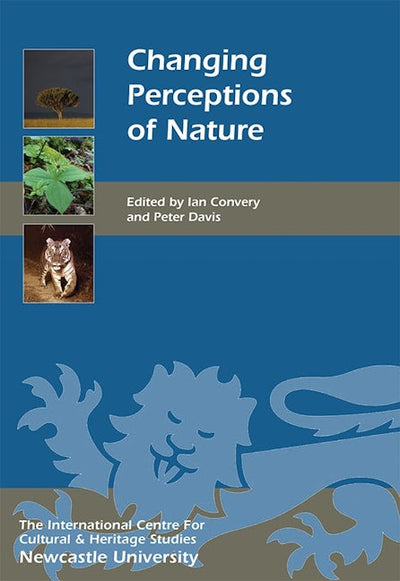
Changing Perceptions of Nature
Regular price $170.00 Save $-170.00
Essays investigating the idea of natural heritage and the ways in which it has changed over time.
The concepts of nature, culture and heritage are deeply entwined; their threads run together in some of our finest museums, in accounts of exploration and discovery, in the work of artists, poets and writers, and in areas that arecherished and protected because of their landscapes and wildlife. The conservation ethic - placing a value on the natural environment - lies at the heart of the notion of "natural heritage", but we need to question how those values originated, were consolidated and ultimately moulded and changed over time. In a contemporary context the connections between nature and culture have sometimes become lost, fragmented, dislocated or misunderstood; where did "natural heritage" begin and how do we engage with the idea of "nature" today? The essays collected here re-evaluate the role of culture in developing the concept of natural heritage, reflecting on the shifts in its interpretation over the last 300 years.
Contributors: Martin Holdgate, Marie Addyman, E. Charles Nelson, Darrell Smith, Andrew Ramsey, Viktor Kouloumpis, Richard Milner, Gina Douglas, Penny Bradshaw, Arthur MacGregor, Chiara Nepi, Hannah Paddon, Stephen Hewitt, Gordon McGregor Reid, Ghillean T Prance, Peter Davis, Christopher Donaldson, Lucy McRobert, Sophie Darlington, Keith Scholey, Paul A. Roncken, Angus Lunn, Juliet Clutton-Brock, Tim Sands, Robert A. Lambert, James Champion, Erwin van Maanen, Heather Prince, Chris Loynes, Julie Taylor, Sarah Elmeligi, Samantha Finn, Owen Nevin, Jared Bowers, Kate Hennessy, Natasha Lyons, Mike Jeffries.
The concepts of nature, culture and heritage are deeply entwined; their threads run together in some of our finest museums, in accounts of exploration and discovery, in the work of artists, poets and writers, and in areas that arecherished and protected because of their landscapes and wildlife. The conservation ethic - placing a value on the natural environment - lies at the heart of the notion of "natural heritage", but we need to question how those values originated, were consolidated and ultimately moulded and changed over time. In a contemporary context the connections between nature and culture have sometimes become lost, fragmented, dislocated or misunderstood; where did "natural heritage" begin and how do we engage with the idea of "nature" today? The essays collected here re-evaluate the role of culture in developing the concept of natural heritage, reflecting on the shifts in its interpretation over the last 300 years.
Contributors: Martin Holdgate, Marie Addyman, E. Charles Nelson, Darrell Smith, Andrew Ramsey, Viktor Kouloumpis, Richard Milner, Gina Douglas, Penny Bradshaw, Arthur MacGregor, Chiara Nepi, Hannah Paddon, Stephen Hewitt, Gordon McGregor Reid, Ghillean T Prance, Peter Davis, Christopher Donaldson, Lucy McRobert, Sophie Darlington, Keith Scholey, Paul A. Roncken, Angus Lunn, Juliet Clutton-Brock, Tim Sands, Robert A. Lambert, James Champion, Erwin van Maanen, Heather Prince, Chris Loynes, Julie Taylor, Sarah Elmeligi, Samantha Finn, Owen Nevin, Jared Bowers, Kate Hennessy, Natasha Lyons, Mike Jeffries.

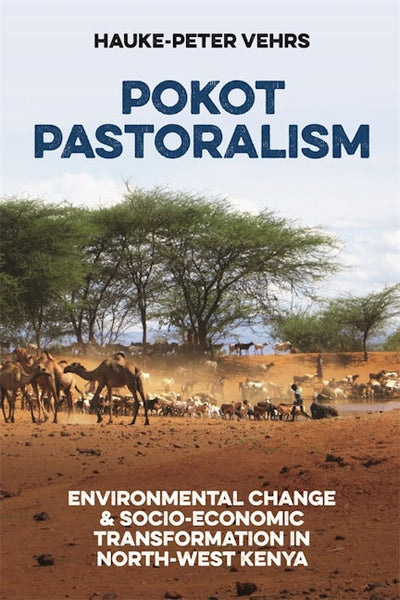
Pokot Pastoralism
Regular price $36.95 Save $-36.95
Examines how pastoral peoples imagine, or even design, their futures under the pressure of changing environments and large-scale government projects.
In East Africa and beyond, pastoral groups find themselves and their livelihoods under increasing threat when dealing with rapid environmental change. On the one hand, they contemplate major upheaval as a result of landscape and climate change on a scale never seen before. At the same time, these often-marginalised groups find themselves subsumed by the wider interests of national political economies prioritising new investment in land as well as encouraging tourism. This book investigates one such group - the nomadic pastoralists in East Pokot in north-west Kenya - and traces their social and ecological transformation over the past two hundred years to show how modern challenges are linked to the past history and also shape the perceptions of pastoral futures.
In East Pokot the grass bush savannah upon which the pastoral lifestyle depends has strongly declined over a long period of time, with encroachment of acacia. Though traditionally cattle-rearing, its people have been forced to diversify into raising other browsing animals as well as cattle husbandry. The development efforts of the Kenyan government to use natural resources have also threatened their environment and their way of life. Bringing a long view to the history of human-environmental relations, the author reveals a more complex picture of change that, contrary to earlier assumptions, is not due exclusively to the pastoralists' pasture management, but also to the extinction of wildlife populations in the region, which were hunted heavily in colonial times. Attempts to move beyond Pokot territory, to the regions west of Lake Baringo and to the hard-fought Laikipia Plateau, have often been compromised by violent conflicts. While a younger generation looks to develop new sources of income through the job opportunities created by geothermal energy production, and diversify into other agricultural activities, this has also brought a dynamic social transformation: increasing production and sale of alcohol, decreasingly nomadic lifestyle, growing differences between the older and younger generations, and so on. Contributing to debates on future rural Africa, ecological history and environmental change, the book will appeal to anthropologists, sociologists, geographers, historians and development scholars.
Published in association with the Collaborative Research Centre FUTURE RURAL AFRICA, funded by the German Research Council (DFG).
In East Africa and beyond, pastoral groups find themselves and their livelihoods under increasing threat when dealing with rapid environmental change. On the one hand, they contemplate major upheaval as a result of landscape and climate change on a scale never seen before. At the same time, these often-marginalised groups find themselves subsumed by the wider interests of national political economies prioritising new investment in land as well as encouraging tourism. This book investigates one such group - the nomadic pastoralists in East Pokot in north-west Kenya - and traces their social and ecological transformation over the past two hundred years to show how modern challenges are linked to the past history and also shape the perceptions of pastoral futures.
In East Pokot the grass bush savannah upon which the pastoral lifestyle depends has strongly declined over a long period of time, with encroachment of acacia. Though traditionally cattle-rearing, its people have been forced to diversify into raising other browsing animals as well as cattle husbandry. The development efforts of the Kenyan government to use natural resources have also threatened their environment and their way of life. Bringing a long view to the history of human-environmental relations, the author reveals a more complex picture of change that, contrary to earlier assumptions, is not due exclusively to the pastoralists' pasture management, but also to the extinction of wildlife populations in the region, which were hunted heavily in colonial times. Attempts to move beyond Pokot territory, to the regions west of Lake Baringo and to the hard-fought Laikipia Plateau, have often been compromised by violent conflicts. While a younger generation looks to develop new sources of income through the job opportunities created by geothermal energy production, and diversify into other agricultural activities, this has also brought a dynamic social transformation: increasing production and sale of alcohol, decreasingly nomadic lifestyle, growing differences between the older and younger generations, and so on. Contributing to debates on future rural Africa, ecological history and environmental change, the book will appeal to anthropologists, sociologists, geographers, historians and development scholars.
Published in association with the Collaborative Research Centre FUTURE RURAL AFRICA, funded by the German Research Council (DFG).

A Companion to Spanish Environmental Cultural Studies
Regular price $130.00 Save $-130.00
An exploration of how writers, artists, and filmmakers expose the costs and contest the assumptions of the Capitalocene era that guides readers through the rapidly developing field of Spanish environmental cultural studies.
From the scars left by Franco's dams and mines to the toxic waste dumped in Equatorial Guinea, from the cruelty of the modern pork industry to the ravages of mass tourism in the Balearic Islands, this book delves into the power relations, material practices and social imaginaries underpinning the global economic system to uncover its unaffordable human and non-human costs. Guiding the reader through the rapidly emerging field of Spanish environmental cultural studies, with chapters on such topics as extractivism, animal studies, food studies, ecofeminism, decoloniality, critical race studies, tourism, and waste studies, an international team of US and European scholars show how Spanish writers, artists, and filmmakers have illuminated and contested the growth-oriented and neo-colonialist assumptions of the current Capitalocene era. Focussed on Spain, the volume also provides models for exploring the socioecological implications of cultural manifestations in other parts of the world.
CONTRIBUTORS: Eugenia Afinoguénova, Samuel Amago, Daniel Ares-López, Kata Beilin, John Beusterien, Miguel Caballero Vázquez, Jorge Catalá, Glen S. Close, Jeffrey K. Coleman, Jamie de Moya-Cotter, Ana Fernández-Cebrián, Ofelia Ferrán, Tatjana Gajic , Pedro García-Caro, Santiago Gorostiza, Germán Labrador Méndez, Maryanne L. Leone, Shanna Lino, Jorge Marí, José Manuel Marrero Henríquez, Maria Antònia Martí Escayol, Christine Martínez, Cristina Martínez Tejero, Micah McKay, Pamela F. Phillips, Mercè Picornell, Luis I. Prádanos, Cécile Stehrenberger, John H. Trevathan, Joaquín Valdivielso, William Viestenz, Maite Zubiaurre
From the scars left by Franco's dams and mines to the toxic waste dumped in Equatorial Guinea, from the cruelty of the modern pork industry to the ravages of mass tourism in the Balearic Islands, this book delves into the power relations, material practices and social imaginaries underpinning the global economic system to uncover its unaffordable human and non-human costs. Guiding the reader through the rapidly emerging field of Spanish environmental cultural studies, with chapters on such topics as extractivism, animal studies, food studies, ecofeminism, decoloniality, critical race studies, tourism, and waste studies, an international team of US and European scholars show how Spanish writers, artists, and filmmakers have illuminated and contested the growth-oriented and neo-colonialist assumptions of the current Capitalocene era. Focussed on Spain, the volume also provides models for exploring the socioecological implications of cultural manifestations in other parts of the world.
CONTRIBUTORS: Eugenia Afinoguénova, Samuel Amago, Daniel Ares-López, Kata Beilin, John Beusterien, Miguel Caballero Vázquez, Jorge Catalá, Glen S. Close, Jeffrey K. Coleman, Jamie de Moya-Cotter, Ana Fernández-Cebrián, Ofelia Ferrán, Tatjana Gajic , Pedro García-Caro, Santiago Gorostiza, Germán Labrador Méndez, Maryanne L. Leone, Shanna Lino, Jorge Marí, José Manuel Marrero Henríquez, Maria Antònia Martí Escayol, Christine Martínez, Cristina Martínez Tejero, Micah McKay, Pamela F. Phillips, Mercè Picornell, Luis I. Prádanos, Cécile Stehrenberger, John H. Trevathan, Joaquín Valdivielso, William Viestenz, Maite Zubiaurre

Pokot Pastoralism
Regular price $130.00 Save $-130.00
Examines how pastoral peoples imagine, or even design, their futures under the pressure of changing environments and large-scale government projects.
In East Africa and beyond, pastoral groups find themselves and their livelihoods under increasing threat when dealing with rapid environmental change. On the one hand, they contemplate major upheaval as a result of landscape and climate change on a scale never seen before. At the same time, these often-marginalised groups find themselves subsumed by the wider interests of national political economies prioritising new investment in land as well as encouraging tourism. This book investigates one such group - the nomadic pastoralists in East Pokot in north-west Kenya - and traces their social and ecological transformation over the past two hundred years to show how modern challenges are linked to the past history and also shape the perceptions of pastoral futures.
In East Pokot the grass bush savannah upon which the pastoral lifestyle depends has strongly declined over a long period of time, with encroachment of acacia. Though traditionally cattle-rearing, its people have been forced to diversify into raising other browsing animals as well as cattle husbandry. The development efforts of the Kenyan government to use natural resources have also threatened their environment and their way of life. Bringing a long view to the history of human-environmental relations, the author reveals a more complex picture of change that, contrary to earlier assumptions, is not due exclusively to the pastoralists' pasture management, but also to the extinction of wildlife populations in the region, which were hunted heavily in colonial times. Attempts to move beyond Pokot territory, to the regions west of Lake Baringo and to the hard-fought Laikipia Plateau, have often been compromised by violent conflicts. While a younger generation looks to develop new sources of income through the job opportunities created by geothermal energy production, and diversify into other agricultural activities, this has also brought a dynamic social transformation: increasing production and sale of alcohol, decreasingly nomadic lifestyle, growing differences between the older and younger generations, and so on. Contributing to debates on future rural Africa, ecological history and environmental change, the book will appeal to anthropologists, sociologists, geographers, historians and development scholars.
Published in association with the Collaborative Research Centre FUTURE RURAL AFRICA, funded by the German Research Council (DFG).
In East Africa and beyond, pastoral groups find themselves and their livelihoods under increasing threat when dealing with rapid environmental change. On the one hand, they contemplate major upheaval as a result of landscape and climate change on a scale never seen before. At the same time, these often-marginalised groups find themselves subsumed by the wider interests of national political economies prioritising new investment in land as well as encouraging tourism. This book investigates one such group - the nomadic pastoralists in East Pokot in north-west Kenya - and traces their social and ecological transformation over the past two hundred years to show how modern challenges are linked to the past history and also shape the perceptions of pastoral futures.
In East Pokot the grass bush savannah upon which the pastoral lifestyle depends has strongly declined over a long period of time, with encroachment of acacia. Though traditionally cattle-rearing, its people have been forced to diversify into raising other browsing animals as well as cattle husbandry. The development efforts of the Kenyan government to use natural resources have also threatened their environment and their way of life. Bringing a long view to the history of human-environmental relations, the author reveals a more complex picture of change that, contrary to earlier assumptions, is not due exclusively to the pastoralists' pasture management, but also to the extinction of wildlife populations in the region, which were hunted heavily in colonial times. Attempts to move beyond Pokot territory, to the regions west of Lake Baringo and to the hard-fought Laikipia Plateau, have often been compromised by violent conflicts. While a younger generation looks to develop new sources of income through the job opportunities created by geothermal energy production, and diversify into other agricultural activities, this has also brought a dynamic social transformation: increasing production and sale of alcohol, decreasingly nomadic lifestyle, growing differences between the older and younger generations, and so on. Contributing to debates on future rural Africa, ecological history and environmental change, the book will appeal to anthropologists, sociologists, geographers, historians and development scholars.
Published in association with the Collaborative Research Centre FUTURE RURAL AFRICA, funded by the German Research Council (DFG).

The Wolf
Regular price $190.00 Save $-190.00
New insights into the changing human attitudes towards wild nature through the depiction of wolves in human culture and heritage.
Few animals arouse such strong opinion as the wolf. It occupies a contested, ambiguous, yet central role in human culture and heritage. It appears as both an inspirational emblem of the wild and an embodiment of evil. Offering a mirror to different human attitudes, beliefs, and values, the wolf is, arguably, the species that plays the greatest role in shaping our views on what nature is or should be.
North America and, more recently, Europe have witnessed a remarkable return of the grey wolf (Canis lupus, and its close relative the Eurasian wolf, Canis lupus lupus) to eco-systems. The essays collected here explore aspects of this recovery, and consider the history, literature and myth surrounding this iconic species. There are chapters on wolf taxonomy, including the coywolf, the red wolf, and the many faces of the dingo. We also meet the Tasmanian wolf and encounter Nazi Werewolves from Outer Space. The book explores the challenges of separating fact from fiction and superstition, and our willingness to co-exist with large carnivores in the twenty-first century. Biologists, historians, anthropologists, cultural theorists, conservationists and museologists will all find riches in the detail presented in this wolf collection.
Few animals arouse such strong opinion as the wolf. It occupies a contested, ambiguous, yet central role in human culture and heritage. It appears as both an inspirational emblem of the wild and an embodiment of evil. Offering a mirror to different human attitudes, beliefs, and values, the wolf is, arguably, the species that plays the greatest role in shaping our views on what nature is or should be.
North America and, more recently, Europe have witnessed a remarkable return of the grey wolf (Canis lupus, and its close relative the Eurasian wolf, Canis lupus lupus) to eco-systems. The essays collected here explore aspects of this recovery, and consider the history, literature and myth surrounding this iconic species. There are chapters on wolf taxonomy, including the coywolf, the red wolf, and the many faces of the dingo. We also meet the Tasmanian wolf and encounter Nazi Werewolves from Outer Space. The book explores the challenges of separating fact from fiction and superstition, and our willingness to co-exist with large carnivores in the twenty-first century. Biologists, historians, anthropologists, cultural theorists, conservationists and museologists will all find riches in the detail presented in this wolf collection.

Animals in Human Histories
Regular price $190.00 Save $-190.00
An exploration of the various ways animals and their relations to humans have been depicted throughout the ages.
This volume delves into the realm between representative images and real animals. It is a historical inquiry into human interaction with the animals we eat, pamper, experiment on, and imagine, as they have been variously domesticated, slaughtered, loved, studied, and made into icons of human invention. Common assumptions and experiences with animals have entered into the functioning and conceptualizing of life, yet these are historically and culturally contingent. The essays in this volume unveil the ways in which human-animal relationships reveal the interhuman structures of the cultures in which they are formed.
By using animals as a lens, they refocus our awareness of the ways in which humans have allotted resources, gathered knowledge, and structured families. The treatment of animals is often a guide to the treatment of people within a society, while the perceived 'stewardship' of humans over animals has helped shape the broader environment that both human and nonhuman animals share. The authors tackle their subject from a variety of levels -- popular, scientific, and economic. The essays explore the vast borderland between human ideas and physical nature regarding animal representation.
Contributors include Richard W. Burkhardt, Jr., Jonathan Burt, Ken C. Erickson, Katherine C. Grier, Richard C. Hoffmann, Andrew C. Isenberg, JacquelineMilliet, John Solomon Otto, Karen A. Rader, Harriet Ritvo, Nigel Rothfels, Kenneth J. Shapiro, and Edward I. Steinhart.
Mary Henninger-Voss is an Associate of the Shelby Cullom Davis Center for Historical Studies, Princeton University.
This volume delves into the realm between representative images and real animals. It is a historical inquiry into human interaction with the animals we eat, pamper, experiment on, and imagine, as they have been variously domesticated, slaughtered, loved, studied, and made into icons of human invention. Common assumptions and experiences with animals have entered into the functioning and conceptualizing of life, yet these are historically and culturally contingent. The essays in this volume unveil the ways in which human-animal relationships reveal the interhuman structures of the cultures in which they are formed.
By using animals as a lens, they refocus our awareness of the ways in which humans have allotted resources, gathered knowledge, and structured families. The treatment of animals is often a guide to the treatment of people within a society, while the perceived 'stewardship' of humans over animals has helped shape the broader environment that both human and nonhuman animals share. The authors tackle their subject from a variety of levels -- popular, scientific, and economic. The essays explore the vast borderland between human ideas and physical nature regarding animal representation.
Contributors include Richard W. Burkhardt, Jr., Jonathan Burt, Ken C. Erickson, Katherine C. Grier, Richard C. Hoffmann, Andrew C. Isenberg, JacquelineMilliet, John Solomon Otto, Karen A. Rader, Harriet Ritvo, Nigel Rothfels, Kenneth J. Shapiro, and Edward I. Steinhart.
Mary Henninger-Voss is an Associate of the Shelby Cullom Davis Center for Historical Studies, Princeton University.
