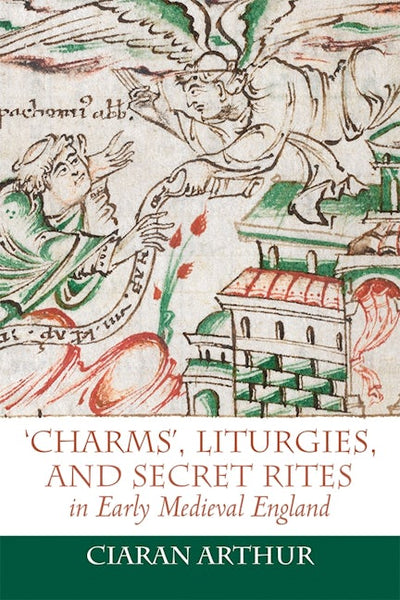
'Charms', Liturgies, and Secret Rites in Early Medieval England
Regular price
$36.95
Save $-36.95
A re-evaluation of the mysterious "charms" found in Anglo-Saxon literature, arguing for their place in mainstream Christian rites.
Since its inception in the nineteenth century, the genre of Anglo-Saxon charms has drawn the attention of many scholars and appealed to enthusiasts of magic, paganism, and popular religion. Their Christian nature has been widely acknowledged in recent years, but their position within mainstream liturgical traditions has not yet been fully recognised. In this book, Ciaran Arthur undertakes a wide-ranging investigation of the genre to better understand how early English ecclesiastics perceived these rituals and why they included them in manuscripts were written in high-status minsters. Evidence from the entire corpus of Old English, various surviving manuscript sources, and rich Christian theological traditions suggests that contemporary scribes and compilers did not perceive "charms" as anything other than Christian rituals that belonged to diverse, mainstream liturgical practices. The book thus challenges the notion that there was any such thing as an Anglo-Saxon "charm", and offers alternative interpretations of these texts as creative para-liturgical rituals or liturgical rites, which testify to the diversity of early medieval English Christianity. When considered in their contemporary ecclesiastical and philosophical contexts, even the most enigmatic rituals, previously dismissed as mere "gibberish", begin to emerge as secret, deliberately obscured texts with hidden spiritual meaning.
The Church of England’s Western Schism
Regular price
$130.00
Save $-130.00
Examines one of the most significant events in the history of the late Georgian church, and revises accepted notions of Evangelical and Anglican ecclesiology and identity.
This study examines the establishment and progress of the Western Schism, which occurred between 1815 and c.1825-the first group secession from the Church of England since the Nonjurors during the late seventeenth century. As such, the Schism proved to be one of the most significant events in the history of the Church between the end of the Napoleonic Wars and the enactment of the 'Constitutional Revolution' of 1828-32. Despite the fears of many inside and outside the Church that the Schism would produce a wave of Evangelical secessions throughout England and Ireland, its influence was largely confined to London and the counties of Devon, Dorset, Gloucestershire, Hampshire, Somerset, Sussex and Wiltshire. Its leadership was comprised of a comparatively small group of clergy and laity drawn from prominent and influential commercial and clerical families (especially those from the Baring banking tribe) and bound by close ties of kinship, friendship and ideology. These factors, along with the Schism's heretical pronouncements and unusual ecclesial practices, its inclusion of women's ministry, and its secretive nature, generated considerable sensationalism and novelty value. The same factors also provoked a sustained period of criticism in which numerous leading religious figures, journals and newspapers participated. Surprisingly, while this criticism of the Schism emerged from every point on the religious compass, including High Churchmen, liberals and Nonconformists, it was the Evangelicals who quickly emerged as the Schism's principal critics. Evangelicals denounced not only the heretical nature of the Schism, but also its inclusion of women in leadership, its abandonment of the Established Church and its attempts to tarnish the reputation of the 'gospel party' by calling into question its adherence to apostolic fidelity and the Reformed heritage of the English Church. This work, the first extensive examination of the Western Schism, revises accepted notions of Evangelical (and Anglican) ecclesiology and identity during the late Georgian period. It discloses how a prominent and small, but influential, group of clergy and laity, alarmed by the Church's failure to respond adequately to the disruptive social and spiritual events of the day, set out to establish a rival ecclesial body which, despite the investment of significant energy and financial resources, ultimately failed to coalesce into a viable and lasting alternative to the Established Church.
The Accounts of Two Westminster Fraternities, 1474-1540
Regular price
$36.95
Save $-36.95
An edition of the surviving accounts of two important religious fraternities, one based at St Margaret's Westminster, the other at the Chapel of St Mary Rounceval at Charing Cross.
These organisations drew their membership from across the social spectrum, from nobles and senior clergy, to local parishioners and merchants. They formed a key focus of social and religious life, and their accounts throw light on the regular activities of Westminster inhabitants.
Medieval Women Religious, c. 800-c. 1500
Regular price
$37.95
Save $-37.95
A multi-disciplinary re-evaluation of the role of women religious in the Middle Ages, both inside and outside the cloister.
Medieval women found diverse ways of expressing their religious aspirations: within the cloister as members of monastic and religious orders, within the world as vowesses, or between the two as anchorites. Via a range of disciplinary approaches, from history, archaeology, literature, and the visual arts, the essays in this volume challenge received scholarly narratives and re-examine the roles of women religious: their authority and agency within their own communities and the wider world; their learning and literacy; place in the landscape; and visual culture. Overall, they highlight the impact of women on the world around them, the significance of their presence in communities, and the experiences and legacies they left behind.
Women and Monastic Reform in the Medieval West, c. 1000 – 1500
Regular price
$130.00
Save $-130.00
New approaches to understanding religious women's involvement in monastic reform, demonstrating how women's experiences were more ambiguous and multi-layered than previously assumed.
Over the last two decades, scholarship has presented a more nuanced view of women's attitude to and agency in medieval monastic reform, challenging the idea that they were, by and large, unwilling to accept or were necessarily hostile towards reform initiatives. Rather, it has shown that they actively participated in debates about the ideas and structures that shaped their religious lives, whether rejecting, embracing, or adapting to calls for "reform" contingent on their circumstances. Nevertheless, fundamental questions regarding the gendered nature of religious reform are ripe for further examination.
This book brings together innovative research from a range of disciplines to re-evaluate and enlarge our knowledge of women's involvement in spiritual and institutional change in female monastic communities over the period c. 1000 - c. 1500. Contributors revise conventional narratives about women and monastic reform, and earlier assumptions of reform as negative or irrelevant for women. Drawing on a diverse array of visual, material and textual sources, it presents "snapshots" of reform from western Europe, stretching from Ireland to Iberia. Case-studies focussing on a number of different topics, from tenth-century female saints' lives to fifteenth-century liturgical books, from the tenth-century Leominster prayerbook to archaeological remains in Ireland, from embroideries and tapestries to the rebellious nuns of Sainte-Croix in Poitiers, offer a critical reappraisal of how monastic women (and their male associates) reflected, individually and collectively, on their spiritual ideals and institutional forms.
Medieval Women Religious, c. 800-c. 1500
Regular price
$130.00
Save $-130.00
A multi-disciplinary re-evaluation of the role of women religious in the Middle Ages, both inside and outside the cloister.
Medieval women found diverse ways of expressing their religious aspirations: within the cloister as members of monastic and religious orders, within the world as vowesses, or between the two as anchorites. Via a range of disciplinary approaches, from history, archaeology, literature, and the visual arts, the essays in this volume challenge received scholarly narratives and re-examine the roles of women religious: their authority and agency within their own communities and the wider world; their learning and literacy; place in the landscape; and visual culture. Overall, they highlight the impact of women on the world around them, the significance of their presence in communities, and the experiences and legacies they left behind.
Guide to the Muniments of Westminster Abbey
Regular price
$36.95
Save $-36.95
A guide to the important records of Westminster Abbey, from the tenth century to the present day.
The Muniments of Westminster Abbey constitute the archives of the iconic church that has been at the heart of public life in England since the middle ages. As well as coronations, royal events and the burials of the great and famous, the archive comprises the records of one of England's most important medieval monasteries and one of the wealthiest cathedral-style collegiate churches refounded in the Reformation period. The long, continuous history of Westminster Abbey has led to an exceptionally undisturbed archive, stretching from the tenth century to the present day and incorporating estate papers, accounts, court rolls, wills, personal papers, maps and plans as well as many surprises. This book is the first full published overview of this major archive, comprising a history of record-keeping, an analysis of the main subjects covered, and summaries of the principal series.
Dr Richard Mortimer was until his retirement Keeper of the Muniments, Westminster Abbey.
The Papacy and Ecclesiology of Honorius II (1124-1130)
Regular price
$130.00
Save $-130.00
A complete reappraisal of the papacy of Honorius II, highlighting the strategies to which this pontificate turned in order to govern ecclesiastical institutions and to deal with secular matters.
The papacy of Honorius II (1124-1130) has often been overlooked by historians, usually considered uneventful, transitional and colourless. This book offers a complete reappraisal, drawing on a detailed examination of the surviving letters produced by the papal chancery to show that conversely, it was a vital and innovative pontificate. It argues that during what was a stabilising period for the papacy in an era of peace, Honorius and the chancery were able to enact the instruments and ecclesiological claims dictated by external threats and produced during previous papacies. In particular, it shows that by adapting the content and form of the letters it issued, Honorius's chancery, led by the official Haimeric, played a decisive role in extending the ecclesiological thinking of the papacy. Furthermore, these years paved the way for ideas which were further developed later in the twelfth century, especially the arguments created by the warring parties in the Schism of 1130 to legitimise their respective popes. This study thus presents a different view of Honorius' administration, highlighting the strategies to which the papacy turned in order both to govern ecclesiastical institutions and to deal with secular matters, when previous protocols and routines could no longer be relied upon.
St David of Wales: Cult, Church and Nation
Regular price
$170.00
Save $-170.00
All aspects of the cult of St David, patron saint of Wales, are examined in this wide-ranging volume.
The cult of St David has been an enduring symbol of Welsh identity across more than a millennium. This volume, published to commemorate the fourteenth centenary of the death of the saint, traces the evidence for the cult of St David through archaeological, historical, hagiographical, liturgical, and toponymic evidence, and considers the role of the cult and church of St David in the history of Welsh society, politics, and landscape. The collection includesa new edition and translation of the Life of St David by Rhygyfarch, based on the text in British Library Ms. Cotton Vespasian A.xiv, as well as new evidence concerning the relics of the saint enshrined in St Davids Cathedral.
J. WYN EVANS is the Dean of St Davids Cathedral. JONATHAN M. WOODING is Director of the Centre for the Study of Religion in Celtic Societies at University of Wales Lampeter.
Contributors: JULIA BARROW,JANE CARTWRIGHT, FRED COWLEY, JOHN REUBEN DAVIES, OWAIN TUDOR EDWARDS, J. WYN EVANS, G.R. ISAAC, DANIEL HUWS, DAVID HOWLETT, T.F.G. HIGHAM, HEATHER JAMES, JOHN MORGAN-GUY, L.D.M NOKES, HUW PRYCE, C. BRONK RAMSEY, MARK REDKNAP, RICHARD SHARPE, BERNARD TANGUY, +GLANMOR WILLIAMS, JONATHAN M. WOODING, W.N. YATES.
The Presbyterians of Ulster, 1680-1730
Regular price
$130.00
Save $-130.00
A comprehensive survey and analysis of the Presbyterian community in its important formative period.
The Presbyterian community in Ulster was created by waves of immigration, massively reinforced in the 1690s as Scots fled successive poor harvests and famine, and by 1700 Presbyterians formed the largest Protestant community in the north of Ireland. This book is a comprehensive survey and analysis of the Presbyterian community in this important formative period. It shows how the Presbyterians formed a highly organised, self-confident community which exercised a rigorous discipline over its members and had a well-developed intellectual life. It considers the various social groups within the community, demonstrating how the always small aristocratic and gentry component dwindled andwas virtually extinct by the 1730s, the Presbyterians deriving their strength from the middling sorts - clergy, doctors, lawyers, merchants, traders and, in particular, successful farmers and those active in the rapidly growing linen trades - and among the laborious poor. It discusses how Presbyterians were part of the economically dynamic element of Irish society; how they took the lead in the emigration movement to the American colonies; and how they maintained links with Scotland and related to other communities, in Ireland and elsewhere. Later in the eighteenth century, the Presbyterian community went on to form the backbone of the Republican, separatist movement.
ROBERT WHAN obtained his Ph.D. in History from Queen's University, Belfast.
Monasteries and Society in the British Isles in the Later Middle Ages
Regular price
$130.00
Save $-130.00
New essays on the monastic life in the later middle ages show that far from being in decline, it remained rich and vibrant.
In recent years there has been an increasing interest in the history of the numerous houses of monks, canons and nuns which existed in the medieval British Isles, considering them in their wider socio-cultural-economic context; historians are now questioning some of the older assumptions about monastic life in the later Middle Ages, and setting new approaches and new agenda. The present volume reflects these new trends. Its fifteen chapters assess diverseaspects of monastic history, focusing on the wide range of contacts which existed between religious communities and the laity in the later medieval British Isles, covering a range of different religious orders and houses. This period has often been considered to represent a general decline of the regular life; but on the contrary, the essays here demonstrate that there remained a rich monastic culture which, although different from that of earlier centuries, remained vibrant.
CONTRIBUTORS: KAREN STOBER, JULIE KERR, EMILIA JAMROZIAK, MARTIN HEALE, COLMAN O CLABAIGH, ANDREW ABRAM, MICHAEL HICKS, JANET BURTON, KIMM PERKINS-CURRAN, JAMES CLARK, GLYN COPPACK, JENS ROHRKASTEN, SHEILA SWEETINBURGH, NICHOLAS ORME, CLAIRE CROSS
Pastoral Care in Late Anglo-Saxon England
Regular price
$120.00
Save $-120.00
The role of pastoral care reconsidered in the context of major changes within the Anglo-Saxon church.
The tenth and eleventh centuries saw a number of very significant developments in the history of the English Church, perhaps the most important being the proliferation of local churches, which were to be the basis of the modern parochial system. Using evidence from homilies, canon law, saints' lives, and liturgical and penitential sources, the articles collected in this volume focus on the ways in which such developments were reflected in pastoral care, considering what it consisted of at this time, how it was provided and by whom. Starting with an investigation of the secular clergy, their recruitment and patronage, the papers move on to examine a variety of aspects of late Anglo-Saxon pastoral care, including church due payments, preaching, baptism, penance, confession, visitation of the sick and archaeological evidence of burial practice. Special attention is paid to the few surviving manuscripts which are likely to have been used in the field and the evidence they provide for the context, the actions and the verbal exchanges which characterised pastoral provisions.
Surveyors of the Fabric of Westminster Abbey, 1827-1906: Reports and Letters
Regular price
$105.00
Save $-105.00
The reports of the surveyors of Westminster Abbey in the nineteenth century provide a treasure trove of information on this most important building.
`A fundamental resource for anyone interested in the Abbey's architecture and contents.' Dr Richard Mortimer.
The papers of the nineteenth-century Surveyors of the Fabric are an essential resource for anyone interestedin the building and contents of Westminster Abbey. The Surveyors, Edward Blore, George Gilbert Scott and his son J .O. Scott, J. L. Pearson and J. T. Micklethwaite, wrote an annual report describing their activities, and these arethe core of the volume, supplemented with letters and other papers. Christine Reynolds, the Abbey's Assistant Keeper of Muniments, adds invaluable notes from many other sources in the archives to round out a fascinating account of interventions in the stonework and monuments of the most historically significant church in England. On the way we learn what Gilbert Scott thought of William Morris, what the Society for the Protection of Ancient Buildings thought of J. L. Pearson's reconstruction of the north rose window, and the dim view of Pearson taken by his successor Micklethwaite. Richard Halsey's introduction sets these eminent Victorians and their work at Westminster in the wider context of the great age of cathedral restoration.
John Goodwin and the Puritan Revolution
Regular price
$36.95
Save $-36.95
`A major contribution to our understanding of the English Revolution.' Ann Hughes, Professor of Early Modern History, Keele University.
John Goodwin [1594-1665] was one of the most prolific and controversial writers of the English Revolution; his career illustrates some of the most important intellectual developments of the seventeenth century. Educated at Queens'College, Cambridge, he became vicar of a flagship Puritan parish in the City of London. During the 1640s, he wrote in defence of the civil war, the army revolt, Pride's Purge, and the regicide, only to turn against Cromwell in 1657. Finally, repudiating religious uniformity, he became one of England's leading tolerationists. This richly contextualised study, the first modern intellectual biography of Goodwin, explores the whole range of writings producedby him and his critics. Amongst much else, it shows that far from being a maverick individualist, Goodwin enjoyed a wide readership, pastored one of London's largest Independent congregations and was well connected to various networks. Hated and admired by Anglicans, Presbyterians and Levellers, he provides us with a new perspective on contemporaries like Richard Baxter and John Milton. It will be of special interest to students of Puritanism, the EnglishRevolution, and early modern intellectual history. JOHN COFFEY is Professor of Early Modern History at the University of Leicester.
King Harold II and the Bayeux Tapestry
Regular price
$120.00
Save $-120.00
Essays on the brief but tumultuous reign of Harold II, and one of our most important sources of knowledge of the time - the Bayeux Tapestry.
Harold II is chiefly remembered today, perhaps unfairly, for the brevity of his reign and his death at the Battle of Hastings. The papers collected here seek to shed new light on the man and his milieu before and after that climax. They explore the long career and the dynastic network behind Harold Godwinesson's accession on the death of King Edward the Confessor in January 1066, looking in particular at the important questions as to whether Harold's kingship was opportunist or long-planned; a usurpation or a legitimate succession in terms of his Anglo-Scandinavian kinships? They also examine the posthumous legends that Harold survived Hastings and lived on as a religious recluse.The essays in the second part of the volume focus on the Bayeux Tapestry, bringing out the small details which would have resonated significantly for contemporary audiences, both Norman and English, to suggest how they judged Harold and the other players in the succession drama of 1066. Other aspects of the Tapestry are also covered: the possible patron and locations the Tapestry was produced for; where and how it was designed; and the various sources - artistic and real - employed by the artist.
Contributors: H.E.J. Cowdrey, Nicholas J. Higham, Ian Howard, Gillian Fellows-Jensen, Stephen Matthews, S.L. Keefer, Gale R. Owen-Crocker, Chris Henige, Catherine Karkov, Shirley Ann Brown, C.R. Hart, Michael Lewis. GALE OWEN-CROCKER is Professor of Anglo-Saxon Culture at the University of Manchester.
Puritanism and the Pursuit of Happiness
Regular price
$120.00
Save $-120.00
Reveals a much neglected strand of puritan theology which emphasised the importance of inner happiness and personal piety.
The traditional view of puritans is that they were killjoys - serious, austere, gloomy people who closed theatres and abolished Christmas. This book, based on extensive original research, presents a different view. Focusing on both the writings of the leading Independent divine, Ralph Venning, and also on his pastoral work in the 1640s and 1650s when he was successively chaplain to the Tower of London and vicar of St Olave's, Southwark, the book revealsa much neglected strand of puritan theology. This emphasised the importance of inner happiness and the development of a personal piety which, the author argues, was similar in its nature to medieval mysticism, not that differentfrom the piety promoted by earlier metaphysical preachers, and not at all driven by the predestinarian ideas usually associated with puritans, ideas liable to induce a sense of helplessness and despair. In addition, the book reassesses the role of Emmanuel College, Cambridge, where Venning was educated, in shaping puritan thought, discusses Max Weber's ideas about puritanism and capitalism especially in relation to recreation and leisure activities, and demonstrates that Venning's strand of puritanism favoured toleration, moderation and church unity to a much greater degree than is usually associated with puritans.
Stephen Bryn Roberts was awarded his doctorate from theUniversity of Aberdeen and has been Adjunct Lecturer in Early Modern Church History at International Christian College, Glasgow since 2011.
Evangelicals in the Royal Navy, 1775-1815
Regular price
$130.00
Save $-130.00
Religious activity flourished in the eighteenth-century navy; this book examines the reasons why and its manifestations.
The Evangelical Admiral Gambier, notorious for distributing tracts to his fleet in a theatre of war, is commonly seen as a misfit in a fighting service that had scant time for fervent piety. In fact, the navy of the Revolutionaryand Napoleonic Wars showed a level of religious observance not seen since the days of Queen Anne. Evangelical laymen provided one dynamic for this change: concentrating first on public worship, they moved to active proselytism insearch of converts amongst sailors, and in a third phase developed a loose network of prayer groups in scores of ships, uniting officers and seamen in voluntary gatherings that transcended rank.
This book explores the effect this new piety had on discipline and human governance, on literacy, on the development of chaplains' ministry and on the mindset of the officer corps. It also looks at the larger question of how its values were absorbed into the ethos of the navy as a whole. It draws on sources both familiar and unusual - logs, letters, minutes, memoirs, tracts and sermons, Regulations - to explain how evangelical influence affected officer corps, lower deck andAdmiralty, showing how a movement that began by promoting public worship at sea became an agency for mass evangelism through literature, preaching and off-duty gatherings, where officers and men met for shared Bible reading and prayer a mere decade after the great Mutinies.
John Goodwin and the Puritan Revolution
Regular price
$130.00
Save $-130.00
`A major contribution to our understanding of the English Revolution.' Ann Hughes, Professor of Early Modern History, Keele University.
John Goodwin [1594-1665] was one of the most prolific and controversial writers of the English Revolution; his career illustrates some of the most important intellectual developments of the seventeenth century. Educated at Queens'College, Cambridge, he became vicar of a flagship Puritan parish in the City of London. During the 1640s, he wrote in defence of the civil war, the army revolt, Pride's Purge, and the regicide, only to turn against Cromwell in 1657. Finally, repudiating religious uniformity, he became one of England's leading tolerationists.
This richly contextualised study, the first modern intellectual biography of Goodwin, explores the whole range of writingsproduced by him and his critics. Amongst much else, it shows that far from being a maverick individualist, Goodwin enjoyed a wide readership, pastored one of the London's largest Independent congregations and was well connected tovarious networks. Hated and admired by Anglicans, Presbyterians and Levellers, he provides us with a new perspective on contemporaries like Richard Baxter and John Milton. It will be of special interest to students of Puritanism,the English Revolution, and early modern intellectual history.
JOHN COFFEY is Reader in Early Modern History at the University of Leicester.
Modern Spiritualism and the Church of England, 1850-1939
Regular price
$130.00
Save $-130.00
Shows how some of the ideas about the afterlife presented by spiritualism helped to shape popular Christianity in the period.
From the moment of its arrival in Britain in 1852, modern spiritualism became hugely popular among all sections of society. As well as offering mysterious and entertaining séance phenomena, spiritualism was underpinned by a beliefthat the living could communicate with the departed and even come to know what life after death looked like. This book, offering the first detailed account of the theology of spiritualism, examines what happened when the Church of England, itself already grappling with questions about the nature of the afterlife, met with such a vibrant and confident presentation. Although this period saw a gradual liberalising in the Church's own theology of heavenand hell this was not communicated to the wider public as long as sermons and liturgy remained largely framed in traditional language. Over time spiritualism, already embedded in common culture, explicitly influenced the thinkingof some Anglican clergy and implicitly began to permeate and shape popular Christianity - to the extent that even some of spiritualism's harshest critics made use of its colourful imagery. This study sets one significant aspect ofChristian doctrine alongside an attractive alternative and provides a fascinating example of the 'negotiation of belief', the way in which, in the interface between Church and culture, religious belief came to be refreshed and redefined.
GEORGINA BYRNE is an ordained Anglican priest and currently Director of Ordinands for the Diocese of Worcester and a Residentiary Canon at Worcester Cathedral.
The English Catholic Community, 1688-1745
Regular price
$36.95
Save $-36.95
A comprehensive examination of the English Catholic community in all its aspects.
The half-century following the Glorious Revolution has been viewed as a time of retreat and withdrawal for English Catholics: the response to tightening penal laws, periods in exile and the failures of the Jacobite cause. This book argues that the perception has arisen because research has been directed into the wrong places. It aims to recapture the eighteenth-century Catholic 'recusant' imagination through a study of hitherto unexplored treatises, manuscript literature and private correspondence preserved in family and religious archives. Contrary to the image of seclusion, Catholic lives were penetrated by questions of national identity, religious liberty and the authorityof an international church: conflicts experienced not merely within their own nation, but in the European courts, seminaries and universities that supported them in exile. Their writings can be understood as commentaries on the state of a community trapped between the political, cultural and intellectual divisions that cut across the Roman Catholic world. Many were actively promoting change in church and state within Britain and Europe, and their argumentsshaped the emergence of a 'Catholic Enlightenment' that outlasted the commitment to Jacobitism. The English Catholic Community investigates Catholic education and family life, scholarship, poetry and spirituality. Itoffers a fresh contribution to debates surrounding the history of the Jacobite movement, the construction of British national identity, and the origins of the Enlightenment. Gabriel Glickman is Assistant Professor of Early Modern British History at the University of Warwick.
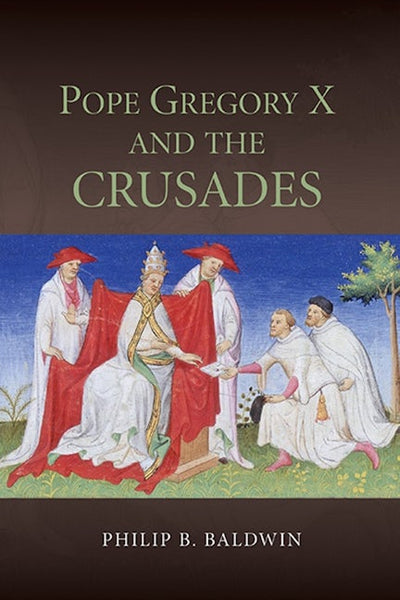
Pope Gregory X and the Crusades
Regular price
$130.00
Save $-130.00
First full-length study of Pope Gregory X in relation to Crusade, demonstrating his significant impact.
Pope Gregory X stood at the very centre of the crusading movement in the later thirteenth century. An able diplomat, he showed himself adept at navigating the political waters of Europe and the Mediterranean World. His crusade gained the participation of virtually all of the leaders of Western Europe, and even the Byzantine emperor and the Ilkhan of the Mongols: crucial if his crusade were to have a chance of defeating the very formidable and successful Mamluk Sultan Baybars. However, Gregory's premature death put paid to his crusade plans. Perhaps because of this, Gregory has hitherto been somewhat neglected by historians - a gap which this book aims to fill. It provides a full account of his contribution to the Crusade, demonstrating that he left a lasting mark on how crusading would operate in the years to come.
PHILIP BALDWIN eceived his doctorate from Queen Mary, University of London.
The Pastoral Care of Women in Late Medieval England
Regular price
$29.99
Save $-29.99
A close examination of religious texts illuminates the way in which parish priests dealt with their female parishioners in the Middle Ages.
The question of how priests were taught to think about and care for female parishioners is the topic of this book. As neither misogynist villains nor saintly heroes, clerical authors of pastoral vernacular literature persisted both in their characterization of women as difficult parishioners and in their attempts to recognize women as ordinary parishioners who deserved ordinary pastoral care. Focusing on the important vernacular writings of John Mirk, his Festial and Instructions for Parish Priests, the author reveals how even a small number of influential sermon compilations, exempla, and pastoral guides could have significantly shaped the perceptions, attitudes, and- perhaps - actions of fourteenth- and fifteenth-century priests. Shedding light on the mental universe of the late medieval parish, this study offers important new insights into the reality of how priests perceived and fulfilled their spiritual obligations to the women they served.
BETH ALLISON BARR is Assistant Professor of European Women's History at Baylor University.
The Church of England and the Holocaust
Regular price
$120.00
Save $-120.00
A challenging interpretation both of the Holocaust and its wider context, and the Church of England's role during the period.
This is the first book to consider the Anglican church's response to the Nazi persecution and then murder of Europe's Jews. Acting as a critique of the historiography of the 'bystanders' to the Holocaust, it reveals a community that struggled to understand the depravity of Nazi anti-semitism. The author outlines Anglican attitudes to war, anti-semitism and many related issues, demonstrating the extent and the limits of the Church's engagement with Europeanpolitics, and shows how Christian interpretations of Nazi persecution contributed to much wider assumptions about Germany and German history in Britain during the war years. He then moves on to the post-war world, indicating theimportant role played by the Church of England in forging memories of the Nazi era and especially the suffering of Europe's Jews. Overall, this book offers a challenging new interpretation of the Holocaust and its wider context, and of the history of the Church of England and its role in the intellectual life of the nation.Dr TOM LAWSON teaches in the Department of History, University of Winchester.
Wingfield College and its Patrons
Regular price
$130.00
Save $-130.00
The 650th anniversary of the foundation of Wingfield College was the occasion for a special two-day symposium marking the culmination of a three-year UEA-funded research project into the college and castle. The building projects of the late medieval aristocracy focused on their homes and the monasteries, churches or chantry foundations under their patronage where their family were buried and commemorated. This commemoration allowed a visual celebration of their achievements, status and lineage, the scale and prestige of which reflected on the fortunes of the family as a whole. Wingfield is explored in the context of both the actual building of the castle, chantry chapel and the college, and that of the symbolic function of these as a demonstration ion of aristocratic status. The contributions to this book examine many topics which have hitherto been neglected, such as the archaeology of the castle, which had never been excavated, the complex history of the college's architecture, and the detailed study of the monuments in the church. The latest techniques are used to reconstruct the college and castle, with a DVD to demonstrate these. And the context of the family and its fortunes are explored in chapters on the place of the de la Poles in fifteenth century history, as soldiers, administrators and potential claimants to the throne.
Reformation and Religious Identity in Cambridge, 1590-1644
Regular price
$130.00
Save $-130.00
A new investigation into the nature and identity of the Church of England on the eve of the Civil War.
The character of the English Church at the end of the sixteenth and beginning of the seventeenth century has always been a contentious historical issue. Concentrating on Cambridge University - where the critical theological debates took place and where new generations were schooled in learning and prejudice - this book aims to shed new light on the question, making use of a wealth of previously underexploited material from the archives of the University and the Colleges, and paying attention to some significant and unjustly neglected figures. After setting the scene in the seventeenth-century city and university, the book goes on to provide a careful and detailed analysis of the debate about Anglicans and Puritans, Arminians and Calvinists; it offers a lively account of bitter academic and religious rivalries fought out in sermons, academic exercises and in print.
DAVID HOYLE is Canon Residentiary at Gloucester Cathedral and Director of Ministry in the Diocese of Gloucester.
Ely: Bishops and Diocese, 1109-2009
Regular price
$65.00
Save $-65.00
Despite its size, Ely has always been one of the most wealthy and important dioceses in the country. The essays here focus on the careers of its bishops, with additional chapters on its buildings and holdings.
The diocese of Ely, formed out of the huge diocese of Lincoln, was established in 1109 in St Etheldreda's Isle of Ely, and the ancient Abbey became Ely Cathedral Priory. Covering at first only the Isle and Cambridgeshire, it grewimmensely in 1837 with the addition of Huntingdonshire, Bedfordshire and West Suffolk. The latter two counties left the diocese in 1914, but a substantial part of West Norfolk was added soon after. Until the nineteenth century Ely was one of the wealthiest dioceses in the country, and in every century there were notable appointments to the bishopric. Few of the bishops were promoted elsewhere; for most it was the culmination of their career, and manyhad made significant contributions, both to national life and to scholarship, before their preferment to Ely. They included men of the calibre of Lancelot Andrewes in the seventeenth century, the renowned book-collector John Moorein the eighteenth, and James Russell Woodford, founder of the Theological College, in the nineteenth. In essays each spanning about a century, experts in the field explore the lives and careers of its bishops, and their families and social contacts, examine their impact on the diocese, and their role in the wider Church in England. Other chapters consider such areas as the estates, the residences, the works of art and the library and archives. Overall, they chart the remarkable development over nine hundred years of one of the smallest, richest and youngest of the traditional dioceses of England.
Peter Meadows is manuscript librarian in Cambridge University Library.
Contributors: Nicholas Karn, Nicholas Vincent, Benjamin Thompson, Peter Meadows, Felicity Heal, Ian Atherton, Evelyn Lord, Frances Knight, Brian Watchorn
Episcopal Culture in Late Anglo-Saxon England
Regular price
$130.00
Save $-130.00
A radical new interpretation of the Anglo-Saxon episcopate, bringing to light previously unused evidence.
This first full-length study of the Anglo-Saxon episcopate explores the activities of the bishops in a variety of arenas, from the pastoral and liturgical to the political, social, legal and economic, so tracing the development ofa particularly English episcopal identity over the course of the tenth and eleventh centuries. It makes detailed use of the contemporary evidence, previously unexploited as diffuse, difficult and largely non-narrative, rather than that from after the Norman Conquest; because this avoids the prevailing monastic bias, it shows instead that differences in order [between secular and monk-bishops] had almost no effect on their attitudes toward their episcopalroles. It therefore presents a much more nuanced portrait of the episcopal church on the eve of the Conquest, a church whose members constantly worked to create a well-ordered Christian polity through the stewardship of the English monarchy and the sacralization of political discourse: an episcopate deeply committed to pastoral care and in-step with current continental liturgical and theological developments, despite later ideologically-charged attempts tosuggest otherwise; and an institution intricately woven, because of its tremendous economic and political power, into the very fabric of English local and regional society. MARY FRANCIS GIANDREA teaches at George Mason University
Rural Society and the Anglican Clergy, 1815-1914
Regular price
$120.00
Save $-120.00
A vivid and accessible reappraisal of the frequently uneasy relationship between the Victorian clergyman and his congregation.
The conduct of divine service was only one item on the agenda of the nineteenth-century clergyman. He might have to sit on the magistrates' bench, or concern himself with business as a farmer or landowner, or attend a meeting of the Poor Law guardians. He would, in all probability, be closely involved with the day-to-day running of the local school, and he would almost certainly be the principle administrator of the parochial charities. While some of theseroles were clearly predestined to bring him into conflict with certain members of his flock, others seem ostensibly designed to operate in their interests. None, however, seem to have earned him much in the way of devotion and respect: instead, each of them at one time or another attracted the direct hostility of parishioners, most particularly those attached to dissenting and/or radical groups. This book is a detailed exploration of the relationship between Anglican clergymen and the inhabitants of rural parishes in the nineteenth century. Taking Norfolk as a focus, the author examines the many and profound ways in which the Victorian Church affected the daily lives and political destinies of local communities.
Religious Politics in Post-Reformation England
Regular price
$130.00
Save $-130.00
New scrutinies of the most important political and religious debates of the post-Reformation period.
The consequences of the Reformation and the church/state polity it created have always been an area of important scholarly debate. The essays in this volume, by many of the leading scholars of the period, revisit many of the important issues during the period from the Henrician Reformation to the Glorious Revolution: theology, political structures, the relationship of theology and secular ideologies, and the Civil War. Topics include Puritan networks and nomenclature in England and in the New World; examinations of the changing theology of the Church in the century after the Reformation; the evolving relationship of art and protestantism; the providentialist thinking of Charles I;the operation of the penal laws against Catholics; and protestantism in the localities of Yorkshire and Norwich.
KENNETH FINCHAM is Reader in History at the University of Kent; Professor PETER LAKE teaches in the Department of History at Princeton University.
Contributors: THOMAS COGSWELL, RICHARD CUST, PATRICK COLLINSON, THOMAS FREEMAN, PETER LAKE, SUSAN HARDMAN MOORE, DIARMAID MACCULLOCH, ANTHONY MILTON, PAUL SEAVER, WILLIAM SHEILS
Evangelicalism and the Church of England in the Twentieth Century
Regular price
$130.00
Save $-130.00
An important contribution to the understanding of twentieth-century Anglicanism and evangelicalism
This volume makes a considerable contribution to the understanding of twentieth-century Anglicanism and evangelicalism. It includes an expansive introduction which both engages with recent scholarship and challenges existing narratives. The book locates the diverse Anglican evangelical movement in the broader fields of the history of English Christianity and evangelical globalisation. Contributors argue that evangelicals often engaged constructively with the wider Church of England, long before the 1967 Keele Congress, and displayed a greater internal party unity than has previously been supposed. Other significant themes include the rise of various 'neo-evangelicalisms', charismaticism, lay leadership, changing conceptions of national identity, and the importance of generational shifts. The volume also provides an analysis of major organisations, conferences and networks, including the Keswick Convention, Islington Conference and Nationwide Festival of Light.
ANDREW ATHERSTONE is tutor in history and doctrine, and Latimer research fellow at Wycliffe Hall, Oxford. JOHN MAIDEN is lecturer in the Department of Religious Studies at the Open University. He is author of National Religion and the Prayer Book Controversy, 1927-1928 (The Boydell Press, 2009).
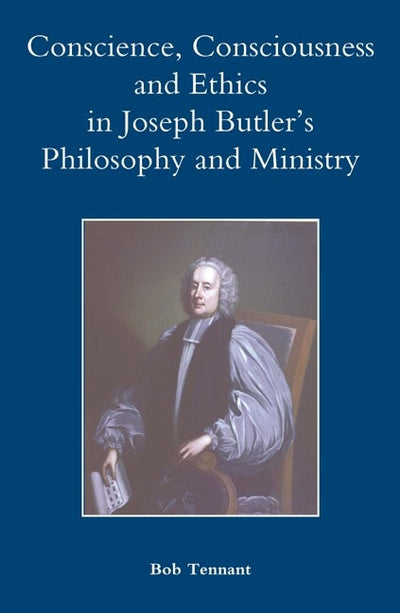
Conscience, Consciousness and Ethics in Joseph Butler's Philosophy and Ministry
Regular price
$130.00
Save $-130.00
Offers a new interpretation of Butler's theology and suggests that exploration of his methods may contribute to modern thinking about ethics, language, the Church as well as religion and science.
Joseph Butler [1692-1752] is perhaps Britain's most powerful and original moral philosopher. He exercised a profound influence over the contemporary Protestant Churches, the English moralists and the Scottish philosophical schoolbut his theory of the "affections", grounded in Newtonian metaphysics and presenting an account of human psychology, also set the terms of engagement with questions of education, slavery, missions and even labour relations. Inthe nineteenth-century English-speaking world he was an authority of first resort for Evangelicals, Tractarians, philosophers, scientists, psychologists, economists, sociologists, lawyers and educationalists alike. He remains a key reference point for modern American and British philosophers, from Broad to Rawls and beyond. Many analyses of Butler, however, have been distorted by aggressively secular readings. This book is based on a comprehensive reassessment of his published work and the surviving manuscripts and archival materials. These are set within an account of his spiritual and intellectual development and his ministerial vocation, from the protracted and painful process of conforming to the Church of England to his initial observations on a social philosophy. Demonstrating that even The Analogy originated in liturgical preaching, this book offers a refreshed and detailed account of Butler's key terms - conscience, consciousness, identity, affections, charity, analogy, probability, tendency - and suggests that exploration of his methods may contribute to modern thinking about ethics, language, the role of the Church, and the religion and science debates.
BOB TENNANT taught English Literature at the University of Sussex, spent many years as a senior manager in adult education, and was a trade union and political activist serving leading organisations at local, regional and national levels. He has written on political, economic and trade union matters for many newspapers and periodicals and is a founder of The British Pulpit Online, seeking to create an online catalogue and database of all printed British sermons from 1660 to 1901.
Landscapes of Monastic Foundation
Regular price
$130.00
Save $-130.00
A history of monastic foundations in East Anglia, from the middle Anglo-Saxon period to the Normans.
Monastic studies usually focus upon the post-Conquest period; here, in valuable contrast, the focus is on pre-Conquest monastic foundations, in the present-day counties of Norfolk and Suffolk. Tim Pestell considers the place of the monastery in wider landscapes - topographical, social, economic and political. He observes that by 1215 the Diocese of Norwich contained about a tenth of all English monasteries, a remarkable richness of patronage was no suddenflush of enthusiasm, but a manifestation of religious devotion that had been evolving in East Anglia since the seventh-century Conversion. By integrating archaeological and historical sources, Dr Pestell presents an in-depth examination of where and how communal religious life developed in the region over half a millennium. In so doing, he demonstrates how the more visible and better-evidenced post-Conquest monastic landscape was typically structured by its Anglo-Saxon past.
Dr TIM PESTELL is Curator of Archaeology at Norwich Castle Museum.
War and the Making of Medieval Monastic Culture
Regular price
$120.00
Save $-120.00
Finalist for AAH First Book Prize
The monastic life, traditionally considered as an area of withdrawal from the world, is here shown to be shaped by metaphors of war, and to be actively engaged with battle in the world outside.
An extremely interesting and important book... makes an important contribution to the history of medieval monastic spirituality in a formative period, whilst also fitting into wider debates on the origins, development and impactof ideas on crusading and holy war. Dr William Purkis, University of Birmingham
Monastic culture has generally been seen as set apart from the medieval battlefield, as "those who prayed" were set apart from "those whofought". However, in this first study of the place of war within medieval monastic culture, the author shows the limitations of this division. Through a wide reading of Latin sermons, letters, and hagiography, she identifies a monastic language of war that presented the monk as the archetypal "soldier of Christ" and his life of prayer as a continuous combat with the devil: indeed, monks' claims to supremacy on the spiritual battlefield grew even louder asChurch leaders extended the title of "soldier of Christ" to lay knights and crusaders. So, while medieval monasteries have traditionally been portrayed as peaceful sanctuaries in a violent world, here the author demonstrates thatmonastic identity was negotiated through real and imaginary encounters with war, and that the concept of spiritual warfare informed virtually every aspect of life in the cloister. It thus breaks new ground in the history of European attitudes toward warfare and warriors in the age of the papal reform movement and the early crusades.
Katherine Allen Smith is Assistant Professor of History, University of Puget Sound.
Saint Michael the Archangel in Medieval English Legend
Regular price
$95.00
Save $-95.00
First comprehensive study of the representations of St Michael in the liturgy, literature, and iconography of the period.
The cult and legends of St Michael the archangel were widespread in medieval England, and this book - the first full-length study of the subject - offers a comprehensive examination of their genesis and diffusion. Part I identifies and analyses the concerns, conflicts, and roles with which St Michael is associated, from scriptural and apocryphal literature through to the homiletic literature of the medieval period. Part II begins with a discussion of thevernacular recensions of the popular account of the archangel's earthly interventions, and goes on to survey the legendary accounts in Old English, Anglo-Norman, and Middle English of the archangel and his roles as guardian, intercessor, psychopomp, and warrior-angel follows. The Appendices contain the first English translation of the archangel's hagiographic foundation-myth; an annotated bibliographical list and motif index of textual materials relating to the archangel; and an essay on the iconographic representations of the archangel in medieval England.
RICHARD F. JOHNSON is Assistant Professor of English at William Rainey Harper College.
The Southern French Nobility and the Albigensian Crusade
Regular price
$120.00
Save $-120.00
A fresh look at the Albigensian Crusade, highlighting its effects upon the indigenous nobility.
The Albigensian Crusade was called by Pope Innocent III in 1208 against the Count of Toulouse in response to the murder of the papal legate Pierre des Castelnau. The Pope's aim was to force the Count and other nobles in Languedocto take action against the Cathar heretics in their lands, but in the end, the defeat of Catharism in the south of France was achieved through the establishment of the Inquisition and the extension of French royal authority to thearea. While some Occitan noble families survived the crusade, others were destroyed and the behaviour of the crusaders towards the local nobility has often been regarded as rather arbitrary, unconnected to how these families related to each other before 1209. This study takes the case of the Trencavel Viscounts of Béziers and Carcassonne, who were the only members of the higher nobility to lose their lands to the crusade, and argues that an understandingof how the Occitan nobility fared in the crusade years must be based in the context of the politics of the noble society of Languedoc, not only in the thirteenth century but also in the twelfth.
ELAINE GRAHAM-LEIGH gained her Ph.D. from the University of London.
Henry VIII and Martin Luther
Regular price
$130.00
Save $-130.00
A new critical edition of Henry VIII's 1526 public letter to Martin Luther, enabling readers to examine how Henry VIII wanted his subjects to regard the German heresiarch.
A modern critical edition of Henry VIII's second published work against Martin Luther. This open letter to Luther, printed at the king's command in December 1526, was in reply to a private letter addressed to him by Luther the previous year. Its particular interest lies in the fact that, unlike his better known Assertion of the Seven Sacraments, published five years before, Henry's open letter was released not only in Latin but also in an official Englishtranslation, with a special English preface added by the king for the edification of his subjects. This edition thus enables modern readers to hear what Henry had to say about Luther in his own words, and how he wanted his subjects to regard the German heresiarch.
This critical edition is based on a previously unrecognised presentation manuscript which furnishes the earliest surviving text of both letters. In addition, it offers editions and newtranslations of a range of related texts, including Luther's reply to Henry and further contributions to the burgeoning controversy from several of the most prominent Catholic opponents of Luther in Europe. For Henry's letter, like his earlier book, became for a while a European sensation, reprinted in towns and cities from Cologne to Cracow. This fully annotated edition includes a substantial introduction which for the first time tells the full history of Henry's second controversy with Luther, and which sets that story in the broader context of the lengthy and fractious relationship between the two men from the time of Luther's emergence in 1517 until his death in 1546.
Britain, Hanover and the Protestant Interest, 1688-1756
Regular price
$130.00
Save $-130.00
A new examination of the links between religion and politics in the early eighteenth century, showing how the defence of protestantism became a major plank in foreign policy.
Religious ideas and power-politics were strongly connected in the early eighteenth century: William III, George I and George II all took their role as defenders of the protestant faith extremely seriously, and confessional thinking was of major significance to court whiggery. This book considers the importance of this connection. It traces the development of ideas of the protestant interest, explaining how such ideas were used to combat the perceived threats to the European states system posed by universal monarchy, and showing how the necessity of defending protestantism within Europe became a theme in British and Hanoverian foreign policy. Drawing on a wide range of printed and manuscript material in both Britain and Germany, the book emphasises the importance of a European context for eighteenth-century British history, and contributes to debates about the justification of monarchy and the nature of identity in Britain. Dr ANDREW C. THOMPSON is Lecturer in History, Queens' College, Cambridge.
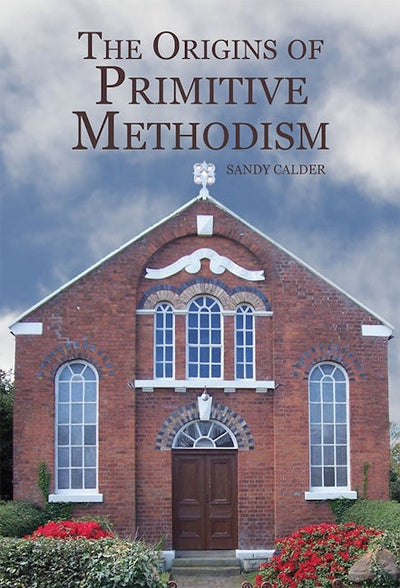
The Origins of Primitive Methodism
Regular price
$130.00
Save $-130.00
The Primitive Methodist Connexion's mature social character may have been working-class, but this did not reflect its social origins.
This book shows that while the Primitive Methodist Connexion's mature social character was working-class, this did not reflect its social origins. It was never the church of the working class, the great majority of whose churchgoers went elsewhere: rather it was the church whose commitment to its emotional witness was increasingly incompatible with middle-class pretensions. Sandy Calder shows that the Primitive Methodist Connexion was a religious movementled by a fairly prosperous elite of middle-class preachers and lay officials appealing to a respectable working-class constituency. This reality has been obscured by the movement's self-image as a persecuted community of humble Christians, an image crafted by Hugh Bourne, and accepted by later historians, whether Methodists with a denominational agenda to promote or scholars in search of working-class radicals. Primitive Methodists exaggerated their hardships and deliberately under-played their social status and financial success. Primitive Methodism in the later nineteenth and early twentieth centuries became the victim of its own founding mythology, because the legend of a community of persecuted outcasts, concealing its actual respectability, deterred potential recruits.
SANDY CALDER graduated with a PhD in Religious Studies from the Open University and has previously worked in the private sector.
Monastic Hospitality
Regular price
$130.00
Save $-130.00
How guests were cared for in medieval monasteries, exploring the administrative, financial, spiritual and other implications.
Hospitality was an integral part of medieval monastic life. In receiving guests the monks were following Christ's injunction and adhering to the Rule of St Benedict, as well as taking on an important role within society andproviding a valuable service for fellow religious. This book draws on a wide range of sources to explore the practice and perception of monastic hospitality in England c.1070-c. 1250, an important and illuminating time in aEuropean and an Anglo-Norman context; it examines the spiritual and worldly concerns compelling monasteries to exercise hospitality, alongside the administrative, financial and other implications of receiving and caring for guests. Analysis focuses on the great Benedictine houses of Southern England (Abingdon, Bury St Edmunds, Canterbury, Reading, St Albans) for which a substantial and diverse body of material survives, but they are set in the context of other houses and other orders (chiefly the Cistercians) to show the wider picture in both England and Europe.
JULIE KERR is an Honorary Research Fellow at the University of St Andrews.
Revelation Restored: The Apocalypse in Later Seventeenth-Century England
Regular price
$130.00
Save $-130.00
An analysis of the nature of apocalyptic and millennial beliefs that reveals concerns prominent in England in the early seventeenth century had not abated after 1660.
Revelation Restored is a study of apocalyptic thought in the later seventeenth century in England. It explores an under-examined aspect of early modern British history: despite the prominence of millenarian beliefs in historians' explanations of the early modern English church and state up to 1660, little has been said about these convictions in the years following the Restoration. The examination of applications of prophetic language and interpretation to explain the events in England from 1660 to 1700 illustrates their continued capacity to comprehend ecclesiastical and political developments. The book demonstrates that, far from having disappeared from the intellectual landscape, apocalyptic ideas still held the potential to animate opinions in the mainstream of political debate in the later seventeenth century. These responses were outlets both for demonstrations of dissent and for endorsements of authorised powers in response to crises in authority and efforts at religious settlement. In addition, this book contends that any strict periodization that segregates the concerns of early seventeenth-century England fromthose of the later seventeenth century has been too sharply drawn. Analysis of the nature of apocalyptic and millennial beliefs reveals that the concerns prominent in England in the early seventeenth century had not abated after1660.
WARREN JOHNSTON is an Assistant Professor at Algoma University in Ontario, Canada.
Martyrs and Martyrdom in England, c.1400-1700
Regular price
$130.00
Save $-130.00
A fresh examination of the idea of martyrdom in the transition from the medieval to the modern periods.
Concepts of Christian martyrdom changed greatly in England from the late middle ages through the early modern era. The variety of paradigms of Christian martyrdom (with, for example, virginity or asceticism perceived as alternateforms of martyrdom) that existed in the late medieval period, came to be replaced during the English Reformation with a single dominant idea of martyrdom: that of violent death endured for orthodox religion. Yet during the seventeenth century another transformation in conceptions of martyrdom took place, as those who died on behalf of overtly political causes came to be regarded as martyrs, indistinguishable from those who died for Christ. The articles in this book explore these seminal changes across the period from 1400-1700, analyzing the political, social and religious backgrounds to these developments. While much that has been written on martyrs, martyrdom and martyrologies has tended to focus on those who died for a particular confession or cause, this book shows how the concepts of martyrdom were shaped, altered and re-shaped through the interactions between these groups.
THOMAS S. FREEMAN is Research Officer at the British Academy John Foxe Project, which is affiliated with the University of Sheffield; THOMAS F. MAYER is Professor of History at Augustana College.
Contributors: JOHN COFFEY, BRAD S.GREGORY, VICTOR HOULISTON, ANDREW LACEY, DANNA PIROYANSKY, RICHARD REX, ALEC RYRIE, WILLIAM WIZEMAN
The Church of England in the Twentieth Century
Regular price
$49.95
Save $-49.95
Unique account of the affairs of the Church of England during a period of colossal change and controversy.
This is the first comprehensive picture of the life and work of the Church of England in the second half of the twentieth century, tracing the evolution of the Church at a time of immense upheaval. The Church was inevitably facedwith the need for [sometimes painful] reform as society became more secularised and multi-cultural, and its response is examined. The book also gives a detailed portrait of the work of its archbishops and bishops; and tackles thecontroversial questions raised by financial matters and the administration of property. They include the financial speculations of the late 1980s and early 1990s, which provoked fundamental questions about the role of the Church and the nature of its relationship with the state.
ANDREW CHANDLER is Director of the George Bell Institute, Birmingham, and Honorary Lecturer at the University of Birmingham.
Runic Amulets and Magic Objects
Regular price
$130.00
Save $-130.00
A fresh examination of one of the most contentious issues in runic scholarship - magical or not?
The runic alphabet, in use for well over a thousand years, was employed by various Germanic groups in a variety of ways, including, inevitably, for superstitious and magical rites. Formulaic runic words were inscribed onto small items that could be carried for good luck; runic charms were carved on metal or wooden amulets to ensure peace or prosperity. There are invocations and allusions to pagan and Christian gods and heroes, to spirits of disease, and even to potential lovers. Few such texts are completely unique to Germanic society, and in fact, most of the runic amulets considered in this book show wide-ranging parallels from a variety of European cultures. The question ofwhether runes were magical or not has divided scholarship in the area. Early criticism embraced fantastic notions of runic magic - leading not just to a healthy scepticism, but in some cases to a complete denial of any magical element whatsoever in the runic inscriptions. This book seeks to re-evaulate the whole question of runic sorcery, attested to not only in the medieval Norse literature dealing with runes but primarily in the fascinating magical texts of the runic inscriptions themselves.
Dr MINDY MCLEOD teaches in the Department of Linguistics, Deakin University, Melbourne; Dr BERNARD MEES teaches in the Department of History at the University of Melbourne.
The Letters of Henry Martyn, East India Company Chaplain
Regular price
$95.00
Save $-95.00
One of the most significant British foreign missionaries of the nineteenth century, Henry Martyn (1781-1812) is a central figure in the history of the East India Company.
Henry Martyn (1781-1812) was one of the most significant British foreign missionaries of the nineteenth century. An Anglican Evangelical, active in India and Persia, he translated the New Testament into Urdu and Persian, pioneeredengagement between Protestant Christianity and Islam, and inspired a generation of British and American evangelical missionary efforts. He is a central figure for the history of the East India Company and its relationship to themissionary movement. This book provides a fully annotated transcription of all Martyn's surviving 327 letters, together with a very substantial introduction covering Martyn's biography, missiology and churchmanship, circle of correspondents, philological contribution, and experience in India and Persia. The letters themselves are rich in detail about East India Company governance in India and the importance of the religious issue at the highest levels. Thebook will be of great interest to historians of India and the East India Company, historians of Anglo-Persian relations and of Evangelical Anglicanism and the broader Protestant missionary movement, and those interested in the emergence and shape of modern Christian-Islamic discourse.
SCOTT D. AYLER spent 24 years as an English-language instructor in the Middle East and South Asia, most recently at the University of Sharjah in the United Arab Emirates. He completed his doctorate in History at the University of Wales, Lampeter.
The Royal Army Chaplains' Department, 1796-1953
Regular price
$190.00
Save $-190.00
A survey and reassessment of the role of the army chaplain in its first 150 years.
Few military or ecclesiastical figures are as controversial as the military chaplain, routinely attacked by pacifist and anticlerical commentators and too readily dismissed by religious and military historians. This highly revisionist study represents a complete reappraisal of the role of the British army chaplain and of the Royal Army Chaplains' Department in the first century and a half of its existence. Challenging old caricatures and stereotypes and drawing on a wealth of new archival material, it surveys the political, denominational and organisational development of the R.A.Ch.D., analyses the changing role and experience of the British army chaplain across the nineteenth century and the two World Wars, and addresses the wider significance of British army chaplaincy for Britain's military, religious and cultural history over the period c.1800-1950.
MICHAEL SNAPE is Senior Lecturer in ModernHistory at the University of Birmingham. The volume has a Foreword by Richard Holmes.
War and the Making of Medieval Monastic Culture
Regular price
$29.99
Save $-29.99
Finalist for AAH First Book Prize
The monastic life, traditionally considered as an area of withdrawal from the world, is here shown to be shaped by metaphors of war, and to be actively engaged with battle in the world outside.
An extremely interesting and important book... makes an important contribution to the history of medieval monastic spirituality in a formative period, whilst also fitting into wider debates on the origins, development and impactof ideas on crusading and holy war. Dr William Purkis, University of Birmingham
Monastic culture has generally been seen as set apart from the medieval battlefield, as "those who prayed" were set apart from "those whofought". However, in this first study of the place of war within medieval monastic culture, the author shows the limitations of this division. Through a wide reading of Latin sermons, letters, and hagiography, she identifies a monastic language of war that presented the monk as the archetypal "soldier of Christ" and his life of prayer as a continuous combat with the devil: indeed, monks' claims to supremacy on the spiritual battlefield grew even louder asChurch leaders extended the title of "soldier of Christ" to lay knights and crusaders. So, while medieval monasteries have traditionally been portrayed as peaceful sanctuaries in a violent world, here the author demonstrates thatmonastic identity was negotiated through real and imaginary encounters with war, and that the concept of spiritual warfare informed virtually every aspect of life in the cloister. It thus breaks new ground in the history of European attitudes toward warfare and warriors in the age of the papal reform movement and the early crusades.
Katherine Allen Smith is Assistant Professor of History, University of Puget Sound.
Céli Dé in Ireland
Regular price
$130.00
Save $-130.00
A detailed investigation into the mysterious group of monks, the Céli Dé, who flourished in early medieval Ireland.
The Céli Dé [`clients of God'], sometimes referred to as the Culdees, comprise the group of monks who first appeared in Ireland in the eighth century in association with St Máel Ruain of Tallaght. Although influential and important in the development of the monastic tradition in Ireland, they have been neglected in general histories. This book offers an investigation into the movement. Proceeding from an examination of ascetic practice and theory in earlymedieval Ireland, followed by a fresh look at the evidence most often cited in support of the prevailing theory of céli Dé identity, the author challenges the orthodox opinion that they were an order or movement intent uponmonastic reform at a time of declining religious discipline. At the heart of the book is a manuscript-centred critical evaluation of the large corpus of putative céli Dé texts, offered as a means for establishing a more comprehensive assessment of who and what céli Dé were. Dr Follett argues that they are properly understood as the self-identified members of the personal retinue of God, in whose service they distinguished themselves from other monks and monastic communities in their personal devotion, pastoral care, Sunday observance, and other matters. A catalogue of céli Dé texts with manuscript references is provided in an appendix.
WESTLEY FOLLETT is Assistant Professor of History at the University of Southern Mississippi.
Rational Dissenters in Late Eighteenth-Century England
Regular price
$170.00
Save $-170.00
Rational Dissent was a branch of Protestant religious nonconformity which emerged to prominence in England between c. 1770 and c. 1800. While small, the movement provoked fierce opposition from both Anglicans and Orthodox Dissenters.
Rational Dissent was a branch of Protestant religious nonconformity which emerged to prominence in England between c. 1770 and c. 1800. Based on the sole study of the Scriptures and the application of individual reasoning to understanding the word of God, Rational Dissent rejected the role and authority of Anglican priests but also stood apart from Orthodox Dissent in its denial of the Trinity and Original Sin, arguing that these concepts were 'irrational'. While small, the movement provoked fierce opposition from both Anglicans and Orthodox Dissenters. Drawing on a wide range of contemporary published and unpublished sources, this study explores the theology of Rational Dissent in its entirety, arguing that it was considerably more diverse than has previously been acknowledged. Through an examination of lists of subscribers to Rational Dissenting publications and organizations, and of Unitarian libraries and their readers, the book uncovers the movement's less visible adherents, mapping them both socially and geographically. It also explores the impact of vehement attacks by Anglicans and Orthodox Dissenters on the development of a Rational Dissenting identity. Within the context of the struggle for civil and political rights and of the American and French Revolutions, the book establishes that the theology of Rational Dissenters underpinned their political beliefs and concepts of liberty, drove their ideas on the nature of society, and determined the lives and priorities of its lay adherents. The final stage of the book explores the largely Unitarian legacy of Rational Dissent and its theological, cultural and social impact in England post 1800.
The Early English Baptists, 1603-49
Regular price
$130.00
Save $-130.00
A fresh examination of the Baptist movement, showing its growth and development to be more complex than hitherto assumed.
This book challenges the orthodoxy that seventeenth-century Baptists were divided from the first into two separate denominations, 'Particular' and 'General', defined by their differing attitudes to predestination and the atonement, showing how the position was in fact much more complicated. It describes how from the foundation of the 'Generals' in 1609 there were always two tendencies, one clericalist and pacifist, influenced by the Dutch Mennonites, and one reflecting the English traditions of erastianism and local lay predominance in religion. It re-analyses the confessional struggle during and after the civil war, showing how Independent and erastian sentiment in Parliament increasingly combined to baulk Presbyterian ambition; during and partly because of this process (which they also influenced), the Baptists evolved into three recognisable tendencies. Amongst General Baptists there was a politically radical current, but also a more passive tendency which was starting to gain ground. In 1647-9 most but by no means all Particular Baptist leaders were hostile to the Levellers. The book looks at the nature of religious convictionin the New Model Army, reassessing the role and influence of Baptists in it. In the late 40s, many Baptists, soldiers and civilians, rejected formal ordinances altogether. STEPHEN WRIGHT received his Ph.D. from the Universityof London. He has been visiting lecturer at the University of Hertfordshire and the University of North London.
Mysticism in Early Modern England
Regular price
$120.00
Save $-120.00
Mysticism in Early Modern England traces how mysticism featured in polemical and religious discourse in seventeenth-century England and explores how it came to be viewed as a source of sectarianism, radicalism, and, most significantly, religious enthusiasm.
Mysticism in Early Modern England examines a vital juncture in the history of Christian mysticism. Exploring both Catholic and Protestant views across the seventeenth and early eighteenth centuries, the book argues for a re-evaluation of the cross-denominational appeal of mystical spirituality. It traces the mysticism of figures such as the Benedictine Augustine Baker, the Familist preacher John Everard, the millenarian Jane Lead, and the Cambridge Platonist writers Henry More and John Worthington. At the same time, it explores the arguments of a number of early modern critics including Meric Casaubon and Edward Stillingfleet, who viewed mysticism with suspicion and ridicule, a product of melancholy and madness incompatible with learned theological and doctrinal discussions. The book contends that the early modern period ultimately saw the association of mysticism with sectarianism, radicalism and religious enthusiasm, resulting in a negative connotation that lasted well into the twentieth century. It also explores connections between England and the Continent, suggesting that parallel and interconnected criticisms of mysticism occurred in France, Italy and Germany over the period. In analysing this significant change in attitude towards mysticism, the book suggests that recent scholarly attempts to 'return' mysticism to modern religious institutions and mainstream histories of religion can be viewed as a direct response to the rejection of mysticism in the early modern period.
LIAM PETER TEMPLE gained his PhD from Northumbria University, Newcastle.
Leadership in Medieval English Nunneries
Regular price
$130.00
Save $-130.00
Examination of the role of the convent superior in the middle ages, underlining the amount of power and responsibility at her command.
The position of an abbess or prioress in the middle ages was one of great responsibility, with care for both the spiritual and economic welfare of her convent. This book considers the power wielded by and available to such women.It addresses leadership models, questions of social identity and the varying perceptions of the role and performance of the abbess or prioress via a close examination of the records of sixteen female houses in the period from 1280to 1540; the large range of documentary evidence used includes selections from episcopal registers, account rolls, plea rolls, Chancery documents, letters, petitions, medieval literature and comparative material from additional nunneries. The theme of conflict recurs throughout, as religious women are revealed steering their communities between the directives of the church and the demands of their budgets or their secular neighbours. The Dissolution and its effects on the morale and behaviour of the last superiors conclude the study.
The Hospitallers and the Holy Land
Regular price
$120.00
Save $-120.00
A new appraisal of the Order of the Hospitallers, showing how they were responsible for the survival of the Christian settlement in the East.
The Order of the Hospital of St John was among the most creative and important institutions of the Middle Ages, its history provoking much debate and controversy. However, there has been very little study of the way in which it operated as an organisation contributing to the survival of the Christian settlement in the East, a gap which this book addresses. It focuses on the impact of the various crises in the East upon the Order, looking at how it reactedto events, the contributions that western priories played in the rehabilitation of the East, and the various efforts made to restore its economic and military strength. In particular, the author shows the key role played by the papacy, both in the Order's recovery, and in determining the fate of the crusader states. Overall, it offers a whole new perspective on the connections between East and West. JUDITH BRONSTEIN gained her Ph.D. from the University of Cambridge
Gildas's De Excidio Britonum and the early British Church
Regular price
$120.00
Save $-120.00
A study of a contemporary witness to the transformation of post-Roman Britain into Anglo-Saxon England.
Gildas's De excidio Britonum is a rare surviving contemporary source for the period which saw the beginning of the transformation of post-Roman Britain into Anglo-Saxon England. However, although the De excidio has received much scholarly attention over the last forty years, the value of the text as a primary source for this fascinating if obscure period of British history has been limited by our lack of knowledge concerning its historical and cultural context. In this new study the author challenges the assumption that the British Church was isolated from its Continental counterpart by Germanic settlement in Britain and seeks to establish a theological context for the De excidio within the framework of doctrinal controversy in the early Continental Church. The vexed question of the place of Pelagianism in the early British Church is re-investigated and a case is put forward for a radical new interpretation of Gildas's own theological stance. In addition, this study presents a detailed investigation of the literary structure of the De excidio and Gildas's use of verbal patterns, and argues that his use ofthe Bible as a literary model is at least as significant as his well-documented use of the literary techniques of Classical Latin.
Dr KAREN GEORGE is currently a tutor at the Cambridge Institute of Continuing Education.
Lay Religious Life in Late Medieval Durham
Regular price
$120.00
Save $-120.00
Relations between the laity and the religious in medieval Durham reveal much about lay religion of the time.
Although religious life in medieval Durham was ruled by its prince bishop and priory, the laity flourished and played a major role in the affairs of the parish, as Margaret Harvey demonstrates. Using a variety of sources, she provides a complete account of its history from the Conquest to the Dissolution of the priory, with a particular emphasis on the fourteenth and fifteenth centuries. She shows how the laity interacted vigorously with both bishop and priory, and the relations between them, with the priory providing schools, hospitals, chantries and regular sermons, but also acting as a disciplinary force. On a wider level, she also looks at the whole question of lay religion andwhat can be discovered about it. She finishes by an examination of local reactions to the Reformation.
Ghosts in Enlightenment Scotland
Regular price
$130.00
Save $-130.00
An examination of how and why Scotland gained its reputation for the supernatural, and how belief continued to flourish in a supposed Age of Enlightenment.
SHORTLISTED for the Katharine Briggs Award 2019
Scotland is famed for being a haunted nation, "whare ghaists and houlets nightly cry". Medieval Scots told stories of restless souls and walking corpses, but after the 1560Reformation, witches and demons became the focal point for explorations of the supernatural. Ghosts re-emerged in scholarly discussion in the late seventeenth century, often in the guise of religious propagandists. As time went on, physicians increasingly reframed ghosts as the conjurations of disturbed minds, but gothic and romantic literature revelled in the emotive power of the returning dead; they were placed against a backdrop of ancient monasteries,castles and mouldering ruins, and authors such as Robert Burns, James Hogg and Walter Scott drew on the macabre to colour their depictions of Scottish life. Meanwhile, folk culture used apparitions to talk about morality and mortality. Focusing on the period from 1685 to 1830, this book provides the first academic study of the history of Scottish ghosts. Drawing on a wide range of sources, and examining beliefs across the social spectrum, it shows howghost stories achieved a new prominence in a period that is more usually associated with the rise of rationalism. In exploring perceptions of ghosts, it also reflects on understandings of death and the afterlife; the constructionof national identity; and the impact of the Enlightenment.
MARTHA MCGILL completed her PhD at the University of Edinburgh.
John Henry Williams (1747-1829): `Political Clergyman'
Regular price
$105.00
Save $-105.00
First full-length study of the life and career of John Henry Williams, one of the most fascinating figures of the eighteenth-century church.
John Henry Williams was the vicar of Wellesbourne in south Warwickshire from 1778 until his death some fifty years later. A dedicated pastor, displaying an `enlightened and liberal' outlook, his career illuminates the Church of England's condition in the period, and also a clergyman's place in local society. However, he was not merely a country parson. A `political clergyman', Williams engaged fervently in both provincial and national political debate, denouncing the war with revolutionary France between 1793 and 1802, and published a series of forceful sermons condemning the struggle on Christian principles. To opponents, he appeared insidious and blinkered, but to admirers he was 'a sound divine, and not a less sound politician'.
This book, the first to examine Williams' career in full, is a detailed, vivid, and sometimes moving, study of a man who occupies an honorable and significant position in the Church of England's history and in the history of British peace campaigning.
Dr COLIN HAYDON teaches in the Department of History at the University of Winchester.
The Winchester Pipe Rolls and Medieval English Society
Regular price
$120.00
Save $-120.00
The accounts of one of the great estates of medieval England, from 1209. A remarkable survival, they supply detailed evidence on a range of issues.
The Winchester pipe rolls - the estate accounts of the bishops of Winchester - constitute one of the most remarkable documentary survivals from medieval England, and are without parallel anywhere in the world, supplying detailed evidence for agriculture, prices, wages, the land market and peasant society in an exceptionally well-preserved sequence from 1209 onwards. They have attracted the attention of historians of medieval economy and society for over acentury, first in deposit in the Public Record Office, more recently in Hampshire Record Office. The essays collected here celebrate their survival and demonstrate their quality, putting them into perspective as a documentary source, and assessing how far their evidence is representative of England as a whole. The volume also demonstrates some of the new ways in which they are being put to use to enhance knowledge of medieval England, with a numberof the articles concerned with recent research projects. The book is completed with a handlist of these records up to 1455, the year in which the bishopric administration started to keep its accounts in registers rather than rolls.
Contributors: RICHARD H. BRITNELL, BRUCE M. S. CAMPBELL, JOHN LANGDON, JOHN MULLAN, MARK PAGE, K. J. STOCKS, CHRISTOPHER THORNTON, NICHOLAS C. VINCENT.
The late RICHARD BRITNELL was Professor of History at the University of Durham.
Bishop Æthelwold, his Followers, and Saints' Cults in Early Medieval England
Regular price
$130.00
Save $-130.00
An exploration of how Æthelwold and those he influenced deployed the promotion of saints to implement religious reform.
Bishop Æthelwold of Winchester and his associates were some of the most radical monastic reformers in tenth-century Europe. In two generations, they took over most of the powerful churches in the kingdom of England and implemented a number of the policies found in their ambitious monastic manifestos. They also had a major impact on the early development of the kingdom itself, taking a role in the establishment of a shire system that lasted a thousand years, negotiations with invaders, and attempts to create a standardized English language. Æthelwold and his circle were also enthusiastic venerators of saints. This book examines a range of sources, from hagiographies to charters, from liturgy to archaeological remains, to argue that saints' cults helped these men and women secure their power, wealth, and relationships with groups outside their monasteries. The saints that Æthelwold's circle promoted most lavishly were not necessarily the ones that they studied or the ones that matched their ideological agenda. Rather, Æthelwold's monks and nuns connected themselves to a wide range of saints, including the Virgin Mary, St Swithun, Æthelthryth of Ely, Iudoc, Grimbald, Botulf, Cuthbert, and many others. Venerating these saints helped Æthelwold and his followers appeal to other groups in society, including unreformed ecclesiastics, lay nobles, and the workers on their estates. This book therefore not only has implications for the study of early English history and literature, but also for the history of western European monasticism and saints' cults more generally.
The Church of England in the Twentieth Century
Regular price
$95.00
Save $-95.00
Unique account of the affairs of the Church of England during a period of colossal change and controversy.
This is the first comprehensive historical picture to be published of the life and work of the Church of England in the second half of the twentieth century. It traces the evolution of the Church in a period of immense upheaval, giving not only a detailed portrait of the work of its archbishops and bishops, but also exploring the Church's relationship with the State, the changes within its central institutions, and the response of the wider community to those changes. Placing the Church of England in its social context, Andrew Chandler examines the parochial reforms which arose in response to the realities of domestic and international migration, multi-culturalism and secularization. Other themes explored are the administration of property (particularly bishops' houses and the work of the cathedrals), 'ethical investment', and the recent crises which are still the subject of argument. Included among theseare the financial speculations of the late 1980s and early 1990s, from which flowed controversies about the reform of the Church of England itself and the nature of its relationship with the state.
ANDREW CHANDLER is Director of the George Bell Institute, Birmingham, and Honorary Lecturer at the University of Birmingham.
The Lateran Church in Rome and the Ark of the Covenant: Housing the Holy Relics of Jerusalem
Regular price
$130.00
Save $-130.00
An examination of the tradition that the Ark of the Covenant was held in a Roman church, and how it developed.
Why did the twelfth-century canons at the Lateran church (San Giovanni in Laterano) in Rome claim the presence of the Ark of the Covenant inside their high altar? This book argues that the claim responded to new challenges in theaftermath of the First Crusade in 1099. The Christian possession of Jerusalem questioned the legitimation of the papal cathedral in Rome as the summit of sacerdotal representation. To meet this challenge, what may be described astranslatio templi (the transfer of the temple) was used to strengthen the status of the Lateran. The Ark of the Covenant was central as part of the treasure from the Jerusalem temple, allegedly transported to Rome, and according to contemporary accounts depicted on the arch of Titus. The author explores the history of the Lateran Ark of the Covenant through a reading of the description of the Lateran Church (Descriptio Lateranensis Ecclesiae), composed around 1100. She follows the transmission of the text both in the Lateran Archive and in a monastic settings in northern France and Belgium, comparing the claim to the Ark with similar claims in texts from Jerusalem. The book also includes a new edition of the Descriptio and an English translation.
EIVOR ANDERSEN OFTESTAD holds a PhD in Church History.
The Franciscans in the Middle Ages
Regular price
$29.99
Save $-29.99
This is the most useful survey of medieval Franciscan history available. ENGLISH HISTORICAL REVIEW
St Francis of Assisi is one of the most admired figures of the Middle Ages - and one of the most important in the Christian church, modelling his life on the literal observance of the Gospel and recovering an emphasis on the poverty experienced by Jesus Christ. From 1217 Francis sent communities of friars throughout Christendom and launched missions to several countries, including India and China. The movement soon became established in most cities and several large towns, and, enjoying close relations with the popes, its followers were ideal instruments for the propagation of the reforms of the Fourth Lateran Council of 1215. They quickly became part of the landscape of medieval life and made their influence felt throughout society.
This book explores the first 250 years of the order's history and charts its rapid growth, development, pastoral ministry, educational organisation, missionary endeavour, internal tensions and divisions. Intended for both the general and more specialist reader, it offers a complete survey of the Franciscan Order. Dr MICHAEL ROBSON is a Fellow and Director of Studies in Theology at St Edmund's College, Cambridge.
Acts of the Dean and Chapter of Westminster, 1609-1642
Regular price
$85.00
Save $-85.00
This volume completes the edition of the two earliest manuscript Chapter Act books of Westminster Abbey, which is now the first cathedral or collegiate church to have all its Chapter Acts fully in print from the Reformation to theCivil War. It records the formal decisions of the Abbey's governing authority, many involving grants of office and leases of the Abbey's large and widely-scattered estate, principally in the midlands and the south-east, and especially in Westminster itself. A full introduction brings out the value of the documents in placing the Abbey in the tumultuous history of the church under James I and Charles I.
The Other Friars
Regular price
$36.95
Save $-36.95
A concise and accessible history of four of the monastic orders in the middle ages.
In 1274 the Council of Lyons decreed the end of various 'new orders' of Mendicants which had emerged during the great push for evangelism and poverty in the thirteenth-century Latin Church. The Franciscans and Dominicans were explicitly excluded, while the Carmelites and Austin friars were allowed a stay of execution. These last two were eventually able to acquire approval, but other smaller groups, in particular the Friars of the Sack and Pied Friars, were forced to disband.
This book outlines the history of those who were threatened by 1274, tracing the development of the two larger orders down to the Council of Trent, and following the fragmentary sources for the brief histories of the discontinued friaries. For the first time these orders are treated comparatively: the volume offers a total history, from their origins, spirituality and pastoral impact, to their music, buildings and runaways.
FRANCES ANDREWS teaches at the University of St Andrews and is the author of The Early Humiliati (CUP 1999).
Apostate Nuns in the Later Middle Ages
Regular price
$120.00
Save $-120.00
A study of women who left their nunneries: their motives and actions, and the consequences for them.
To make a vow is a matter of the will, to fulfill one is a matter of necessity, declared late medieval canon law, and religious profession involved the most solemn of those vows. Professed nuns could never renege on their vows and if they did attempt to re-enter secular society, they became apostates. Automatically excommunicated, they could be forcibly returned to their monasteries where, should they remain unrepentant, penalties, including imprisonment, might be imposed. And although the law imposed uniform censures on male and female apostates, the norms regarding the proper sphere of activity for women within the Church would prohibit disaffected nuns from availing themselves of options short of apostasy that were readily available to monks similarly unhappy with the choices that they had made.
This book is the first to address the practical and legal problems facing women religious, both in England and in Europe, who chose to reject the terms of their profession as nuns. The women featured in these pages acted, and were acted upon, by the law: the volume shows alleged apostates petitioning for redress and actual apostates seeking to extricate themselves, via self-help and litigation, from the moral and legal consequences of their behaviour.
ELIZABETH MAKOWSKI is Emerita Professor of History at Texas State University, San Marcos.
Armsbearing and the Clergy in the History and Canon Law of Western Christianity
Regular price
$130.00
Save $-130.00
The history of the vexed relationship between clergy and warfare is traced through a careful examination of canon law.
In the first millennium the Christian Church forbade its clergy from bearing arms. In the mid-eleventh century the ban was reiterated many times at the highest levels: all participants in the battle of Hastings, for example, who had drawn blood were required to do public penance. Yet over the next two hundred years the canon law of the Latin Church changed significantly: the pope and bishops came to authorize and direct wars; military-religious orders, beginning with the Templars, emerged to defend the faithful and the Faith; and individual clerics were allowed to bear arms for defensive purposes. This study examines how these changes developed, ranging widely across Europe and taking the story right up to the present day; it also considers the reasons why the original prohibition has never been restored.
Lawrence G. Duggan is Professor of History at the University of Delaware and research fellowof the Alexander von Humboldt Foundation.
Protestant Pluralism
Regular price
$120.00
Save $-120.00
The 1689 Toleration Act marked a profound shift in the English religious landscape. By permitting the public worship of Protestant Dissenters (largely Presbyterian), the statute laid the foundations for legal religious pluralism,albeit limited, and ensured that eighteenth-century English society would be multi-denominational.
The 1689 Toleration Act marked a profound shift in the English religious landscape. By permitting the public worship of Protestant Dissenters, the statute laid the foundations for legal religious pluralism, albeit limited, and ensured that eighteenth-century English society would be multi-denominational. However, the Act was rushed, incomplete and on many issues fundamentally ambiguous. It therefore threw up numerous practical difficulties for the clergy of the Church of England, who were deeply divided about what the legislation implied. This book explores how the Church reacted to the legal establishment of a multi-denominational religious environment and how it came to terms with religious pluralism. Thanks to the Toleration Act's inherent ambiguity, there was genuine confusion over how far it extended. The book examines how the practicalities of toleration and pluralism were worked out in the decades after 1689. A series of five case studies addresses: political participation; the movement for the reformation of manners; baptism; education; and the use of chapels. These studies illustrate how the Toleration Act influencedthe lived experiences of the clergy and the effects that it had on their pastoral role. The book places the Act in its broader context, at the end of England's 'long Reformation', and emphasises how, far from representing a defining constitutional moment, the Act heralded a process of experimentation, debate and adjustment.
RALPH STEVENS is a Tutor in History at University College Dublin.
William Waynflete
Regular price
$120.00
Save $-120.00
Study of the life of bishop of Winchester (1447-86), one of the great educationalists and patrons of learning of late medieval England.
This is the first modern study of William Waynflete, powerful and influential bishop of Winchester from 1447 to 1486. Waynflete was one of the great educationalists and patrons of learning of late medieval England, and his careerwas dominated by an interest in education. He played a leading role in some of the changes which transformed education in 15th-century England: the emergence in Oxford and Cambridge of new and larger colleges; the influence of continental humanist ideas which reshaped English thought; the introduction of the teaching of Greek; the composition of new grammars; and the introduction of printing as a means of disseminating the new learning. Through her examination of Waynflete's career, Davis challenges the received view of the gangrenous corruption of the medieval church and instead supports recent research which suggests the truth to have been far more complex. As this biographyrecords, Waynflete himself was politically linked to Henry VI and the Lancastrian administration and most of his time was spent in southern England, However, he retained close links with his native Lincolnshire, and his committments there are also fully considered.
VIRGINIA DAVIS is lecturer in history at Queen Mary and Westfield College, University of London.
Church Papists
Regular price
$29.99
Save $-29.99
A study of clerical reaction to the sizeable number of Catholics who outwardly conformed to Protestantism in late 16c England. An important and satisfying monograph... Many insights emerge from this rich and original study, whichwhets the appetite for more. ENGLISH HISTORICAL REVIEW [Diarmaid MacCulloch]
`Church Papist' was a nickname, a term of abuse, for those English Catholics who outwardly conformed to the established Protestant Church and yet inwardly remained Roman Catholics. The more dramatic stance of recusancy has drawn historians' attention away from this sizeable, if statistically indefinable, proportion of Church of England congregations, but its existence and significance is here clearly revealed through contemporary records, challenging the sectarian model of post-Reformation Catholicism perpetuated by previous historians. Alexandra Walsham explores the aggressive reaction of counter-Reformation clergy to the compromising conduct of church papists and the threat theyposed to Catholicism's separatist image; alongside this she explains why parish priests simultaneously condoned qualified conformity. This scholarly and original study thus draws into focus contemporary clerical apprehensions andanxieties, as well as the tensions caused by the shifting theological temper ofthe late Elizabethan and early Stuart church.ALEXANDRA WALSHAM is Lecturer in History at the University of Exeter.
Gilds in the Medieval Countryside
Regular price
$95.00
Save $-95.00
A study of late medieval religious gilds, their form, function, and influence in the community.
This study focuses on religious gilds or fraternities in both the densely settled shire and the sparsely populated fens of Cambridgeshire, from their apparent proliferation in the mid-fourteenth century to their dissolution under Edward VI in 1558, in order to examine social and religious change during the period. Gilds reflected the social hierarchies of their communities, exerting social control and fostering mutual charity in life and commemoration after death; they also made a substantial contribution to the religious and economic life of the parish. Dr Bainbridge examines lay responses to changing devotional and doctrinal patterns through the returns to the 1388-9 survey of religious gilds and surviving gild records; wills, manorial records, poll-tax returns and letters patent supply further information.
Dr VIRGINIA R. BAINBRIDGE teaches at St Hilda's College, Oxford.
Dr Williams's Trust and Library: A History
Regular price
$170.00
Save $-170.00
This first complete history of Dr Williams's Trust and Library, deriving from the will of the nonconformist minister Daniel Williams (c.1643-1716) reveals rare examples of private philanthropy and dissenting enterprise.
The library contains the fullest collection of material relating to English Protestant Dissent. Opening in the City of London in 1730, it moved to Bloomsbury in the 1860s. Williams and his first trustees had a vision for Protestant Dissent which included maintaining connections with Protestants overseas. The charities espoused by the trust extended that vision by funding an Irish preacher, founding schools in Wales, sending missionaries to native Americans, and giving support to Harvard College. By the mid-eighteenth century, the trustees had embraced unitarian beliefs and had established several charities and enlarged the unique collection of books, manuscripts and portraits known as Dr Williams's Library. The manuscript and rare book collection offers material from the sixteenth to the twentieth centuries, with strengths in the early modern period, including the papers of Richard Baxter, Roger Morrice, and Owen Stockton. The eighteenth-century archive includes the correspondence of the scientist and theologian Joseph Priestley. The library also holds several collections of importance for women's history and English literature. The story of the trust and library reveals a rare example of private philanthropy over more than three centuries, and a case study in dissenting enterprise. Alan Argent illuminates key themes in the history of nonconformity; the changing status of non-established religions; the voluntary principle; philanthropy; and a lively concern for society as a whole.
The Other Friars
Regular price
$39.95
Save $-39.95
A concise and accessible history of four of the monastic orders in the middle ages.
In 1274 the Council of Lyons decreed the end of various 'new orders' of Mendicants which had emerged during the great push for evangelism and poverty in the thirteenth-century Latin Church. The Franciscans and Dominicans were explicitly excluded, while the Carmelites and Austin friars were allowed a stay of execution. These last two were eventually able to acquire approval, but other smaller groups, in particular the Friars of the Sack and Pied Friars, were forced to disband.
This book outlines the history of those who were threatened by 1274, tracing the development of the two larger orders down to the Council of Trent, and following the fragmentary sources for the brief histories of the discontinued friaries. For the first time these orders are treated comparatively: the volume offers a total history, from their origins, spirituality and pastoral impact, to their music, buildings and runaways.
FRANCES ANDREWS teaches at the University of St Andrews and is the author of The Early Humiliati (CUP 1999).
Missionary Women
Regular price
$130.00
Save $-130.00
The first comprehensive study of the role of gender in British Protestant missionary expansion into China and India during the late 19th and early 20th centuries.
This is the first comprehensive study of the role of gender in British Protestant missionary expansion into China and India during the late nineteenth and early twentieth centuries. Focusing on the experiences of wives and daughters, female missionaries, educators and medical staff associated with the London Missionary Society, the China Inland Mission and the various Scottish Presbyterian Mission Societies, it compares and contrasts gender relations within different British Protestant missions in cross-cultural settings. Drawing on extensive published and archival materials, this study examines how gender, race, class, nationality and theology shaped the polity of Protestant missions and Christian interaction with native peoples. Rather than providing a romantic portrayal of fulfilled professional freedom, this work argues that women's labor in Christian missions, as in the secular British Empire and domestic society, remained under-valued both in terms of remuneration and administrative advancement, until well into the twentieth century. Rich in details and full of insights, this work not only presents the first comparative treatment of gender relations in British Christian missionary movements, but also contributes to an understanding of the importance of gender more broadly in the high imperial age.
RHONDA A. SEMPLE is Assistant Professor ofHistory at the University of Northern British Columbia, Canada.
'Charms', Liturgies, and Secret Rites in Early Medieval England
Regular price
$130.00
Save $-130.00
A re-evaluation of the mysterious "charms" found in Anglo-Saxon literature, arguing for their place in mainstream Christian rites.
Since its inception in the nineteenth century, the genre of Anglo-Saxon charms has drawn the attention of many scholars and appealed to enthusiasts of magic, paganism, and popular religion. Their Christian nature has been widely acknowledged in recent years, but their position within mainstream liturgical traditions has not yet been fully recognised. In this book, Ciaran Arthur undertakes a wide-ranging investigation of the genre to better understand how early English ecclesiastics perceived these rituals and why they included them in manuscripts were written in high-status minsters. Evidence from the entire corpus of Old English, various surviving manuscript sources, and rich Christian theological traditions suggests that contemporary scribes and compilers did not perceive "charms" as anything other than Christian rituals that belonged to diverse, mainstream liturgical practices. The book thus challenges the notion that there was any such thing as an Anglo-Saxon "charm", and offers alternative interpretations of these texts as creative para-liturgical rituals or liturgical rites, which testify to the diversity of early medieval English Christianity. When considered in their contemporary ecclesiastical and philosophical contexts, even the most enigmatic rituals, previously dismissed as mere "gibberish", begin to emerge as secret, deliberately obscured textswith hidden spiritual meaning.
Ciaran Arthur is a Research Fellow at Queen's University Belfast.
Armsbearing and the Clergy in the History and Canon Law of Western Christianity
Regular price
$36.95
Save $-36.95
The history of the vexed relationship between clergy and warfare is traced through a careful examination of canon law.
In the first millennium the Christian Church forbade its clergy from bearing arms. In the mid-eleventh century the ban was reiterated many times at the highest levels: all participants in the battle of Hastings, for example, who had drawn blood were required to do public penance. Yet over the next two hundred years the canon law of the Latin Church changed significantly: the pope and bishops came to authorize and direct wars; military-religious orders, beginning with the Templars, emerged to defend the faithful and the Faith; and individual clerics were allowed to bear arms for defensive purposes. This study examines how these changes developed, ranging widely across Europe and taking the story right up to the present day; it also considers the reasons why the original prohibition has never been restored.
LAWRENCE G. DUGGAN is Professor of History at the University of Delaware and research fellow of the Alexander von Humboldt Foundation.
Lollardy and Orthodox Religion in Pre-Reformation England
Regular price
$29.99
Save $-29.99
An account of how, in certain parts of sixteenth-century England, challenges to conventional piety anticipated the Reformation.
Here is a richly detailed account of the relationship between Lollard heresy and orthodox religion before the English Reformation. Robert Lutton examines the pious practices and dispositions of families and individuals in relationto the orthodox institutions of parish, chapel and guild, and the beliefs and activities of Wycliffite heretics. He takes issue with portrayals of orthodox religion as buoyant and harmonious, and demonstrates that late medieval piety was increasingly diverse and the parish community far from stable or unified. By investigating the generation of family wealth and changing attitudes to its disposal through inheritance and pious giving in the important Lollard centre of Tenterden in Kent, he suggests that rapid economic development and social change created the conditions for a significant cultural shift. This study contends that in certain parts of England by the early sixteenth century piety was subject to dramatic changes which, in a number of important ways, anticipated the Reformation.
Dr ROBERT LUTTON teaches in the Department of History at the University of Nottingham.
Columbanus: Studies on the Latin Writings
Regular price
$130.00
Save $-130.00
Essays investigating the writings attributed to Columbanus, influential 0c founder of Luxeuil and Bobbio.
Columbanus (d.615), the Irish monk and founder of such important centres as Luxeuil and Bobbio, was one of the most influential figures in early medieval Europe. His fiery personality led him into conflict with Gallic bishops andRoman popes, and he defended his position on such matters as monastic discipline in a substantial corpus of Latin writings marked by burning conviction and rhetorical skill. However, the polish of his style has raised questions about the nature of his early training in Ireland and even about the authenticity of the writings which have come down to us under his name. The studies in this volume attempt to address these questions: by treating each of the individual writings comprehensively, and drawing on recently-developed techniques of stylistic analysis new light is shed on Columbanus and his early education in Ireland. More importantly, doubts over the authenticity of certain writings attributed to Columbanus are here authoritatively resolved, so putting the study of this cardinal figure on a sound basis.Professor MICHAEL LAPIDGE teaches in the Department of Anglo-Saxon, Norse and Celtic, Universityof Cambridge. Contributors: DONALD BULLOUGH, NEIL WRIGHT, CLARE STANCLIFFE, JANE STEVENSON, T.M. CHARLES-EDWARDS, DIETER SCHALLER, MICHAEL LAPIDGE, DÁIBHÍ Ó CRÓINÍN
Conformity and Orthodoxy in the English Church, c.1560-1660
Regular price
$130.00
Save $-130.00
The first general study of different attitudes to conformity and the political and cultural significance of the resulting consensus on what came to be regarded as orthodox.
The different ways in which people expressed `conformity' or `nonconformity' to the 1559 settlement of religion in the English church have generally been treated separately by historians: Catholic recusancy and occasional conformity; Protestant ministerial subscription to the canons and articles of the Church of England; the innovations made by avant-garde conformist clerics to the early Stuart Church; and conformist support for the prayer book in the 1640s. This is the first book to look across the board at what was politically important about conformity, aiming to assess how different attitudes to conformity affected what was regarded as orthodox or true religion in the English Church: that is, the political and cultural significance of the ways in which one could obey or disobey the law governing the Church. The introduction places the articles in the context of the recent historiography of the late Tudor and early Stuart Church.
PETER LAKE is Professor of History, Princeton University; MICHAEL QUESTIER is Senior Research Fellow, St Mary's Strawberry Hill.
Contributors: ALEXANDRA WALSHAM, MICHAEL QUESTIER, PAULINE CROFT, KENNETH FINCHAM, THOMAS FREEMAN, PETER LAKE, ANDREW FOSTER, NICHOLAS TYACKE, DAVID COMO, JUDITH MALTBY.
The Anglo-Saxon World
Regular price
$39.95
Save $-39.95
Reissue with new introduction of hardback edition of classic anthology of Anglo-Saxon poetry and prose.
The Anglo-Saxon World introduces the Anglo-Saxons in their own words - their chronicles, laws and letters, charters and charms, and above all their magnificent poems. Most of the greatest surviving poems are printed here intheir entirety: the reader will find the whole of Beowulf, The Battle of Maldon, and the haunting elegiac poems. Here is a word picture of a people who came to these islands as pagans, subscribing to the Germanic heroic code, and yet within 200 years had become Christian to such effect that England was the centre of missionary endeavour and, for a time, the heart of European civilisation.Kevin Crossley-Holland places the poems and prose in context with his skilful interpretation of the Anglo-Saxon world; his translations have been widely acclaimed, and of Beowulf Charles Causley has written 'the poem has at last found its translator'. The many illustrations draw onthe splendours of Anglo-Saxon manuscripts and jewellery and a wealth of archaeological finds. KEVIN CROSSLEY-HOLLAND is a poet and writer who takes a particular interest in the middle agesand in traditional tale: in addition to his translations from the Anglo-Saxon, he is also the author of versions of the Norse myths.
Cathedral Shrines of Medieval England
Regular price
$36.95
Save $-36.95
First ever detailed study of lost medieval shrines in English cathedrals.
Almost all the great medieval shrines disappeared at the Reformation, yet for several centuries they were the outward and visible sign of the spiritual benefits believed to flow from proximity to the saint's body, and an importantwitness to the spiritual life of the middle ages. They were the focal point of prayer and pilgrimage, but also a critical economic factor in the life of the church. This first study devoted to cathedral shrines draws on surviving cathedral records to describe their nature and development in England from around 1066 to 1540. The development of the shrine itself, the monument enclosing the saint's body, is followed, and the connections between the chapel around the shrine and changes in church architecture considered. Accounts of the cathedral clergy who built and managed the shrines, the pilgrims who visited them, and the fluctuating fortunes of the cathedrals which housed themcomplete the book. BEN NILSON is College Professor at Okanagan University College, Canada.
Pelagius: Life and Letters
Regular price
$64.95
Save $-64.95
Collected together for the first time in one volume are the most important critical study of Pelagius to date and a selection of his letters.
Collected together for the first time in one volume are the most important critical study of Pelagius to date, together with a selection of his letters. Arriving in Rome in the late 4th century, Pelagius soon acquired a considerable reputation as a reformer and spiritual adviser. In Palestine he became embroiled with Jerome and later with Augustine who had been alerted to the Pelagian threat to orthodox doctrine. Professor Rees here re-examines the evidence for the Pelagian controversy. The second part of the book consists of Pelagius' letters, which provide the clearest and most succinct statements of Pelagian theology, but few of which have ever been translated into English before.
Reissue; first published in two volumes as Pelagius: A Reluctant Heretic and The Letters of Pelagius and his Followers (The Boydell Press, 1991).
Suffolk Returns from the Census of Religious Worship of 1851
Regular price
$36.95
Save $-36.95
Census returns provide a detailed information about patterns of religious life in 19c Suffolk, revealing much about both orthodox Anglicanism and Dissent.
The reader is in John Clare's world... Every county should publish its Census and see that it is done as excellently as that for Suffolk. RONALD BLYTHE, CHURCH TIMES The census returns edited in this volume provide a unique sample of mid nineteenth-century religious life. They are printed in calendared form, and their findings set in local and national context; information about land and property ownership is supplied, making it possible to compare patterns of ownership in most parishes with the presence or absence of Dissent. Chapel dates are collated with those in meeting-house certificates and printed notices, while much detail refused by Anglican clergymen is recovered, together with communicant numbers and/or information about the frequency of Holy Communion. The appendices present the evidence about places of worship omitted, and contain facsimiles of the census forms. T.C.B. TIMMINS has prepared editions of two volumes of church registers: of John Chandler, Dean of Salisbury, 1404-17, and John Waltham, Bishop of Salisbury, 1388-1395.
Inward Purity and Outward Splendour
Regular price
$130.00
Save $-130.00
A record of material and spiritual gifts to churches, compiled from 3000 wills made over 180 years.
Reads like a medieval detective story. A splendid book... should be treated as a companion volume to The Stripping of the Altars. JULIAN LITTEN, CHURCH TIMES
In the late medieval churches of the former deanery of Dunwich there are many features which were provided by testamentary gifts; this study of three thousand wills from fifty-two Suffolk parishes, written between 1370 and 1547, records such material and spiritual bequests. Many purchased prayer (the prayers of the poor being particularly sought), vital for the swift passage of the soul through Purgatory; other testators left instructions for the acquisition of liturgical books, church plate and embroideredvestments. Gifts and outright donations also provided stained glass, seven-sacrament fonts and rood-screens which have survived. The wills give no hint of the destruction that was to come - a medieval chancel with vacant niches and whitewashed walls says more than the wills are prepared to tell - but the pennies and shillings which had helped towards building expenses in this coastal district of East Anglia produced at least two of the finest parish churches in the country within a few decades of the Reformation.
The late JUDITH MIDDLETON-STEWART was a tutor for the Board of Continuing Education for the universities of Cambridge and East Anglia.
Religion and the Conduct of War c.300-c.1215
Regular price
$120.00
Save $-120.00
The first comprehensive analysis of the dynamic interpenetration of religion and war in the West from C4 to early C13.
Warfare in all histories and cultures shows evidence of the driving need to sanctify the cause, from the personal devotions of individuals to the grand designs of the architects of battle. In his important study David Bachrach takes a first thorough look at warfare in western Europe and its interaction with Christianity, from the initial appearance of the pacifist sect to the medieval popes' certainty of the crusades as "holy war". Religion played a necessary and crucial role in the conduct of war during late Antiquity and the middle ages. Military discipline and morale depended in significant part on religious rites carried out by priests and soldiers in the field and by their supporters on the home front. Just as importantly, warfare in the late Roman empire and its western successor states had a profound impact on Christian religious practice and doctrine: liturgical developments - in prayer, communion, confession, penance - can be linked to the military needs of the Christian Roman world and the Christian states of medieval Europe. Even more profound was the transformation of Christianity itself from pacifism to a faith which justified and eventually glorified killing on behalf of the Church. This volume provides the first comprehensive analysis of the dynamic interpenetration of religion and war in the West during almost a thousand years, fromthe accession of Constantine the Great in the early fourth century until the eve of the Fourth Lateran Council in the early thirteenth. With its often new interpretations of a vast array of sources, Religion and the Conduct ofWar has much to say to historians and others on the nature of war and its relationship with faith.
DAVID S. BACHRACH is Associate Professor of History, University of New Hampshire.
The Cartulary of Chatteris Abbey
Regular price
$190.00
Save $-190.00
15c cartulary of Benedictine nunnery illuminates relationship with Ely, estate management, and life of women religious.
Takes its place as perhaps the finest available study of a house for women religious. ENGLISH HISTORICAL REVIEW
The fifteenth-century cartulary of the Benedictine nunnery of Chatteris Abbey in Cambridgeshire (founded in the early eleventh century) has important implications for the study of women religious, especially in the light of the small number of surviving cartularies from English nunneries, yet until now it has received little attention, perhaps due to its damage in the Cotton Library fire of 1731. This critical edition of the manuscript, which contains documents copied into it from the mid-twelfth to the fifteenth centuries, offers a full transcription, together with historical notes and apparatus. The introduction draws on the cartulary itself, as well as manorial and episcopal records, to analyse the nunnery's relationship with its patron, the bishop of Ely, and the development and management of its estates; it also examines the location and layout of the abbey, the social and geographical origins of the nuns, and the production and organisation of the cartulary. The edition is accompanied by an annotated listof all known abbesses, prioresses and nuns.
CLAIRE BREAYgained her Ph.D. at the Institute for Historical Research at the University of London; she is currently a curator of medieval manuscripts at the British Library.
The Convent and the Community in Late Medieval England
Regular price
$130.00
Save $-130.00
Detailed study of female monasticism in the later middle ages, with particular emphasis on the nuns' importance to the local community.
Convents were an important part of medieval monastic life, but only now, with the upsurge of interest in women's history, are they beginning to receive the attention they deserve. The prevailing view has been that female monasticism was bankrupt, spiritually and socially as well as financially, but Professor Oliva shows the reality to have been otherwise. In her study of the eleven female monasteries in the diocese of Norwich between 1350-1540, the convents emerge as integral parts of the local social and spiritual landscape, with nuns more active in the local community than their male counterparts, and markedly more popular with parish gentry and yeoman farmers (as their wills prove). The majority of nuns are shown to have been from these parish gentry families, not from the upper gentry or aristocracy as has been thought, and the records of their active lives, so rewardingly examined here, reveal mobilitywithin the nunnery too, the existence of a `career ladder' enabling nuns to progress to more important and prestigious household offices. Professor MARILYN OLIVAteaches in the Center for Medieval Studies at Fordham University.
The Choral Revival in the Anglican Church, 1839-1872
Regular price
$170.00
Save $-170.00
Survey of an important period in the development of the choral tradition in the Anglican church.
When Bernarr Rainbow was director of music at the College of St Mark and St John, Chelsea, he came across the 1849 diary of service music of Thomas Helmore. Astonished at its breadth of repertoire, he was inspired to investigate the circumstances of the document. His findings are recorded in this book, which sets Thomas Helmore's contribution in perspective against the background of the Choral Revival as a whole. In tracing the history of the remarkable revival of care for the music of the liturgy, the author produced a socio-musical history of a period vital in the evolution of the Anglican Church, and made clear, probably for the first time, how music in the Anglican Churchcame to follow lines which are unique in Christendom. His book was originally published at a time of important changes in ecclesiastical thinking; his presentation of the decisions taken in the past which led to the existing relationship between choirs and congregations, interesting in itself, is also valuable in the continuing debate.
Liturgy and Ritual of the Celtic Church
Regular price
$190.00
Save $-190.00
Warren's book has been the single most useful compendium of information about the ritual aspects of the Celtic Church, which are of both historical and theological interest, since it was first published in 1881. It includes both acritical account of Celtic liturgy, and a collection of editions of Celtic liturgical texts, Cornish, Welsh, Scottish, and Irish, not all of which has been superseded. This new issue builds on the book's time-tested value by including an extensive new Introduction and Bibliography, which summarise current thought in liturgiology and Celtic history, and which are written with the needs of both Celticists and liturgists in mind.
The Reckoned Expense
Regular price
$170.00
Save $-170.00
Essays exploring different facets of the life and influence of Edmund Campion, the sixteenth-century Jesuit and martyr.
This volume forms the first modern study of Edmund Campion, the Jesuit priest executed at Tyburn in 1581, and through him focuses on a theme that has been attracting growing interest among sixteenth-century historians: the passagefrom a Catholic to an Anglican England, and the resistance to this move. The essays collected here investigate the historical context of Campion's mission; different aspects of his writing and work; the network of colleagues withwhom he was in contact; his relationship with contemporaries such as Sir Philip Sidney; the effect of his English mission; and the legacy he left.
THOMAS M. MCCOOG, S.J. is the Archivist of the British province of theSociety of Jesus and a member of the Jesuit Historical Institute at Rome.
Contributors: FRANCISCO DE BORJA MEDINA, JOHN BOSSY, NANCY POLLARD BROWN, KATHERINE DUNCAN-JONES, DENNIS FLYNN, VICTOR HOULISTON, JOHN J. LAROCCA, COLM LENNON, DAVID LOADES, JAMES MCCONICA, THOMAS M. MCCOOG, THOMAS MAYER, MICHAEL QUESTIER, ALISON SHELL, MICHAEL E. WILLIAMS
The Premonstratensian Order in Late Medieval England
Regular price
$130.00
Save $-130.00
Detailed study of monastic life of the English white canons, based on 15c visitation records.
Monasteries were a dominant feature of the landscape of medieval England, but although much critical attention has been devoted to them, comparatively little has been written on the thirty abbeys of the English Premonstratensians[`White Canons'], a gap which this book, the first detailed study since the early 1950s, seeks to fill. Centred upon the remarkable visitation records of Richard Redman [d.1505], commissary-general and visitor of the English Premonstratensian abbeys, it covers topics such as the foundation and development of the English Premonstratensian province; Redman's visitation of the Premonstratensian abbeys; conventual food and clothing; misdemeanours, such as sexual immorality and apostasy; liturgical observances; spirituality and learning; and English Premonstratensian libraries. It thus offers evidence for the vitality of the English Premonstratensians, as well as re-evaluating their monastic observances.
Bishop Aethelwold
Regular price
$29.99
Save $-29.99
[This] exemplary interdisciplinary approach to Aethelwold and his impart on the cultural, religious and political life of southern England in his own day is to be applauded. JOURNAL OF ECCLESIASTICAL HISTORY
Æthelwold's life and his political and ecclesiastical importance in the 10th-century reformation receive thorough scholarly scrutiny in this appraisal of his life and work. The studies include a comparison of Æthelwold's career with that of other European monastic reformers; a study of Æthelwold's foundation at Abingdon; and of his involvement with the political crises of the 10th century. Æthelwold's skills as a scholar are assessed through surviving Latin and Old Englist texts, and as a teacher from the writings of his pupils. The scholarly work of his foundations is highlighted by a detailed study of the text of the Benedictional of St Æthelwold; other essays look at themusic and sculpture performed and produced at Æthelwold's foundations. Contributors: PATRICK WORMALD, ALAN THACKER, BARBARA YORKE, MICHAEL LAPIDGE, ANDREW PRESCOTT, MARY BERRY, ELIZABETH COATSWORTH
The Dramatic Liturgy of Anglo-Saxon England
Regular price
$120.00
Save $-120.00
An examination of the liturgical rituals of the high festivals of the year and their reflection in the secular church.
This volume presents an examination of the liturgical rituals of the high festivals from Christmas to Ascension in late Anglo-Saxon England, particularly in the secular church. It expands the current knowledge of liturgical practice in a period where there is little direct evidence, using vernacular homilies and sermons - important but neglected sources of information - to explore the extent to which monastic practices were extended to the secular church.The performative nature of litury and its spiritual, emotional and educative value receive particular attention; the author argues that preachers were often unconsciously influenced by the liturgical experience of an episode rather than by the biblical narrative which they were ostensibly retelling.
M. BRADFORD BEDINGFIELD gained his D.Phil. at Oxford University.
Early Monasteries in Cornwall
Regular price
$120.00
Save $-120.00
This is the first study for more than seventy years to consider the early monasteries of Cornwall through a combination of evidence -written sources (the first hagiography of Brittany and Cornwall, ecclesiastical documents, Anglo-Saxon charters, Domesday Book), place-names and material remains. The main emphasis is on identifying the sites of these monasteries, and tracing their survival to later periods; Dr Olson also considers the origin and progress ofmonasticism in south-west Britain, and looks at the monasteries' characteristics and, in a broader context, their place in Church and society.
The Living Stream
Regular price
$29.99
Save $-29.99
A history of holy wells from the pagan cult of water to the Christian wells of the middle ages, and including a full gazetteer.
The holy well is the absolute combination of mystery and utility. There are hundreds of them still to be found, some easily, others with good maps. This useful book lists them all, and in so doing takes us into the realm of a still little-known spiritual area... It also leads us through many exceedingly interesting though remote areas of Celtic and English Christian history. RONALD BLYTHE [TABLET] Holy wells are an ancient and mysterious part of the landscape, yet have been the subject of little serious study. James Rattue has been fascinated by them for many years, and has now written the first general history of wells and their religious and cultural associations. He begins the story in the ancient world, exploring the archetypal motifs present in the cult of water, then traces the distinctive development of the holy well in England, examining pagan wells and their Christianisation, the role played byecclesiastical history and institutions, the importance of saints' cults, and the social functions of wells in the middle ages.
The Practice of Penance, 900-1050
Regular price
$36.95
Save $-36.95
Penitential practice in the Holy Roman Empire 900-1050, examined through records in church law, the liturgy, monastic and other sources.
This study examines all forms of penitential practice in the Holy Roman Empire under the Ottonian and Salian Reich, c.900 - c.1050. This crucial period in the history of penance, falling between the Carolingians' codification of public and private penance, and the promotion of the practice of confession in the thirteenth century, has largely been ignored by historians. Tracing the varieties of penitential practice recorded in church law, the liturgy, monastic practice, narrative and documentary sources, Dr Hamilton's book argues that many of the changes previously attributed to the twelfth and thirteenth centuries can be found earlier in the tenth and early eleventh centuries. Whilst acknowledging that there was a degree of continuity from the Carolingian period, she asserts that the period should be seen as having its own dynamic. Investigating the sources for penitential practice by genre, sheacknowledges the prescriptive bias of many of them and points ways around the problem in order to establish the reality of practice in this area at this time. This book thus studies the Church in action in the tenth and eleventhcenturies, the reality of relations between churchmen, and between churchmen and the laity, as well as the nature of clerical aspirations. It examines the legacy left by the Carolingian reformers and contributes to our understanding of pre-Gregorian mentalities in the period before the late eleventh-century reforms.
SARAH HAMILTON teaches in the Department of History, University of Exeter.
Heaven and Earth in the Middle Ages
Regular price
$95.00
Save $-95.00
A discussion of European understanding of the physical world from the 9th century to the 15th, ranging from astronomy to zoology - and refuting the more recent notion that the world was thought flat.
What were the ideas held by medieval man concerning the size and shape of the earth? How many planets were there, and of what material was the universe constructed? What was the relationship between the sky and Heaven? How were snow, thunderstorms and comets explained? In this fascinating book Dr Simek shows that though nature was thought to be permeated by the will of God, there were numerous explanations for unknown phenomena, from the simple theories of the early middle ages to the more sophisticated ideas of the centres of learned scholasticism in Paris and Oxford. He presents a cross-section of the medieval knowledge of the physical world as deliberated and discussed byauthors from the 9th to the 15th centuries. He touches on fields as diverse as astronomy, geography, physics, botany and chemistry, and shows how medieval knowledge combined `scientific' explanations with others from popular mythology and folklore. RUDOLF SIMEKis Professor of Medieval German and Scandinavian Literature at the University of Bonn in Germany.
The Medieval Cult of St Petroc
Regular price
$130.00
Save $-130.00
The saint's cult casts light on relations between Cornwall and Brittany - and Henry II's empire - in the 12th century.
The historical, political, ecclesiastical, and religious relationships between medieval Cornwall, Brittany, Wales, Ireland and England are explored here through a study of the cult of St Petroc. Evidence for the cult in each areais thoroughly surveyed, but Cornwall and Brittany, the most important loci of the cult and most closely linked by language and culture, are the book's primary focus. The implications of the cult of a Celtic saint [generallyan intensely local phenomenon] shared between Cornwall and Brittany are discussed, and attention is given to the highly politically-directed twelfth-century account of the furtive translation of the saint's relics to Brittany, which offers invaluable evidence for relations between Cornwall and Brittany, and also for Brittany's position in the Angevin empire of Henry II.
Dr KAREN JANKULAK lectures in the Department of Welsh, University of Wales,Lampeter. She gained her Ph.D. from the Centre for Medieval Studies, Toronto, and was a post-doctoral fellow at the School of Celtic Studies, Dublin Institute for Advanced Studies.
Christabel Pankhurst: Fundamentalism and Feminism in Coalition
Regular price
$120.00
Save $-120.00
Christabel Pankhurst, one of the leading champions of women's suffrage in Britain, entered the evangelical world after the first world war as a preacher of the second coming. Larsen shows that the two causes, far from being automatically antagonistic, could be complementary.
Christabel Pankhurst was arguably the most influential member of her famous family in the struggle to win the vote for women in the years before the First World War. Paradoxically, she has also been the most neglected subsequentlyby historians. Part of the reason for this may be that, in the years after women's suffrage had been achieved in 1918, she turned her energies to Christian fundamentalism and carved out a new career as a writer of best-selling evangelical books and as a high-profile speaker on the fundamentalist preaching circuit, particularly in the United States. In this important work Tim Larsen provides the first full account of this part of Christabel Pankhurst's life. He thus offers both a highly original contribution to Christabel Pankhurst's biography and also a fascinating commentary on the relationship between fundamentalism and feminism. His book will be essential reading for anyone interested in the Pankhursts, in the history of the women's movement, or in fundamentalism in Britain and North America.
TIMOTHY LARSEN is Associate Professor of Theology, Wheaton College, USA.
Acts of the Dean and Chapter of Westminster, 1543-1609
Regular price
$65.00
Save $-65.00
First volume in the new Westminster Abbey Record Series, covering changes in Abbey ritual during the Reformation.
This book is the first volume in a new venture, the Westminster Abbey Record Series, which aims to publish documents, calendars, lists and indexes from the Abbey's large and continuous archive of over a thousand years, making itscontents available both to scholars and to a wider interested public. This edition of the earliest Chapter Act Book of the Dean and Chapter is an essential source for the impact of the Reformation at Westminster. The years covered in this volume show the business of setting up a reformed cathedral; the administration of the Abbey's large estate is also well illustrated, including the relations with the powerful courtiers and politicians who were among the Abbey's tenants. Dr CHARLES KNIGHTON gained his Ph.D. from Magdalene College, Cambridge.
A History of Western Astrology
Regular price
$36.95
Save $-36.95
`Superb general account.' Times Literary Supplement
The story of the history of Western astrology begins with the philosophers of Greece in the 5th century BC. To the magic and stargazing of Egypt the Greeks addednumerology, geometryand rational thought. The philosophy of Plato and later of the Stoics made astrology respectable, and by the time Ptolemy wrote his textbook the Tetrabiblos, in the second century AD, the main lines of astrological practice as it is known today had already been laid down. In future centuries astrology shifted to Islam only to return to the West in medieval times where it flourished until the shift of ideas during the Renaissance.
The Cult of King Charles the Martyr
Regular price
$130.00
Save $-130.00
The first study to deal exclusively with the cult and the political theology underpinning it, taking the story up to 1859.
The cult of King Charles the Martyr did not spring into life fully formed in January 1649. Its component parts were fashioned during Charles's captivity and were readily available to preachers and eulogists in the weeks and monthsafter the regicide. However, it was the publication of the Eikon Basilike in early February 1649 that established the image of Charles as a suffering, innocent king, walking in the footsteps of his Saviour to his own Calvary at Whitehall. The figure of the martyr and the shared set of images and beliefs surrounding him contributed to the survival of royalism and Anglicanism during the years of exile. With the Restoration the cult was given official status by the annexing of the Office for the 30th January in the Book of Common Prayer in 1662. The political theology underpinning the cult and a particular historiography of the Civil Wars were presented as the only orthodox reading of these events. Yet from the Exclusion Crisis onwards dissonant voices were heard challenging the orthodox interpretation. In these circumstances the cult began to fragment between those who retained the political theology of the 1650s and those who sought to adapt the cult to the changing political and dynastic circumstances of 1688 and 1714. This is the first study to deal exclusively with the cult and takes the story up until1859, the year in which the Office for the 30th January was removed from the Book of Common Prayer. Apart from discussing the origins of the cult in war, revolution and defeat it also reveals the extent to which politicaldebate in the late seventeenth and early eighteenth centuries was conducted in terms of the Civil Wars. It also goes some way to explaining the persistence of conservative assumptions and patterns of thought.
ANDREW LACEY is currently Special Collections Librarian, University of Leicester, and College Librarian, Trinity Hall, Cambridge.