

Filter
-
Antiques & Collectibles
-
Architecture
-
Art
-
Bibles
-
Biography & Autobiography
-
Body, Mind & Spirit
-
Business & Economics
-
Comics & Graphic Novels
-
Computers
-
Cooking
-
Crafts & Hobbies
-
Design
-
Education
-
Family & Relationship
-
Fiction
-
Foreign Language Study
-
Games & Activities
-
Gardening
-
Health & Fitness
-
History
-
House & Home
-
Humor
-
Juvenile Fiction
-
Juvenile Nonfiction
-
Language Arts & Disciplines
-
Law
-
Literary Collections
-
Literary Criticism
-
Mathematics
-
Medical
-
Miscellaneous
-
Music
-
Nature
-
Performing Arts
-
Pets
-
Philosophy
-
Photography
-
Poetry
-
Political Science
-
Psychology
-
Reference
-
Religion
-
Self-Help
-
Science
-
Social Science
-
Sports & Recreation
-
Study Aids
-
Technology & Engineering
-
Transportation
-
Travel
-
True Crime
-
Young Adult Fiction
-
Young Adult Nonfiction
-
Antiques & Collectibles
-
Architecture
-
Art
-
Bibles
-
Biography & Autobiography
-
Body, Mind & Spirit
-
Business & Economics
-
Comics & Graphic Novels
-
Computers
-
Cooking
-
Crafts & Hobbies
-
Design
-
Education
-
Family & Relationship
-
Fiction
-
Foreign Language Study
-
Games & Activities
-
Gardening
-
Health & Fitness
-
History
-
House & Home
-
Humor
-
Juvenile Fiction
-
Juvenile Nonfiction
-
Language Arts & Disciplines
-
Law
-
Literary Collections
-
Literary Criticism
-
Mathematics
-
Medical
-
Miscellaneous
-
Music
-
Nature
-
Performing Arts
-
Pets
-
Philosophy
-
Photography
-
Poetry
-
Political Science
-
Psychology
-
Reference
-
Religion
-
Self-Help
-
Science
-
Social Science
-
Sports & Recreation
-
Study Aids
-
Technology & Engineering
-
Transportation
-
Travel
-
True Crime
-
Young Adult Fiction
-
Young Adult Nonfiction
21 products


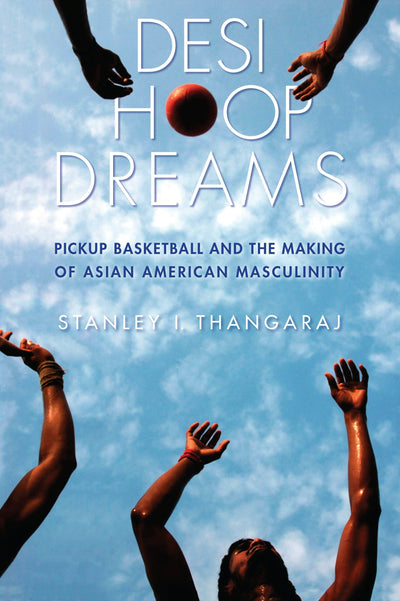




Desi Hoop Dreams
Regular price $39.00 Save $-39.00South Asian American men are not usually depicted as ideal American men. They struggle against popular representations as either threatening terrorists or geeky, effeminate computer geniuses. To combat such stereotypes, some use sports as a means of performing a distinctly American masculinity. Desi Hoop Dreams focuses on South Asian-only basketball leagues common in most major U.S. and Canadian cities, to show that basketball, for these South Asian American players is not simply a whimsical hobby, but a means to navigate and express their identities in 21st century America.
The participation of young men in basketball is one platform among many for performing South Asian American identity. South Asian-only leagues and tournaments become spaces in which to negotiate the relationships between masculinity, race, and nation. When faced with stereotypes that portray them as effeminate, players perform sporting feats on the court to represent themselves as athletic. And though they draw on black cultural styles, they carefully set themselves off from African American players, who are deemed “too aggressive.” Accordingly, the same categories of their own marginalization—masculinity, race, class, and sexuality—are those through which South Asian American men exclude women, queer masculinities, and working-class masculinities, along with other racialized masculinities, in their effort to lay claim to cultural citizenship.
One of the first works on masculinity formation and sport participation in South Asian American communities, Desi Hoop Dreams focuses on an American popular sport to analyze the dilemma of belonging within South Asian America in particular and in the U.S. in general.

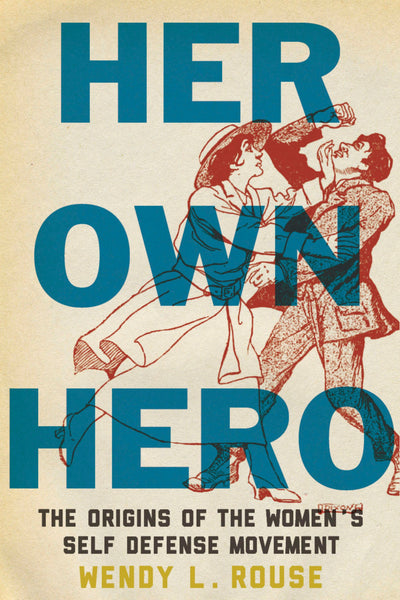
Her Own Hero
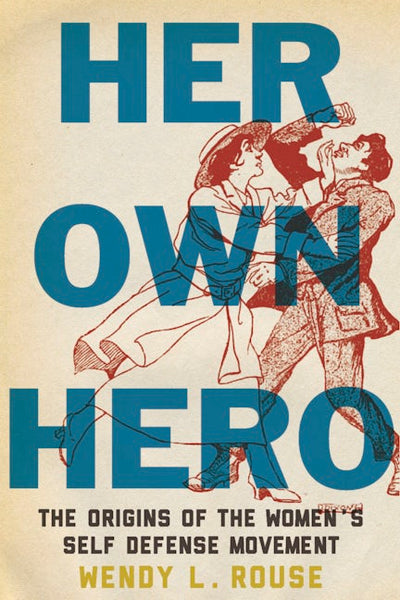
Regular price $31.00 Save $-31.00The surprising roots of the self-defense movement and the history of women’s empowerment.
At the turn of the twentieth century, women famously organized to demand greater social and political freedoms like gaining the right to vote. However, few realize that the Progressive Era also witnessed the birth of the women’s self-defense movement.
It is nearly impossible in today’s day and age to imagine a world without the concept of women’s self defense. Some women were inspired to take up boxing and jiu-jitsu for very personal reasons that ranged from protecting themselves from attacks by strangers on the street to rejecting gendered notions about feminine weakness and empowering themselves as their own protectors. Women’s training in self defense was both a reflection of and a response to the broader cultural issues of the time, including the women’s rights movement and the campaign for the vote.
Perhaps more importantly, the discussion surrounding women’s self-defense revealed powerful myths about the source of violence against women and opened up conversations about the less visible violence that many women faced in their own homes. Through self-defense training, women debunked patriarchal myths about inherent feminine weakness, creating a new image of women as powerful and self-reliant. Whether or not women consciously pursued self-defense for these reasons, their actions embodied feminist politics. Although their individual motivations may have varied, their collective action echoed through the twentieth century, demanding emancipation from the constrictions that prevented women from exercising their full rights as citizens and human beings. This book is a fascinating and comprehensive introduction to one of the most important women’s issues of all time.
This book will provoke good debate and offer distinct responses and solutions.

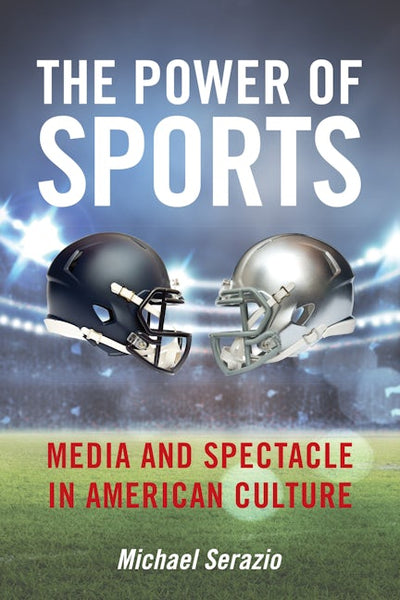
The Power of Sports
Regular price $28.00 Save $-28.00A provocative, must-read investigation that both appreciates the importance of—and punctures the hype around—big-time contemporary American athletics
In an increasingly secular, fragmented, and distracted culture, nothing brings Americans together quite like sports. On Sundays in September, more families worship at the altar of the NFL than at any church. This appeal, which cuts across all demographic and ideological lines, makes sports perhaps the last unifying mass ritual of our era, with huge numbers of people all focused on the same thing at the same moment. That timeless, live quality—impervious to DVR, evoking ancient religious rites—makes sports very powerful, and very lucrative. And the media spectacle around them is only getting bigger, brighter, and noisier—from hot take journalism formats to the creeping infestation of advertising to social media celebrity schemes.
More importantly, sports are sold as an oasis of community to a nation deeply divided: They are escapist, apolitical, the only tie that binds. In fact, precisely because they appear allegedly “above politics,” sports are able to smuggle potent messages about inequality, patriotism, labor, and race to massive audiences. And as the wider culture works through shifting gender roles and masculine power, those anxieties are also found in the experiences of female sports journalists, athletes, and fans, and through the coverage of violence by and against male bodies. Sports, rather than being the one thing everyone can agree on, perfectly encapsulate the roiling tensions of modern American life.
Michael Serazio maps and critiques the cultural production of today’s lucrative, ubiquitous sports landscape. Through dozens of in-depth interviews with leaders in sports media and journalism, as well as in the business and marketing of sports, The Power of Sports goes behind the scenes and tells a story of technological disruption, commercial greed, economic disparity, military hawkishness, and ideals of manhood. In the end, despite what our myths of escapism suggest, Serazio holds up a mirror to sports and reveals the lived realities of the nation staring back at us.

The Power of Sports
Regular price $39.00 Save $-39.00A provocative, must-read investigation that both appreciates the importance of—and punctures the hype around—big-time contemporary American athletics
In an increasingly secular, fragmented, and distracted culture, nothing brings Americans together quite like sports. On Sundays in September, more families worship at the altar of the NFL than at any church. This appeal, which cuts across all demographic and ideological lines, makes sports perhaps the last unifying mass ritual of our era, with huge numbers of people all focused on the same thing at the same moment. That timeless, live quality—impervious to DVR, evoking ancient religious rites—makes sports very powerful, and very lucrative. And the media spectacle around them is only getting bigger, brighter, and noisier—from hot take journalism formats to the creeping infestation of advertising to social media celebrity schemes.
More importantly, sports are sold as an oasis of community to a nation deeply divided: They are escapist, apolitical, the only tie that binds. In fact, precisely because they appear allegedly “above politics,” sports are able to smuggle potent messages about inequality, patriotism, labor, and race to massive audiences. And as the wider culture works through shifting gender roles and masculine power, those anxieties are also found in the experiences of female sports journalists, athletes, and fans, and through the coverage of violence by and against male bodies. Sports, rather than being the one thing everyone can agree on, perfectly encapsulate the roiling tensions of modern American life.
Michael Serazio maps and critiques the cultural production of today’s lucrative, ubiquitous sports landscape. Through dozens of in-depth interviews with leaders in sports media and journalism, as well as in the business and marketing of sports, The Power of Sports goes behind the scenes and tells a story of technological disruption, commercial greed, economic disparity, military hawkishness, and ideals of manhood. In the end, despite what our myths of escapism suggest, Serazio holds up a mirror to sports and reveals the lived realities of the nation staring back at us.

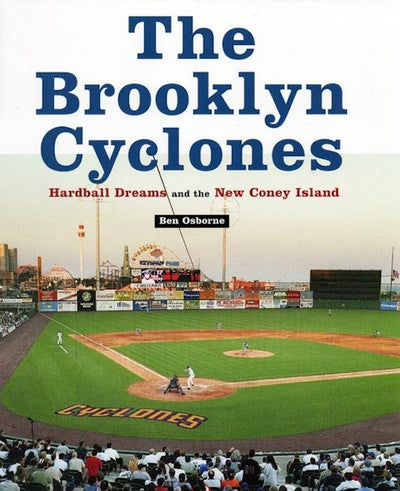
The Brooklyn Cyclones
Regular price $39.00 Save $-39.00When professional baseball returned to Brooklyn in 2001, fans were jubilant and the media swarmed. After losing the Brooklyn Dodgers to California 44 years ago, Brooklyn baseball fans could once again claim a team of their own: the Cyclones, a Class A affiliate of the New York Mets.
The Brooklyn Cyclones: Hardball Dreams and the New Coney Island recounts that first season of the Cyclones. From the construction of the incredible Keyspan Park at Coney Island to their improbable successes on the field, Ben Osborne tells the story of the Cyclones' delicate first year of operation. We see the story up close and personal through the eyes of two very different young men. The first is Anthony Otero, who was raised in a Coney Island housing project and loves baseball, but has never seen a game in person until the Cyclones land in his neighborhood. The second is Brett Kay, a young man from California who has never been to New York, until he becomes the catcher for the Brooklyn Cyclones.
From the plans of politicians like Rudy Giuliani and Howard Golden, to the poverty of Coney Island's citizens, The Brooklyn Cyclones reveals the stories behind the headlines to show that the reality of creating a new sports team often involves broken promises and shattered dreams. Osborne includes chapters on the Cyclones' rivalry with the Staten Island Yankees, the Cyclones' chances of capturing the New York-Penn League title, and an epilogue updating Kay's, Otero's, and the Cyclones' progress through the 2003 season.
Ultimately, Ben Osborne shows how, for these two young men, the Brooklyn Cyclones created dreams the same way the Brooklyn Dodgers allowed the boys of Flatbush to dream about one day playing in the Big Leagues.

Her Own Hero
Regular price $22.00 Save $-22.00The surprising roots of the self-defense movement and the history of women’s empowerment.
At the turn of the twentieth century, women famously organized to demand greater social and political freedoms like gaining the right to vote. However, few realize that the Progressive Era also witnessed the birth of the women’s self-defense movement.
It is nearly impossible in today’s day and age to imagine a world without the concept of women’s self defense. Some women were inspired to take up boxing and jiu-jitsu for very personal reasons that ranged from protecting themselves from attacks by strangers on the street to rejecting gendered notions about feminine weakness and empowering themselves as their own protectors. Women’s training in self defense was both a reflection of and a response to the broader cultural issues of the time, including the women’s rights movement and the campaign for the vote.
Perhaps more importantly, the discussion surrounding women’s self-defense revealed powerful myths about the source of violence against women and opened up conversations about the less visible violence that many women faced in their own homes. Through self-defense training, women debunked patriarchal myths about inherent feminine weakness, creating a new image of women as powerful and self-reliant. Whether or not women consciously pursued self-defense for these reasons, their actions embodied feminist politics. Although their individual motivations may have varied, their collective action echoed through the twentieth century, demanding emancipation from the constrictions that prevented women from exercising their full rights as citizens and human beings. This book is a fascinating and comprehensive introduction to one of the most important women’s issues of all time.
This book will provoke good debate and offer distinct responses and solutions.

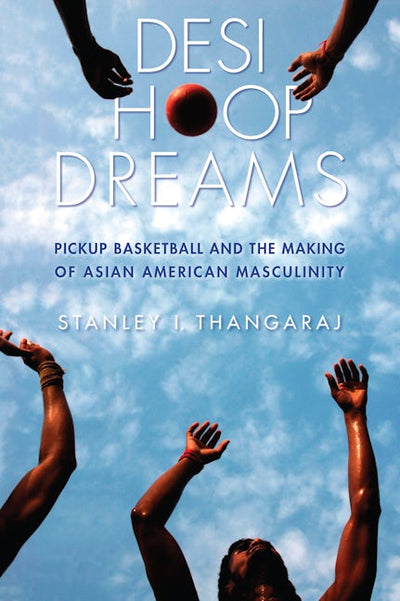
Desi Hoop Dreams
Regular price $28.00 Save $-28.00South Asian American men are not usually depicted as ideal American men. They struggle against popular representations as either threatening terrorists or geeky, effeminate computer geniuses. To combat such stereotypes, some use sports as a means of performing a distinctly American masculinity. Desi Hoop Dreams focuses on South Asian-only basketball leagues common in most major U.S. and Canadian cities, to show that basketball, for these South Asian American players is not simply a whimsical hobby, but a means to navigate and express their identities in 21st century America.
The participation of young men in basketball is one platform among many for performing South Asian American identity. South Asian-only leagues and tournaments become spaces in which to negotiate the relationships between masculinity, race, and nation. When faced with stereotypes that portray them as effeminate, players perform sporting feats on the court to represent themselves as athletic. And though they draw on black cultural styles, they carefully set themselves off from African American players, who are deemed “too aggressive.” Accordingly, the same categories of their own marginalization—masculinity, race, class, and sexuality—are those through which South Asian American men exclude women, queer masculinities, and working-class masculinities, along with other racialized masculinities, in their effort to lay claim to cultural citizenship.
One of the first works on masculinity formation and sport participation in South Asian American communities, Desi Hoop Dreams focuses on an American popular sport to analyze the dilemma of belonging within South Asian America in particular and in the U.S. in general.

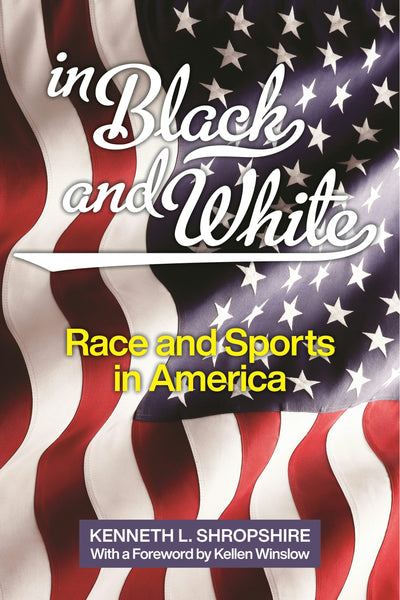
In Black and White
Regular price $30.00 Save $-30.00Confronts the pressing problems surrounding race and diversity in the front offices of the American sports industry
From the years of the Negro Leagues in baseball up to today, when college basketball programs entice and then fail to educate young Black men, sports in America have long served as a barometer of the country’s racial climate. Just as Black employees are often barred from the upper echelons of corporate America, they are underrepresented in the front offices of the sports industry as well. In this compact volume, Kenneth L. Shropshire confronts prominent racial myths head-on, offering both a history of—and solutions for—the most pressing problems currently plaguing sports.
Despite the fact that Black athletes represent a huge majority of the American sports industry, the majority of ownership stake in professional basketball, baseball, and football teams is still held by white owners. And yet, when confronted with programs intended to diversify their front offices, many teams resort to the familiar refrain of merit-based excuses: there simply aren't enough qualified Black candidates or they don't know how to network. These hollow excuses not only stigmatize and exclude Black employees, but directly contradict the important value Black candidates can bring to these roles. In the insular world of sports, where former players often move up to become coaches, managers, executives, and owners, Black candidates are eminently qualified. After decades of active involvement with their sport, they often bring to the table experiences more relevant to the Black players on their teams. As a central aspect of American life, the sports industry has a responsibility to be a leader in the fight for racial equality—a responsibility that has not yet been met.
In Black and White takes the industry to task, revealing claims of colorblindness and reverse racism as self-serving deflection and scrutinizing professional and collegiate sports, sports agents, and owners alike. No mere critique, however, the volume looks optimistically forward, outlining strategies that will drive the sports industry toward greater racial equality, and help it lead the way for racial justice efforts throughout America.

The Brooklyn Cyclones
Regular price $32.00 Save $-32.00When professional baseball returned to Brooklyn in 2001, fans were jubilant and the media swarmed. After losing the Brooklyn Dodgers to California 44 years ago, Brooklyn baseball fans could once again claim a team of their own: the Cyclones, a Class A affiliate of the New York Mets.
The Brooklyn Cyclones: Hardball Dreams and the New Coney Island recounts that first season of the Cyclones. From the construction of the incredible Keyspan Park at Coney Island to their improbable successes on the field, Ben Osborne tells the story of the Cyclones' delicate first year of operation. We see the story up close and personal through the eyes of two very different young men. The first is Anthony Otero, who was raised in a Coney Island housing project and loves baseball, but has never seen a game in person until the Cyclones land in his neighborhood. The second is Brett Kay, a young man from California who has never been to New York, until he becomes the catcher for the Brooklyn Cyclones.
From the plans of politicians like Rudy Giuliani and Howard Golden, to the poverty of Coney Island's citizens, The Brooklyn Cyclones reveals the stories behind the headlines to show that the reality of creating a new sports team often involves broken promises and shattered dreams. Osborne includes chapters on the Cyclones' rivalry with the Staten Island Yankees, the Cyclones' chances of capturing the New York-Penn League title, and an epilogue updating Kay's, Otero's, and the Cyclones' progress through the 2003 season.
Ultimately, Ben Osborne shows how, for these two young men, the Brooklyn Cyclones created dreams the same way the Brooklyn Dodgers allowed the boys of Flatbush to dream about one day playing in the Big Leagues.

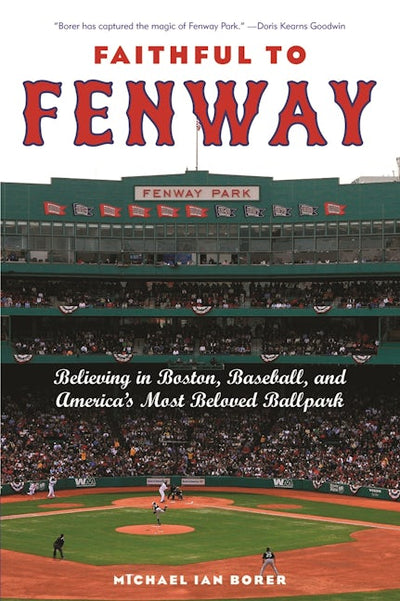
Faithful to Fenway
Regular price $29.00 Save $-29.00An unforgettable pilgrimage through America's oldest major league ballpark
The Green Monster. Pesky's Pole. The Lone Red Seat. Yawkey Way. To baseball fans this list of bizarre phrases evokes only one place: Fenway Park, home of the Boston Red Sox. Built in 1912, Fenway Park is Americas oldest major league ballpark still in use. In Faithful to Fenway, Michael Ian Borer takes us out to Fenway where we sit in cramped wooden seats (often with obstructed views of the playing field), where there is a hand-operated scoreboard and an average attendance of 20,000 fewer fans than most stadiums, and where every game has been sold out since May of 2003. There is no Hard Rock Café (like Toronto's Skydome), no swimming pool (like Arizona's Chase Field), and definitely no sushi (which has become a fan favorite from Baltimore to Seattle). As Borer tells us in this captivating book, Fenway is short on comfort but long on character.
Faithful to Fenway investigates the mystique of the ballpark. Borer, who lived in Boston before and after the Red Sox historic 2004 World Series win, draws on interviews with Red Sox players, including Jason Varitek and Carl Yastrzemski, management, including Larry Lucchino and John Henry, groundskeepers, vendors, and scores of fans to uncover what the park means for Boston and the people who revere it. Borer argues that Fenway is nothing less than a national icon, more than worthy of the banner outside the stadium that proclaims, “America's Most Beloved Ballpark”. Certainly as one of New England's greatest landmarks, Fenway captures the hearts and imaginations of a deferential and devoted public. There are T-shirts, bumper stickers, banners, and snow globes that honor the ballpark. Fenway shows up in popular films, novels, television commercials, and in replicated form in people's backyards—and coming in 2008 to Quincy, Massachusetts, is Mini-Fenway Park, a replica stadium built especially for kids.
Full of legendary stories, amusing anecdotes, and the shared triumph and tragedy of the Red Sox and their fans, Faithful to Fenway offers a fresh and insightful perspective, offering readers an unforgettable pilgrimage to the mecca of baseball.

Faithful to Fenway
Regular price $107.00 Save $-107.00An unforgettable pilgrimage through America's oldest major league ballpark
The Green Monster. Pesky's Pole. The Lone Red Seat. Yawkey Way. To baseball fans this list of bizarre phrases evokes only one place: Fenway Park, home of the Boston Red Sox. Built in 1912, Fenway Park is Americas oldest major league ballpark still in use. In Faithful to Fenway, Michael Ian Borer takes us out to Fenway where we sit in cramped wooden seats (often with obstructed views of the playing field), where there is a hand-operated scoreboard and an average attendance of 20,000 fewer fans than most stadiums, and where every game has been sold out since May of 2003. There is no Hard Rock Café (like Toronto's Skydome), no swimming pool (like Arizona's Chase Field), and definitely no sushi (which has become a fan favorite from Baltimore to Seattle). As Borer tells us in this captivating book, Fenway is short on comfort but long on character.
Faithful to Fenway investigates the mystique of the ballpark. Borer, who lived in Boston before and after the Red Sox historic 2004 World Series win, draws on interviews with Red Sox players, including Jason Varitek and Carl Yastrzemski, management, including Larry Lucchino and John Henry, groundskeepers, vendors, and scores of fans to uncover what the park means for Boston and the people who revere it. Borer argues that Fenway is nothing less than a national icon, more than worthy of the banner outside the stadium that proclaims, “America's Most Beloved Ballpark”. Certainly as one of New England's greatest landmarks, Fenway captures the hearts and imaginations of a deferential and devoted public. There are T-shirts, bumper stickers, banners, and snow globes that honor the ballpark. Fenway shows up in popular films, novels, television commercials, and in replicated form in people's backyards—and coming in 2008 to Quincy, Massachusetts, is Mini-Fenway Park, a replica stadium built especially for kids.
Full of legendary stories, amusing anecdotes, and the shared triumph and tragedy of the Red Sox and their fans, Faithful to Fenway offers a fresh and insightful perspective, offering readers an unforgettable pilgrimage to the mecca of baseball.

Desi Hoop Dreams
Regular price $107.00 Save $-107.00South Asian American men are not usually depicted as ideal American men. They struggle against popular representations as either threatening terrorists or geeky, effeminate computer geniuses. To combat such stereotypes, some use sports as a means of performing a distinctly American masculinity. Desi Hoop Dreams focuses on South Asian-only basketball leagues common in most major U.S. and Canadian cities, to show that basketball, for these South Asian American players is not simply a whimsical hobby, but a means to navigate and express their identities in 21st century America.
The participation of young men in basketball is one platform among many for performing South Asian American identity. South Asian-only leagues and tournaments become spaces in which to negotiate the relationships between masculinity, race, and nation. When faced with stereotypes that portray them as effeminate, players perform sporting feats on the court to represent themselves as athletic. And though they draw on black cultural styles, they carefully set themselves off from African American players, who are deemed “too aggressive.” Accordingly, the same categories of their own marginalization—masculinity, race, class, and sexuality—are those through which South Asian American men exclude women, queer masculinities, and working-class masculinities, along with other racialized masculinities, in their effort to lay claim to cultural citizenship.
One of the first works on masculinity formation and sport participation in South Asian American communities, Desi Hoop Dreams focuses on an American popular sport to analyze the dilemma of belonging within South Asian America in particular and in the U.S. in general.

In Black and White
Regular price $107.00 Save $-107.00Confronts the pressing problems surrounding race and diversity in the front offices of the American sports industry
From the years of the Negro Leagues in baseball up to today, when college basketball programs entice and then fail to educate young Black men, sports in America have long served as a barometer of the country’s racial climate. Just as Black employees are often barred from the upper echelons of corporate America, they are underrepresented in the front offices of the sports industry as well. In this compact volume, Kenneth L. Shropshire confronts prominent racial myths head-on, offering both a history of—and solutions for—the most pressing problems currently plaguing sports.
Despite the fact that Black athletes represent a huge majority of the American sports industry, the majority of ownership stake in professional basketball, baseball, and football teams is still held by white owners. And yet, when confronted with programs intended to diversify their front offices, many teams resort to the familiar refrain of merit-based excuses: there simply aren't enough qualified Black candidates or they don't know how to network. These hollow excuses not only stigmatize and exclude Black employees, but directly contradict the important value Black candidates can bring to these roles. In the insular world of sports, where former players often move up to become coaches, managers, executives, and owners, Black candidates are eminently qualified. After decades of active involvement with their sport, they often bring to the table experiences more relevant to the Black players on their teams. As a central aspect of American life, the sports industry has a responsibility to be a leader in the fight for racial equality—a responsibility that has not yet been met.
In Black and White takes the industry to task, revealing claims of colorblindness and reverse racism as self-serving deflection and scrutinizing professional and collegiate sports, sports agents, and owners alike. No mere critique, however, the volume looks optimistically forward, outlining strategies that will drive the sports industry toward greater racial equality, and help it lead the way for racial justice efforts throughout America.

Basketball Jones
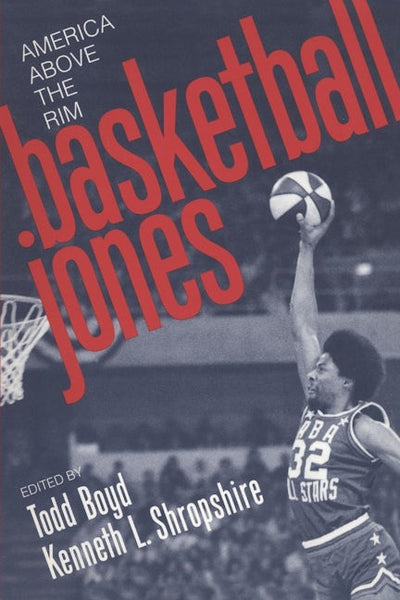
Regular price $107.00 Save $-107.00It began with Magic, Bird, and Dr. J. Then came Michael. The Dream Team. The WNBA. And, most recently, "Spree" Latrell Sprewell--American Dream or American Nightmare?--the embodiment of everything many believe is wrong--and others believe is exciting--about the game.
Today, despite the NBA strike, despite home run derbies, despite football's headlock on network television ratings, despite the much-heralded return of baseball, basketball has assumed a role in American culture and consciousness impossible to imagine 20 years ago, when arenas were empty and the NBA finals were broadcast via tape delay in the wee hours.
So what happened? How did a "black sport," plagued by drug scandal and decimated by white flight, come to achieve such prominence? What are the subtle and not-so-subtle racial codes that define how the game is played and perceived, and the reception of its high-profile stars? What does the shift in popularity from the predominantly white, working-class ethos of baseball to the black, urban ethos of basketball suggest about contemporary life in America? What linkages exist between basketball and hip-hop culture and how did these develop? How has the arrival of women on the scene changed the equation?
Bringing together journalists, cultural critics, and academics, this wide-ranging anthology has something for everyone, from hard-core fan to casual observer.
Contributors: Todd Boyd, Kenneth L. Shropshire, Gerald Early, James Peterson, Susan J. Rayl, Davis W. Houck, Mark Conrad, Charles J. Ogletree, Jr., Earl Smith, Sohail Daulatzi, Larry Platt, Tina Sloan Green, Alpha Alexander, Tara McPherson, Aaron Baker.

Her Own Hero
Regular price $98.00 Save $-98.00The surprising roots of the self-defense movement and the history of women’s empowerment.
At the turn of the twentieth century, women famously organized to demand greater social and political freedoms like gaining the right to vote. However, few realize that the Progressive Era also witnessed the birth of the women’s self-defense movement.
It is nearly impossible in today’s day and age to imagine a world without the concept of women’s self defense. Some women were inspired to take up boxing and jiu-jitsu for very personal reasons that ranged from protecting themselves from attacks by strangers on the street to rejecting gendered notions about feminine weakness and empowering themselves as their own protectors. Women’s training in self defense was both a reflection of and a response to the broader cultural issues of the time, including the women’s rights movement and the campaign for the vote.
Perhaps more importantly, the discussion surrounding women’s self-defense revealed powerful myths about the source of violence against women and opened up conversations about the less visible violence that many women faced in their own homes. Through self-defense training, women debunked patriarchal myths about inherent feminine weakness, creating a new image of women as powerful and self-reliant. Whether or not women consciously pursued self-defense for these reasons, their actions embodied feminist politics. Although their individual motivations may have varied, their collective action echoed through the twentieth century, demanding emancipation from the constrictions that prevented women from exercising their full rights as citizens and human beings. This book is a fascinating and comprehensive introduction to one of the most important women’s issues of all time.
This book will provoke good debate and offer distinct responses and solutions.

In Black and White
Regular price $36.00 Save $-36.00Confronts the pressing problems surrounding race and diversity in the front offices of the American sports industry
From the years of the Negro Leagues in baseball up to today, when college basketball programs entice and then fail to educate young Black men, sports in America have long served as a barometer of the country’s racial climate. Just as Black employees are often barred from the upper echelons of corporate America, they are underrepresented in the front offices of the sports industry as well. In this compact volume, Kenneth L. Shropshire confronts prominent racial myths head-on, offering both a history of—and solutions for—the most pressing problems currently plaguing sports.
Despite the fact that Black athletes represent a huge majority of the American sports industry, the majority of ownership stake in professional basketball, baseball, and football teams is still held by white owners. And yet, when confronted with programs intended to diversify their front offices, many teams resort to the familiar refrain of merit-based excuses: there simply aren't enough qualified Black candidates or they don't know how to network. These hollow excuses not only stigmatize and exclude Black employees, but directly contradict the important value Black candidates can bring to these roles. In the insular world of sports, where former players often move up to become coaches, managers, executives, and owners, Black candidates are eminently qualified. After decades of active involvement with their sport, they often bring to the table experiences more relevant to the Black players on their teams. As a central aspect of American life, the sports industry has a responsibility to be a leader in the fight for racial equality—a responsibility that has not yet been met.
In Black and White takes the industry to task, revealing claims of colorblindness and reverse racism as self-serving deflection and scrutinizing professional and collegiate sports, sports agents, and owners alike. No mere critique, however, the volume looks optimistically forward, outlining strategies that will drive the sports industry toward greater racial equality, and help it lead the way for racial justice efforts throughout America.

Basketball Jones
Regular price $36.00 Save $-36.00It began with Magic, Bird, and Dr. J. Then came Michael. The Dream Team. The WNBA. And, most recently, "Spree" Latrell Sprewell--American Dream or American Nightmare?--the embodiment of everything many believe is wrong--and others believe is exciting--about the game.
Today, despite the NBA strike, despite home run derbies, despite football's headlock on network television ratings, despite the much-heralded return of baseball, basketball has assumed a role in American culture and consciousness impossible to imagine 20 years ago, when arenas were empty and the NBA finals were broadcast via tape delay in the wee hours.
So what happened? How did a "black sport," plagued by drug scandal and decimated by white flight, come to achieve such prominence? What are the subtle and not-so-subtle racial codes that define how the game is played and perceived, and the reception of its high-profile stars? What does the shift in popularity from the predominantly white, working-class ethos of baseball to the black, urban ethos of basketball suggest about contemporary life in America? What linkages exist between basketball and hip-hop culture and how did these develop? How has the arrival of women on the scene changed the equation?
Bringing together journalists, cultural critics, and academics, this wide-ranging anthology has something for everyone, from hard-core fan to casual observer.
Contributors: Todd Boyd, Kenneth L. Shropshire, Gerald Early, James Peterson, Susan J. Rayl, Davis W. Houck, Mark Conrad, Charles J. Ogletree, Jr., Earl Smith, Sohail Daulatzi, Larry Platt, Tina Sloan Green, Alpha Alexander, Tara McPherson, Aaron Baker.

Faithful to Fenway
Regular price $35.00 Save $-35.00An unforgettable pilgrimage through America's oldest major league ballpark
The Green Monster. Pesky's Pole. The Lone Red Seat. Yawkey Way. To baseball fans this list of bizarre phrases evokes only one place: Fenway Park, home of the Boston Red Sox. Built in 1912, Fenway Park is Americas oldest major league ballpark still in use. In Faithful to Fenway, Michael Ian Borer takes us out to Fenway where we sit in cramped wooden seats (often with obstructed views of the playing field), where there is a hand-operated scoreboard and an average attendance of 20,000 fewer fans than most stadiums, and where every game has been sold out since May of 2003. There is no Hard Rock Café (like Toronto's Skydome), no swimming pool (like Arizona's Chase Field), and definitely no sushi (which has become a fan favorite from Baltimore to Seattle). As Borer tells us in this captivating book, Fenway is short on comfort but long on character.
Faithful to Fenway investigates the mystique of the ballpark. Borer, who lived in Boston before and after the Red Sox historic 2004 World Series win, draws on interviews with Red Sox players, including Jason Varitek and Carl Yastrzemski, management, including Larry Lucchino and John Henry, groundskeepers, vendors, and scores of fans to uncover what the park means for Boston and the people who revere it. Borer argues that Fenway is nothing less than a national icon, more than worthy of the banner outside the stadium that proclaims, “America's Most Beloved Ballpark”. Certainly as one of New England's greatest landmarks, Fenway captures the hearts and imaginations of a deferential and devoted public. There are T-shirts, bumper stickers, banners, and snow globes that honor the ballpark. Fenway shows up in popular films, novels, television commercials, and in replicated form in people's backyards—and coming in 2008 to Quincy, Massachusetts, is Mini-Fenway Park, a replica stadium built especially for kids.
Full of legendary stories, amusing anecdotes, and the shared triumph and tragedy of the Red Sox and their fans, Faithful to Fenway offers a fresh and insightful perspective, offering readers an unforgettable pilgrimage to the mecca of baseball.

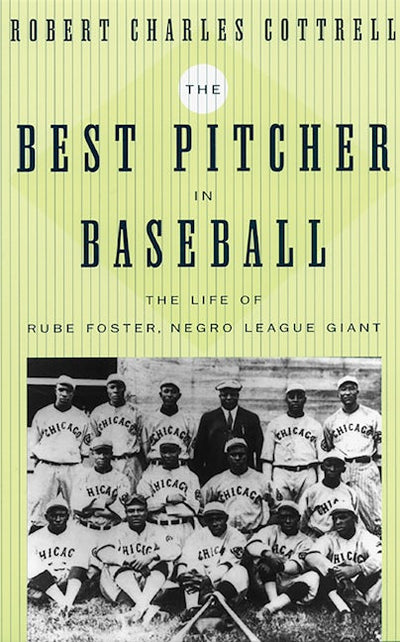
The Best Pitcher in Baseball
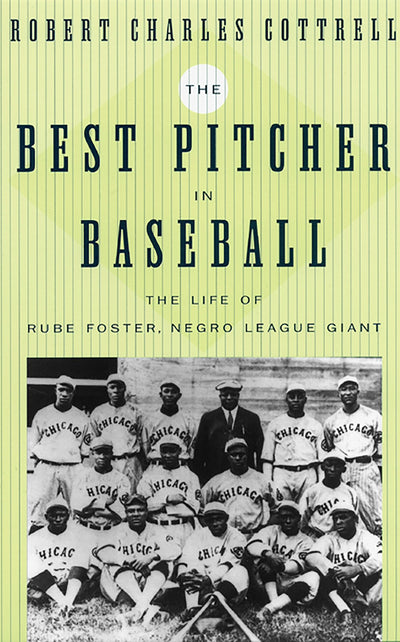
Regular price $30.00 Save $-30.00When Rube Foster was inducted into the National Baseball Hall of Fame in 1981, his rightful place alongside baseball's greatest black heroes was at last firmly established. A world-class pitcher, a formidable manager, and a brilliant administrator, Rube Foster was arguably more influential in breaking down the color barrier in major league baseball than the venerable Jackie Robinson.
Born in 1879, Rube Foster pitched for the legendary black baseball teamsthe Cuban X-Giants and the Philadelphia Giants before becoming player-manager of the Leland Giants and the Chicago American Giants. Long a central figure in black baseball, he founded baseball's first black leaguethe Negro National League in 1920. From its inception, the Negro League served as a vehicle through which many of the finest black players could showcase their considerable talents. Challenging racial discrimination and stereotypes, it ultimately set the stage for future efforts to contest Jim Crow.
Despite the long-standing success of the Negro National League as an influential black institution, Rube Foster was deeply embittered by organized baseball's unmitigated refusal to lift the color barrier. He died a broken man in 1930.
The Best Pitcher in Baseball is the story of a man of unparalleled vision and organizational acumen whose passion for justice changed the face of baseball forever. It is a moving tribute to a man and his dream.

The Best Pitcher in Baseball
Regular price $107.00 Save $-107.00When Rube Foster was inducted into the National Baseball Hall of Fame in 1981, his rightful place alongside baseball's greatest black heroes was at last firmly established. A world-class pitcher, a formidable manager, and a brilliant administrator, Rube Foster was arguably more influential in breaking down the color barrier in major league baseball than the venerable Jackie Robinson.
Born in 1879, Rube Foster pitched for the legendary black baseball teamsthe Cuban X-Giants and the Philadelphia Giants before becoming player-manager of the Leland Giants and the Chicago American Giants. Long a central figure in black baseball, he founded baseball's first black leaguethe Negro National League in 1920. From its inception, the Negro League served as a vehicle through which many of the finest black players could showcase their considerable talents. Challenging racial discrimination and stereotypes, it ultimately set the stage for future efforts to contest Jim Crow.
Despite the long-standing success of the Negro National League as an influential black institution, Rube Foster was deeply embittered by organized baseball's unmitigated refusal to lift the color barrier. He died a broken man in 1930.
The Best Pitcher in Baseball is the story of a man of unparalleled vision and organizational acumen whose passion for justice changed the face of baseball forever. It is a moving tribute to a man and his dream.

The Best Pitcher in Baseball
Regular price $36.00 Save $-36.00When Rube Foster was inducted into the National Baseball Hall of Fame in 1981, his rightful place alongside baseball's greatest black heroes was at last firmly established. A world-class pitcher, a formidable manager, and a brilliant administrator, Rube Foster was arguably more influential in breaking down the color barrier in major league baseball than the venerable Jackie Robinson.
Born in 1879, Rube Foster pitched for the legendary black baseball teamsthe Cuban X-Giants and the Philadelphia Giants before becoming player-manager of the Leland Giants and the Chicago American Giants. Long a central figure in black baseball, he founded baseball's first black leaguethe Negro National League in 1920. From its inception, the Negro League served as a vehicle through which many of the finest black players could showcase their considerable talents. Challenging racial discrimination and stereotypes, it ultimately set the stage for future efforts to contest Jim Crow.
Despite the long-standing success of the Negro National League as an influential black institution, Rube Foster was deeply embittered by organized baseball's unmitigated refusal to lift the color barrier. He died a broken man in 1930.
The Best Pitcher in Baseball is the story of a man of unparalleled vision and organizational acumen whose passion for justice changed the face of baseball forever. It is a moving tribute to a man and his dream.
