

Filter
-
Antiques & Collectibles
-
Architecture
-
Art
-
Bibles
-
Biography & Autobiography
-
Body, Mind & Spirit
-
Business & Economics
-
Comics & Graphic Novels
-
Computers
-
Cooking
-
Crafts & Hobbies
-
Design
-
Education
-
Family & Relationship
-
Fiction
-
Foreign Language Study
-
Games & Activities
-
Gardening
-
Health & Fitness
-
History
-
House & Home
-
Humor
-
Juvenile Fiction
-
Juvenile Nonfiction
-
Language Arts & Disciplines
-
Law
-
Literary Collections
-
Literary Criticism
-
Mathematics
-
Medical
-
Miscellaneous
-
Music
-
Nature
-
Performing Arts
-
Pets
-
Philosophy
-
Photography
-
Poetry
-
Political Science
-
Psychology
-
Reference
-
Religion
-
Self-Help
-
Science
-
Social Science
-
Sports & Recreation
-
Study Aids
-
Technology & Engineering
-
Transportation
-
Travel
-
True Crime
-
Young Adult Fiction
-
Young Adult Nonfiction
-
Antiques & Collectibles
-
Architecture
-
Art
-
Bibles
-
Biography & Autobiography
-
Body, Mind & Spirit
-
Business & Economics
-
Comics & Graphic Novels
-
Computers
-
Cooking
-
Crafts & Hobbies
-
Design
-
Education
-
Family & Relationship
-
Fiction
-
Foreign Language Study
-
Games & Activities
-
Gardening
-
Health & Fitness
-
History
-
House & Home
-
Humor
-
Juvenile Fiction
-
Juvenile Nonfiction
-
Language Arts & Disciplines
-
Law
-
Literary Collections
-
Literary Criticism
-
Mathematics
-
Medical
-
Miscellaneous
-
Music
-
Nature
-
Performing Arts
-
Pets
-
Philosophy
-
Photography
-
Poetry
-
Political Science
-
Psychology
-
Reference
-
Religion
-
Self-Help
-
Science
-
Social Science
-
Sports & Recreation
-
Study Aids
-
Technology & Engineering
-
Transportation
-
Travel
-
True Crime
-
Young Adult Fiction
-
Young Adult Nonfiction
10 products




Almost a Dynasty
Regular price $34.95 Save $-34.95Being a Phillies fan has never been easy. The team has amassed the most losses of any professional sports franchise in history, as well as the longest losing streak and the most last-place finishes in the major leagues.
The year 1980 was redemption for a miserable, century-old legacy of losing. It was also the beginning of the end for a team that could have been among the very best in baseball throughout the decade. Between 1980 and 1983 the Philadelphia Phillies captured two pennants and a world championship. Legends like Tug McGraw, Steve Carlton, Mike Schmidt, and Pete Rose led the collection of homegrown products, veteran castoffs, and fair-haired rookies. If they had won another World Series, the team not only would have distanced themselves from a history of losing but would have established a championship dynasty. It never happened.
The 1981 season was a watershed for both the Phillies and baseball. A players' strike led to a sixty-day work stoppage. The Phils, who had been in first place before the strike, were unable to regain their winning ways after play resumed. Labor relations between an increasingly powerful Players Association and inflexible owners became more acrimonious than ever before. Player salaries skyrocketed. Old loyalties were forgotten, and the notion of a homegrown team, like the 1980 Phillies, was a thing of the past.
Almost a Dynasty details the rise and fall of the 1980 World Champion Phillies. Based on personal interviews, newspaper accounts, and the keen insight of a veteran baseball writer, the book convincingly explains why a team that had regularly made the post-season in the mid- to late 1970s, only to lose in the playoffs, was finally able to win its first world championship.

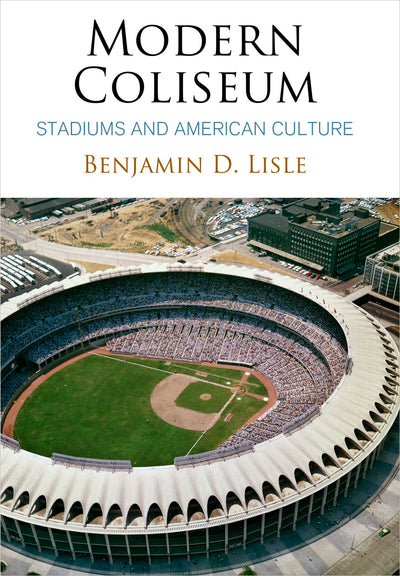
Modern Coliseum
Regular price $50.00 Save $-50.00From the legendary Ebbets Field in the heart of Brooklyn to the amenity-packed Houston Astrodome to the "retro" Oriole Park at Camden Yards, stadiums have taken many shapes and served different purposes throughout the history of American sports culture. In the early twentieth century, a new generation of stadiums arrived, located in the city center, easily accessible to the public, and offering affordable tickets that drew mixed crowds of men and women from different backgrounds. But in the successive decades, planners and architects turned sharply away from this approach.
In Modern Coliseum, Benjamin D. Lisle tracks changes in stadium design and culture since World War II. These engineered marvels channeled postwar national ambitions while replacing aging ballparks typically embedded in dense urban settings. They were stadiums designed for the "affluent society"—brightly colored, technologically expressive, and geared to the car-driving, consumerist suburbanite. The modern stadium thus redefined one of the city's more rambunctious and diverse public spaces.
Modern Coliseum offers a cultural history of this iconic but overlooked architectural form. Lisle grounds his analysis in extensive research among the archives of teams, owners, architects, and cities, examining how design, construction, and operational choices were made. Through this approach, we see modernism on the ground, as it was imagined, designed, built, and experienced as both an architectural and a social phenomenon. With Lisle's compelling analysis supplemented by over seventy-five images documenting the transformation of the American stadium over time, Modern Coliseum will be of interest to a variety of readers, from urban and architectural historians to sports fans.

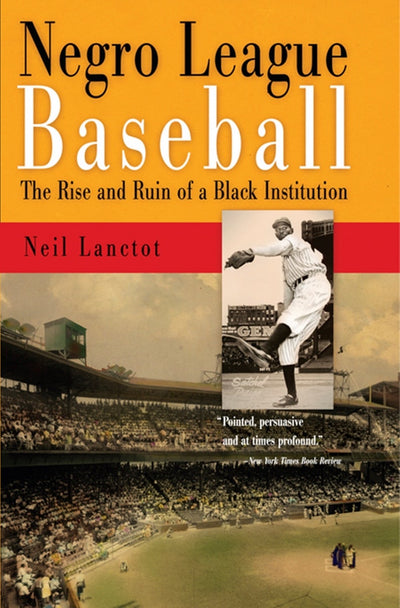
Negro League Baseball
Regular price $39.95 Save $-39.95The story of black professional baseball provides a remarkable perspective on several major themes in modern African American history: the initial black response to segregation, the subsequent struggle to establish successful separate enterprises, and the later movement toward integration. Baseball functioned as a critical component in the separate economy catering to black consumers in the urban centers of the North and South. While most black businesses struggled to survive from year to year, professional baseball teams and leagues operated for decades, representing a major achievement in black enterprise and institution building.
Negro League Baseball: The Rise and Ruin of a Black Institution presents the extraordinary history of a great African American achievement, from its lowest ebb during the Depression, through its golden age and World War II, until its gradual disappearance during the early years of the civil rights era. Faced with only a limited amount of correspondence and documents, Lanctot consulted virtually every sports page of every black newspaper located in a league city. He then conducted interviews with former players and scrutinized existing financial, court, and federal records. Through his efforts, Lanctot has painstakingly reconstructed the institutional history of black professional baseball, locating the players, teams, owners, and fans in the wider context of the league's administration. In addition, he provides valuable insight into the changing attitudes of African Americans toward the need for separate institutions.

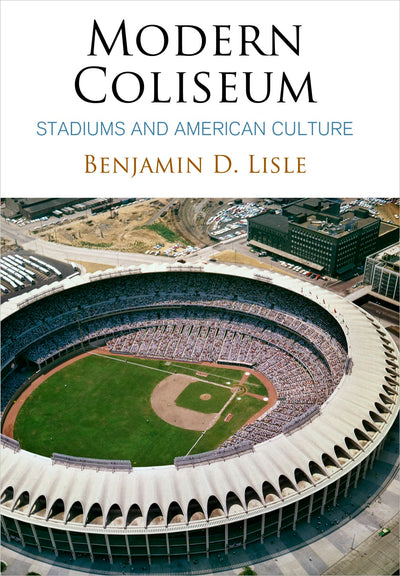
Modern Coliseum
Regular price $50.00 Save $-50.00From the legendary Ebbets Field in the heart of Brooklyn to the amenity-packed Houston Astrodome to the "retro" Oriole Park at Camden Yards, stadiums have taken many shapes and served different purposes throughout the history of American sports culture. In the early twentieth century, a new generation of stadiums arrived, located in the city center, easily accessible to the public, and offering affordable tickets that drew mixed crowds of men and women from different backgrounds. But in the successive decades, planners and architects turned sharply away from this approach.
In Modern Coliseum, Benjamin D. Lisle tracks changes in stadium design and culture since World War II. These engineered marvels channeled postwar national ambitions while replacing aging ballparks typically embedded in dense urban settings. They were stadiums designed for the "affluent society"—brightly colored, technologically expressive, and geared to the car-driving, consumerist suburbanite. The modern stadium thus redefined one of the city's more rambunctious and diverse public spaces.
Modern Coliseum offers a cultural history of this iconic but overlooked architectural form. Lisle grounds his analysis in extensive research among the archives of teams, owners, architects, and cities, examining how design, construction, and operational choices were made. Through this approach, we see modernism on the ground, as it was imagined, designed, built, and experienced as both an architectural and a social phenomenon. With Lisle's compelling analysis supplemented by over seventy-five images documenting the transformation of the American stadium over time, Modern Coliseum will be of interest to a variety of readers, from urban and architectural historians to sports fans.

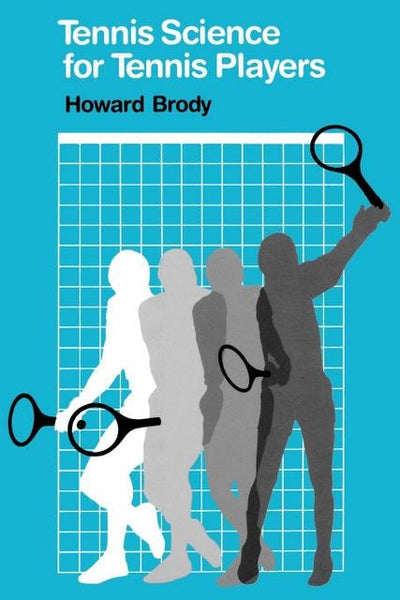
Tennis Science for Tennis Players
Regular price $24.95 Save $-24.95How does your opponent put that tricky spin on the ball? Why are some serves easier to return than others? The mysteries behind the winning strokes, equipment, and surfaces of the game of tennis are accessibly explained by Howard Brody through the laws of physics. And he gives practical pointers to ways players can use this understanding to advantage in the game.
Through extensive laboratory testing and computer modeling, Brody has investigated the physics behind the shape of the tennis racket, the string pattern, the bounce of the tennis ball, the ways a particular court surface can determine the speed of the game, and the many other physical factors involved in tennis.

Football
Regular price $64.95 Save $-64.95Every autumn American football fans pack large college stadiums or crowd around grassy fields to root for their favorite teams. Most are unaware that this most popular American sport was created by the teams that now make up the Ivy League. From the day Princeton played the first intercollegiate game in 1869, these major schools of the northeast—Brown, Columbia, Cornell, Dartmouth, Harvard, Pennsylvania, Princeton, and Yale—shaped football as we now know it. Almost every facet of the game still bears their imprint: they created the All-America team, produced the first coaches, devised the basic rules, invented many of the strategies, developed much of the equipment, and even named the positions. Both the Heisman and Outland trophies are named for Ivy League players.
Crowds of 80,000 no longer attend Ivy League games as they did seventy years ago, and Ivy teams are not the powerhouses they once were, but at times they can still be a step ahead of the rest of football, as in 1973 when Brown and Penn started the first black quarterbacks to face each other in major college history.
In this rich history, Bernstein shows that much of the culture that surrounds American football, both good and bad, has its roots in the Ivy League. The college fight song is an Ivy League creation (Yale's was written by Cole Porter), as are the marching bands that play them. With their long winning streaks and impressive victories, Ivy teams started a national obsession with football in the first decades of the twentieth century that remains alive today. But football was almost abolished early on because of violence in Ivy games, and it took President Theodore Roosevelt to mediate disagreements about rough play in order for football to remain a college sport. Gambling and ticket scalping were as commonplace then as now, as well as payoffs and recruiting abuses, fueled by the tremendous amount of money generated by the games, revenue that was oftentimes greater than that collected by the rest of the university. But the Ivy teams confronted those abuses, and in so doing helped develop our ideals about the role of athletics in college life. Although Ivy League football and its ancient rivalries have disappeared from big-time sports by their own accord, their legacy remains with every snap of the ball.

Tennis Science for Tennis Players
Regular price $24.95 Save $-24.95How does your opponent put that tricky spin on the ball? Why are some serves easier to return than others? The mysteries behind the winning strokes, equipment, and surfaces of the game of tennis are accessibly explained by Howard Brody through the laws of physics. And he gives practical pointers to ways players can use this understanding to advantage in the game.
Through extensive laboratory testing and computer modeling, Brody has investigated the physics behind the shape of the tennis racket, the string pattern, the bounce of the tennis ball, the ways a particular court surface can determine the speed of the game, and the many other physical factors involved in tennis.

Negro League Baseball
Regular price $39.95 Save $-39.95The story of black professional baseball provides a remarkable perspective on several major themes in modern African American history: the initial black response to segregation, the subsequent struggle to establish successful separate enterprises, and the later movement toward integration. Baseball functioned as a critical component in the separate economy catering to black consumers in the urban centers of the North and South. While most black businesses struggled to survive from year to year, professional baseball teams and leagues operated for decades, representing a major achievement in black enterprise and institution building.
Negro League Baseball: The Rise and Ruin of a Black Institution presents the extraordinary history of a great African American achievement, from its lowest ebb during the Depression, through its golden age and World War II, until its gradual disappearance during the early years of the civil rights era. Faced with only a limited amount of correspondence and documents, Lanctot consulted virtually every sports page of every black newspaper located in a league city. He then conducted interviews with former players and scrutinized existing financial, court, and federal records. Through his efforts, Lanctot has painstakingly reconstructed the institutional history of black professional baseball, locating the players, teams, owners, and fans in the wider context of the league's administration. In addition, he provides valuable insight into the changing attitudes of African Americans toward the need for separate institutions.

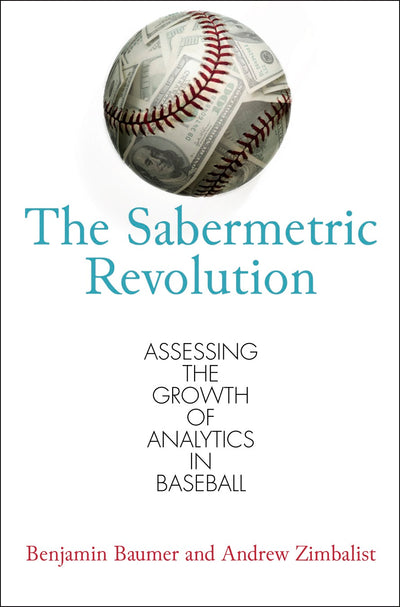
The Sabermetric Revolution
Regular price $24.95 Save $-24.95From the front office to the family room, sabermetrics has dramatically changed the way baseball players are assessed and valued by fans and managers alike. Rocketed to popularity by the 2003 bestseller Moneyball and the film of the same name, the use of sabermetrics to analyze player performance has appeared to be a David to the Goliath of systemically advantaged richer teams that could be toppled only by creative statistical analysis. The story has been so compelling that, over the past decade, team after team has integrated statistical analysis into its front office. But how accurately can crunching numbers quantify a player's ability? Do sabermetrics truly level the playing field for financially disadvantaged teams? How much of the baseball analytic trend is fad and how much fact?
The Sabermetric Revolution sets the record straight on the role of analytics in baseball. Former Mets sabermetrician Benjamin Baumer and leading sports economist Andrew Zimbalist correct common misinterpretations and develop new methods to assess the effectiveness of sabermetrics on team performance. Tracing the growth of front office dependence on sabermetrics and the breadth of its use today, they explore how Major League Baseball and the field of sports analytics have changed since the 2002 season. Their conclusion is optimistic, but the authors also caution that sabermetric insights will be more difficult to come by in the future. The Sabermetric Revolution offers more than a fascinating case study of the use of statistics by general managers and front office executives: for fans and fantasy leagues, this book will provide an accessible primer on the real math behind moneyball as well as new insight into the changing business of baseball.

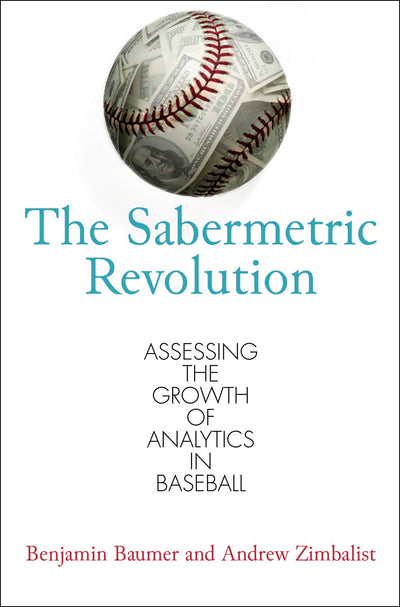
The Sabermetric Revolution
Regular price $24.95 Save $-24.95From the front office to the family room, sabermetrics has dramatically changed the way baseball players are assessed and valued by fans and managers alike. Rocketed to popularity by the 2003 bestseller Moneyball and the film of the same name, the use of sabermetrics to analyze player performance has appeared to be a David to the Goliath of systemically advantaged richer teams that could be toppled only by creative statistical analysis. The story has been so compelling that, over the past decade, team after team has integrated statistical analysis into its front office. But how accurately can crunching numbers quantify a player's ability? Do sabermetrics truly level the playing field for financially disadvantaged teams? How much of the baseball analytic trend is fad and how much fact?
The Sabermetric Revolution sets the record straight on the role of analytics in baseball. Former Mets sabermetrician Benjamin Baumer and leading sports economist Andrew Zimbalist correct common misinterpretations and develop new methods to assess the effectiveness of sabermetrics on team performance. Tracing the growth of front office dependence on sabermetrics and the breadth of its use today, they explore how Major League Baseball and the field of sports analytics have changed since the 2002 season. Their conclusion is optimistic, but the authors also caution that sabermetric insights will be more difficult to come by in the future. The Sabermetric Revolution offers more than a fascinating case study of the use of statistics by general managers and front office executives: for fans and fantasy leagues, this book will provide an accessible primer on the real math behind moneyball as well as new insight into the changing business of baseball.
