Luis Buñuel was one of the great film-makers of the twentieth century. Gwynne Edwards analyses his work in the context of Buñuel's personal obsessions - sex, bourgeois values and religion.
Luis Buñuel (1900-1983) was one of the truly great film-makers of the twentieth century. Shaped by a repressive Jesuit education and a bourgeois family background, he reacted against both, escaped to Paris, and was soon embraced by André Breton's official surrealist group. His early films are his most aggressive and shocking, the slicing of the eyeball in Un Chien andalou (1929) one of the most memorable episodes in the history of cinema. The Forgotten Ones (1950) and He (1952), made in Mexico, were followed, from 1960, in Spain and France, by the films for which he is best known: Viridiana (1961), Belle de jour (1966), Tristana (1970), The Discreet Charm of the Bourgeoisie (1972), and That Obscure Object of Desire (1977). Gwynne Edwards analyses the films in the context of Buñuel's personal obsessions - sex, bourgeois values, and religion - suggesting that the film-maker experienced a degree of sexual inhibition surprising in a surrealist.
GWYNNE EDWARDS is Professor of Spanish at the University of Wales, Aberystwyth.
Ethiopian Warriorhood
Regular price
$36.95
Save $-36.95
The history of the often-overlooked chewa Ethiopian warriors and their crucial role in defending their homeland against invasion, as well as their strong influence on political identity and the social infrastructure.
Today best known for their role in defending Ethiopia from Italian invasion 1935-41, chewa warriors protected Ethiopia for centuries. Yet, depicted by some 19th-century Western observers as little more than "a horde" of warmongers, and later suppressed by Ethiopian monarchs who sought to create a centralized modern state, their contribution has been neglected. Drawing on oral and written sources, as well as the zeraf poetry through which theyexpressed themselves, this book explores for the first time in depth the history, practices and principles of warriorhood of the chewa, and their wider influence on society and state. Often self-trained individuals who began by defending their communities, by the end of the 19th century there were chewa warrior groups from almost all linguistic groups who fought together to resist foreign invaders. Some chewa enrolled in the service of the Ethiopian "kings of kings", who organized them as named corps that supplemented the formal defence of the state. Today, chewa political identity, which transcended social, familial, political and other groupings, remains deeply rooted in Ethiopian society.
Diamonds, Dispossession and Democracy in Botswana
Regular price
$29.99
Save $-29.99
Analyses the limits to democracy in Botswana.
Is Botswana still 'an African miracle'? Thanks to diamonds the country's growth rate was the highest in the world into the 1990s, and regular parliamentary elections judged free on polling day have been held since 1965. However aduopoly of presidentialism and ruling party preponderance has stimulated arrogance, complacency and corruption among the country's rulers. What is 'perpetual democracy'? The ruling BDP is kept in perpetual power by the first-past-the post election system. The President in Botswana is empowered to do whatever he pleases. President Mogae has amended the constitution to ensure the automatic succession of the Vice-President General Ian Khama, the son of Seretse and Ruth Khama.A new Directorate of Intelligence Services provides closer control of power. Why are the Khoisan confined to 'a gulag of special settlements'? The expulsion of the San from Central Kalahari Game Reservewas relentlessly enforced in 1997 and 2002. A multi-cultural coalition asserts that the government is implementing 'a philosophy of cultural genocide on the non-Tswana tribes'. How can the gift of diamonds be turned to reform? Professor Good asserts the need to strengthen and democratise the electoral and voting systems. He sees diversification as essential to reduce the dependency on diamonds. He urges the use of mineral wealth to reduce the gap between rich and poor; half of the population are at present in poverty in a rich country.
KENNETH GOOD was Professor of Politics at the University of Botswana when he was expelled from the country.
South Africa: Jacana
Leopoldo Alas [Clarín]
Regular price
$105.00
Save $-105.00
Novelist-critic Leopoldo Alas's reputation suffered neglect and silent reproval during much of the twentieth century, especially under the Franco regime, but his reputation has now achieved classic status in Spain. Clearly relatedto this is the great increase in the number of translations - Julian Barnes called La Regenta 'the foreign classic tardily discovered'. This bibliography picks up where the first one left off in 1984. It is divided into primary material and secondary material. Primary material includes: Anthologies and Selections; Criticism; Novels; Short Story Collections; Plays; Correspondence; Prologues; Reprints; Translations; and Miscellaneous, with two new categories: autograph manuscripts and iconography.
Disability Rights and Inclusiveness in Africa
Regular price
$36.95
Save $-36.95
Grassroots researchers examine the barriers and ways of implementing the UN Convention on the Rights of Persons with Disabilities (CRPD) in Africa.
Many have praised the United Nations Convention on the Rights of Persons with Disabilities (CRPD), first adopted by the UN in 2006, as a revolutionary step towards disability rights in Africa. But how real is the progress towards equality for persons with physical disabilities, mental health difficulties, blindness, deafness or albinism? What are the barriers to the CRPD's successful implementation on the continent, and how might we enforce inclusiveness and equality among those disadvantaged? This book brings together the findings of researchers in Ghana, Cameroon, Nigeria, Ethiopia, Uganda, Kenya, Zimbabwe and South Africa to offer grassroots' perspectives on the challenges and possibilities of achieving disability rights under the CRPD. Challenging the generally optimistic view presented to date, the contributors provide evidence-based trenchant critiques of the Convention, highlight the ways in which disability rights are interpreted in varying contexts and with different disabilities, and examine particular issues in relation to children and women. Finally, the contributors suggest ways of moving forward and achieving disability rights in Africa.
A Companion to Cervantes's Novelas Ejemplares
Regular price
$36.95
Save $-36.95
This edited volume of fourteen specially commissioned essays written from a variety of critical perspectives by leading Cervantine scholars seeks to provide an overview of Cervantes's Novelas ejemplares which will be of interest to a broad academic readership.
This edited volume of fourteen specially commissioned essays written from a variety of critical perspectives by leading cervantine scholars seeks to provide an overview of Cervantes's Novelas ejemplares which will be of interest to a broad academic readership. An extensive general Introduction places the Novelas in the context of Cervantes's life and work; provides basic information about their content, composition, internal ordering, publication, and critical reception, gives detailed consideration to the contemporary literary-theoretical issues implicit in the title, and outlines and contributes to the key critical debates on their variety, unity, exemplarity,and supposed "hidden mystery". After a series of chapters on the individual stories, the volume concludes with two survey essays devoted, respectively, to the understanding of eutrapelia implicit in the Novelas, andto the dynamics of the character pairing that is one of their salient features. Detailed plot summaries of each of the stories, and a Guide to Further Reading are supplied as appendices.
Stephen Boyd is a lecturer in the Department of Hispanic Studies of University College Cork.
Chrétien de Troyes
Regular price
$105.00
Save $-105.00
The supplement to the 1976 original bibliography reflects the expanding scope of modern Chrétien studies, including items from around the world, with the assistance of an international team of scholars.
The Supplement builds on and completes the Chrétien de Troyes Bibliography first published in 1976. Together the two volumes constitute the fullest and most complete bibliographical source now available on this major medieval author. Chrétien de Troyes bequeathed a corpus of highly original and widely influential Arthurian romances. Indeed, his direct or indirect influence continued throughout the middle ages and beyond into modern times. The Bibliographypermits students of medieval romance to quickly identify the areas in which Chrétien scholarship has been active. Items are listed under twenty-two topics, with numerous sub-sections under each topic, and cross-references for items that treat more than one of the topics. The broad geographic and linguistic scope of modern Chrétien studies is evident in items not only from western Europe and North America, but also from the growing body of medieval scholarship in eastern Europe, Asia, Africa, South America, and Australasia. To ensure accuracy and completeness, the editor has been assisted by scholars competent in the many languages in which Chrétien studies are now published, most notably in Japanese, Welsh, Rumanian, Hungarian and Polish, as well as by other scholars and librarians who generously provided assistance and information in finding items difficult to access.
A Companion to Chimamanda Ngozi Adichie
Regular price
$36.95
Save $-36.95
A critical examination of the engaging voice and multiple stories of Chimamanda Ngozi Adichie on war, feminism, art, ideology, hair, complex human identities and the challenges of multicultural existence.
Easily the leading and most engaging voice of her era and generation, Chimamanda Ngozi Adichie has bridged gaps and introduced new motifs and narrative styles which have energized contemporary African fiction since her first novel, Purple Hibiscus (2003). With Half of a Yellow Sun (2007) and The Thing Around Your Neck - Short Stories (2009), she established herself as a preeminent story-teller. Americanah (2013), with ingeniouscraftsmanship addresses the sensitive themes of passionate love, independence, freedom and moral responsibility with extravagant and versatile narrative innovations.
Through her writings, she has made herself relevant topeople of all ages - across racial and linguistic boundaries. Her talks, blogs, musings on social media, essays and commentaries, workshop-mentoring for budding young writers, lecture circuit discourses, all enrich her imaginativecreativity as they expand and define her mission as a writer. "We Should All be Feminists" she proclaimed in an essay, giving feminism a "tweak and twist" and suggesting new outlooks in literary theory.
Her contributionsto African, Diasporic and World literatures deserve serious analyses, commentaries and interpretations, and this Companion to her work critically examines her creative outputs from her art and ideology, from feminism to war, to matters of myth and perception, and the challenges of multicultural existence and complex human identities.
Actividad teatral en la región de Madrid según los protocolos de Juan García de Albertos, 1634-1660: II
Regular price
$105.00
Save $-105.00
En 1639 el escribano madrileño Juan García de Albertos fue nombrado Escribano de la Comisión de las comedias. Sus protocolos notariales contienen más de 2.000 escrituras relacionadas con actores y actividad teatral de 1634 a 1660.Esta riquísima colección ofrece un fascinante panorama de la vida teatral de Madrid y su comarca, en toda su diversidad, durante la época de Calderón. Son especialmente abundantes los contratos de representaciones en fiestas de pueblos, tanto por parte de compañías profesionales como de aficionados locales con la ayuda de actrices y músicos individuales contratados en Madrid. La extraordinaria cantidad de actividad teatral que se llevaba a cabo hasta en las poblaciones más pequeñas -fenómeno casi totalmente ignorado hasta ahora- nos obliga a revisar y ampliar nuestra imagen convencional del teatro áureo español. La colección revela también, con todo lujo de detalles, lan y el funcionamiento de las compañías de actores, además de las condiciones de su transporte, el alquiler de vestidos, las prácticas escénicas y el repertorio. Tema omnipresente son los enrevesados problemas económicos de landula. Los documentos vienen acompañados de apéndices y mapas, y de una extensa introducción en la que se analiza exhaustivamente lo que podemos aprender de esta valiosa fuente documental.
CHARLES DAVIS fue anteriormenteprofesor de español de Queen Mary, Universidad de Londres, y es ahora investigador por el programa Ramón y Cajal en la Universitat de València. J. E. VAREY fue catedrático de español de la Universidad de Londres y Rector de Westfield College. For description in English see Volume I. Actividad Teatral en la Región de Madrid is published in TWO VOLUMES (I: ISBN 1855660628, II ISBN 1855660792) WHICH MUST BE PURCHASED AS A SET.
Memorias cronológicas sobre el origen de la representación de comedias en España (año de 1785)
Regular price
$105.00
Save $-105.00
Una nueva edición de la primera historia sistemática del teatro en España.
Esta nueva edición de las Memorias cronológicas de José Antonio de Armona ofrece por primera vez un análisis pormenorizado de las fuentes documentales empleadas por el autor, que constituyen su aportación más fundamentlos estudios teatrales. La obra de Armona es la primera historia sistemática del teatro en España, desde el final de la Edad Media hasta su propia época. Aunque incluye una visión general de la literatura dramática del Siglo de Oro, se centra principalmente en los aspectos institucionales del teatro. En su calidad de Corregidor de Madrid, le correspondía a Armona el cargo de Juez Protector, máxima autoridad de la administración de los teatros públicos y los actores, y la mayor parte de sus Memorias se dedica a este tema. Habiendo reflexionado sobre su experiencia como Protector y los problemas planteados por conflictos jurisdiccionales en este ámbito, Armona examinó sus orígenes y evolución mediante extensas investigaciones en los archivos municipales de Madrid, reuniendo y recopilando una nutrida colección de documentos que aclaran múltiples aspectos de la historia teatral. Por tanto, sus Memorias están estrechamente relacionadas con la documentación municipal publicada en tomos anteriores de las Fuentes para la Historia del Teatro en España, y deben situarse en este contexto.
En español xiv+352 pp., 8 ilus.b/n Fuentes para la Historia del Teatro en España, XIV
CHARLES DAVIS es Honorary Research Fellow de Queen Mary, Universidad de Londres.
Across the Copperbelt
Regular price
$32.99
Save $-32.99
The first comparative historical analysis - local, national and transnational - of the cross-border Central African copperbelt; a key work in studies of labour, urbanisation and African studies.
The Central African Copperbelt, encompassing the mining communities of Katanga (DR Congo) and Zambia, has been central to the study of modernisation and rapid social and political change in urban Africa. This volume expands upon earlier studies of industrial mining, male-dominated formal labour organisation and political change by examining both sides of the border from pre-colonial history to the present and encompassing a wide range of economic, social and cultural identities and activities. Bringing together scholars from a range of disciplines, the contributors explore copperbelt communities' sense of identity - expressed in comic strips and football matches, their precarious and inventive ways of living, their involvement in church and education, and the processes and impact of urbanisation and development, environmental degradation and changing gender relations. A major contribution to borderland studies, in showing how the meaning and relevance of the border to the copperbelt's mixed and mobile population has changed constantly over time, the book's engagement with communities at the nexus of social, economic and political change makes it a key study for those working in global urban development.
This book is available under the Creative Commons license CC-BY-NC. It is based on research that is part of a project that has received funding from the European Research Council (ERC) under the European Union's Horizon 2020 research and innovation program (grant agreement no: 681657): 'Comparing the Copperbelt: Political Culture and Knowledge Production in Central Africa'.
The Road to Soweto
Regular price
$29.99
Save $-29.99
A new history of the 1976 Soweto Uprising and the events leading to it in the preceding decade, that will transform our understanding of the historical evolution of the struggle against apartheid.
This revisionary account of the Soweto Uprising of June 1976 and the decade preceding it transforms our understanding of what led to this crucial flashpoint of South Africa's history. Brown argues that far from there being "quiescence" following the Sharpeville Massacre and the suppression of African opposition movements, during which they went underground, this period was marked by experiments in resistance and attempts to develop new forms of politics that prepared the ground for the Uprising. Students at South Africa's segregated universities began to re-organise themselves as a political force; new ideas about race reinvigorated political thought; debates around confrontation shaped the development of new forms of protest. The protest then began to move off university campuses and onto the streets: through the independent actions of workers in Durban, and attempts by students to link their struggles with a broader agenda. These actions made protest public once again, and helped establish the patterns of popular action and state response that would come to shape the events in Soweto on 16 June 1976.
Julian Brown is a Lecturer in the Department of Political Studies at the University of the Witwatersrand, Johannesburg.
Southern Africa (South Africa, Namibia, Lesotho, Swaziland & Botswana): Jacana
'throws new light on the background to the Soweto Uprising, providing insight into white and black student politics, worker protest and broader dissent' - William Beinart, University of Oxford
'an extremely important contribution to the historiography on protest in South Africa. It links black and white student protests (too often studied in isolation from one another) to workers' movements by looking at the changing forms of protest during the 1960s and 1970s, and the apartheid government's changing responses.' - Anne Heffernan, University of the Witwatersrand
'By showing how the Soweto Uprising served as a precursor for later historical and political events, the author convincingly shows the continuity from one from one protest and decade to the next.' - Dawne Curry, University of Nebraska-Lincoln
Archaeology and Oral Tradition in Malawi
Regular price
$36.95
Save $-36.95
First comprehensive account of the origins and early history of the Chewa as revealed by oral tradition and archaeology that allows a more accurate picture of a pre-literate society.
The Chewa are the largest ethnic group in Malawi, representing a third of the population of approximately 19 million, and their language - Chichewa - is Malawi's national language. Yet the last book on the history of this group was published in 1944, and was based on oral history, or tradition. As with much African history, oral history started to be recorded only in the late 19th century. This is the first book to use not only oral history, but also documents written by early Portuguese explorers, traders and government officials, as well as archaeology, to piece together the early history of the Chewa. The author is an archaeologist, who discovered the first major Chewa settlement, Mankhamba, near the southern part of Lake Malawi. His excavations have enabled a more scientific chronology of the migrations of the Chewa into what is today Malawi and have provided physical proof of their early history as well as their material and spiritual culture and way of life. Professor Yusuf Juwayeyi has written and documented a very readable history and description of archaeology, which reveals the value of combining oral tradition together with archaeology to arrive at a more accurate picture of the history of a pre-literate society. This book will be of value not only to historians, archaeologists and anthropologists, but also the general reader interested in African history.
YUSUF M. JUWAYEYI is an Associate Professor of Anthropology at Long Island University, Brooklyn, New York.
South Africa: UCT Press
Commercial Agriculture, the Slave Trade and Slavery in Atlantic Africa
Regular price
$26.99
Save $-26.99
Re-envisages what we know about African political economies through its examination of one of the key questions in colonial and African history, that of commercial agriculture and its relationship to slavery.
This book considers commercial agriculture in Africa in relation to the trans-Atlantic slave trade and the institution of slavery within Africa itself, from the beginnings of Afro-European maritime trade in the fifteenth century to the early stages of colonial rule in the twentieth century. For Europeans, the export of agricultural produce represented a potential alternative to the slave trade from the outset and there was recurrent interest in establishing plantations in Africa or in purchasing crops from African producers. This idea gained greater currency in the context of the movement for the abolition of the slave trade from the late eighteenth century onwards, when the promotion of commercial agriculture in Africa was seen as a means of suppressing the slave trade. Robin Law is Emeritus Professor of African History, University of Stirling; Suzanne Schwarz is Professor of History, University ofWorcester; Silke Strickrodt is a Visiting Research Fellow in the Department of African Studies and Anthropology at the University of Birmingham.
African Theatre 8: Diasporas
Regular price
$29.99
Save $-29.99
This volume in the African Theatre series celebrates the African theatrical diaspora from Brazil to Tasmania, and Canada to Cuba, and also includes the playscript Messing with the Mind by Egyptian writer and director Khaled El-Sawy.
Diasporas', as used in the title of this volume, refers to a multitude of groups and communities with widely differing histories, identities and current locations. This book brings together essays on theatre by people of Africandescent in North America, Cuba, Italy, the UK, Israel and Tasmania. Several chapters present overviews of particular national contexts, others offer insights into play texts or specific performances. Offering a mix of academic andpractitioner's points of views, Volume 8 in the African Theatre series analyses and celebrates various aspects of African diasporic theatre worldwide.
Guest Editors: CHRISTINE MATZKE, Lecturer in African Literatures and Cultures, Humboldt-University, Berlin; and OSITA OKAGBUE, Senior Lecturer in the Department of Drama, Goldsmiths, University of London.
Series Editors: Martin Banham, Emeritus Professor of Drama & Theatre Studies,University of Leeds; James Gibbs, Senior Visiting Research Fellow, University of the West of England; Femi Osofisan, Professor of Drama at the University of Ibadan; Jane Plastow, Professor of African Theatre, University of Leeds;Yvette Hutchison, Associate Professor, Department of Theatre & Performance Studies, University of Warwick
A Companion to Modern Spanish American Fiction
Regular price
$36.95
Save $-36.95
A comprehensive survey of Spanish American fiction as it has eveolved through successive phases.
With such figures as Jorge Luis Borges, Miguel Ángel Asturias and Gabriel García Márquez (both the latter Nobel Prizewinners) Spanish American fiction is now unquestionably an integral part of the mainstream of Western literature.This book draws on the most recent research in describing the origins and development of narrative in Spanish America during the nineteenth and twentieth centuries, tracing the pattern from Romanticism and Realism, through Modernismo, Naturalism and Regionalism to the Boom and beyond. It shows how, while seldom moving completely away from satire, social criticism and protest, Spanish American fiction has evolved through successive phases in which both the conceptions of the writer's task and presumptions about narrative and reality have undergone radical alterations. DONALD SHAW holds the Brown Forman Chair of Spanish American literature in the University of Virginia.
ALT 12 New Writing, New Approaches: African Literature Today
Regular price
$29.99
Save $-29.99
The re-issue of archival volumes ALT 1 to ALT 14 makes the complete series available and provides the historical perspective of these early contributions to the literature and its criticism.
In his Editorial to African Literature Today 12, first published in 1982, Eldred Jones laments the death of Camara Laye and gives tribute to him as one of the pioneers of African literature. The volume celebrates new writers whose works "have not received much critical attention either because they are relatively new, or because not being what might be described as mainstream they may unintentionally, perhaps, have been damned with faint praise or neglect." There are contributions on the works of Gabriel Okara, Robert Serumaga, Hamidou Kane and John Munonye, and emerging as significant new voices are playwrights Femi Osofisan and Ola Rotimi, and feminist writer Mariama Bâ.
Turning Points in African Democracy
Regular price
$29.99
Save $-29.99
A team of scholars examine the radical political changes that have taken place since 1990 in eleven key countries in Africa.
Radical changes have taken place in Africa since 1990. What are the realities of these changes? What significant differences have emerged between African countries? What is the future for democracy in the continent? The editors have chosen eleven key countries to provide enlightening comparisons and contrasts to stimulate discussion among students. They have brought together a team of scholars who are actively working in the changing Africa of today.Each chapter is structured around a framing event which defines the experience of democratisation. The editors have provided an overview of the turning points in African politics. They engage with debates on how to study andevaluate democracy in Africa, such as the limits of elections. They identify four major themes with which to examine similarities and divergences as well as to explain change and continuity in what happened in the past.
Abdul Raufu Mustapha is University Lecturer in African Politics at Queen Elizabeth House and Kirk-Greene Fellow at St Antony's College, University of Oxford; Lindsay Whitfield is a Research Fellow at the Danish Institute of International Studies, Copenhagen.
ALT 5 The Novel in Africa: African Literature Today
Regular price
$29.99
Save $-29.99
The re-issue of archival volumes ALT 1 to ALT 14 makes the complete series available and provides the historical perspective of these early contributions to the literature and its criticism.
Originally published in 1971, this was the first volume in the series to focus on a specific theme, in this case the novel, but continues the format of including contributions from both writers and critics. There are articles on:Equiano, Onuora Nzekwu, T.M. Aluko, Ngugi, Sarif Easmon, Chinua Achebe and Wole Soyinka. The volume also includes a contribution from Ernest Emenyonu asking of African Literature "What does it take to be its critic" plus reviews of Sembene Ousmane's newly published God's Bits of Wood, Mbella Sonne Dipoko's Because of Women, T.M. Aluko's Chief, The Honourable Minister and Flora Nwapa's Idu.
Transport Corridors in Africa
Regular price
$36.95
Save $-36.95
In-depth examination of the inherent tensions and dynamics of transport corridors in Africa: between short-term optics and long-term durability; between regional integration and national interest; between the facilitation of trade and the generation of corridor revenue.
The image of the corridor, a central pathway of road and rail carving its way through Africa's interior, has guided the coordination of transport and trade developments on the continent in recent decades. Existing analysis of the "Corridor" - a label with a great capacity to change shape, guiding funding and infrastructural priorities at different times and in different settings - tends to be presentist, technical, and conveyed in the language of transport economics. The chapters collected here showcase a more varied approach, offering perspectives from academics and policy-makers coming from a range of disciplinary backgrounds. They capture the varied forms of the corridor concept (developmental, transport, and trade corridors), the multiplicity of actors (including China and the European Union), as well as the different permutations of the infrastructure itself, in corridors linking coastal states and in others that link coastal states with the hinterland. The breadth of cases allows for a comparative perspective of East, West, and Southern Africa, as well as the basis of comparisons outside of the continent in Europe, South Asia, and elsewhere. The motivations behind corridor initiatives in Africa range enormously, from resource extraction to urban development and poverty reduction. A lot depends on scale, and this collection places the grand designs thrashed out at continental and regional economic forums alongside the individual concerns of drivers and cross-border traders hauling goods across the continent's checkpoints. What emerges are a number of central tensions in the study of transport corridors: between short-term optics and long-term durability; between road and rail as modes of transportation; between regional integration and national interest; between the facilitation of trade and the generation of corridor revenue; between different port configurations; and between local dynamics and the dynamics of long-distance transportation.
This book is available as an Open Access ebook under the Creative Commons license CC-BY-NC.
ALT 29 Teaching African Literature Today
Regular price
$29.95
Save $-29.95
Brings together experiences of teachers of African literature from around the world in the context of technological change.
Focuses on theoretical and pedagogical approaches to the teaching of African Literature on both sides of the Atlantic and beyond. The publication of Chinua Achebe's Things Fall Apart in 1958 drew universal attention not only to contemporary African creative imagination, but also established the art of the modern African novel. In 1986, Wole Soyinka became the first African to win the Nobel Prize for Literature, and opened the 'gate' for other African writers. By the close of the 20th century, African Literature had gained world-wide acceptance and legitimacy in the academy and featured on the literature curriculum of schools and colleges across the globe. This specialissue of African Literature Today, examines the diverse experiences of teachers of African Literature across regional, racial, cultural and national boundaries. It explores such issues as student responses, productive pedagogical innovations, the impact of modern technology, case studies of online teaching, teaching Criticism of African Literature, and teaching African Literature in an age of multiculturalism. It is intended as an invaluable teacher's handbook and essential student companion for the effective study of African Literature.
Ernest Emenyonu is Professor of Africana Studies at the University of Michigan-Flint, USA; the editorial board is composed of scholars from US, UK and African universities
Nigeria: HEBN
Written under the Skin
Regular price
$24.99
Save $-24.99
Winner of the 2021 ALA Book of the Year Award - Scholarship
The author uses the image of blood under the skin as a way of understanding cultural and literary forms in contemporary South Africa. Chapters deal with the bloodied histories of apartheid and blood as trope for talking about change.
In this book the author argues that a younger generation of South Africans is developing important and innovative ways of understanding South African pasts, and that challenge the narratives that have over the last decades been informed by notions of forgiveness and reconciliation. The author uses the image of history-rich blood to explore these approaches to intergenerational memory. Blood under the skin is a carrier of embodied and gendered histories andusing this image, the chapters revisit older archives, as well as analyse contemporary South African cultural and literary forms. The emphasis on blood challenges the privileged status skin has had as explanatory category inthinking about identity, and instead emphasises intergenerational transfer and continuity. The argument is that a younger generation is disputing and debating the terms through which to understand contemporary South Africa, as well as for interpreting the legacies of the past that remain under the visible layer of skin. The chapters each concern blood: Mandela's prison cell as laboratory for producing bloodless freedom; the kinship relations created and resisted in accounts of Eugene de Kock in prison; Ruth First's concern with information leaks in her accounts of her time in prison; the first human-to-human heart transplant and its relation to racialised attempts to salvage whiteidentity; the #Fallist moment; Abantu book festival; and activist scholarship and creative art works that use blood as trope for thinking about change and continuity.
Southern Africa (South Africa, Namibia, Lesotho, Zimbabwe and Swaziland): Wits University Press
Architecture and Politics in Africa
Regular price
$26.99
Save $-26.99
Honourable Mention - 2023 ASR Prize for Best Africa-focused Anthology or Edited Collection
Innovative study of state politics, identity and buildings that sheds new light on the links between the material and the ideational realms of contemporary life in Africa.
Buildings shape politics in the ways they define communities, enable economic activity, reflect political ideas, and impact state-society relations. They are materially and symbolically interwoven with the everyday lives of elites and citizens, as well global flows of money, goods, and contracts. Yet, to date, there has been no research that explicitly connects debates about Africa's domestic and international politics with the study of architecture. This innovative book fills this gap, providing a new and compelling reading of the politics of identity in sub-Saharan Africa through an examination of some of its most significant buildings. Using case studies from nine countries across sub-Saharan Africa, this volume reveals how they are commissioned and built, how they enable elites to project power, and how they form a basis for popular conceptions of the state. Exploring a diverse range of buildings including parliaments, airports, prisons, ministries, regional institutions, libraries, universities, shopping malls, public housing, cathedrals and palaces, the contributors suggest a innovative perspective on African politics, identity and urban development. This book will be a compelling reference for scholars and students of African politics, development studies and city life in its elaboration of and challenges to established concepts and arguments about the relationship between material objects and political ideas.
This book is available as an Open Access ebook under the Creative Commons license CC-BY-NC-ND.
African Women in the Atlantic World
Regular price
$36.95
Save $-36.95
An innovative and valuable resource for understanding women's roles in changing societies, this book brings together the history of Africa, the Atlantic and gender before the 20th century. It explores trade, slavery and migrationin the context of the Euro-African encounter.
HONORABLE MENTION FOR AFRICAN STUDIES REVIEW BEST AFRICA-FOCUSED ANTHOLOGY OR EDITED COLLECTION, 2019
While there have been studies of women's roles in African societies and of Atlantic history, the role of women in Westand West Central Africa during the period of the Atlantic slave trade and its abolition remains relatively unexamined. This book brings together scholars from Africa, North and South America and Europe to show, for the first time,the ways in which African women participated in economic, social and political spaces in Atlantic coast societies. Focusing on diversity and change, and going beyond the study of wealthy merchant women, the contributors examine the role of petty traders and enslaved women in communities from Sierra Leone to Benguela. They analyse how women in Africa used the opportunities offered by relationships with European men, Christianity and Atlantic commerce to negotiate their social and economic positions; consider the limitations which early colonialism sought to impose on women and the strategies they employed to overcome them; the factors which fostered or restricted women's mobility,both spatially and socially; and women's economic power and its curtailment.
Mariana P. Candido is an Associate Professor of History at the University of Notre Dame; Adam Jones recently retired as Professor of African History and Culture History at the University of Leipzig.
In association with The Institute for Scholarship in the Liberal Arts, College of Arts and Letters, University of Notre Dame
The Ethiopian Red Terror Trials
Regular price
$29.99
Save $-29.99
This collection analyses the approach taken by the current government of Ethiopia to deal with the massive human rights violations that took place from 1974 to 1991 under the Derg.
How was an autocratic emperor replaced by a totalitarian dictator? An unexpected popular upsurge in February 1974 made the ancien regime of Emperor Haile Selassie buckle. The Derg, a group of army officers led by an obscure and ruthless major Mengistu Hailemariam, seized power by military coup in September 1974 and removed the Emperor. What was the 'red terror'? The callous executions of members of the old regime initiated a cult of violence. The Derg were united by the shedding of blood. Search and destroy campaigns against militants led on to the full-blown 'red terror' in which thousands of the regime's opponents were brutally murdered in the streets. In what way was 'transitional justice' administered? The main officials were found guilty of genocide and crimes against humanity by the Ethiopian Federal High Court and sentenced to life imprisonment. Some of the minor officialshad already been sentenced to death, whilst President Mugabe has given Mengistu Hailemariam sanctuary in Zimbabwe.
KJETIL TRONVOLL is Professor in Human Rights, Peace and Conflict Studies at the Norwegian Centre for Human Rights, University of Oslo; CHARLES SCHAEFER is Associate Professor of African History, Valparaiso University; GIRMACHEW ALEMU ANEME is a Research Fellow at the Norwegian Centre for Human Rights, University of Oslo.
Afro-European Trade in the Atlantic World
Regular price
$36.95
Save $-36.95
A uniquely detailed account of the dynamics of Afro-European trade in two states on the western Slave Coast over three centuries and the transition from slave trade to legitimate commerce.
From 1550 to colonial partition in the mid-1880s, trade was key to Afro-European relations on the western Slave Coast (the coastal areas of modern Togo and parts of what are now Ghana and Benin). This book looks at the commercialrelations of two states which played a crucial role in the Atlantic slave trade as well as the trade in ivory and agricultural produce: Hula, known to European traders as Grand Popo (now in Benin) and Ge, known as Little Popo (nowin Togo). Situated between the Gold Coast to the west and the eastern Slave Coast to the east, this region was an important supplier of provisions for Europeans and the enslaved Africans they purchased. Also, due to its positionin the lagoon system, it facilitated communication along the coast between the trading companies' headquarters on the western Gold Coast and their factories on the eastern Slave Coast, particularly at Ouidah, the Slave Coast's major slave port. In the 19th century, when the trade at more established ports was disrupted by the men-of-war of the British anti-slave trade squadron, the western Slave Coast became a hot-spot of illegal slave trading. Providing a detailed reconstruction of political and commercial developments in the western Slave coast, including the transition from the slave trade to legitimate commerce, this book also reveals the region's position in the wider trans-Atlantic trade network and how cross-cultural partnerships were negotiated; the trade's impact on African coastal "middlemen" communities; and the relative importance of local and global factors for the history of a region or community.
Silke Strickrodt is Visiting Research Fellow at the Department of African Studies and Anthropology at the University of Birmingham. She is co-editor (with Robin Law and Suzanne Schwarz) of Commercial Agriculture, the Slave Trade and Slavery in Atlantic Africa (James Currey, 2013).
Sheng
Regular price
$29.99
Save $-29.99
Of interest to linguists, artists, ma-youth, scholars of urban studies, educationalists, policy makers and language planners who are grappling with the challenges of multilingualism and language of education in Kenya.
The city of Nairobi is a rich context for the study of sociolinguistic phenomena. The coexistence of speakers of many different languages, further differentiated by socio-economic status, age and ethnicity provide conditions for the development of a mixed code such as Sheng, an urban variety of Kenyan Swahili which has morphed from a "youth language" into a vernacular of wider use. Sheng is a unique phenomenon in the study of linguistic change and innovation in an African context, a reflection of the ethnolinguistic diversity of Kenya, and language asymmetry created by socio-economic disparities. It also provides a window into understanding the processes of urban multilingualism, within the specific space structuring of Nairobi city.
This book is a detailed account of the rise and development of Sheng, its linguistic structure, social functions, and possible future directions. The author's analysis ofits presence in newspapers, TV, radio and online, makes it clear that Sheng functions as a particularly useful lens through which to explore contemporary Kenya.
Sects & Social Disorder
Regular price
$29.99
Save $-29.99
Analyses Muslim-Muslim divisions within northern Nigeria, which are as important for understanding the violence in the region as those between Muslim and Christian (for which, see the companion volume, Creed and Grievance),with consequences for long-term peacemaking.
Nigerian society has long been perceived as divided along religious lines, between Muslims and Christians, but alongside this there is an equally important polarization within the Muslim population in beliefs, rituals and sectarian allegiance. This book highlights the crucial issue of intra-Muslim pluralism and conflict in Nigeria. Conflicting interpretations of texts and contexts have led to fragmentation within northern Nigerian Islam, and differentIslamic sects have often resorted to violence against each other in pursuit of 'the right path'. The doctrinal justification of violence was first perfected against other Muslim groups, before being extended to non-Muslims: conflict between Muslim groups therefore preceded the violence between Muslims and Christians. It will be impossible to manage the relationship between the latter, without addressing the schisms within the Muslim community itself.
Nigeria: Premium Times Books
Abdul Raufu Mustapha is Associate Professor in African Politics, University of Oxford. His publications include (co-edited with Lindsey Whitfield) Turning Points in African Democracy (James Currey, 2009).
Forthcoming: Creed & Grievance: Muslims, Christians & Society in Northern Nigeria edited by Abdul Raufu Mustapha and David Ehrhardt.
ALT 28 Film in African Literature Today
Regular price
$29.99
Save $-29.99
From Hollywood to Nollywood: this issue of African Literature Today examines the relationship between film and video and the literatures of Africa.
A recent literary phenomenon in contemporary Africa is the developing relationship between film and African literature. ALT 28 focuses on the interface between film and literature in contemporary African writing and imagination. Contributors have examined the issue from a variety of perspectives: critiques of adaptations of African creative works into film, analyses of filmic structures in African dramatic literature, African writers as film makers, and the impact of the video film industry on literature and the reading culture in Africa.
Ernest N. Emenyonu is Professor of the Department of Africana Studies, University of Michigan-Flint
Nigeria: HEBN
They Called You Dambudzo
Regular price
$36.95
Save $-36.95
Compelling memoir of Flora Veit-Wild and her relationship with the Zimbabwean novelist, poet, playwright, and essayist Dambudzo Marechera, one of Africa's most innovative and subversive writers and a significant voice in contemporary world literature.
How shall I tell our story? I hear your voice ringing in mine. I struggle to disentangle a dense tapestry of memories. One thread will be caught up in another. Early images will embrace later ones. My gaze will often be filtered through your eyes, your poems. In the end I will not always be able to tell the original from the reflection. Just as you wrote, Time's fingers on the piano / play emotion into motion / the dancers in the looking glass never recognise us as their originals. This book is a memoir with a 'double heartbeat'. At its centre is the author's relationship with the late Zimbabwean writer, Dambudzo Marechera, whose award-winning book The House of Hunger marked him as a powerful, disruptive, perhaps prophetic voice in African literature. Flora Veit-Wild is internationally recognised for her significant contribution to preserving Marechera's legacy. What is less known about Marechera and Veit-Wild is that they had an intense, personal and sexual relationship. This memoir explores this: the couple's first encounter in 1983, amidst the euphoria of the newly independent Zimbabwe; the tumultuous months when the homeless writer moved in with his lover and her family; the bouts of creativity once he had his own flat followed by feelings of abandonment; the increasing despair about a love affair that could not stand up against reality; and the illness of the writer and his death of HIV related pneumonia in August 1987. What follows are the struggles Flora went through once Dambudzo had died. On the one hand she became the custodian of his life and work, on the other she had to live with her own HIV infection and the ensuing threats to her health.
Jacana: Southern Africa
The Struggle for Land and Justice in Kenya
Regular price
$29.99
Save $-29.99
2nd Runner Up - Honorary Mention - African Studies Association of Africa - Memorial Award for Excellence in African Writing Finalist for the African Studies Association's 2021 Best Book Prize.
Explores the limits of law in changing unequal land relations in Kenya.
Why, despite the introduction of new land laws beginning in 2012, has there been an increase in land grabbing in Kenya? Why has legislation failed to address long standing grievances about grossly unequal land distribution? This important book suggests that questions of justice should be central to discussions of African land reform. Constitutional reformers in Kenya promised transformative changes in land relations. However, the reality has disappointed. Land law reforms since 2010 have been more concerned with the administration of land and with bureaucratic power than with the real consequences of unequal access to land for ordinary Kenyans. Manji documents this thwarted struggle and surveys the prospects for genuine change.
Published in association with the British Institute in Eastern Africa.
Ambreena Manji is Professor of Land Law and Development at the School of Law and Politics, Cardiff University. Between 2010 and 2014, she was Director of the British Institute in Eastern Africa. Her books include The Politics of Land Reform in Africa (2006).
Vita Books: Kenya, Uganda, Tanzania, Rwanda, Burundi, South Sudan and South Africa.
Do Bicycles Equal Development in Mozambique?
Regular price
$36.95
Save $-36.95
Challenges some key assumptions of both the donors and the government about how development can be achieved in Mozambique.
Is Mozambique an African success story? It has 7 percent a year growth rate and substantial foreign investment. Fifteen years after the war of destabilisation, the peace has held. Mozambique is the donors' model pupil, carefully following their prescriptions and receiving more than a billion dollars a year in aid. The number of bicycles has doubled and this is often cited as the symbol of development. In this book the authors challenge some key assumptions of both the donors and the government and ask questions such as whether there has been too much stress on the Millennium Development Goals and too little support for economic development; if it makes sense to target thepoorest of the poor, or would it be better to target those who create the jobs which will employ the poor; whether there has been too much emphasis on foreign investment and too little on developing domestic capital; and if the private sector really will end poverty, or must there be a stronger role for the state in the economy? This book is about more than Mozambique. Mozambique is an apparent success story that is used to justify the present 'post-Washington consensus' development model. Here, the case of Mozambique is situated within the broader development debate.
Joseph Hanlon is Senior Lecturer at the Open University and the author of Beggar Your Neighbours; Mozambique: Who Calls the Shots?; and Peace without Profit (all published by James Currey) which have all made influential interventions in the development debate; Teresa Smart is Director of the London Mathematics Centre, Institute of Education.
Published in association with the Open University
Hawks and Doves in Sudan's Armed Conflict
Regular price
$29.99
Save $-29.99
Analyses the involvement of the agro-pastoral al-Hakkamat Baggara women of Darfur in Sudan's recent civil wars and the implications of this for conflict resolution and peacebuilding.
WINNER OF THE 2019 AIDOO-SNYDER BOOK PRIZE
Al-Hakkamat Baggara women hold an instrumental position in rural Sudan, wielding agency, social and political power. This book uncovers their significant, but widely overlooked, role during the war in Darfur from the 1970s to today's continuing conflict. The author examines the influence they exercised through composing and reciting poems and songs, informal speech and other symbolic acts, and analysestheir impact in the social and political domains. Challenging the pervasive portrayal of women as natural peacebuilders and their roles as passive and submissive, the author highlights how Sudan's state government co-opted al-Hakkamat Baggara women to lobby on its behalf, to rally for war and to advocate for peace. Understanding how they can contribute to the resolution and resettlement processes is vital to sustainable reconciliation and post-conflict transformation of the unstable state.
Suad M.E. Musa (PhD) is a Freelance Consultant on gender and women's issues. She worked with the government of Sudan and with CSOs and INGOs in the Horn of Africa and Britain. She alsoworked as Assistant Professor of Sociology at Qatar University.
Reel Resistance - The Cinema of Jean-Marie Teno
Regular price
$29.99
Save $-29.99
Weaving together critical analysis and a filmic conversation, this book journeys through the multiple layers of Cameroonian filmmaker Jean-Marie Teno's thematically and aesthetically challenging body of work, framed here as a form of decolonial cinematic resistance.
Co-winner African Literature Association Book of the Year - Scholarship
Both a monograph and a critical dialogue between academic Melissa Thackway, author of Africa Shoots Back, and the Cameroonian filmmaker Jean-Marie Teno, this collaborative work takes the reader on a journey through Teno's multifaceted on-going filmic reflection on Cameroon and the wider African continent, its socio-political systems, history, memory and cultures. Presenting and contextualizing Teno's cinema, it addresses the notion of political commitment in art and of cinema as a form of resistance. It also considers Teno's filmmaking both in relation to the theoretical and aesthetic debates to have animated West and Central African filmmakers since the 1960s and 1970s, and n relation to documentary filmmaking practices on the continent and beyond. In so doing, the book offers an analysis of the predominant stylistic and thematic traits of Teno's work, examines the individual films and the collective oeuvre, and highlights the evolutions of his film language and concerns. It identifies and explores the committed socio-political and historical themes at play, such as violence, power, history, memory, gender, trauma and exile. It also considers Teno's unwavering focus, both thematically and in his filmmaking choices, on forms and instances of resistance, framing his cinema as a form of decolonial aesthetics.
In the Name of the Mother
Regular price
$29.99
Save $-29.99
Alongside the impact of his early novels and plays, and his more recent memoirs, these essays give new insights into Ngugi's and other writers' responses to colonialism - there is new material here for students of literature, politics and culture.
Renowned worldwide, as novelist and dramatist, Ngugi wa Thiongo's contributions to the body of critical writing on African literature, politics and society have been highly significant. His best known critical work is Decolonising the Mind, which since publication in 1986 has profoundly influenced other writers, critics, scholars and students. These latest essays reflect Ngugi's continuing interests and enthusiasms. His choice of writers is original. He makes us look again at their novels to address his lifelong concerns with the ways to independence, the meanings of colonialism and the takeover by neo-colonialism, and the functions of literature in political as well asliterary terms. They will appeal not only to his international band of supporters. They will also introduce his views to young people discovering African and Caribbean literature.
Ngugi wa Thiong'o is Distinguished Professor of English and Comparative Literature at the University of California, Irvine. Ngugi is renowned for his essays, including the seminal Decolonising the Mind (James Currey 1986); his plays, which led to his detentionin Kenya; his novels - the most recent works being The Wizard of the Crow (2007, translated into English from Gikuyu) and his memoirs Dreams in a Time of War and In the House of the Interpreter
East Africa [Kenya, Tanzania, Uganda and Rwanda]: EAEP
Electricity in Africa
Regular price
$29.99
Save $-29.99
Examines the history of electricity provision in Africa and the effects of privatization and infrastructure changes in energy transformation, offering a critical window into development politics in African states.
No country has managed to develop beyond a subsistence economy without ensuring at least minimum access to electricity for the majority of its population. Yet many sub-Saharan African countries struggle to meet demand. Why is this, and what can be done to reduce energy poverty and further Africa's development? Examining the politics and processes surrounding electricity infrastructure, provision and reform, the author provides an overview of historical andcontemporary debates about access in the sub-continent, and explores the shifting role and influence of national governments and of multilateral agencies in energy reform decisions. He describes a challenging political environment for electricity supply, with African governments becoming increasingly frustrated with the rules and the processes of multilateral donors. Civil society also began to question reform choices, and governments in turn looked to new development partners, such as China, to chart a fresh path of energy transformation. Drawing on over fifteen years of research on Uganda, which has one of the lowest levels of access to electricity in Africa and has struggled to construct several, large hydroelectric dams on the Nile, Gore argues that there is a critical need to recognize how the changing political and social context in African countries, and globally, has affected the capacity tofulfil national energy goals, minimize energy poverty and transform economies.
Christopher Gore is Associate Professor, Department of Politics and Public Administration, Ryerson University, Toronto, Canada.
OA EDITION This book has been made available as Open Access through the support of the Office of the Dean, Faculty of Arts, Ryerson University; Ryerson International; and the Department of Politics and Public Administration, Ryerson University.
Nairobi in the Making
Regular price
$29.99
Save $-29.99
Examines the making and remaking of Nairobi, one of Africa's most fragmented, vibrant cities, contributing to debates on urban anthropology, the politics of the past and postcolonial materialities.
What does it mean to make a life in an African city today? How do ordinary Africans, surrounded by collapsing urban infrastructures and amid fantastical promises of hypermodern, globalised futures, try to ensure a place for themselves in the city's future? Exploring the relationship between the remains of empire and the global city, and themes of urban belonging and exclusion, housing and security, Constance Smith examines the making and remaking of one ofAfrica's most fragmented, vibrant cities.
Nairobi is on the cusp of radical urban change. As in other capital cities across Africa, the Kenyan government has launched "Vision 2030", an urban megaproject that envisions the capital as a "world class metropolis", a spectacular new node in a network of global cities. Yet as a city born of British colonialism, Nairobians also live amongst the dilapidated vestiges of imperial urban planning; spaces designed to regulate urban subjects. Based on extensive ethnographic research in a dilapidated, colonial-era public housing project built as a model urban neighbourhood but which is now slated for demolition, Smith explores how projects of self-making and city-making are entwined. She traces how it is through residents' everyday lives - in the mundane, incremental work of home maintenance, in the accumulation of stories about the past, in ordinary people's aspirations for the future - that urban landscapes are formed, imaginatively, materially and unpredictably, across time. Nairobi emerges as a place of pathways and plans, obstructions and aspirations, residues and endurances, thatinflect the way that ordinary people produce the city, generating practices of historymaking, ideas about urban belonging and attempts to refashion "Vision 2030" into a future more meaningful and inclusive to ordinary city dwellers.
Published in association with the British Institute in Eastern Africa.
Shortlisted for the SAUK Fage & Oliver Prize 2020 'Honorable Mention' for the ALA First Book Award - Scholarship 2021
A path-breaking contribution to the critical literature on African travel writing.
Throughout the twentieth century, Nigerians have been writing about their travels within Nigeria using a variety of media and forms, from serialised newspaper travelogues to personal diaries, autobiographies and online narratives.These works offer important insights into how Nigerians have represented Nigeria to itself and to the world. This is the first book to examine the production of Nigerian travel narratives about Nigeria in the century from colonisation to independence. Rebecca Jones argues that we can read these texts both as the products of a local Nigerian print culture, and through their articulations with global travel writing traditions. Focusing on travel writing published from 1914 to 2014 in the Yoruba-speaking region of southwestern Nigeria, home to a well-established and prolific writing and print culture in both Yoruba and English, this cultural history of Nigerian travel comprisesclose readings of these works, and argues that the production of travel writing in the region can be read not simply as a foreign import, but as a cluster of genres with a cohesive local history. Writers discussed include Samuel Ajayi Crowther, I.B. Thomas, E.A. Akintan, Isaac Delano, D.O. Fagunwa, Amos Tutuola, Ben Okri, Babatunde Shadeko, Damilola Ajenifuja, Chibuzor Mirian Azubuike, Pelu Awofeso, Lape Soetan, Teju Cole, Adewale Maja-Pearce, Noo Saro-Wiwa, and the Invisible Borders collective.
Nigeria: Premium Times Books
Field Research in Africa
Regular price
$29.99
Save $-29.99
An essential exploration of and guide to research ethics in the field.
Researchers working in Africa are engaged in ethical, methodological, logistical, emotional and professional compromises. Juggling the demands of being a researcher and being human, scholars must balance the recording of data withthe emotional demands of listening, of analyzing and reporting personal, and often contradictory, narratives. This book recognizes these challenges and lays bare the underlying and important process by which the researcher grapples with emotions, and how 'feelings' inform and shape data collection, interpretation, write-up and dissemination. Based on widely researched on-the-ground work, the contributors reveal the ambiguities and inconsistences that emerge at all stages of fieldwork and how to tackle them. They examine the ethical quagmires that arise when doing research on sensitive topics in a researcher's own living environment, and suggest how to manage the complex interaction between the researcher's own identity and social relationships in the field, and navigate the role of researcher when activism risks access to the field.
Dealing with Government in South Sudan
Regular price
$36.95
Save $-36.95
Essential reading for scholars of Sudan, of Africa and of local governance, as well as policy-makers and practitioners, this study explores chiefly authority in South Sudan from its historical origins and evolution under colonial,postcolonial and military rule, to its current roles and value in the newly independent country.
The creation of Africa's newest state, South Sudan, in 2011, involved national and international recognition of "traditional authorities", or chiefs. Chiefship has often been misunderstood to be a timeless or non-state institution, but this book argues for the mutual constitution of chiefship and the state since the mid-nineteenth century, based on research in the vicinity of three towns. The book also demonstrates that while South Sudanese towns have previously been analysed as centres of alien state power, people came to the urban "frontier" to seek the resources, regulation and justice of the state. Located conceptually - and sometimes spatially - upon this frontier, chiefshipbecame central to local relations with the state, and to state definitions of the local. The book thus addresses broader debates over the role of traditional authorities and the nature of urban-rural and state-society relations inAfrica.
Cherry Leonardi is a Senior Lecturer in African History at Durham University, a former course director of the Rift Valley Institute's Sudan course, and a member of the council of the British Institute in Eastern Africa
Published in association with the British Institute in Eastern Africa.
Reading Marechera
Regular price
$29.99
Save $-29.99
Variously understood as literary genius and enfant terrible of African literature, Dambudzo Marechera's work as novelist, poet, playwright and essayist is discussed here in relation to other free-thinking writers.
Considered one of Africa's most innovative and subversive writers, the Zimbabwean novelist, poet, playwright and essayist Dambudzo Marechera is read today as a significant voice in contemporary world literature. Marechera wrote ceaselessly against the status quo, against unqualified ideas, against expectation. He was an intellectual outsider who found comfort only in the company of other free-thinking writers - Shelley, Bakhtin, Apuleius, Fanon, Dostoyevsky, Tutuola. It is this universe of literary thought that one can see written into the fiction of Marechera that this collection of essays sets out to interrogate. In this important and timely contribution to African literarystudies, Grant Hamilton has gathered together essays of world-renowned, established, and young academics from Africa, Europe, Asia and Australia in order to discuss the important literary and philosophical influences that course through Marechera's prose, poetry and drama. From classical allusion to the political philosophy of anarchism, this collection of new research on Marechera's work makes clear the extraordinary breadth and quality of thought that Marechera brought to his writing.
Grant Hamilton is Assistant Professor of English Literature at the Chinese University of Hong Kong. He is the author of On Representation: Deleuze and Coetzee on the Colonized Subject (Rodopi, 2011), as well as a number of articles on contemporary African, postcolonial, and world literatures. He is currently working on his second book, Deleuze and African Literature.
African Theatre 11: Festivals
Regular price
$29.99
Save $-29.99
Contributors examine how international theatre festivals have been organised and how they have affected the evolution of sustainable theatre.
During the last fifty years, large sums of money, huge resources of labour and vast amounts of creative energy have been invested in international theatre festivals in Africa. Under banners such as 'Reclaiming the African Past' and 'African Renaissance', the festival participants have used the performing arts to address a variety of topical issues and to confront images embedded by a century of patronising colonial expositions. The themes indicate the desire to take history by the forelock, challenge perceptions and transform communities.
Volume Editor: JAMES GIBBS
Series Editors: Martin Banham, Emeritus Professor of Drama & Theatre Studies, University of Leeds; James Gibbs, Senior Visiting Research Fellow, University of the West of England; Femi Osofisan, Professor of Drama at the University of Ibadan; Jane Plastow, Professor of African Theatre, University of Leeds; Yvette Hutchison, Associate Professor, Department of Theatre & Performance Studies, University of Warwick
African Theatre 14: Contemporary Women
Regular price
$29.99
Save $-29.99
Looks at the lives, challenges and contributions of African women from across the continent to making and participating in theatre in the 21st century.
Drawing on expertise from across the African continent this collection reflects the realities for women working and making theatre: how Egyptian director Dalia Basiouny has documented the "Tahrir Stories" of the Egyptian Revolution; how in Uganda women have used various theatrical devices, such as oral poetry, to seek common ground in a rural-urban inter-generational theatre project; and the use of physical theatre to examine disavowed memory in South Africa. The contributors also look at how practitioners are re-thinking performance space and modes of performance for gendered advocacy in Botswanan theatre, and how women are addressing gender-based violence and rape culture, comparing performance and street-based activism in South Africa and India. A particular strength of the volume is its interviews: with Jalila Baccar of Tunisia, by Marvin Carlson; six Ethiopian actresses are interviewed and introduced by Jane Plastow and Mahlet Solomon; and Ariane Zaytzeff explores "Making art to reinvent culture" with Odile Gakire Katese of Rwanda. The new play to be published is The Sentence by Sefi Atta, introduced and contextualized by Christine Matzke.
Volume Editors: JANE PLASTOW & YVETTE HUTCHISON Guest Editor: CHRISTINE MATZKE Series Editors: Martin Banham, Emeritus Professor of Drama & Theatre Studies, University of Leeds; James Gibbs, Senior Visiting Research Fellow, University of the West of England; Femi Osofisan, Professor of Drama at the University of Ibadan; Jane Plastow, Professor of African Theatre, University of Leeds; Yvette Hutchison, Associate Professor, Department of Theatre & Performance Studies, University of Warwick
ALT 11 Myth & History: African Literature Today
Regular price
$29.99
Save $-29.99
The re-issue of archival volumes ALT 1 to ALT 14 makes the complete series available and provides the historical perspective of these early contributions to the literature and its criticism.
This volume, first published in 1980, provides an overview of the way myth and history have influenced both the literature of Africa and individual writers. Isidore Okpewho, Solomon O. Iyasere and Mazisi Kunene contribute here onmyth, oral tradition and African cosmological systems. Armah's vision of history is examined both in the way that it appears in his novels and in comparison with Ouologuem and Soyinka; also examined are Elechi Amadi's view of thegods, Achebe's use of myth in Arrow of God and the inward journey of Tutuola's Palm-Wine Drinkard. There are views across the Atlantic of the way the Middle Passage resonates in the work of Edouard Glissant and in the work of a number of writers from West Africa.
Overcoming Boko Haram
Regular price
$39.95
Save $-39.95
A comparative, whole-of-society approach to the Boko Haram insurgency that offers a more nuanced understanding of the risks, resilience and resolution of violent radicalization in Nigeria and beyond.
It is now more than a decade since the violent Islamic group Boko Haram launched its reign of terror across northern Nigeria, claiming more than 27,000 lives and displacing over 2 million people. While its territorial gains have largely been recaptured, the insurgency rages on, devastating communities across vast stretches of the north-east and disrupting governance, livelihoods and food security, as well as posing a security risk to Niger, Chad and Cameroon. Less attention is paid to the pervasive popular rejection of violent extremism on the ground. How did a diverse and economically dynamic West African society unravel so violently, and for so long? Why does radicalizationhave so little influence on large Muslim populations in surrounding areas, such as the Yoruba in south-western Nigeria, or the poor ethnically similar Muslim majority in central Niger just north of the border? This book looks beyond the details of the insurgency to examine the wider social and political processes that explain why Boko Haram emerged when and where it did, and what forces exist within society to contain it. Drawing on the detailed fieldworkof specialist Nigerian and Nigerianist scholars from Nigeria, connecting the worst of Boko Haram violence to the wider realities of the present, the book offers new insights into the drivers of Islamic extremism in Nigeria - poverty, regional inequality, environmental stress, migration, youth unemployment, and state corruption and human rights abuses - with a view to charting more sustainable paths out of the conflict.
Nigeria: Premium Times Books
Sudan Looks East
Regular price
$29.99
Save $-29.99
Places Sudan's oil industry (examined here in macro, micro and political terms), its economy, external relations and changing politics under the impact of the Darfur conflict and the Comprehensive Peace Agreement, in the wider context of the expansion of Asia's global economic strength.
By successfully turning to China, Malaysia and India from the mid-1990s, amidst civil war and political isolation, Khartoum's 'Look East' policy transformed Sudan's economy and foreign relations. Sudan, in turn, has been a key theatre of Chinese, Indian and Malaysian overseas energy investment. What began as economic engagements born of pragmatic necessity later became politicized within Sudan and without, resulting in global attention. Despite its importance, widespread sustained interest and continuing political controversy, there is no single volume publication examining the rise and nature of Chinese, Malaysian and Indian interests in Sudan, their economic and political consequences, and role in Sudan's foreign relations. Addressing this gap, this book provides a groundbreaking analysis of Sudan's 'Look East' policy. It offers the first substantive treatment of a subject of fundamental significancewithin Sudan that, additionally, has become a globally prominent dimension of its changing international politics.
Daniel Large is research director of the Africa Asia Centre, Royal African Society at the School of Oriental and African Studies, London, and founding director of the Rift Valley Institute's digital Sudan Open Archive. Luke A. Patey is a Research Fellow at the Danish Institute for International Studies.
Remaking Mutirikwi
Regular price
$39.95
Save $-39.95
A detailed ethnographic and historical study of the implications of fast-track land reform in Zimbabwe from the perspective of those involved in land occupations around Lake Mutirikwi, from the colonial period to the present day.
Finalist for the African Studies Association 2016 Melville J. Herskovits Award
The Mutirikwi river was dammed in the early 1960s to make Zimbabwe's second largest lake. This was a key moment in the Europeanisation of Mutirikwi's landscapes, which had begun with colonial land appropriations in the 1890s. But African landscapes were not obliterated by the dam. They remained active and affective. At independence in 1980, local clans reasserted ancestral land claims in a wave of squatting around Lake Mutirikwi. They were soon evicted as the new government asserted control over the remaking of Mutirikwi's landscapes. Amid fast-track land reform in the 2000s, the same people returned again to reclaim the land. Many returned to the graves and ruins of past lives forged in the very substance of the soil, and even incoming war veterans and new farmers appealed to autochthonous knowledge to make safe theirresettlements. This book explores those reoccupations and the complex contests over landscape, water and belonging they provoked. The 2000s may have heralded a long-delayed re-Africanisation of Lake Mutirikwi, but just as African presence had survived the dam, so white presence remains active and affective through Rhodesian-era discourses, place-names and the materialities of ruined farms, contour ridging and old irrigation schemes. Through lenses focused on the political materialities of water and land, this book reveals how the remaking of Mutirikwi's landscapes has always been deeply entangled with changing strategies of colonial and postcolonial statecraft. It highlights howthe traces of different pasts intertwine in contemporary politics through the active, enduring yet emergent, forms and substances of landscape.
Joost Fontein is Director of the British Institute in Eastern Africa and Lecturer in Social Anthropology at the University of Edinburgh.
Published in association with the British Institute in Eastern Africa.
Achebe and Friends at Umuahia
Regular price
$29.99
Save $-29.99
WINNER OF THE ASAUK FAGE & OLIVER PRIZE 2016
The author meticulously contextualises the experiences of Achebe and his peers as students at Government College Umuahia and argues for a re-assessment of this influential group of Nigerian writers in relation to the literary culture fostered by the school and its tutors.
Maps the literary awakening of the young intellectuals who became known as Nigeria's "first-generation" of postcolonial writers: Chinua Achebe, Elechi Amadi, Chike Momah, Christopher Okigbo, Chukwuemeka Ike, Gabriel Okara, Ken Saro-Wiwa and I.C. Aniebo. The author provides fresh perspectives on Postcolonial and World literary processes, colonial education in British Africa, literary representations of colonialism and Chinua Achebe's seminal position in African literature. She demonstrates how each of the writers used this very particular education to shape their own visions of the world and examines the implications for African literature as a whole.
Supplementary material is available online of some of the original sources. See: http://boybrew.co/9781847011091_2
Terri Ochiagha is a Teaching Fellow in the History of Modern Africa at King's College, London and a Honorary Research Fellowat the Department of African Studies and Anthropology at the University of Birmingham. She was previously a British Academy Newton Fellow at the University of Sussex.
The Root Causes of Sudan's Civil Wars
Regular price
$36.95
Save $-36.95
Expanded third edition of this key text on the complex underlying conditions of the civil war from the 1960s to the present day, including a new chapter on the current wars in Sudan's new south and South Sudan.
Sudan's post-independence history has been dominated by political and civil strife. Most commentators have attributed the country's recurring civil war either to an age-old racial divide between Arabs and Africans, or to recent colonially constructed inequalities. This book attempts a more complex analysis, briefly examining the historical, political, economic and social factors which have contributed to periodic outbreaks of violence between the state and its peripheries. In tracing historical continuities, it outlines the essential differences between the modern Sudan's first civil war in the 1960s and today, including an analysis of the escalation of the Darfur war, implementation of the 2005 peace agreement and implications of the Southern referendum in 2011 and the new war in Sudan's new south and South Sudan. The author also looks at the series of minor civil wars generated by, and contained within, the major conflict, as well as the regional and international factors - including humanitarian aid - which have exacerbated civil violence. This introduction is aimed at students of North-East Africa, and of conflict and ethnicity. It is essential reading for those in aid and international organizations who need a straightforward analytical survey which will help them assess the prospects for a lasting peace in Sudan.
Douglas H. Johnson is an independent scholar and former international expert on the Abyei Boundaries Commission.
Writing Spatiality in West Africa
Regular price
$29.99
Save $-29.99
Winner of the 2020 ALA Book of the Year Award - Scholarship
Examines the ways in which space and spatial structures have been constituted, contested and re-imagined in Francophone and Anglophone West African literature since the early 1950s.
From the "imaginative geographies" of conquest identified by Edward Said to the very real and material institution of territorial borders, regions and geographical amalgamations, the control, administration and integration of space are known to have played a central and essential role in the creation of contemporary "Africa". Space continues to be a site of conflict, from separatist struggles to the distribution of resources to the continued absorption ofAfrican territories into the uneven geographies of global capitalism. In this book, Madhu Krishnan examines the ways in which the anxieties and conflicts engendered by these phenomena are registered in a broad set of literarytexts from British and French West Africa. By placing these novels in dialogue with a range of archival material such as territorial planning documents, legislative papers, records of liberation movements and development projects, this book reveals the submerged articulations between spatial planning and literary expression, generating new readings of canonical West African texts as well as analyses of otherwise under-researched material.
Zimbabwe's Land Reform
Regular price
$36.95
Save $-36.95
Challenges the commonly held myths about Zimbabwe's land reform.
Ten years after the land invasions of 2000, this book provides the first full account of the consequences of these dramatic events. This land reform overturned a century-old pattern of land use, one dominated by a small group of large-scale commercial farmers, many of whom were white. But what replaced it?
This book challenges five myths through the examination of the field data from Masvingo province:
Myth 1 Zimbabwean land reform has been a total failure Myth 2 The beneficiaries of Zimbabwean land reform have been largely political 'cronies' Myth 3 There is no investment in the new resettlements Myth 4 Agriculture is in complete ruins creating chronic food insecurity Myth 5 The rural economy has collapsed By challenging these myths, and suggesting alternative policy narratives, this book presents the story as it has been observed on the ground: warts and all. What comes through very strongly is the complexity, the differences, almost farm by farm: there is no single, simple story of the Zimbabwe land reform as sometimes assumed by press reports, political commentators, or indeedmuch academic study.
Ian Scoones, Professorial Fellow, Institute of Development Studies, University of Sussex, with co-authors Nelson Marongwe, Blasio Mavedzenge, Jacob Mahenehene, Felix Murimbarimba and Chrispen Sukume.
Zimbabwe: Weaver Press Southern Africa (South Africa, Namibia, Lesotho, Swaziland and Botswana): Jacana
Faith, Power and Family
Regular price
$36.95
Save $-36.95
An innovative study of Christianity and society in Cameroon that illuminates the history of faith and cultural transformation among societies living under French rule 1914 to 1939.
Finalist for the 2019 Albert J. Raboteau Prize for Best Book in Africana Religions
Between the two World Wars, the radical innovations of African Catholic and Protestant evangelists repurposed Christianity to challenge local and foreign governments operating in the French-administered League of Nations Mandate of Cameroon. Walker-Said explores how African believers transformed foreign missionary societies into profoundly local religious institutions with indigenous ecclesiastical hierarchies and devotional social and charitable networks,devising novel authority structures to control resources and govern cultural and social life. She analyses how African Christian religious leaders transformed social and labour relations, contesting forced labour and authoritarian decentralized governance as threats to family stability and community integrity. Inspired by Catholic and Protestant doctrines on conjugal complementarity and social equilibrium, as well as by local spiritual and charismatic movements, African Christians re-evaluated and renovated family and community authority structures to address the devastating changes colonialism wrought in the private sphere. The history of these reform-minded believers reveals howfamily intimacies and kinship ties constituted the force of community resistance to oppression and also demonstrates the relevance of faith in the midst of a tumultuous series of forces arising out of the colonial situation peculiar to Cameroon.
African Theatre 13: Ngugi wa Thiong'o and Wole Soyinka
Regular price
$29.99
Save $-29.99
Directors and collaborators assess and comment on the production of plays by West Africa's Nobel Laureate Wole Soyinka and East Africa's most influential author Ngugi wa Thiong'o.
Wole Soyinka and Ngugi wa Thiong'o are the pre-eminent playwrights of West and East Africa respectively and their work has been hugely influential across the continent. This volume features directors' experiences of recent productions of their plays, the voices of actors and collaborators who have worked with the playwrights, and also provides a digest of their theatrical output. Contributors provide new readings of Ngugi and Soyinka's classic texts, and astimulating new approach for students of English, Theatre and African studies.
The playscript for this volume is a previously unpublished radio play by Wole Soyinka entitled A Rain of Stones, first broadcast onBBC Radio 4 in 2002.
Series Editors: Martin Banham, Emeritus Professor of Drama & Theatre Studies, University of Leeds; James Gibbs,Senior Visiting Research Fellow, University of the West of England; Femi Osofisan, Professor of Drama at the University of Ibadan; Jane Plastow, Professor of African Theatre, University of Leeds; Yvette Hutchison, Associate Professor, Department of Theatre & Performance Studies, University of Warwick
Ghosts of Kanungu
Regular price
$29.99
Save $-29.99
Shortlisted for the Herskovits Award, this book throws light on secrecy and violence in Uganda, Rwanda and the Great Lakes area of East Africa.
On 17 March 2000 several hundred members of a charismatic Christian sect, the Movement for the Restoration of the Ten Commandments of God (MRTC), burnt to death in the group's headquarters in the Southwest Ugandan village of Kanungu. Days later the Ugandan police discovered a series of mass graves containing over 400 bodies on various other properties belonging to the sect. Was this mass suicide or mass murder? Based on eight years of historical andethnographic research, Ghosts of Kanungu provides a comprehensive and scholarly account of the MRTC and of the events leading up to the inferno. It argues that none of these events can be understood without reference to abroader social history of Southwestern Uganda during the twentieth century, in which anti-colonial movements, Catholic White Fathers missionaries, colonial relocation schemes, the breakdown of the Ugandan state, post-war reconstruction, the onset of HIV/AIDS, and the transformation of the regional Nyabingi fertility cult into a Marian church with worldwide connections, all played their part.
RICHARD VOKES is Senior Lecturer in Anthropology and Development Studies at the University of Adelaide, Australia
Uganda: Fountain Publishers (PB)
Beyond Religious Tolerance
Regular price
$26.99
Save $-26.99
A counterbalance to the predominant study of Islam's role in social and political struggles, this book examines life in Ede, south-west Nigeria, offering important analyses of religious co-existence.
Since the end of the Cold War, and especially since 9/11, religion has become an increasingly important factor of personal and group identification. Based on an African case study, this book calls for new ways of thinking about diversity that go "beyond religious tolerance". Focusing on the predominantly Muslim Yoruba town of Ede, the authors challenge the assumption that religious difference automatically leads to conflict: in south-west Nigeria, Muslims,Christians and traditionalists have co-existed largely peacefully since the early twentieth century. In some contexts, Ede's citizens emphasise the importance and significance of religious difference, and the need for tolerance.But elsewhere they refer to religious boundaries in passing, or even celebrate and transcend religious divisions. Drawing on detailed ethnographic and historical research, survey work, oral histories and poetry by UK- and Nigeria- based researchers, the book examines how Ede's citizens experience religious difference in their everyday lives. It examines the town's royal history and relationship with the deity Sàngó, its old Islamic compounds and itsChristian institutions, as well as marriage and family life across religious boundaries, to illustrate the multiplicity of religious practices in the life of the town and its citizens and to suggest an alternative approach to religious difference.
INSA NOLTE is Reader in African Studies, University of Birmingham, and Visiting Research Professor, Osun State University, Osogbo. OLUKOYA OGEN is Former Provost, Adeyemi College of Education, Ondo,Professor of History, Osun State University, Osogbo, and Visiting Senior Research Fellow, University of Birmingham. REBECCA JONES, Postdoctoral Research Fellow, University of Birmingham, is author of At the Crossroads: NigerianTravel Writing and Literary Culture in Yoruba and English, published by James Currey in 2019. All three editors worked on the ERC project 'Knowing Each Other: Everyday Religious Encounters, Social Identities and Tolerance in Southwest Nigeria'. Nigeria: Adeyemi College Academic Press (paperback)
South Africa - The Present as History
Regular price
$26.99
Save $-26.99
Analyses on-going movements against inequality and injustice in South Africa to show how these are rooted in its early history, anti-apartheid resistance and struggles for independence.
In 1994, the first non-racial elections in South Africa brought Nelson Mandela and his African National Congress to office; elections since have confirmed the ANC's hold, both popular and legitimate, on power. Yet, at the same time, South Africa has one of the highest rates of protest and dissent in the world - underscored by the police shooting of 34 striking miners at Marikana in 2012 - regions of deep poverty and environmental degradation, rising inequality and high unemployment rates. This book looks at this paradox by examining the precise character of the post-apartheid state, and the roots of the hope that something better than the semi-liberation that the ANC has presided over must not be long delayed - both within the ANC itself and within the broader society of South Africa. The authors present a history of South Africa from earliest times, with today's post-apartheid society interpreted andunderstood in the context of and through the lens of its earlier history. Following the introduction, which offers an analytical background to the narrative that follows, they track the course of South African history: from its origins to apartheid in the 1970; through the crisis and transition of the 1970s and 1980s to the historic deal-making of 1994 that ended apartheid; to its recent history from Mandela to Marikana, with increasing signs of social unrest and class conflict. Finally, the authors reflect on the present situation in South Africa with reference to the historical patterns that have shaped contemporary realities and the possibility of a 'next liberation struggle'.
Shortlisted for the 2014 Tamara and Isaac Deutscher Prize
John S. Saul is Professor Emeritus at York University (Canada). Patrick Bond is Senior Professor of Development Studies and Director of the Centre forCivil Society at the University of KwaZulu-Natal (Durban).
Southern Africa (South Africa, Namibia, Lesotho, Swaziland & Botswana): Jacana
ALT 6 Poetry in Africa: African Literature Today
Regular price
$29.99
Save $-29.99
The re-issue of archival volumes ALT 1 to ALT 14 makes the complete series available and provides the historical perspective of these early contributions to the literature and its criticism.
First published in 1973, this volume of the series includes a tribute from the Editor to the poet Christopher Okigbo who died fighting in the Biafran War in 1967, and two articles on his poetry. Also discussed are Leopold Senghor,Dennis Brutus, Wole Soyinka, Lenrie Peters and Ferdinand Oyono. The contributions analyse East African poetry, French Algerian poetry, Zulu poetry, and "Rara" chants in Yoruba oral poetry. Donatus I. Nwoga writes a general article on modern African poetry. The new books reviewed include Mazisi Kunene's Zulu Poems and Okot p'Bitek's Two Songs: "Song of Prisoner" and "Song of Malaya" and Taban lo Liyong's Another Nigger Dead.
Mandela's Kinsmen
Regular price
$24.99
Save $-24.99
A novel study of the complex connections between Nelson Mandela and the nationalist leadership in the ANC with their kinsmen inside the Transkei Bantustan state, that reveals the significance of ethnic belonging, so important in African history.
At a time of increasing regional fractures within the African National Congress, Mandela's Kinsmen provides a timely study of South Africa's nationalist elite. Whilst mass protests against apartheid were forged in the crucible of township and trade union politics, Gibbs focuses on Mandela's fraught relationships to his kinsmen inside apartheid's foremost "tribal" Bantustan, the Transkei. He uncovers the enduring connections between the nationalist elites and the chieftaincy areas, and argues the enduring institutional legacies of the Bantustans continue to shape post-apartheid South Africa.
Timothy Gibbs is a Lecturer in African History, University College London.
Southern Africa (South Africa, Namibia, Lesotho, Swaziland & Botswana): Jacana
The Political Economy of Everyday Life in Africa
Regular price
$39.95
Save $-39.95
Multi-disciplinary examination of the role of ordinary African people as agents in the generation and distribution of well-being in modern Africa.
What are the fundamental issues, processes, agency and dynamics that shape the political economy of life in modern Africa? In this book, the contributors - experts in anthropology, history, political science, economics, conflict and peace studies, philosophy and language - examine the opportunities and constraints placed on living, livelihoods and sustainable life on the continent. Reflecting on why and how the political economy of life approach is essential for understanding the social process in modern Africa, they engage with the intellectual oeuvre of the influential Africanist economic anthropologist Jane Guyer, who provides an Afterword. The contributors analyse the politicaleconomy of everyday life as it relates to money and currency; migrant labour forces and informal and formal economies; dispossession of land; debt and indebtedness; socio-economic marginality; and the entrenchment of colonial andapartheid pasts.
Wale Adebanwi is the Rhodes Professor of Race Relations at the University of Oxford. He is author of Nation as Grand Narrative: The Nigerian Press and the Politics of Meaning (University of Rochester Press).
Africa's Land Rush
Regular price
$29.99
Save $-29.99
Interrogates the narratives of "land grabbing" and "agricultural investment" through detailed local studies that illuminate how these are experienced on the ground and the implications for Africa's land and agricultural economy.
Africa has been at the centre of a "land grab" in recent years, with investors lured by projections of rising food prices, growing demand for "green" energy, and cheap land and water rights. But such land is often also used or claimed through custom by communities. What does this mean for Africa? In what ways are rural people's lives and livelihoods being transformed as a result? And who will control its land and agricultural futures?
The case studies explore the processes through which land deals are being made; the implications for agrarian structure, rural livelihoods and food security; and the historical context of changing land uses, revealing that these land grabs may resonate with, even resurrect, forms of large-scale production associated with the colonial and early independence eras. The book depicts the striking diversity of deals and dealers: white Zimbabwean farmers in northern Nigeria,Dutch and American joint ventures in Ghana, an Indian agricultural company in Ethiopia's hinterland, European investors in Kenya's drylands and a Canadian biofuel company on its coast, South African sugar agribusiness in Tanzania's southern growth corridor, in Malawi's "Greenbelt" and in southern Mozambique, and white South African farmers venturing onto former state farms in the Congo.
Ruth Hall is Associate Professor at the Institute for Poverty, Land and Agrarian Studies (PLAAS) at the University of the Western Cape, South Africa; Ian Scoones is a Professorial Fellow at the Institute of Development Studies (IDS) at the University of Sussex and Director of the ESRC STEPS Centre; Dzodzi Tsikata is Associate Professor at the Institute of Statistical, Social and Economic Research (ISSER) at the University of Ghana, Legon.
The Eritrean National Service
Regular price
$29.99
Save $-29.99
Gives voice to the conscripts who are forced to serve indefinitely without remuneration under the ENS in a powerful critical survey of its effect from the Liberation Struggle to today.
The Eritrean National Service (ENS) lies at the core of the post-independence state, not only supplying its military, but affecting every aspect of the country's economy, its social services, its public sector and its politics. Over half the workforce are forcibly enrolled into it by the government, driving the country's youth to escape national service by seeking employment and asylum elsewhere. Yet how did the ENS, which began during the 1961-91 liberation struggle as part of the idea of the "common good" - in which individual interests were sacrificed in pursuit of the grand scheme of independence and the country's development - degenerate into forced labour and a modern form ofslavery? And why, when Eritrea no longer faces existential threat, does the government continue to demand such service from its citizens? This book provides for the first time an in-depth and critical scrutiny of the ENS'sachievements and failures and its overarching impact on the social fabric of Eritrea. The author discusses the historical backdrop to the ENS and the rationales underlying it; its goals and objectives; its transformative effects,as well as its impact on the country's defence capability, national unity, national identity construction and nation-building. He also analyses the extent to which the national service functions as an effective mechanism of transmitting the core values of the liberation struggle to the conscripts and through them to the rest of country's population. Finally, the book assesses whether the core aims and objectives of the ENS proclaimed by various governmentshave been or are in the process of being accomplished and, drawing on the testimony of the hitherto voiceless conscripts themselves, its impact on their lives and livelihoods.
ALT 8 Drama in Africa: African Literature Today
Regular price
$29.99
Save $-29.99
The re-issue of archival volumes ALT 1 to ALT 14 makes the complete series available and provides the historical perspective of these early contributions to the literature and its criticism.
First published in 1976, this volume has a focus on African drama and carries an introductory article by Ghanaian poet and playwright J.C. de Graft. There are three articles on Wole Soyinka's work as a playwright and an article onthe dramatic works of Ama Ata Aidoo, as well as an article on four dramatists from East Africa. The dilemmas of the popular playwright are discussed in an article on two Zambian writers and Eldred Jones's Editorial gives examplesfrom Sierra Leone of the challenges faced by more "popular" playwrights and those with the more "literary" concerns of publication.
Conflict and Security in Africa
Regular price
$29.99
Save $-29.99
Spanning the period from the cold war to the 'war on terror', examines the political economy dynamics of security and insecurity on the continent, as well as its implications for political actions.
More than any other part of the globe, Africa has become associated with conflict, insecurity and human rights atrocities. In the popular imagination and the media, overpopulation, environmental degradation and ethnic hatred dominate accounts of African violence, while in academic and policy-making circles, conflict and insecurity have also come to occupy centre stage, with resource-hungry warlords and notions of 'greed' and 'grievance' playing key explanatory roles. Since the attacks of 9/11, there has also been mounting concern that the continent's so-called 'ungoverned spaces' will provide safe havens for terrorists intent on destroying Western civilization.
The Review of African Political Economy has engaged extensively with issues of conflict and security, both analysing on-going conflicts and often challenging predominant modes of explanation and interpretation. This Review of African Political Economy Reader provides a timely, comprehensive and critical contribution to contemporary debates about conflict and security on the continent. The first section, covers some of the continent's main post-Cold War conflicts and demonstrates their global connections. The articles also discuss the so-called 'resource curse', as well as the global arms trade, and reveal the complexities of the relationship between the economic and the political. The second section focuses on security as part of post-Cold War global governance, and discusses the effects of liberal peace-building as well as the link between development assistance and the 'war on terror'. The final section examines life as it continues in conditions of war and shows how insecurity reconfigures urban space, transforms social order, identities and authority.
Rita Abrahamsen is Professor in the Graduate School of Publicand International Affairs, University of Ottawa, Canada Published in association with ROAPE ROAPE African Readers Series Editors: Tunde Zack-Williams & Ray Bush
The Oromo and the Christian Kingdom of Ethiopia
Regular price
$45.95
Save $-45.95
First full-length history of the Oromo 1300-1700; explains their key part in the medieval Christian kingdom and demonstrates their importance in shaping Ethiopian history.
This revisionary account of the Oromo people and the Christian kingdom of Ethiopia transforms our perception of the country's development, rebutting the common depiction of the Oromo as no more than a destructive force and demonstrating their significant role in shaping the course of Ethiopian history. Tracing the early history of the Oromo as part of the Cushitic language speaking family of peoples, it establishes that they were neither foreigners nor newcomers to Ethiopia, but have been an integral part of the indigenous population since at least the first half of the 14th century. The massive 16th-century pastoral Oromo population movement revolutionized relations between the Christians and the Oromo. During the long process of assimilation that followed, with periods of both war and peace in central and southern Ethiopia, Oromo society was able to absorb and assimilate Cushitic and Semitic languagespeakers and Oromize them through the open, democratic and egalitarian Gada system; while in northern Ethiopia the Oromo themselves were absorbed into Christian Amhara society.
Mohammed Hassen is Associate Professor in the Department of History, Georgia State University. His books include The Oromo of Ethiopia: A History, 1570 to 1860 (Cambridge University Press, 1990). He is a Contributing Editor of The Journal of Oromo Studies and The Horn of Africa journal.
The New Black Middle Class in South Africa
Regular price
$36.95
Save $-36.95
Provides the most comprehensive account since the early 1960s of South Africa's "black middle class".
2016 CHOICE Outstanding Academic Title
The "rise of the black middle class" is one of the most visible aspects of post-apartheid society in South Africa. Yet while it has been a major actor in the country's democratic reshaping, analysis of its role has been all but lacking. Rather, the image presented by the media has been of "black diamonds", consumers of the products of advanced industrial economies, and of corrupt "tenderpreneurs" who use their political connections to obtain contracts. This book seeks to complicate that picture with a much-needed analysis that recounts its historical development in colonial society prior to 1994, before examining the size, shape andstructure of the new black middle class in contemporary South Africa and its relation to its counterparts in the Global South.
Roger Southall is Professor Emeritus in Sociology, University of the Witwatersrand.
Southern Africa (South Africa, Namibia, Botswana, Lesotho, Zimbabwe and Swaziland): Jacana
Nyerere
Regular price
$36.95
Save $-36.95
A uniquely detailed portrayal of the formative years of Tanzania's first president and the influences that led him to enter politics.
Julius Kambarage Nyerere (1922-1999), the first President of Tanzania, was a man whose political life was uniquely and inextricably bound into the history of the nation he created. This book presents the first truly rounded portrait of Nyerere's early life, from his birth in 1922 until his graduation from Edinburgh in 1952, enabling us to see his later political achievements in a new light. It was after returning to Tanganyika that "Mwalimu" (the teacher)formally entered politics, and led efforts to deliver Tanganyika to independence. Drawing on interviews with his contemporaries and archival sources including his letters as a student and colonial authorities files on him, this biography brings a new perspective on how the scholarship that Nyerere engaged with as a young man influenced his ideas of the uhuru movement against colonial rule and, later, the ujamaa policy of African socialism that so defined his leadership of an independent Tanzania.
Thomas Molony is Senior Lecturer in African Studies at the University of Edinburgh.
Population, Welfare and Economic Change in Britain, 1290-1834
Regular price
$39.95
Save $-39.95
Presents the latest research on the causes and consequences of British population change from the medieval period to the eve of the Industrial Revolution, in both town and countryside
Population, Welfare and Economic Change presents the latest research on the causes and consequences of British population change from the medieval period to the eve of the Industrial Revolution, in both town and countryside. Its overarching concern is with the economic and demographic decision-making of individuals and groups and the extent to which these were constrained by institutions and resources. Within this, the volume's particular focus is on population growth: its causes and the welfare challenges it posed. Several chapters investigate the success with which the English Old Poor Law provided care for the poor and elderly, and new work on alternative welfare institutions, such as almshouses, is also presented. A further distinctive feature of this book is its comparative perspective. By making systematic comparisons between economic and demographic developments in pre-industrial Britain and those taking place in various regions of contemporary Continental Europe and Russia, several chapters uncover how far Britain in this period was 'different'. Stimulating to experts and students alike, Population, Welfareand Economic Change offers overviews and summaries of the latest scholarship by leading economic historians and historical demographers, alongside detailed case studies which showcase the original research of younger scholars.
Chris Briggs is Lecturer in Medieval British Economic and Social History at the University of Cambridge and a Fellow of Selwyn College. P.M. Kitson is a former Research Associate at the Cambridge Group for the Historyof Population and Social Structure and Bye-Fellow of Downing College, Cambridge. S.J. Thompson is a former J.H. Plumb Fellow and Director of Studies in History at Christ's College, Cambridge.
CONTRIBUTORS: Lorraine Barry, Jeremy Boulton, Chris Briggs, Bruce M.S. Campbell, Tracy Dennison, Nigel Goose, R.W. Hoyle, Peter Kitson, Julie Marfany, Rebecca Oakes, Sheilagh Ogilvie, Stephen Thompson, Samantha Williams, Sir Tony Wrigley, Margaret Yates
The Quest for Socialist Utopia
Regular price
$36.95
Save $-36.95
A lively historical account of the rise of Ethiopia's student movement by one of those involved, its role in overthrowing the imperial regime, and its impact on the shaping of the country's future.
Finalist for the Bethwell A. Ogot Book Prize to the author of the best book on East African Studies, 2015.
In the second half of the 1960s and the early 1970s, the Ethiopian student movement became the major oppositionforce against the imperial regime in Ethiopia, ultimately playing a fundamental role in the shaping of the country's future political and social development. Bahru Zewde, one of the students involved in the uprising, draws on interviews with former student leaders and activists, as well as documentary sources, to describe the steady radicalisation of the movement, characterised particularly after 1965 by annual demonstrations against the regime and culminating in the ascendancy of Marxism-Leninism by the early 1970s. In 1969, the students broached what came to be famously known as the "national question", ultimately resulting in the adoption of the Leninist/Stalinist principle of self-determination up to and including secession. On the eve of the revolution, the student movement abroad split into two rival factions - a split that would ultimately lead to the liquidation of both and the consolidation of military dictatorship.
Bahru Zewde is Emeritus Professor of History at Addis Ababa University and founding Fellow and Vice President of the Ethiopian Academy of Sciences. He has authored many books and articles, notably A History of Modern Ethiopia, 1855-1974 and Pioneers of Change in Ethiopia: The Reformist Intellectuals of the Early Twentieth Century.
Ethiopia: Addis Ababa University Press
Volunteer Economies
Regular price
$36.95
Save $-36.95
Examines the increasing significance of the volunteer and volunteerism in African societies, and their societal impact within precarious economies in a period of massive unemployment and faltering trajectories of social mobility.
Across Africa today, as development activities animate novel forms of governance, new social actors are emerging, among them the volunteer. Yet, where work and resources are limited, volunteer practices have repercussions that raise contentious ethical issues. What has been the real impact of volunteers economically, politically and in society? The interdisciplinary experts in this collection examine the practices of volunteers - both international and local - and ideologies of volunteerism. They show the significance of volunteerism to processes of social and economic transformation, and political projects of national development and citizenship, as well as to individual aspirations in African societies. These case studies - from South Africa, Lesotho, Kenya, Tanzania, Zambia, Sierra Leone and Malawi - examine everyday experiences of volunteerism and trajectories of voluntary work, trace its broaderhistorical, political and economic implications, and situate African experiences of voluntary labour within global exchanges and networks of resources, ideas and political technologies. Offering insights into changing configurations of work, citizenship, development and social mobility, the authors offer new perspectives on the relations between labour, identity and social value in Africa.
Ruth Prince is Associate Professor in Medical Anthropology at the University of Oslo; with her co-author Wenzel Geissler, she won the 2010 Amaury Talbot Prize for their book The Land is Dying: Contingency, Creativity and Conflict in Western Kenya. Hannah Brown is a lecturer in Anthropology at Durham University.
Liberation Movements in Power
Regular price
$45.95
Save $-45.95
Analyses the ZANU-PF in Zimbabwe, SWAPO in Namibia and the ANC in South Africa and to what extent their promises of democracy have been effected in government.
The liberation movements of Southern Africa arose to combat racism, colonialism and settler capitalism and engaged in armed struggle to establish democracy. After victory over colonial and white minority regimes, they moved into government embodying the hopes and aspirations of their mass of supporters and of widespread international solidarity movements. Even with the difficult legacies they inherited, their performance in power has been deeply disappointing. Roger Southall tracks the experiences in government of ZANU-PF, SWAPO and the ANC, arguing that such movements are characterised by paradoxical qualities, both emancipatory and authoritarian. Analysis is offered of their evolution into political machines through comparative review of their electoral performance, their relation to state and society, their policies regarding economic transformation, and their evolution as vehicles of class formation andpredatory behaviour. The author concludes that, while they will survive organizationally, their essence as progressive forces is dying, and that hopes of a genuine liberation throughout the region will depend upon political realignments alongside moral and intellectual regeneration.
ANC South Africa SWAPO Namibia Zanu-PF Zimbabwe
Roger Southall is Professor Emeritus in Sociology, University of the Witwatersrand and a Research Associate of the Society, Work and Development Institute.
African Theatre 12: Shakespeare in and out of Africa
Regular price
$29.99
Save $-29.99
A key volume for Shakespeare, African theatre and postcolonial cultural scholars, promoting debate on the role of Western cultural icons in contemporary postcolonial cultures.
This volume takes as its starting point an interrogation of the African contributions to the Globe to Globe festival staged in London in 2012, where 37 Shakespeare productions were offered, each from a different nation. Five African companies were invited to perform and there are articles on four of these productions, examining issues of interculturalism, postcolonialism, language, interpretation and reception. The contributors are both Shakespeare and African theatre scholars, promoting discourse from a range of geographical and cultural perspectives. A critical debate about the process of the Globe to Globe festival is initiated in the form of a discussion article featuringsome of its directors and actors. Two further articles look at Shakespeare productions made purely for Africa, from Mauritius and Cape Verde, and leading Nigerian playwright and cultural commentator Femi Osofisan provides an overview article examining Shakespeare in Africa in the 21st century. The playscript in this volume of African Theatre is Femi Osofisan's Wesoo, Hamlet! or the Resurrection of Hamlet.
Volume Editor: JANE PLASTOW
Series Editors: Martin Banham, Emeritus Professor of Drama & Theatre Studies, University of Leeds; James Gibbs, Senior Visiting Research Fellow, University of the West of England; Femi Osofisan, Professor of Drama at the University of Ibadan; Jane Plastow, Professor of African Theatre, University of Leeds; Yvette Hutchison, Associate Professor, Department of Theatre & Performance Studies, University of Warwick
Creed & Grievance
Regular price
$39.95
Save $-39.95
Analyses the complexities of Christian-Muslim conflict that threaten the fragile democracy of Nigeria, and the implications for global peace and security.
In northern Nigeria, high levels of ethnic diversity have resulted in acute polarization between Muslims and Christians, increasingly fuelling violent conflict. The climate of insecurity threatens northern Nigeria's development, accentuates the inequalities between it and the rest of the country, and undermines the attempt to stabilize democracy in the country. Externally, fears have also been expressed that Islamist movements in northern Nigeria form partof a wider network constituting a threat to global peace and security.
Refuting a "clash of civilizations" between Muslims and Christians, the authors of this new study highlight the multiplicity of Muslim and Christiangroups contending for influence and relevance, and the doctrinal, political and historical drivers of conflict and violence between and within them. They analyse some of the region's most contentious issues: conflict and peacebuilding in Jos; the Boko Haram insurgency; the informal economy; and the challenges of legal pluralism posed by the declaration of "full" Sharia law in 12 Muslim-majority states. Finally, they suggest appropriate and effective policyresponses at local, national, and international levels, discussing the importance of informal institutions as avenues for peace-building and the complementarities between local and national dynamics in the search for peace.
Abdul Raufu Mustapha (deceased 2017), was Associate Professor in African Politics, University of Oxford. David Ehrhardt is Assistant Professor of International Development at Leiden University College, The Netherlands.
Companion volume: Sects & Social Disorder: Muslim Identities & Conflict in Northern Nigeria edited by Abdul Raufu Mustapha (James Currey 2014)
Nigeria: Premium Times Books
Writing Revolt
Regular price
$29.99
Save $-29.99
A deeply felt and engaging personal account of Zimbabwe's political awakening by one of its best-known historians.
I did not set out for Rhodesia as a radical' writes Terence Ranger. This memoir of the years between 1957, when he first went to Southern Rhodesia, and 1967 when he published his first book, is both an intimate record of the African awakening which Ranger witnessed during those ten years, and of the process which led him to write Revolt in Southern Rhodesia. Intended as both history and as historiography, Writing Revolt is also about the ways in which politics and history interacted. The men with whom Ranger discussed Zimbabwean history were the leaders of African nationalism; his seminar papers were sent to prisons and into restricted areas. Both they and he were making political as well as intellectual discoveries. The book also includes a brief account of Ranger's life before he went to Africa.
TERENCE RANGER was Emeritus Rhodes Professor of Race Relations, University of Oxfordand author of many books including Are we not also Men? (1995), Voices from the Rocks (1999) and Bulawayo Burning (2010), and co-editor of Violence and Memory (2000).
Zimbabwe & Southern Africa (South Africa, Botswana, Lesotho, Swaziland, and Namibia): Weaver Press
ALT 7 Focus on Criticism: African Literature Today
Regular price
$29.99
Save $-29.99
The re-issue of archival volumes ALT 1 to ALT 14 makes the complete series available and provides the historical perspective of these early contributions to the literature and its criticism.
First published in 1975, this volume of the series continues in more depth the debate on the role of critics and the purpose of criticism. As Eldred Jones reminds the reader in his Editorial: "African Literature Today has always aimed to be a forum for discussion ... Not surprisingly some opinions have provoked strong reactions. Indeed where there is time reactions are deliberately sought so that differing opinions can appear close to each other....African Literature Today is happy to serve as the threshing floor." The lively exchanges on who is best placed to judge African literature and how best to teach it continue both in responding articles and in the Comments section of the volume. Eldred Jones again embraces this debate and is reminded of the Igbo proverb: "The world is like a mask dancing; if you want to see it well you must not stand in one place."
ALT 32 Politics & Social Justice: African Literature Today
Regular price
$29.99
Save $-29.99
Examines some of the varied African literary responses to politics and social justice and injustice under colonialism/neocolonialism.
In 1965, Chinua Achebe, in his classic essay "The Novelist as Teacher", declared that the "African past - with all its imperfections - was not one long night of savagery from which the early Europeans acting on God's behalf, delivered them." That assertion included a still reverberating sentiment shared by many of the first generation of African writers that it is possible to reclaim that distorted past creatively in order to show and understand "where andwhen the rain started beating Africa". Many genres and forms of literary and cultural production have recalled and recorded and reconfigured that past - many projecting a new confident African future defined by self-determination. The spectrum of that complex engagement, which encompasses critical issues in politics and social justice, provides the basis of this volume, which concludes with tributes to the life and works of Kofi Awoonor.
Articles on: Binyavanga Wainaina + Ben Okri & Nationhood + J.M. Coetzee & the Philosophy of Justice + Isidore Okpewho & "Manhood" + Ngugi's Matigari & the Postcolonial Nation + Politics & Women in Irene Salami's MoreThan Dancing + Ayi Kwei Armah's The Resolutionaries
Ernest Emenyonu is Professor of Africana Studies at the University of Michigan-Flint, USA; the editorial board is composed of scholars from US, UK and African universities
Nigeria: HEBN
Lost Nationalism
Regular price
$36.95
Save $-36.95
Winner of the African Studies Association 2016 Bethwell A. Ogot Book Prize
A lively account of the 1924 Revolution in Sudan and the way in which the colonial situation has affected its representation, a case in point inthe histories of nationalist anti-colonial movements in Africa and the Middle East.
Winner of the African Studies Association 2016 Bethwell A. Ogot Book Prize
The 1924 Revolution was a watershed in Sudanese history, the first episode of anti-colonial resistance in which a nationalist ideology was explicitly used, and part of a global wave of anti-colonial movements after the First World War that can be seen as the "spring of the colonial nations".
This detailed account of the uprising, and its eventual failure, explores the cosmopolitan nationalism embraced by the White Flag League, the movement that sparked the revolution, and its ability to attract people from diverse origins, classes and professions. It examines the international genesisof the movement; the strategies put in place to spread it in different areas of Sudan and among different groups; the movement's inclusive ideology and its definition of the Sudanese nation, as well as the limitations to its inclusiveness; and the way in which this episode reveals deeper questions relating to origins, social hierarchies and power. The book also unravels the complex history of the memory of 1924, the politics of its representation and the underlying power struggles that saw 1924 largely lost from the historical record.
Elena Vezzadini is a historian of modern Sudan affiliated to the CNRS, Institut des Mondes Africains, Paris.
A History of Malawi
Regular price
$59.95
Save $-59.95
WINNER: 2013 CHOICE Outstanding Academic Title Award
A distinguished scholar's magnum opus and the first full account of Malawi's colonial history.
This is the first comprehensive history of Malawi during the colonial period. Using a wide range of primary and secondary sources, John McCracken places the history of Malawi within the context of its pre-colonial past. The book examines the way in which British people, starting with David Livingstone, followed by the pioneer Scottish Presbyterian missionaries and including soldiers, speculators, colonial officials and politicians, played an influential part in shaping Malawi. But even more important is the story of how Malawian people responded to the intrusion of colonialism and imperialism and the role they played in the dissolution of the colonial state.
There is muchhere on resistance to colonial occupation, including religious-inspired revolt, on the shaping of the colonial economy, on the influence of Christian missions and on the growth of a powerful popular nationalism that contained within it the seeds of a new authoritarianism. But space is also given to less mainstream activities: the creation of dance societies, the eruption of witchcraft eradication movements and the emergence of football as a popular national sport. In particular, the book seeks to demonstrate the interrelationship between environmental and economic change and the impact these forces had on a poverty-stricken yet resilient Malawian peasantry.
John McCracken is Honorary Senior Research Fellow, Stirling University. He has taught at University College of Rhodesia and Nyasaland, University College of Dar es Salaam and was Professor and Head of the Department of History at Chancellor College, University of Malawi from 1980-83 and returned as Visiting Professor in 2009. John McCracken was awarded ASAUK's Distinguished Africanist Award in 2008.
The Development State
Regular price
$29.99
Save $-29.99
A timely, ethnographically informed account of the "development state" of Tanzania, showing how development practice and culture have become integrated into everyday life, politically, socially and economically.
How has development affected the practices of the state in Africa? How has the development state become the basis of social organisation? How do Tanzanians position themselves to obtain aid money to effect change in their personallives? Financial aid flows have entrenched an economy of intervention in which the main beneficiaries are those who can claim to undertake development activities. Even for those not formally engaged in the development sector, its discourses influence everyday discussion about class and inequality, poverty and wealth, modernity and tradition. With Tanzania as the country focus, the author shows how the practices of development have infiltrated not only the state at large but many aspects of people's everyday lives.
Maia Green is Professor of Social Anthropology at the University of Manchester.
Foundations of an African Civilisation
Regular price
$36.95
Save $-36.95
A single coherent narrative of Aksumite civilisation revealing the roots of medieval Christian Ethiopia.
This well-illustrated book provides an up-to-date survey of a key period in the history of northern Ethiopia and south-central Eritrea. It is accessible to the general reader, but its comprehensive references and guidance to controversies and research needs will render it invaluable to specialists and students. It considers how the region's literate communities arose and flourished during the last millennium BC, giving rise to the Aksumite civilisation whose achievements and intercontinental significance are increasingly recognised, and which formed an integral but often neglected component of the Christian world in Late Antiquity. Aksum is now seen as the ancestor of the region'smedieval Christian kingdom whose churches and associated art continue to attract many visitors to Ethiopia.
David W. Phillipson is Emeritus Professor of African Archaeology and former Director of the University Museum of Archaeology & Anthropology, Cambridge. In 2014 he was made an Associate Fellow of the Ethiopian Academy of Sciences.
Published in association with the British Institute in Eastern Africa.
Ethiopia: Addis Ababa University Press
Pastoralism and Politics in Northern Kenya and Southern Ethiopia
Regular price
$29.99
Save $-29.99
Examines how the lives of pastoralists in northern Kenya and southern Ethiopia are deeply affected by the creation of mutually exclusive ethnic territories and proposes ways to reverse this trend.
This study, based on anthropological field research over a period of thirty-four years, focuses on pastoralism, politics, policies and development in northern Kenya and southern Ethiopia. The authors present a detailed ethnographic view of recent events of ethnic violence in Kenya and analyse how local patterns of conflict among pastoralists were influenced by both national and regional politics, which have encouraged an increased tendency of territorialized ethnicity. They propose ways of getting out of the ethnic trap and revitalizing a mobile livestock economy in a region where other forms of land use are impossible or much less effective. A companion volume to Islam andEthnicity in Northern Kenya and Southern Ethiopia, it will be of particular interest to political anthropologists, students of nomadism, pastoral economy ecology, and globalization.
Günther Schlee is director of the Department of 'Integration and Conflict', Max Planck Institute for Social Anthropology, Halle, Germany; Abdullahi Shongolo is an independent scholar based in Kenya.
Losing your Land
Regular price
$29.99
Save $-29.99
Examines a new aspect of one of the highest profile issues facing Africa today-land-grabbing-and shows the widespread impact of small-scale dispossession.
Dispossession of land on a small scale can have as great an impact on living conditions as large-scale land-grabs. With the increasing commodification of land, new forms of dispossession, in urban as well as rural districts, are also gaining in importance. This book looks at this largely uninvestigated issue through case studies in the Eastern DRC, Rwanda, Burundi and Uganda: here the loss of land often represents the loss of people's livelihoods inthese areas of extreme land scarcity in highly populated regions. In the post-conflict states of the Great Lakes, governance challenges increase the risk of dispossession of the already poor and vulnerable: formal institutions are weak or biased; customary authorities have lost some of their moral authority. The cases in this book show in particular how local power dynamics, often rooted in history, bear upon the processes of land competition, dispossession and land grabbing. This timely volume will be important not only for those in African Studies, but for those in development studies, as well as practitioners and policy-makers worldwide.
An Ansoms is assistant professor in development studies at the Université Catholique de Louvain (Belgium); Thea Hilhorst is a senior advisor at the Royal Tropical Institute in Amsterdam.
Ethiopia
Regular price
$45.95
Save $-45.95
An historical overview of Ethiopia's transformation from a multicultural empire into a modern nation state.
Provides the gist of one scholar's knowledge of this country acquired over several decades. The author of numerous works on Ethiopia, Markakis presents here an overarching, concise historical profile of a momentous effort to integrate a multicultural empire into a modern nation state. The concept of nation state formation provides the analytical framework within which this process unfolds and the changes of direction it takes under different regimes, as well as a standard for assessing its progress and shortcomings at each stage.
Over a century old, the process is still far from completion and its ultimate success is far from certain. In the author's view, there are two major obstacles that need to be overcome, two frontiers that need to be crossed to reach the desired goal. The first is the monopoly of power inherited from the empire builders and zealously guarded ever since by a ruling class of Abyssinian origin. The descendants of the people subjugated by the empire builders remain excluded from power, a handicap that breeds political instability and violent conflict. The second frontier is the arid lowlands on the margins of the state, where the process of integration has not yet reached, and where resistance to it is greatest. Until this frontier is crossed, the Ethiopian state will not have the secure borders that a mature nation state requires.
John Markakis is a political historian who has devoted a professional lifetime to the study of Ethiopia and its neighbours in the Horn of Africa. He has published several books and many articles on this area.
Africa Rising?
Regular price
$29.99
Save $-29.99
Explores to what extent Africa's "rise" has impacted on development and whether the BRICS are creating a new version of dependency.
Africa is said to be rising, turning a definitive page in its history, heralding new and exciting possibilities for the continent. This discourse maintains that with upsurge in economic growth comes improved governance and endogenous dynamics; that the emerging economies, and especially the BRICS (Brazil, Russia, India, China, South Africa), have been instrumental in diversifying Africa's international relations, perhaps leading to a radical change in theglobal order, favourable to the developing world. But to what extent is this true, and how deep and how broad has been the impact on society at large? This book takes a critical look at the prevalent Africa Rising discourse,and explores the nature and implications of Africa's "rise" and the role that the BRICS have played in it. The author argues that Africa has still to undergo any structural transformation; that there is strong evidence that deindustrialisation and jobless growth have accompanied the upsurge of interest in the continent; and that far from making a radical turn in its developmental trajectory, Africa is being pushed into the resource corner as commodity exporters, to the North (and now, the BRICS) with little scope for industrial progress or skills advancement. Hope that the BRICS might offer an alternative to the extant neoliberal order are misplaced, for the BRICS have a stake in maintaining the current global unequality. Africa must therefore fashion its own independent path - while the emerging economies will be important, relying on external actors may simply reproduce anew the current state of underdevelopment.
Ian Taylor is Professor in International Relations and African Politics, University of St Andrews; Chair Professor, Renmin, University of China; Professor Extraordinary, University of Stellenbosch, South Africa; Honorary Professor, Institute of African Studies, Zhejiang Normal University, China; and a Visiting Scholar at Mbarara University of Science and Technology, Uganda.
The African Garrison State
Regular price
$29.99
Save $-29.99
WINNER: 2015 CHOICE Outstanding Academic Title Award
Examines Eritrea's deprivation of human rights since independence and its transformation into a militarised "garrison state".
When Eritrea gained independence in 1991, hopes were high for its transformation. In two decades, however, it became one of the most repressive in the world, effectively a militarised "garrison state". This comprehensive and detailed analysis examines how the prospects for democracy in the new state turned to ashes, reviewing its development, and in particular the loss of human rights and the state's political organisation. Beginning with judicial development in independent Eritrea, subsequent chapters scrutinise the rule of law and the court system; the hobbled process of democratisation, and the curtailment of civil society; the Eritrean prison system and everyday life of detention and disappearances; and the situation of minorities in the country, first in general terms and then through exploration of a case study of the Kunama ethnic group. While the situation is bleak, it is not without hope, however:the conclusion focuses on opposition to the current regime, and offers scenarios of regime change and how the coming of a second republic may yet reconfigure Eritrea politically.
Kjetil Tronvoll is Professor of Peace and Conflict Studies at Bjoerknes College, founding and senior partner of the International Law and Policy Institute, Oslo, and a former Professor of Human Rights at the University of Oslo; Daniel R. Mekonnen is Senior Legal Advisor, International Law and Policy Institute, Oslo, and former Judge of the Zoba Maekel Provincial Court in Eritrea.
African Theatre 10: Media and Performance
Regular price
$29.99
Save $-29.99
Examines the impact of new media (such as video and YouTube) and the use of multi-media on live and recorded performance in Africa.
Focuses on the ways African theatre and performance relate to various kinds of media. Includes contributions on dance; popular video, with an emphasis on video drama and soaps from Eastern and Southern Africa, and the Nigerian 'Nollywood' phenomenon; the interface between live performance and video (or still photography), and links between on-line social networks and new performance identities. As a group the articles raise, from original angles, the issues of racism, gender, identity, advocacy and sponsorship.
Volume Editor: DAVID KERR is Professor of English in the University of Botswana, and is the author of African Popular Theatre
Series Editors: Martin Banham, Emeritus Professor of Drama & Theatre Studies, University of Leeds; James Gibbs, Senior Visiting Research Fellow, University of the West of England; Femi Osofisan, Professor of Drama at the University of Ibadan; Jane Plastow, Professor of African Theatre, University of Leeds; Yvette Hutchison, Associate Professor, Department of Theatre & Performance Studies, University of Warwick
The Sudan Handbook
Regular price
$29.99
Save $-29.99
A compact and useable introduction to the understanding of contemporary Sudan, and a convenient reference work.
WINNER: 2012 CHOICE Outstanding Academic Title Award
The Sudan Handbook, based on the Rift Valley Institute's successful Sudan Field Course, is an authoritative and accessible introduction to Sudan, vividly written and edited by leading Sudanese and international specialists. The handbook offers a concise introduction to all aspects of the country, rooted in a broad historical account of the development of the Sudanese state. It consists of eighteen self-contained, cross-referenced chapters, covering essential topics in the geography, history, sociology, culture and politics of the country, written by outstanding Sudanese scholars and recognized international experts. It includes numerous purpose-drawn maps and diagrams,glossaries of key terms, capsule biographies of key figures, a chronology and a bibliography.
John Ryle, Rift Valley Institute and Division of Social Sciences, Bard College, USA; Justin Willis, Department of History, Durham University, UK and former Director of the British Institute in Eastern Africa; Suliman Baldo, International Center for Transitional Justice, New York, International Crisis Group; Jok Madut Jok, Department of History, LoyolaMarymount University, USA.
Published in association with the Rift Valley Institute
From the Pit to the Market
Regular price
$29.99
Save $-29.99
Argues that corporate neo-colonialism in the diamond trade of Sierra Leone has served to restrict its social and economic growth, excluding and marginalizing it from the club of wealthier nations, and causing it to continue to rely on international aid.
Diamonds have played an important role in the political economy of Sierra Leone, as was highlighted by the use of 'conflict' or 'blood' diamonds in the decade-long civil war. Conflict diamonds were used not only by rebels, military groups and others inside Sierra Leone and Liberia, but also by groups extending beyond the borders of West Africa: global criminal networks, international terror groups, and 'legitimate' transnational companies. The diamond trade in Sierra Leone has also been subject to exploitation by global business interests, a form of corporate neo-colonialist predation that continues today and which has curbed the country's growth, while recent newspaper headlines also demonstrate the currency of rough diamonds. Sierra Leone's diamonds have been used to finance factions in Lebanon's civil war, criminal networks in the US and Russia, and al-Qaeda. The marginalization and exclusion of Sierra Leone, this book argues, mean that it, and other such resource-rich nations, remain reliant on aid.
Diane Frost is Lecturer in the Department of Sociology, Social Policy and Criminology, University of Liverpool
Borders and Borderlands as Resources in the Horn of Africa
Regular price
$29.99
Save $-29.99
Borders offer opportunities as well as restrictions, and in the Horn of Africa they are used as economic, political, identity and status resources by borderland peoples.
State borders are more than barriers. They structure social, economic and political spaces and as such provide opportunities as well as obstacles for the communities straddling both sides of the border. This book deals with the conduits and opportunities of state borders in the Horn of Africa, and investigates how the people living there exploit them through various strategies. Using a micro level perspective, the case studies, which include the borders of Djibouti, Eritrea, Ethiopia, Sudan, Somalia, Kenya, Uganda and Tanzania, focus on opportunities, highlight the agency of the borderlanders, and acknowledge the permeability but consequentiality of the borders.
Dereje Feyissa is Africa Research Director at the International Law and Policy Institute and Adjunct Professor at Addis Ababa University, Ethiopia. Markus Virgil Hoehne is a Lecturer at the Institute of Anthropology at Leipzig University.
Christopher Okigbo 1930-67
Regular price
$36.95
Save $-36.95
This first biography is now in paperback marking the 50th anniversary of the start of the Nigeria-Biafra War and the anniversary of the death of Christopher Okigbo, the most anthologized modern African poet.
Christopher Okigbo, once described as "Africa's most lyrical poet of the twentieth century" was killed in September 1967, fighting for the independence of Biafra. The Sunday Times described his death as "the single most important tragedy of the Nigerian civil war". The manner in which Okigbo died typified the passionate, tortured and dramatic quality of his life. Widely considered along with Wole Soyinka and Chinua Achebe as part of modern Nigeria's greatest literary triumvirate, Okigbo's death promoted him to cult status among subsequent generations of African writers. This is the first full biography of the Nigerian poet. It places Okigbo within the turmoil of his generation and illustrates the aspects of his life that gave rise to such an intense poetry. How did his experience in the prestigious, English-type boarding school, Umuahia, where he was known more as a sportsman than a scholar, influence his life and later choices? Why was he sacked from the colonial service, and how did that lead him towards a search for private recovery, and ultimately towards poetry? What led him to take up arms? In other words, how didhis eclectic pursuits as high school teacher, university librarian, publisher, gun-runner and guerrilla fuel his poetic drive? Obi Nwakanma has written not just a biography of the poet but also a biography of the nation, and of an important time in the making of nation, giving powerful insights into the postcolonial transition in Nigeria and West Africa.
OBI NWAKANMA, journalist and poet, is Assistant Professor in the English Department,University of Central Florida, Orlando.
Nigeria: HEBN (PB)
ALT 31 Writing Africa in the Short Story: African Literature Today
Regular price
$29.99
Save $-29.99
The success of the Caine Prize for African Writing and the growth of online publishing have played key roles in putting the short story in its rightful place within the study and criticism of African literature.
African writers have, much more than the critics, recognized the beauty and potency of the short story. Always the least studied in African literature classrooms and the most critically overlooked genre in African literature today, the African short story is now given the attention it deserves. Contributors here take a close look at the African short story to re-define its own peculiar pedigree, chart its trajectory, critique its present state and examineits creative possibilities. They examine how the short story and the novel complement each other, or exist in contradistinction, within the context of culture and politics, history and public memory, legends, myths and folklore.
Ernest Emenyonu is Professor of Africana Studies at the University of Michigan-Flint, USA; the editorial board is composed of scholars from US, UK and African universities
Nigeria: HEBN
Photography in Africa
Regular price
$36.95
Save $-36.95
Gives an ethnographic account of the complexities of the use of photography in Africa, both historically and in contemporary practice.
This collection of studies in African photography examines, through a series of empirically rich historical and ethnographic cases, the variety of ways in which photographs are produced, circulated, and engaged across a range of social contexts. In so doing, it elucidates the distinctive characteristics of African photographic practices and cultures, vis-à-vis those of other forms of 'vernacular photography' worldwide. In addition, these studies develop areflexive turn, examining the history of academic engagement with these African photographic cultures, and reflecting on the distinctive qualities of the ethnographic method as a means for studying such phenomena. The volumecritically engages current debates in African photography and visual anthropology. First, it extends our understanding of the variety of ways in which both colonial and post-colonial states in Africa have used photography as a means for establishing, and projecting, their authority. Second, it moves discussion of African photography away from an exclusive focus on the role of the 'the studio' and looks at the circulations through which the studios' products - the photographs themselves - later pass as artefacts of material culture. Last, it makes an important contribution to our understanding of the relationship between photography and ethnographic research methods, as these have been employed in Africa.
RICHARD VOKES is Senior Lecturer in Anthropology and Development Studies at the University of Adelaide, Australia, and author of Ghosts of Kanungu
The Front Line Runs through Every Woman
Regular price
$29.99
Save $-29.99
Theorizes the experiences of women in wartime, and specifically of African women during Zimbabwe's anti-colonial struggle.
A Zimbabwe-specific study, focusing on the lives of women in a small locale (Chiweshe) during the anti-colonial insurgency, this book is also a challenge to established and still current modes of thought and research orientationswhich over-simplify the complex realities women face in the full range of violent conflicts, both past and present. By contextualizing the voices of women of Chiweshe, not only is an important and under-developed aspect of Zimbabwean and African history revealed, but a new approach to comprehending the highly-tensioned lives of women in war is presented, which is characterized here as Gendered Localised Resistance. This is examined through the prism of life in the Protected Villages in Chiweshe experienced in everyday social relations, revolutionary roles, and food security. It traces how women forged strategies of survival and resistance in the middle of guerrilla warfare pitted between the forces of the state and the revolutionary resistance movements. The book can be read as a unique and richly detailed account of the lives of women during the Zimbabwe civil war and liberation struggle; as a wider argument about how researchers can approach and incorporate lived experience into accounts of larger dynamics (war/revolution); and as a substantial and important contribution to feminist historiography and writings on women and war.
Eleanor O' Gorman is Senior Associate at the Gender Studies Centre and a Research Associate at the Department of Politics and International Studies at the University of Cambridge; an independent consultant who has advised the UN, the UK Government (DFID and FCO), the Irish Department of Foreign Affairs, the European Commission, and the Organisation for Economic Cooperation and Development (OECD)
Zimbabwe: Weaver Press
Fighting for Britain
Regular price
$36.95
Save $-36.95
The first major study of the experiences of the hundreds of thousands of African soldiers who served with the British army during the Second World War.
During the Second World War over half-a-million African troops served with the British Army as combatants and non-combatants in campaigns in the Horn of Africa, the Middle East, Italy and Burma - the largest single movement of African men overseas since the slave trade. This account, based mainly on oral evidence and soldiers' letters, tells the story of the African experience of the war. It is a 'history from below' that describes how men were recruited for a war about which most knew very little. Army life exposed them to a range of new and startling experiences: new foods and forms of discipline, uniforms, machines and rifles, notions of industrial time, travel overseas, new languages and cultures, numeracy and literacy. What impact did service in the army have on African men and their families? What new skills did soldiers acquire and to what purposes were they put on their return? What was the social impact of overseas travel, and how did the broad umbrella of army welfare services change soldiers' expectations of civilian life? And what role if any did ex-servicemen play in post-war nationalist politics? In this book African soldiers describe in their own words what it was like to undergo army training, to travel on a vast ocean, to experience battle, and their hopes and disappointments on demobilisation. DAVID KILLINGRAY is Professor Emeritus of History, Goldsmiths, and Senior Research Fellow at the Institute of Commonwealth Studies, University of London.
Black Star
Regular price
$29.99
Save $-29.99
Basil Davidson's Black Star remains one of the most thoughtful and insightful views into the life and times of Kwame Nkrumah (1909-1972)'.- Emmanuel Akyeampong, from the book's new Foreword
Prime Minister Kwame Nkrumah seized opportunities to lead the countries of sub-Saharan Africa away from colonialism. In 1957, he became the first Prime Minister of Ghana. By the time he was overthrown in a coup in 1966 most African countries, outside the settler-dominated South, had also achieved independence. ' As a visionary Nkrumah was ahead of his times, with an astute understanding of colonialism that made the twin goals of socialism at home (Ghana) and African unity the abiding principles of his work and life.... Nkrumah's monumental role and place in modern Ghana's history mystifies him as a national hero; Black Star humanizes Nkrumah in important ways, and the reader gains a new understanding of a great man, but still a man.' - From the new Foreword by Emmanuel Kwaku Akyeampong, Professor of History, Harvard University
China's Aid and Soft Power in Africa
Regular price
$29.99
Save $-29.99
China's increasing role as an education donor in Africa, and the significance of this both economically and politically.
Why does China run one of the world's largest short-term training programmes, with plans to bring 30,000 Africans to China between 2013 and 2015?
Why does it give generous support to 31 Confucius Institutes teaching Mandarin and Chinese culture at many of Africa's top universities from the Cape to Cairo?
Why is China one of the very few countries to increase the number of full scholarships for Africans to study in its universities,a total of 18,000 anticipated between 2013 and 2015?
China claims to have been involved for 60 years in South-South cooperation of mutual benefit to China and Africa. While its dramatic economic and trade impact, particularly on Africa, has caught global attention, little focus has yet been given to its role as an education donor - and especially to the critical role of China's support for training and human resource development for Africans inChina, and within Africa itself. It is vital that we understand what is going on, and why education is so important in China-Africa relations. Here is hard evidence from Ethiopia, South Africa and Kenya of the dramatic growth ofChina's soft power and increasing impact in capacity-building, and of the implications of this for Africa, China and the world.
South Africa's Gold Mines and the Politics of Silicosis
Regular price
$29.99
Save $-29.99
Examines the silicosis crisis in the South African mining industry, and reveals how the rate of, often fatal, tuberculosis among black migrant miners was hidden for over a century.
South Africa's gold mines are the largest and historically among the most profitable in the world. Yet at what human cost? This book reveals how the mining industry, abetted by a minority state, hid a pandemic of silicosis for almost a century and allowed miners infected with tuberculosis to spread disease to rural communities in South Africa and to labour-sending states.
In the twentieth century, South African mines twice faced a crisis over silicosis, which put its workers at risk of contracting pulmonary tuberculosis, often fatal. The first crisis, 1896-1912, saw the mining industry invest heavily in reducing dust and South Africa became renowned for its mine safety. The second began in 2000 with mounting scientific evidence that the disease rate among miners is more than a hundred times higher than officially acknowledged. The first crisis also focused upon disease among the minority white miners: the current crisis is about black migrant workers, and is subject to major class actions for compensation.
Jock McCulloch was a Legislative Research Specialist for the Australian parliament and has taught at various universities. His books include Asbestos Blues.
Southern Africa (South Africa, Namibia, Lesotho, Swaziland & Botswana): Jacana
Growing up with HIV in Zimbabwe
Regular price
$29.99
Save $-29.99
Psychotherapy and ethnography are jointly employed to produce an account of HIV-positive children's lives (and deaths) in Zimbabwe that is sensitive to emotions and their social contexts.
The study explores the lives of children growing up HIV-positive in the eastern Zimbabwean town of Mutare at a time of severe crisis in the state, marked by impoverishment, organized violence and mass death. This ethnography grewout of a psychotherapeutic engagement with a group of children living with HIV.
The study examines children's experiences through the institutional domains of family and kin, clinics and other forms of healing, churches and religious practices, and experiences of dying and bereavement. Against patrilineal norms, much daily caring occurs in mothers' families. Clinics continue to offer partial western medical care despite daunting resource constraints. Western medicine sits on older templates of 'traditional' and 'spiritual' healing. Anti-retrovirals and other basic medicines are available but may exacerbate domestic discord and fail to meet more obvious physical symptoms. Children and their families appear to prefer spiritual alternatives to medical care, perhaps partly as a result of the severe limitations placed on the latter. A wide variety of religious practices, primarily Christian in a plethora of forms, flourish in the context. Dying may come to be seen by children as preferable to continued struggle against severe adversity. Child deaths are deeply imbued with religious practice and given voice through religious idioms.
Ross Parsons has extensive experience as a psychotherapist, a writer and a social researcher. He lives in Mutare and teaches anthropology and psychology at Africa University.
Weaver Press: Zimbabwe and Southern Africa (South Africa, Botswana, Lesotho, Swaziland and Namibia)
The First Century of Welfare
Regular price
$36.95
Save $-36.95
The first major regional study of poverty and its relief in the seventeenth century: the first century of welfare.
The English 'Old Poor Law' was the first national system of tax-funded social welfare in the world. It provided a safety net for hundreds of thousands of paupers at a time of very limited national wealth and productivity. The First Century of Welfare, which focusses on the poor, but developing, county of Lancashire, provides the first major regional study of poverty and its relief in the seventeenth century. Drawing on thousands of individual petitions for poor relief, presented by paupers themselves to magistrates, it peers into the social and economic world of England's marginal people. Taken together, these records present a vivid and sobering picture of the daily lives and struggles of the poor. We can see how their family life, their relations with their kin and their neighbours, and the dictates of contemporary gender norms conditioned their lives. We can also see how they experienced illness and physical and mental disability; and the ways in which real people's lives could be devastated by dearth, trade depression, and the destruction of the Civil Wars. But the picture is not just one of poor folk tossed by the tidesof fortune. It is also one of agency: about the strategies of economic survival the poor adopted, particularly in the context of a developing industrial economy, of the support they gained from their relatives and neighbours, andof their willingness to engage with England's developing system of social welfare to ensure that they and their families did not go hungry. In this book, an intensely human picture surfaces of what it was like to experience poverty at a time when the seeds of state social welfare were being planted.
JONATHAN HEALEY is University Lecturer in English Local and Social History and Fellow of Kellogg College, University of Oxford.
Sexuality and Gender Politics in Mozambique
Regular price
$36.95
Save $-36.95
Demonstrates shortcomings in Western feminist conceptualizations, and shows how insights from African feminist thinking may enhance understandings of gender, both in and beyond Africa.
Winner of the 2012 gender research award KRAKA-prisen. This book is about gender politics in Mozambique over three decades from 1975 to 2005. The book is also about different ways of understanding gender and sexuality. Gender policies from Portuguese colonialism, through Frelimo socialism to later neo-liberal economic regimes share certain basic assumptions about men, women and gender relations. But to what extent do such assumptions fit the ways in which rural Mozambican men and women see themselves? A major line of argument in the book is that gender relations should be investigated, not assumed, and that policies not matching people's lives are not likely to succeed. The empirical data, on which the argument is based, are first a unique body of data material collected 1982-1984 by the national women's organization, the OMM [when the author was employed as a sociologist in the organization] andsecondly data resulting from more recent fieldwork in northern Mozambique. Importantly inspired by African post-colonial feminist lines of thinking, the book engages in a project of re-mapping and re-interpreting 'culture andtradition'. In this context, the book investigates in particular matriliny [c. 40 per cent of Mozambique's population live under conditions of matriliny] and female initiation. The findings open new avenues for gender politics, and for rethinking sexuality and gender - in Africa and beyond.
Signe Arnfred is Associate Professor, Dept of Society & Globalization, and Centre for Gender, Power & Diversity, Roskilde University
Peace versus Justice?
Regular price
$45.95
Save $-45.95
Offers fresh insights on the so-called 'justice versus peace' dilemma, examining the challenges and prospects for promoting both peace and accountability, specifically in African countries affected by conflict or political violence.
WINNER: 2011 CHOICE Outstanding Academic Title Award
The chapters in this volume consider a wide range of approaches to accountability and peacebuilding. These include not only domestic courts and tribunals, hybrid tribunals, or the International Criminal Court, but also truth commissions and informal or non-state justice and conflict resolution processes. Taken together, they demonstrate the wealth of experiences and experimentation in transitional justice processes on the continent.
CHANDRA LEKHA SRIRAM is Professor of Human Rights at the School of Law, University of East London, United Kingdom. She is also the Chair of the International Studies Association Human Rights Section and consults on issues of governance and conflict prevention for the United Nations Development Programme. SUREN PILLAY is a Senior Lecturer in the Department of Political Studies at the University of the Western Cape, South Africa, and a Senior Research Specialistin the Democracy and Governance programme of the Human Sciences Research Council.
Southern Africa (South Africa, Botswana, Lesotho, Swaziland, Botswana & Namibia): University of KwaZulu-Natal Press




![Leopoldo Alas [Clarín]](http://indiepubs.com/cdn/shop/files/9781855660823_a1045880-38be-49b1-a9f6-d7b96fb0618e_400x.jpg?v=1721434156)


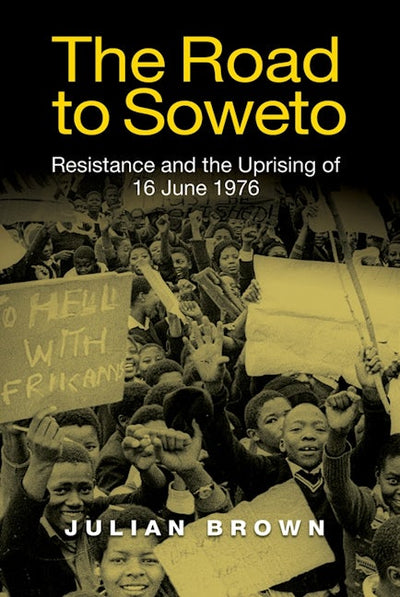
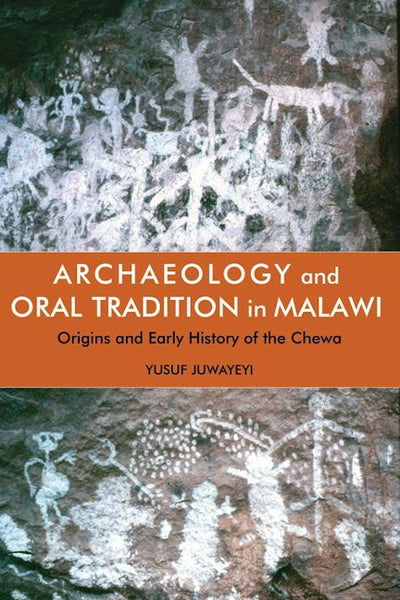
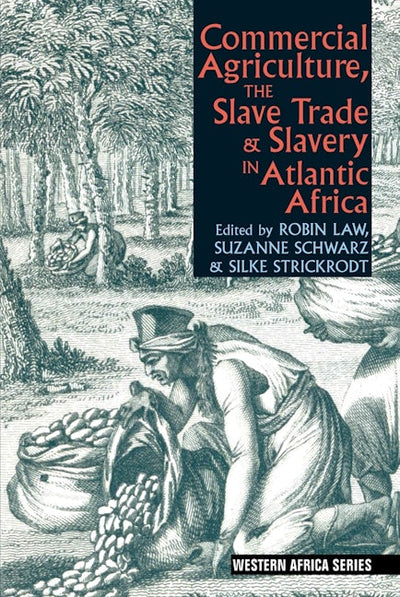
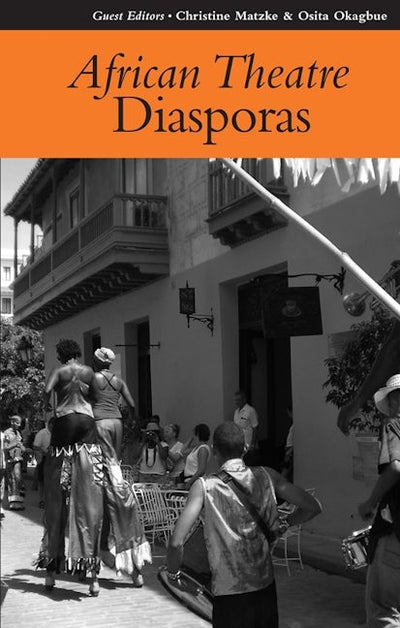
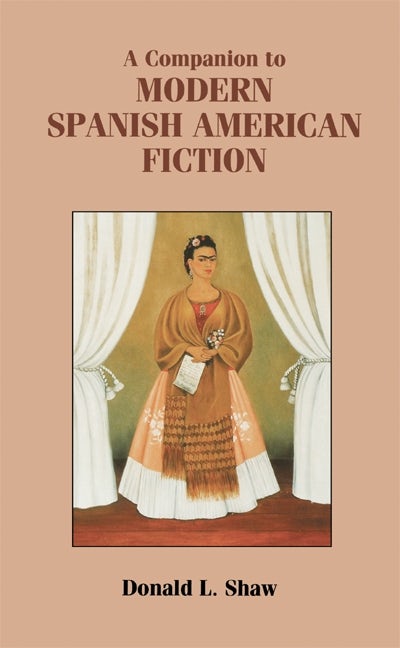
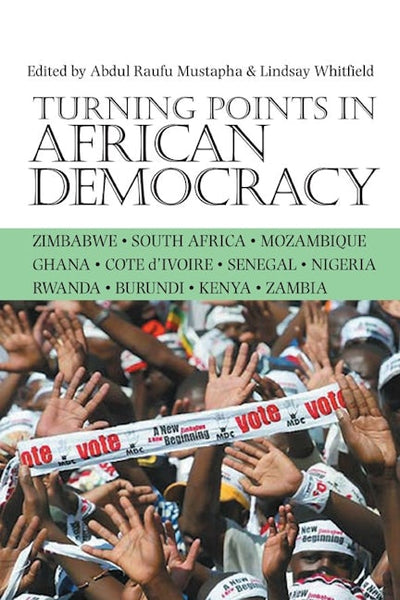
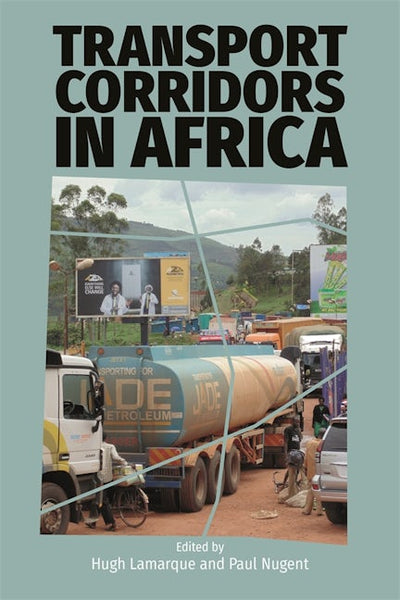
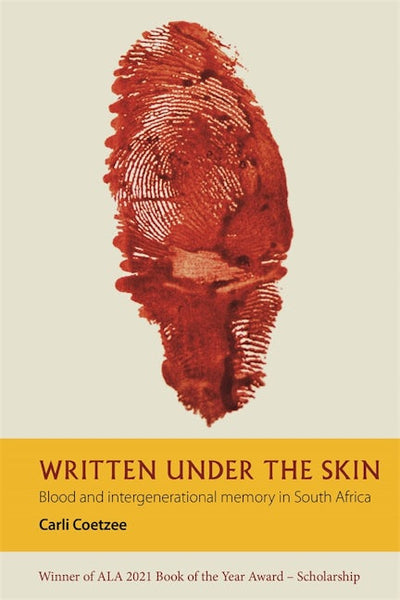
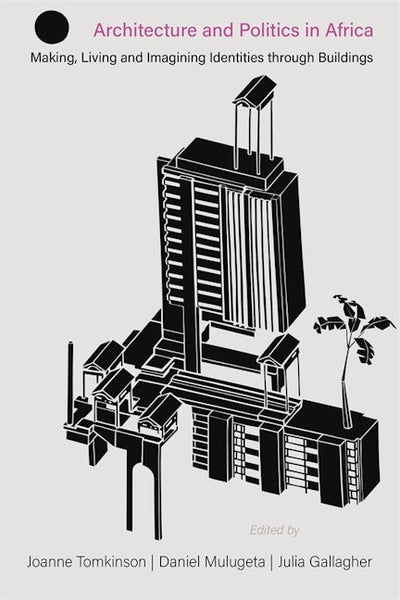
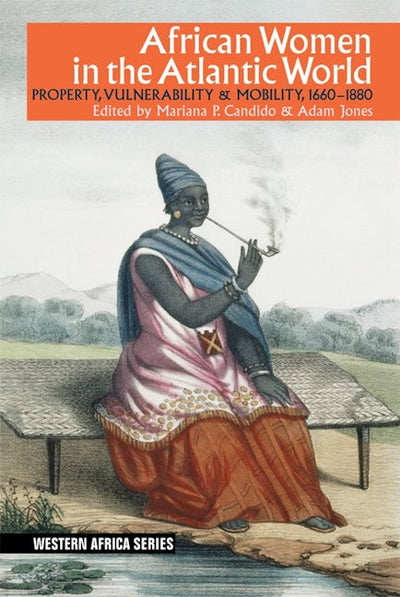
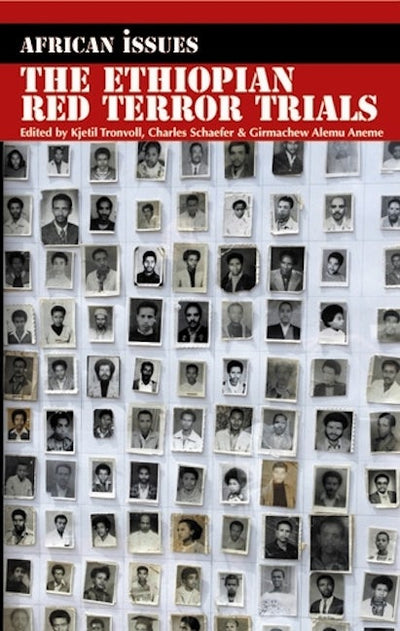
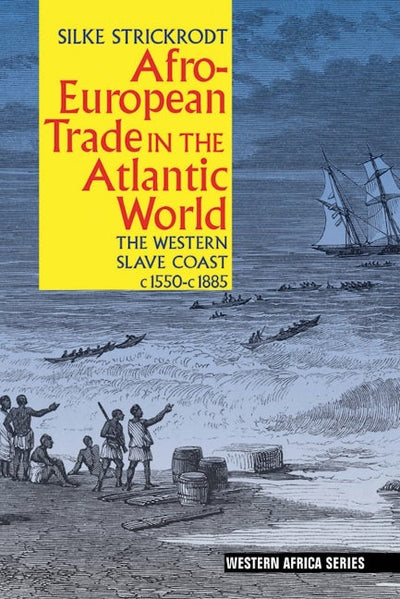
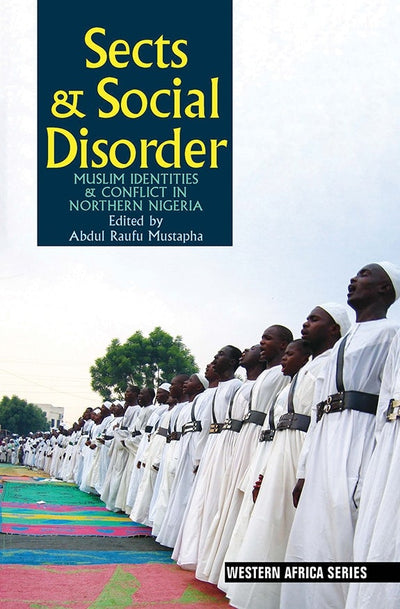
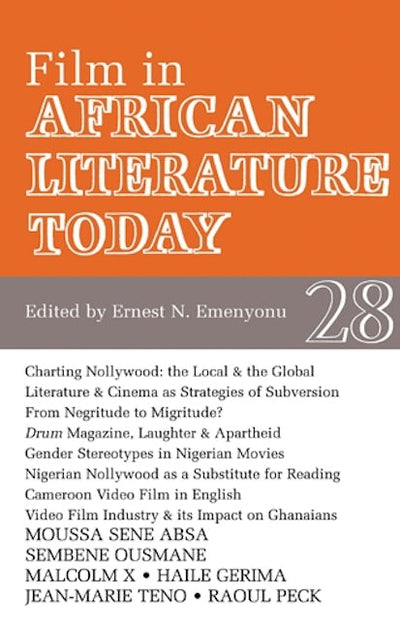
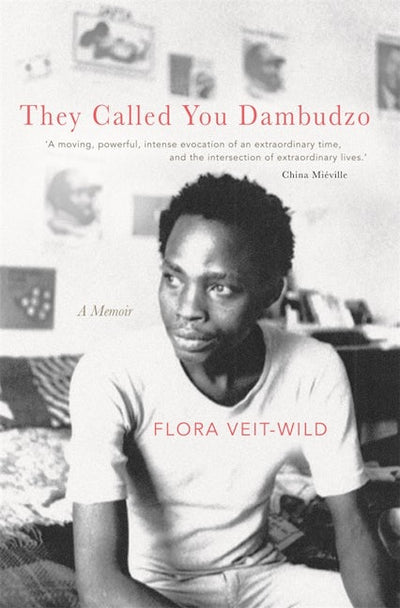
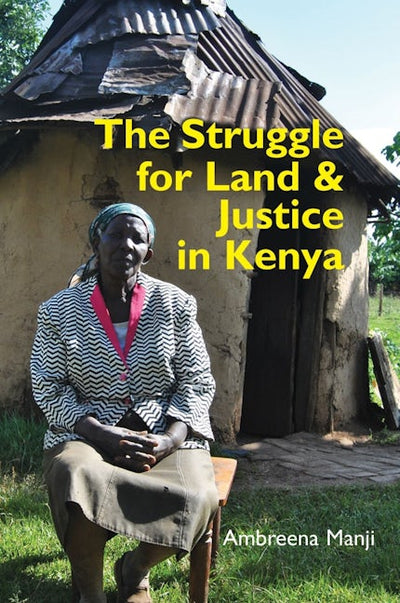
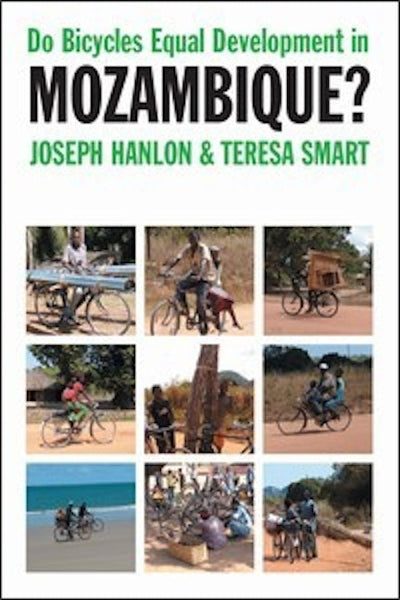
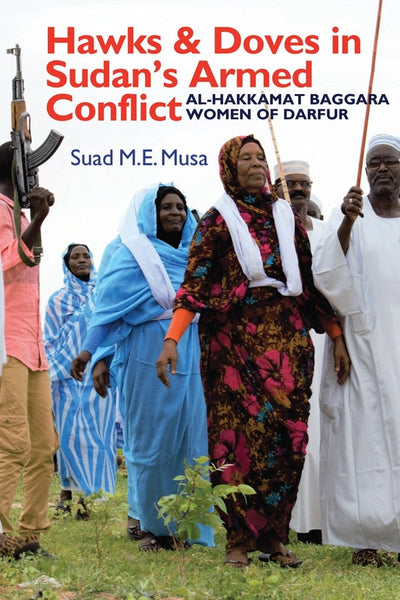
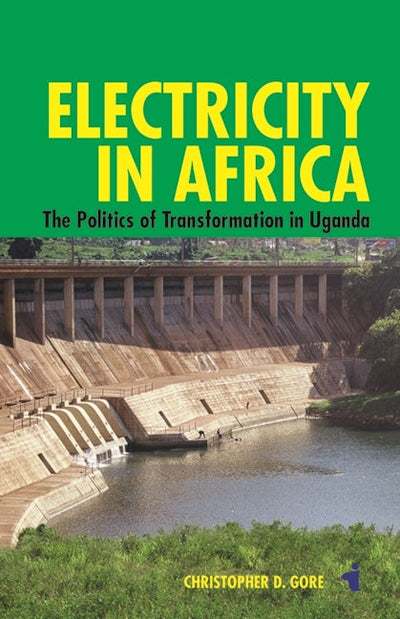
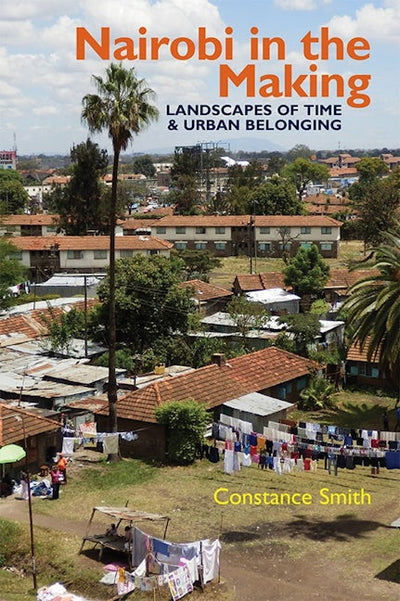
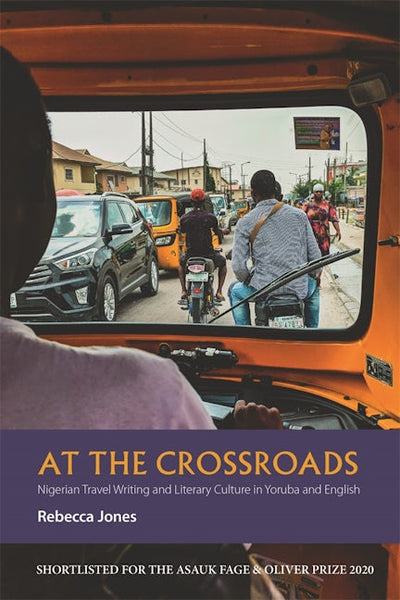
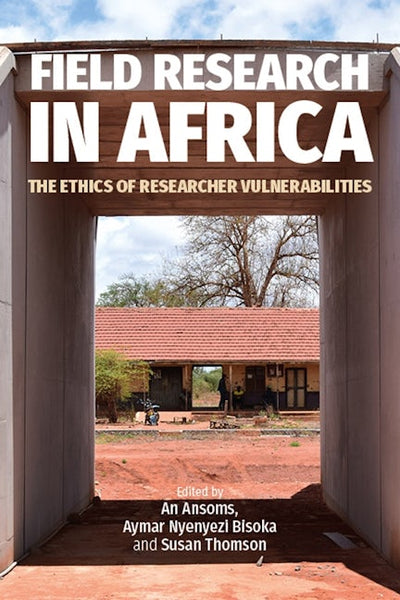
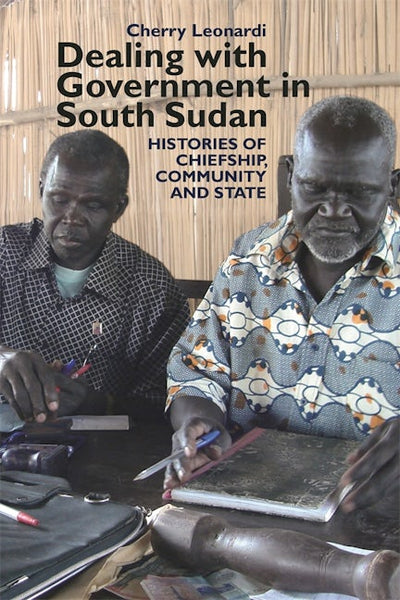
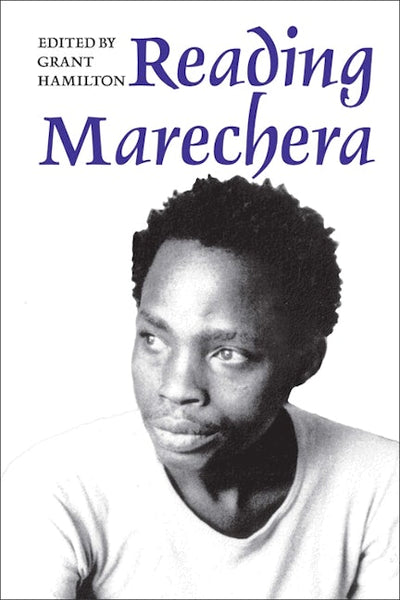
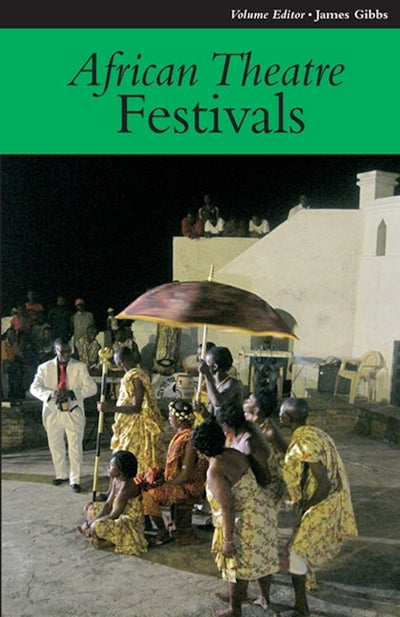
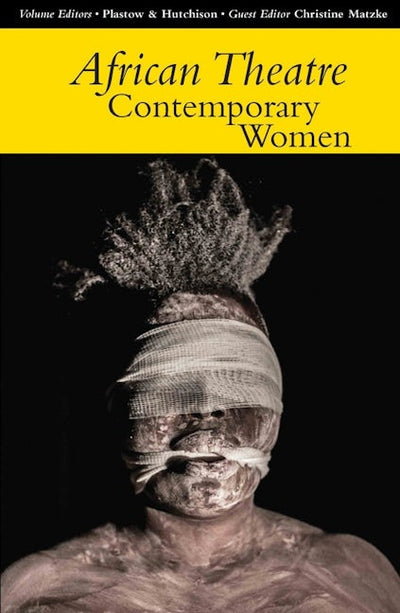
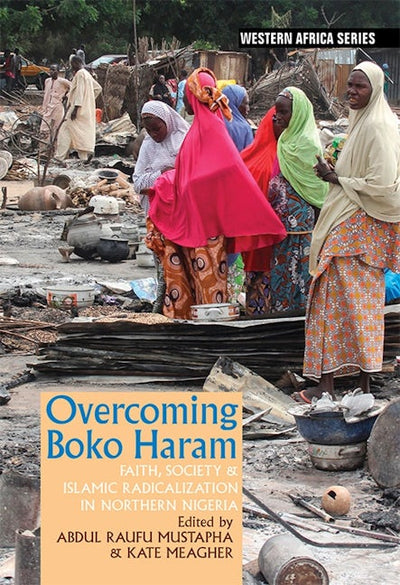
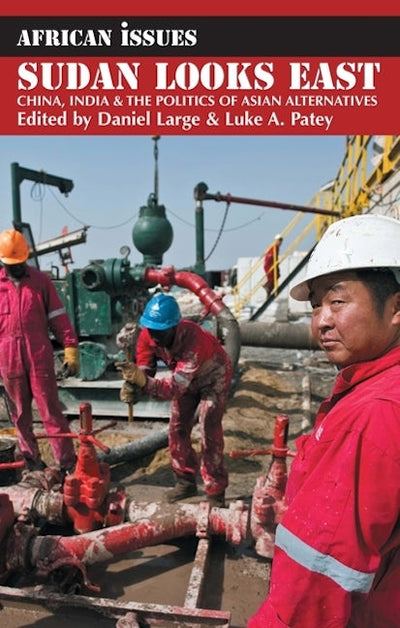
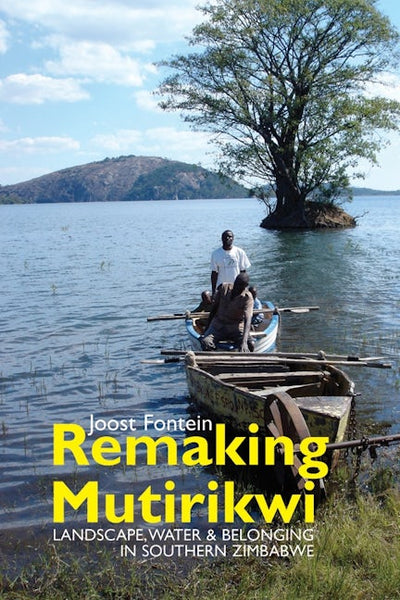
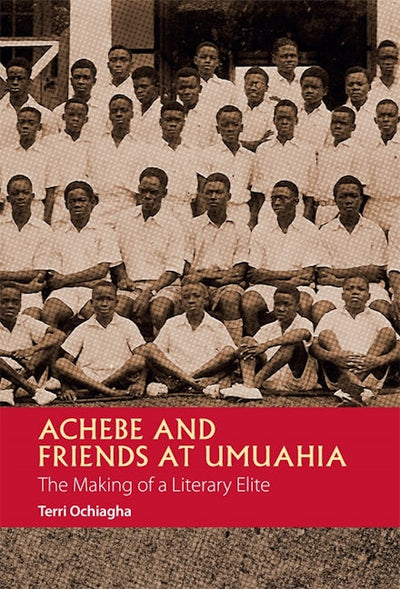
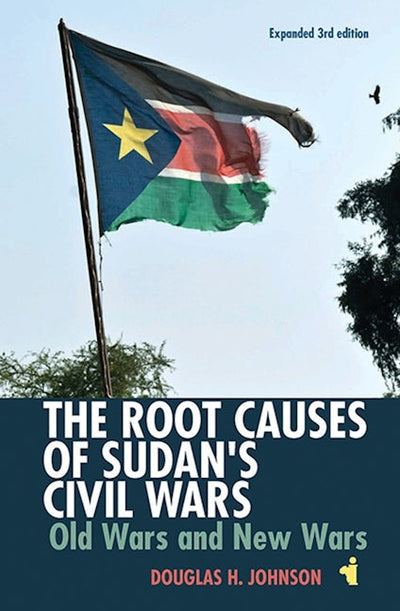
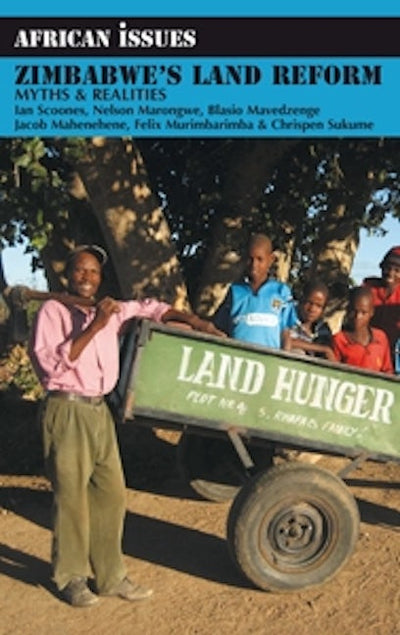
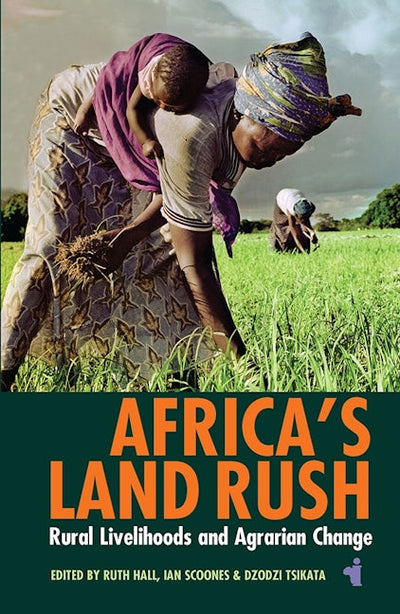
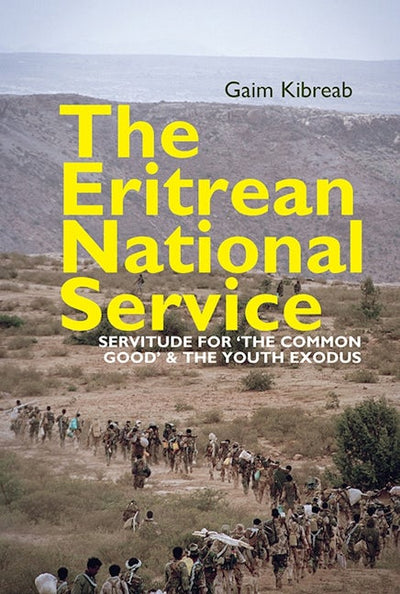
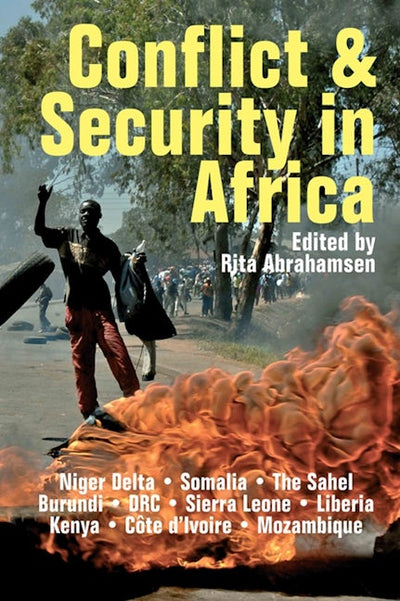

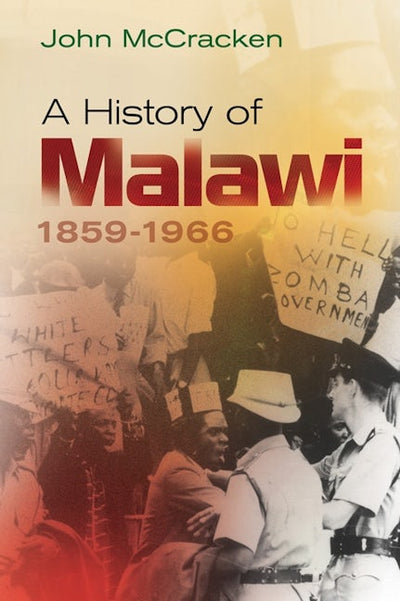
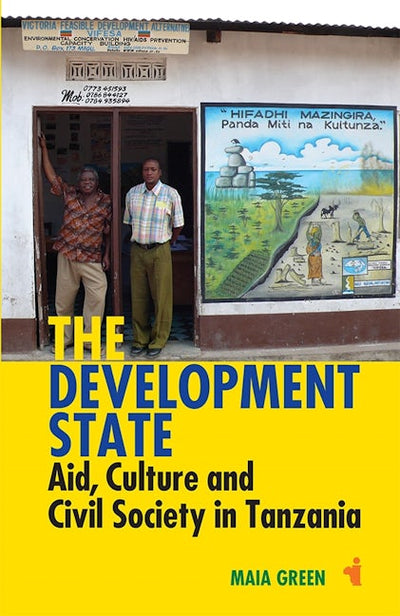
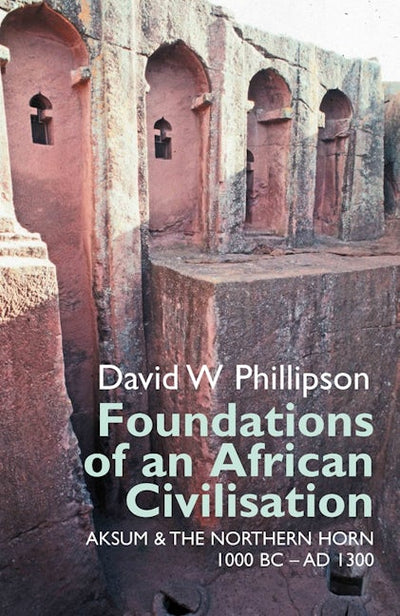
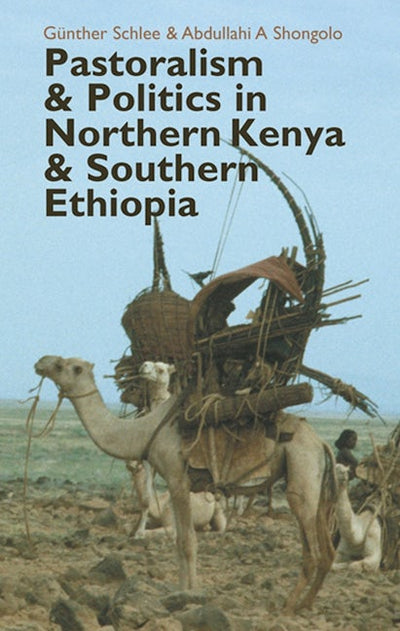
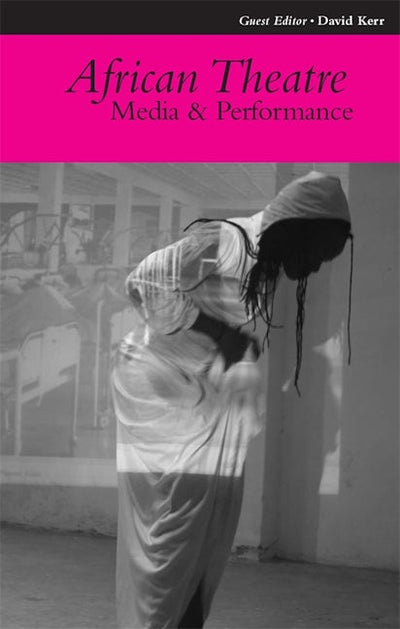
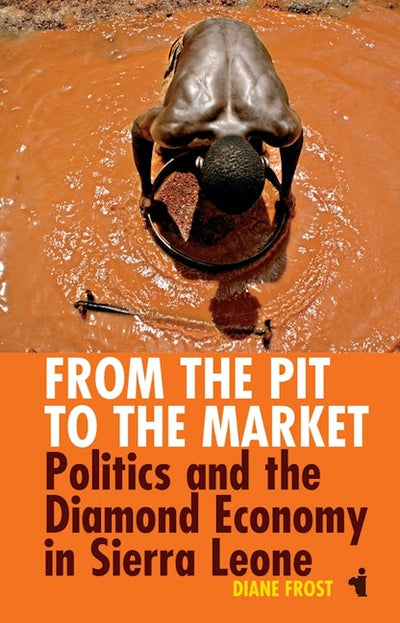
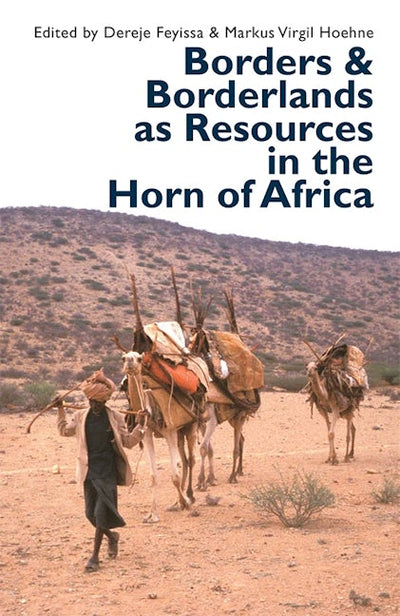
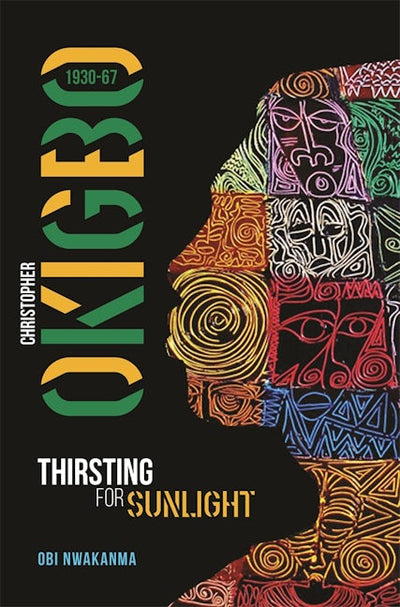
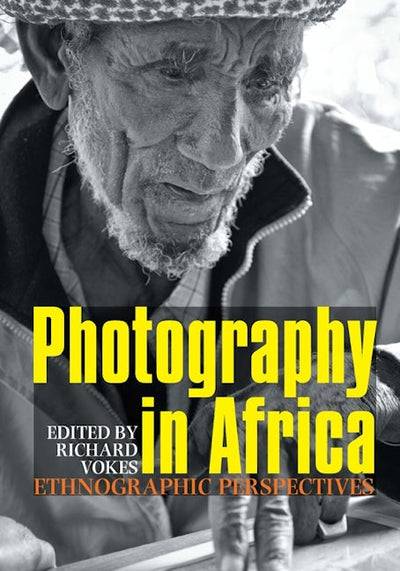
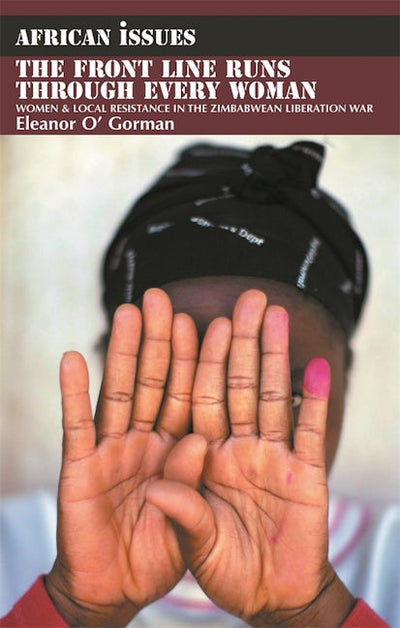
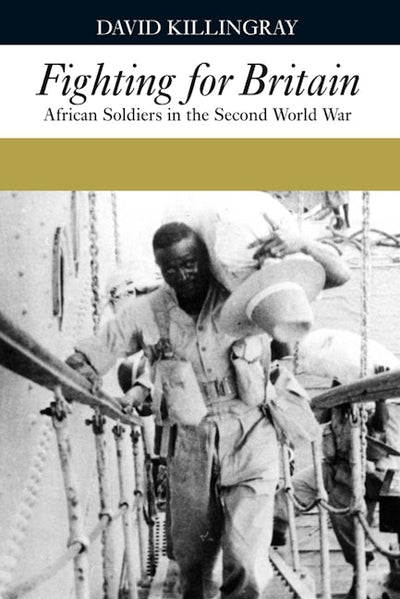
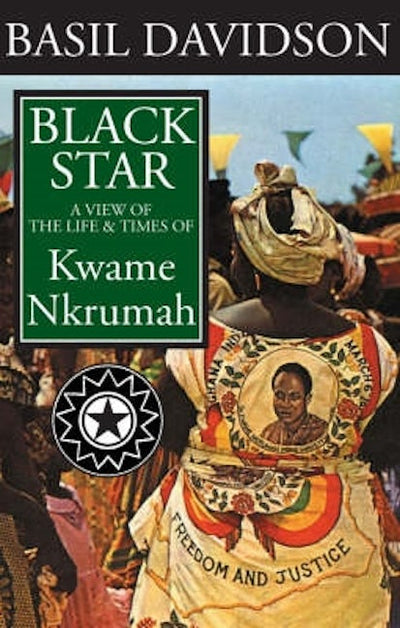
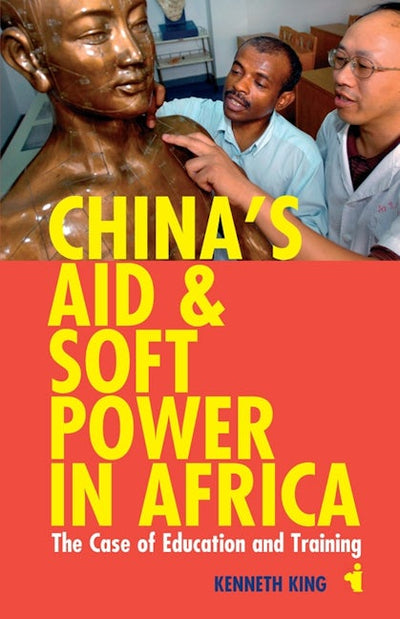
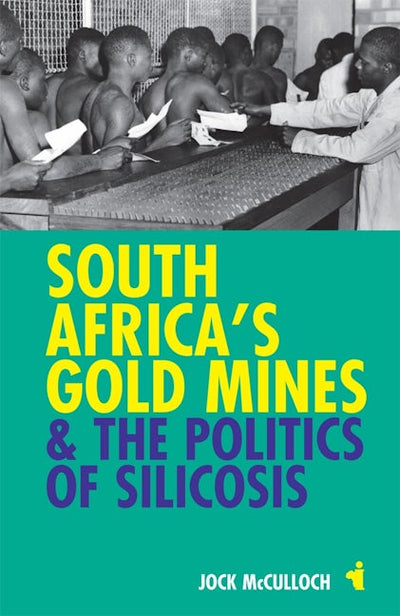




![Leopoldo Alas [Clarín]](http://indiepubs.com/cdn/shop/files/9781855660823_a1045880-38be-49b1-a9f6-d7b96fb0618e_{width}x.jpg?v=1721434156)


