Longlisted for South Africa's 2022 Sunday Times Non-fiction Award
Definitive and gripping narrative history of the Communist Party of South Africa.
Renowned historian Tom Lodge has written an immensely readable and compelling sweep of history, spanning continents and the last hundred years, producing the first comprehensive account of the South African Communist Party in all its intricacies. Taking the story back to the party's pre-history in the early 20th century reveals that it was shaped by a range of socialist traditions and that their influence persisted and were decisive. The party's engagement in popular front politics after 1935 has been largely uncharted: this book supplies fresh detail. In the 1940s the author shows how the party became a key actor in the formation of black working-class politics, and hitherto unused archival materials as well as the insights from an increasingly candid genre of autobiographies make possible a much fuller picture of the secret party of 1952 to 1965. Despite its concealment and tiny numbers, its intellectual impact on black South African mainstream politics was considerable. On the exile period, the author examines the activities of the party's recruits and more informal following inside South Africa, as well as the scope and nature of its broader influence. In 1990, a year in which global politics would change fundamentally, South African communists would return to South Africa to begin the work of reconstructing their party as a legal organisation. Throughout its history, the party had been inspired and supported by the reality of existing socialism, state systems embracing half of Europe and Asia, in which the ruling group was at least notionally committed to the building of communist societies. With the fall of Eastern European regimes and the fragmentation of the Soviet Union, one key set of material foundations for the party's programmatic beliefs crumbled and its most important international alliances in the global socialist community in Eastern Europe and Russia would end. Finally, Lodge brings the story up to date, assessing the degree to which communists both inside and outside government have shaped and influenced policy in successive ANC-led administrations, particularly during the popular resistance to apartheid during the 1950s, which was underpinned by the party's systematic organisation in the localities that supplied the ANC with its strongest bases.
Jacana: Africa, India
The Channel Islands in Anglo-French Relations, 1689-1918
Regular price
$130.00
Save $-130.00
Examines how the Channel Islands have been crucial to Britain's successful maritime superiority in the English Channel.
The Channel Islands have played a key role in both naval warfare and Anglo-French diplomacy, but this has not always been highlighted sufficiently even though Britain and France were at war for most of the period 1689-1815. This book considers a wide range of maritime subjects where the role of the Channel Islands has been significant, such as intelligence gathering, piracy and privateering, and naval strategy and control of the Channel. It also examines topics in relation to the Channel Islands specifically, such as surveying and hydrography, fortifications, trade and Channel Islands societies. It charts changes over time, including the impact of technological changes, from the wars of Louis XIV and William III, through the many Anglo-French wars of the eighteenth and early nineteenth centuries, and includes planning for wars which were anticipated but avoided. Throughout the issues are discussed from the perspectives of Britain, France and the Channel Islands themselves, equal weight being given to all three perspectives. Andrew Lambert is Professor of War Studies at King's College, London and one of Britain's foremost maritime and naval historians. Colin Partridge is a former consultant to the States of Guernsey's 'Fortress Guernsey' programme for the restoration and interpretation of Guernsey's fortifications. Jean de Préneuf is a Senior Lecturer at the University of Lille and Head of the Research, Teaching and Studies Unit at the Historical Branch of the French Ministry of Defence at Vincennes.
Pokot Pastoralism
Regular price
$36.95
Save $-36.95
Examines how pastoral peoples imagine, or even design, their futures under the pressure of changing environments and large-scale government projects.
In East Africa and beyond, pastoral groups find themselves and their livelihoods under increasing threat when dealing with rapid environmental change. On the one hand, they contemplate major upheaval as a result of landscape and climate change on a scale never seen before. At the same time, these often-marginalised groups find themselves subsumed by the wider interests of national political economies prioritising new investment in land as well as encouraging tourism. This book investigates one such group - the nomadic pastoralists in East Pokot in north-west Kenya - and traces their social and ecological transformation over the past two hundred years to show how modern challenges are linked to the past history and also shape the perceptions of pastoral futures. In East Pokot the grass bush savannah upon which the pastoral lifestyle depends has strongly declined over a long period of time, with encroachment of acacia. Though traditionally cattle-rearing, its people have been forced to diversify into raising other browsing animals as well as cattle husbandry. The development efforts of the Kenyan government to use natural resources have also threatened their environment and their way of life. Bringing a long view to the history of human-environmental relations, the author reveals a more complex picture of change that, contrary to earlier assumptions, is not due exclusively to the pastoralists' pasture management, but also to the extinction of wildlife populations in the region, which were hunted heavily in colonial times. Attempts to move beyond Pokot territory, to the regions west of Lake Baringo and to the hard-fought Laikipia Plateau, have often been compromised by violent conflicts. While a younger generation looks to develop new sources of income through the job opportunities created by geothermal energy production, and diversify into other agricultural activities, this has also brought a dynamic social transformation: increasing production and sale of alcohol, decreasingly nomadic lifestyle, growing differences between the older and younger generations, and so on. Contributing to debates on future rural Africa, ecological history and environmental change, the book will appeal to anthropologists, sociologists, geographers, historians and development scholars. Published in association with the Collaborative Research Centre FUTURE RURAL AFRICA, funded by the German Research Council (DFG).
Sports & Modernity in Late Imperial Ethiopia
Regular price
$29.99
Save $-29.99
Innovative study of the role of sports in modernity in Africa.
Sports in Ethiopia was always more than a means of useful recreation. It was also a way to enjoy and define fun, as new modes of behaviour emerged that showed what it meant to be a modern man or woman. This book is the first academic study of the history of modern sports in Ethiopia during the imperial rule of the twentieth century. Showing how agents, ideas and practices linked societal improvement and bodily improvement, this innovative study argues thatmodern sports offers new possibilities to explore the meanings of modernity in Africa. Drawing on written and oral sources in Amharic, Tigrinya, English, French, German and Italian, Bromber provides an in-depth analysis of the role of sports in modern educational institutions, volunteer organizations and urbanization processes. She examines sports' function as a political propaganda tool during the Italian fascist occupation (1935 - 1941), as well as in representations of successful modernization under Haile Selassie (1930 - 1974). The integration into global networks of ideas about the fit colonized body linked Ethiopia, which was never colonized, to the legacy of colonialism. Institutions such as schools, civilian sports clubs, and volunteer organizations were not only loaded with coercive procedures, but instituted modes of behaviour that developed into certain styles and affirmation of the self as well as their contestation. Examining the locations for practising sports in organized forms, informal leisure and practices consumption in Ethiopia, this book contributes to recent debates on the role of sports in the history of urbanization in Africa, as well as those on global modernity.
Ethiopia: AAUP
The Genocide against the Tutsi, and the Rwandan Churches
Regular price
$39.95
Save $-39.95
Pioneering study of the role of the Christian churches in the Rwandan genocide of the Tutsi; a key work for historians, memory studies scholars, religion scholars and Africanists.
Why did some sectors of the Rwandan churches adopt an ambiguous attitude towards the genocide against the Tutsi which claimed the lives of around 800,000 people in three months between April and July 1994? What prevented the churches' acceptance that they may have had some responsibility? And how should we account for the efforts made by other sectors of the churches to remember and commemorate the genocide and rebuild pastoral programmes? Drawing on interviews with genocide survivors, Rwandans in exile, missionaries and government officials, as well as Church archives and other sources, this book is the first academic study on Christianity and the genocide against the Tutsi to explore these contentious questions in depth, and reveals more internal diversity within the Christian churches than is often assumed. While some Christians, Protestant as well as Catholic, took risks to shelter Tutsi people, others uncritically embraced the interim government's view that the Tutsi were enemies of the people and some, even priests and pastors, assisted the killers. The church leaders only condemned the war: they never actually denounced the genocide against the Tutsi. Focusing on the period of the genocide in 1994 and the subsequent years (up to 2000), Denis examines in detail the responses of two churches, the Catholic Church, the biggest and the most complex, and the Presbyterian Church in Rwanda, which made an unconditional confession of guilt in December 1996. A case study is devoted to the Catholic parish La Crête Congo-Nil in western Rwanda, led at the time by the French priest Gabriel Maindron, a man whom genocide survivors accuse of having failed publicly to oppose the genocide and of having close links with the authorities and some of the perpetrators. By 1997, the defensive attitude adopted by many Catholics had started to change. The Extraordinary Synod on Ethnocentricity in 1999-2000 was a milestone. Yet, especially in the immediate aftermath of the genocide, tension and suspicion persist.
Fountain: Rwanda, Uganda
Competing Catholicisms
Regular price
$36.95
Save $-36.95
Explores the impact of Jesuit missions on the development of Christianity in postcolonial French Africa, which found itself at the centre of major shifts and struggles within global Christianity and world politics.
At a time when most African countries were moving towards independence, the Vatican was speeding up the Church's indigenization agenda in an effort to secure its survival in sub-Saharan Africa. Yet, at the same time, African nationalism was on the rise and, following the collapse of its colonial empire, France was attempting to reassert its influence in Africa. This book shows how the Vatican, French Jesuits, the rising Cameroonian indigenous clergy and leadership, and the first Cameroonian Jesuits competed for the Catholic evangelization of French Africa during the mid-20th century. In the mission field, they also competed with different Protestant groups, with whom they shared acommon aim: to convert African traditional religionists and different groups of African Muslims to Christ, while containing the spread of anti-religious ideologies such as Communism. Tracing the rapid expansion of Christianity in Central and Western French Africa during the second half of the twentieth century, the author shows in this book how this competition for faith helped both build the church in French West Africa and Africanize the church alongside missionary Christianity in postcolonial Africa. He also explores the African reaction to this diverse and competing global agenda of Christianization, especially after Chad and Cameroon came together as part of a single Jesuit jurisdiction in 1973, and the way in which, despite differing interpretations of Catholicity which generated internal conflicts, Western Jesuits focus on popular masses and the poor, was able to contain the spread of Islam, counter the Chad's persecution of Christians during the Cultural Revolution (1973-1975) and secure the survival of Christianity as a missionary movement in which Western missionaries worked alongside a rising African clergy and leadership.
JEAN LUC ENYEGUE, SJ is the Director of the Jesuit Historical Institute in Africa, Nairobi. He also lectures on church history at Hekima University College, Catholic University of Eastern Africa.
From Rebels to Rulers
Regular price
$29.99
Save $-29.99
A reinterpretation of the history of Sokoto that provides a new assessment of its leaders and their visions for the Muslim state.
Sokoto was the largest and longest lasting of West Africa's nineteenth-century Muslim empires. Its intellectual and political elite left behind a vast written record, including over 300 Arabic texts authored by the jihad's leaders: Usman dan Fodio, his brother Abdullahi and his son, Muhammad Bello (known collectively as the Fodiawa). Sokoto's early years are one of the most documented periods of pre-colonial African history, yet current narratives pay little attention to the formative role these texts played in the creation of Sokoto, and the complex scholarly world from which they originated. Far from being unified around a single concept of Muslim statecraft, this book demonstrates how divided the Fodiawa were about what Sokoto could and should be, and the various discursive strategies they used to enrol local societies into their vision. Based on a close analysis of the sources (some appearing in English translation for the first time) and an effort to date their intellectual production, the book restores agency to Sokoto's leaders as individuals with different goals, characters and methods. More generally, it shows how revolutionary religious movements gain legitimacy, and how the kind of legitimacy they claim changes as they move from rebels to rulers.
Civil Religion and the Enlightenment in England, 1707-1800
Regular price
$36.95
Save $-36.95
Reveals how Enlightened writers in England, both lay and clerical, proclaimed public support for Christianity by transforming it into a civil religion.
In the aftermath of the seventeenth-century European wars of religion, civil religionists such as David Hume, Edward Gibbon, the third earl of Shaftesbury, and William Warburton sought to reconcile Christian ecclesiology with the civil state and Christian practice with civilized society. They built their arguments in the context of England's long Reformation, syncretizing 'primitive' gospel Christianity with ancient paganism as they attempted to render Christianity a modern version of Roman republican civil religion. They believed that outward observance of the reformed Protestant faith was vital for belonging to the Christian commonwealth of Hanoverian England. Uncovering a major theme in eighteenth-century intellectual and religious history that connected classical Rome with Italian Renaissance humanism and the Enlightenment, this deeply interdisciplinary book draws from recent post-secular trends in social and political theory. Combining intellectual history with the political and ecclesiastical history of the Church of England, it will prove as indispensable for historians as studentsof political theory, theology, and literature.
Privilege, Economy and State in Old Regime France
Regular price
$39.95
Save $-39.95
WINNER: Society for the Study of French History First Book Prize
This book closely analyses the rise and fall of Louis XIV's marine insurance institutions in Paris, which were central to the French monarchy's efforts to stimulate commerce, colonial enterprise and economic growth. These institutions were the projects of two leading ministers, Jean-Baptiste Colbert and his son, the Marquis de Seignelay. While both men recognised that marine insurance was crucial for protecting commercial investment in French maritime endeavours, Colbert looked to private enterprise to lure capital away from passive investments in state debt towards the marine insurance industry. Seignelay, by contrast, leveraged the tools of privilege on which the French economy was built by creating the first chartered company in the history of marine insurance. In exploring the global insurance portfolios of the men and women who joined these institutions - and the conflicts that arose when maritime incidents came into dispute - the book identifies the absolute monarchy itself as the source of the institutions' struggles. While the markets of Amsterdam and London thrived in the long run, Parisian insurers were made to bear the burden of maritime and colonial losses during Louis XIV's costly wars to make up for the state's inadequate protection of French shipping, the French Atlantic empire and the Parisian market. This encapsulates, the book argues, the overarching system of risk management that lay at the heart of absolutism itself.
The ebook edition of this book is openly available under the Creative Commons license CC BY-NC-ND.
Pierre Boulez: Organised Delirium
Regular price
$39.95
Save $-39.95
Exploring the emotional and cultural influences on Pierre Boulez's early works as well as the role surrealism and French culture of the 1930s and 40s played in shaping his radical new musical concepts.
Pierre Boulez's (1925-2016) creative output has mostly been studied from an analytical perspective in the context of serialism. While Boulez tends to be pigeonholed as a cerebral composer, his interest in structure coexisted with extreme visceral energy. This book redresses the balance and stresses the febrile cultural environment of Paris in the 1940s and the emotional side of his early works.
Surrealism, in particular, had an impact on Boulez's formative years that has until now been underexplored. There are intriguing links between French music and surrealism in the 1930s and 40s, arising within a cultural context where surrealism, ethnography and the emerging discipline of ethnomusicology were closely related. Potter situates the young Boulez within this environment. As an emerging musician, he explored radical new musical concepts alongside peers including Yvette Grimaud, Serge Nigg and Yvonne Loriod, performing and exchanging ideas with them.
This book argues that authors associated with surrealism, especially René Char but also Antonin Artaud and André Breton, were crucial to Boulez's musical development. It enhances our understanding of his work by connecting it with significant trends in contemporary French culture, refocusing Boulez studies away from detailed musical analysis and towards a broader and more visceral, emotional response to his work.
Crusade, Settlement and Historical Writing in the Latin East and Latin West, c. 1100-c.1300
Regular price
$130.00
Save $-130.00
This collection offers a holistic understanding of the impact of both crusading and settlement on the literary cultures of Latin Christendom.
The period between the First Crusade and the collapse of the "crusader states" in the eastern Mediterranean was a crucial one for medieval historical writing. From the departure of the earliest crusading armies in 1096 to the Mamlūk conquest of the Latin states in the late thirteenth century, crusading activity, and the settlements it established and aimed to protect, generated a vast textual output, offering rich insights into the historiographical cultures of the Latin West and Latin East. However, modern scholarship on the crusades and the "crusader states" has tended to draw an artificial boundary between the two, even though medieval writers treated their histories as virtually indistinguishable.
This volume places these spheres into dialogue with each other, looking at how individual crusading campaigns and the Frankish settlements in the eastern Mediterranean were depicted and remembered in the central Middle Ages. Its essays cover a geographical range that incorporates England, France, Germany, southern Italy and the Holy Land, and address such topics as gender, emotion, the natural world, crusading as an institution, origin myths, textual reception, forms of storytelling and historical genre. Bringing to the foreground neglected sources, methodologies, events and regions of textual production, the collection offers a holistic understanding of the impact of both crusading and settlement on the literary cultures of Latin Christendom.
Localizing Christopher Marlowe
Regular price
$190.00
Save $-190.00
This study punctures the stereotyped portrayals of Marlowe, first created by his rival Robert Greene, and, yet, which still colour our view. In doing so, Ide reveals the social and cultural discourses out of which such myths emerged.
We know next to nothing about the life of the playwright Christopher Marlowe (b.1564 - d. 1593). Few documents survive other than his birth record in the parish register, a handful of legal cases in court records, Privy Council mandates and reports to the Council, the coroner's examination of his death, and a few hearsay accounts of his atheism. With such a limited collection of biographical documents available, it is impossible to retrieve from history a complete sense of Marlowe. However, this does not mean that biography cannot play a significant role in Marlowe studies.
By observing the details of the specific places and communities to which Marlowe belonged, this book highlights the collective experiences and concerns of the social groups and communities with which we know he was personally and financially involved. Specifically, Localizing Christopher Marlowe reveals the political and cultural dynamics in the community of Corpus Christi College, Cambridge, into which Marlowe was deeply integrated and through which he became affiliated with the circle of Sir Francis Walsingham, mapping these influences in both his life and works.
Rochester Adolescent Medicine
Regular price
$19.99
Save $-19.99
Rochester Adolescent Medicine has a long history as one of the earliest programs in the country. Spanning over six decades, the program has grown from a weekly ambulatory session to a fully functioning division of the Department of Pediatrics with an array of complex clinical, research, educational, and community programs of national/international significance. Interviews with over thirty former and present University residents, fellows, and faculty members in Adolescent Medicine showcase these practitioners' extraordinary passion and dedication for caring for adolescents and their families.
Faculty and former fellows from Rochester Adolescent Medicine have been leaders at the forefront of almost every major decision about the field of Adolescent Medicine since its inception. Adolescent Medicine has never been more critical than it is now, and the field continues its dedication to equity, diversity, and integrity in all programs. This book celebrates Rochester's six-decade contributions to optimum health for adolescents and their families; the partnership with the University of Rochester and the Rochester community; and the training of future generations of leaders in Adolescent Medicine.
Borders and the Norman World
Regular price
$170.00
Save $-170.00
Study of the Norman World's borders, frontiers, and boundaries in Europe, shedding fresh light on their nature and extent.
The Normans exerted great influence across Christendom and beyond in the eleventh and twelfth centuries. Figures like William the Conqueror and Robert Guiscard subdued vast territories, their feats recorded for posterity by chroniclers such as Orderic Vitalis and Geoffrey Malaterra. Through travel and conquest, the Normans encountered, created, and conceptualised many borders, with the areas of Europe that they ruled and most affected often being grouped together as the "Norman World".
This volume examines the nature, forms, and function of borders in and around this "Norman World", looking at Normandy, the British-Irish Isles, and Southern Italy. Three sections frame the collection. The first concerns physical features, from broad frontier expanses, to rivers and walls that were both literally and metaphorically lines of division. The second shows how borders were established, contested, and negotiated between the papacy and lay rulers and senior churchmen. Finally, the third highlights the utility of conceptual frontiers for both medieval authors and modern historians. Among the subjects covered are Archbishop Anselm's travels across Christendom; the portrayal of borders in the writings of William of Jumièges, Orderic Vitalis, and Gerald of Wales; and the limits of Norman seigneurial and papal power at the edges of Europe. Overall, the essays demonstrate the role that the manipulation of borders played in the creation of the "Norman World", and address what these borders did and whom they benefited.
Film History for the Anthropocene
Regular price
$120.00
Save $-120.00
From its beginnings, some of German film's most prominent genres and directors have focused on the natural world and its transformations by humans. Heimat films, "city symphonies," mountain films, and rubble films all blend the boundary between landscape documentary and fiction film. Yet German film studies has been slow to adopt an environmental focus, concentrating (understandably) on its subject matter's political implications. This book reveals critical connections between German film, sociopolitical context, and environment, showing it to have been a creative catalyst for the social and ecological transformation of the Anthropocene.
The book first considers the interplay between German film and environmental history in films and discourses of Heimat. Weimar-era films such as E. A. Dupont's Die Geierwally (1921), Carl Ludwig Achaz-Duisberg's Sprengbagger 1010 (1929), and Phil Jützi's Hunger in Waldenburg (1929) document and create a forum for discussing environmental change. The book then looks at film as a visual archive of and catalyst for infrastructure development, focusing on Metropolis (Fritz Lang, 1927), the mountain films of Arnold Fanck, and the Berlin films Stadt der Millionen (Adolf Trotz, 1925), Berlin: Die Sinfonie der Großstadt (Walter Ruttmann, 1927), and Menschen am Sonntag (1930). Nazi-era and postwar films are also examined. By exploring German film history alongside environmental history and theory, this book provides a case study of the power of film within processes of environmental transformation.
Verdi and the Art of Italian Opera
Regular price
$130.00
Save $-130.00
A long-needed and up-to-date overview of the syntax and principles that make Verdi's operas so effective and so beloved today.
Verdi's art emerged from a rich array of dramatic and musical practices operative in the Italy of his day. Drawing the reader into his creative world, this study (translated from the French original by the author himself) begins where Verdi began when it came time to set notes to paper: the libretto. Designed for the non-Italophone reader, Steven Huebner's Verdi and the Art of Italian Opera explains key principles of Italian poetry that shaped his music. From there, Huebner outlines the various musical textures available to the composer, including an exploration of the characteristics of recitative and aria. Working outward, subsequent chapters explore the syntax of Verdi's melodic writing and the larger-level forms that he used. A concluding chapter considers ways of conceiving musical unity in his operas.
The African Charter on Human and Peoples’ Rights [2 volume set]
Regular price
$250.00
Save $-250.00
Landmark study of the African Charter on Human and Peoples' Rights, one of the most important documents in modern African history, that positions it within the African Lives Matter struggle to assert an African identity rather than as simply a human rights document.
The African Charter on Human and Peoples' Rights (ACHPR) was the first non-Western declaration of human rights. This 2 volume set, for the first time, presents a comprehensive account of the development of the ACHPR, key to a proper understanding of its fundamental nature. Volume 1 outlines the dominant African political and cultural ideas upon which the OAU (now African Union) was founded. Volume 2 describes the process through which the ACHPR came into being.
Charles Bridgeman (c.1685-1738)
Regular price
$130.00
Save $-130.00
An examination of the garden plans of eighteenth-century landscape architect Charles Bridgeman, shedding light on his artistic vision and contributions to English garden history.
Charles Bridgeman was a popular and highly successful landscape architect in the first part of the eighteenth century. He was Royal Gardener to George I and George II, designing the gardens at Kensington Palace for them and working for many of the ruling Whig elite, including Sir Robert Walpole at Houghton Hall in Norfolk. His landscapes were audacious and monumental, but he is barely known outside the world of academic garden history; most of his gardens have disappeared, changed out of all recognition to chime with later tastes shaped by Lancelot Brown's vision of a more "natural" landscape, or buried under housing developments and golf courses; and there is little archaeological or written evidence of his work.
This book aims to redress this injustice and rescue his legacy. It draws on the only significant body of evidence which survived him: an extensive but wildly heterogenous corpus of garden plans. Close examination of them reveals an artistic vision heavily influenced by the late seventeenth-century geometric garden but deeply rooted in the "genius of the place", and working methods that include a proto-business model which prefigures the gentleman improvers who followed him. The volume brings him from obscurity to demonstrate his skill as an artist, a manipulator of space on a grand scale and a consummate practitioner, a deserved member of the canon of famous and revered English landscape gardeners.
Ireland’s Sea Fisheries, 1400-1600
Regular price
$130.00
Save $-130.00
This book examines the environmental, political, and economic history of Ireland's marine fisheries from 1400 to 1600.
It combines a wide range of historical sources with innovative digital research methods to provide a comprehensive and systematic overview. Government letters and court documents highlight the diverse range of fishing fleets from across Europe that visited Irish waters in the early sixteenth century, bringing wealth and cultural influence to the native Irish, who developed complex systems to protect and tax the visitors. Furthermore, trade records illustrate that fish was Ireland's premier export in the late fifteenth and early sixteenth centuries. However, a range of factors led to the industry's collapse by the end of the sixteenth century: the Tudor conquest which disrupted fishing operations and fundamentally altered who controlled fishing resources; the destabilization of Irish waters resulting from the terrestrial conflict, which allowed pirates to thrive; an influx of cheap cod from the newly exploited fisheries in Newfoundland which changed consumption patterns in Ireland and across Europe; and shifting climatic conditions and decades of over-exploitation which meant fewer fish and poorer catches. Overall, the book reveals that fisheries form a vital part of the broader environmental, political, and economic history of Ireland.
Renaissance Papers 2022
Regular price
$120.00
Save $-120.00
Renaissance Papers collects the best scholarly essays submitted each year to the Southeastern Renaissance Conference. The theme of this year's volume is "sacred places, secular spaces." It begins with a "who is it" mystery, examining two portraits by Raphael that embody the sacred and the profane, respectively. The next essay engages both the sacred and pictorial innovationsin Holbein's predella The Dead Christ; while the following one views the sacred through the critical lens of race, arguing that Northern European churchmen normalized views on race by strategically placing racialized artifacts in their churches. The scene then shifts to 16th century Venice, where the Greek community contended with local authorities over the right to establish a sacred site for interring their dead. The next two essays swing the pendulum toward the secular: an essay on ecocriticism suggests that the early modern period expelled the sacred from nature and presents a Rabelaisian antidote, while an essay on Spenser's The Faerie Queene presents it as a blueprint for colonization. The volume concludes with
Contributors: Julie Fox-Horton, Lorenz A. Hindrichsen, Heather Hirschfeld, Elizabeth Lisot-Nelson, Jesse Russell, Victor Velázquez, John N. Wall, Jennifer Wu. The journal is edited by Jim Pearce of North Carolina Central University and Ward Risvold of Georgia College and State University.
Maritime Power and the Power of Money in Louis XIV’s France
Regular price
$130.00
Save $-130.00
A detailed analysis of the limitations of the system which relied on intermediaries and private suppliers to finance, build and maintain the French navy.
Although Louis XIV's navy did not "win" in any recognisable sense during the wars of the later seventeenth and early eighteenth centuries, it was nevertheless one of the largest military institutions of the entire early modern world at a key moment in the evolution of the modern state and modern warfare. This book examines how Louis XIV's navy was financed, arguing that the way the state spends money, and the relative efficiency and accountability of that spending, is fundamental to understanding the effectiveness of a military system. It outlines how the French crown depended on fiscal intermediaries and private suppliers, explores how its failure to control the spending and activities of its contractors fundamentally limited France's strategic possibilities at sea, and discusses how these structural problems were progressively and disastrously exposed as the state's financial situation deteriorated. The book sets the activities of the French navy in the wider context of the wars of the period, showing that France necessarily had to give precedence to the funding of its army. Overall, the book highlights the limitations of the contractor state, demonstrating that early modern navies were both too complex and investment-heavy to be entirely outsourced.
Fictions of Presence
Regular price
$36.95
Save $-36.95
An absorbing study of the contested embodiment of the idea of "presence" in the plays and novels of the eighteenth century.
In the years following the 1737 Licensing Act, the English stage found itself for the first time facing serious competition from the novel - newly respectable and increasingly fashionable. But the story is not one of theatre's decline and the novel's rise. As Ros Ballaster shows in this lively and innovative study, the relationship between the two media was one of an intensely creative and productive rivalry. Novelists sent their heroes to the theatre, dramatists appropriated the plots of popular novels, the celebrity status of actors was advanced through guest appearances in printed prose fictions. Some figures, like Richardson's virtuous serving maid Pamela, or Sterne's eccentrichumourist Tristram Shandy, acquired such independent lives in the minds of the public that they migrated into the mainstream of popular culture.
Fictions of Presence describes how major authors of the period - Eliza Haywood, Henry Fielding, Charlotte Lennox and Oliver Goldsmith - spanned both genres. It charts the movement of popular fictional characters between stage and page. And it looks at the representation of contemporary audiences and readers in the new types of the (female) mimic and the (male) critic. Crucially, Ballaster delineates the ground over which the two media competed: the ability to create 'presence' - a sense of being present with the moment of action, of finding 'being' in fictional worlds - in the mind's eye of readers and theatregoers. In so doing, she not only illuminates the shared history of the theatre and the novel, but describes the power of aesthetic experience itself.
Political Journalism in London, 1695-1720
Regular price
$36.95
Save $-36.95
A major history of the evolution of political journalism in the late Stuart and early Hanoverian period.
The reign of Queen Anne (1702-1714) saw a remarkable boom in political journalism and newspaper culture in London, in which some of the leading literary lights of the age, Swift, Defoe, Addison, Steele, were heavily involved. While scholars have dealt at length with the physical development and circulation of these newspapers and with their literary contribution, much less has been done to trace the evolving ideologies of London's political newspapers in this period. In this major contribution to the study of eighteenth-century political culture, Ashley Marshall shows how the ideologies of the leading papers evolved in direct and indirect response to one another. She offers provocative re-readings of well-known journals, including Defoe's Review, Swift's Examiner and the various publishing ventures of Richard Steele, and first accounts of the wealth of smaller, short-lived journals which made up the ecosystem of periodical publishing at the time. A ground-breaking final chapter looks at the radically different ways in which periodical writers imagined and addressed their public. Drawing out the distinction between the Whig ideal of a highly engaged citizenry and a Tory press which conditioned its readers to be dutiful subjects rather than active citizens, Marshall argues that these rhetorical differences reflected an ongoing debate about the ultimate role of journalism.
British Sociability in the Long Eighteenth Century
Regular price
$36.95
Save $-36.95
This innovative collection explores how a distinctively British model of sociability developed in the period from the Restoration of Charles II to the early nineteenth century through a complex process of appropriation, emulation and resistance to what was happening in France and other parts of Europe.
The study of sociability in the long eighteenth century has long been dominated by the example of France. In this innovative collection, we see how a distinctively British model of sociability developed in the period from the Restoration of Charles II to the early nineteenth century through a complex process of appropriation, emulation and resistance to what was happening in France and other parts of Europe. The contributors use a wide range of sources - from city plans to letter-writing manuals, from the writings of Edmund Burke to poems and essays about the social practices of the tea table, and a variety of methodological approaches to explore philosophical, political and social aspects of the emergence of British sociability in this period. They create a rounded picture of sociability as it happened in public, private and domestic settings - in Masonic lodges and radical clubs, in painting academies and private houses - and compare specific examples and settings with equivalents in France, bringing out for instance the distinctively homo-social and predominantly masculine form of British sociability, the role of sociabilitywithin a wider national identity still finding its way after the upheaval of civil war and revolution in the seventeenth century, and the almost unique capacity of the British model of sociability to benefit from its own apparent tensions and contradictions.
Converting Britannia
Regular price
$36.95
Save $-36.95
A compelling study of Anglican Evangelicalism in the Age of Wilberforce revealing its potency as a political machine whose reach extended into every area of the British establishment and its nascent Empire.
SHORTLISTED for the EHS Book Prize 2020
The moralism that characterized the decades either side of 1800 - the so-called 'Age of William Wilberforce' - has long been regarded as having a massive impact on British culture. Yet the reasons why Wilberforce and his Evangelical contemporaries were so influential politically and in the wider public sphere have never been properly understood. Converting Britannia shows for thefirst time how and why religious reformism carried such weight. Evangelicalism, it argues, was not just an innovative social phenomenon, but also a political machine that exploited establishment strengths to replicate itself at home and internationally. The book maps networks that spanned the churches, universities, business, armed forces and officialdom, connecting London and the regions with Europe and the world, from business milieux in the Cityof London and elsewhere through the Royal Navy, the Colonial Office and East India and Sierra Leone companies. Revealing how religion drove debates about British history and identity in the first half of the nineteenth century, itthrows new light not just on the networks themselves, but on cheap print, mass-production and the public sphere: the interconnecting technologies that sustained religion in a rapidly modernizing age and projected it into new contexts abroad.
GARETH ATKINS is a Bye-Fellow at Queens' College, University of Cambridge.
The Bayeux Tapestry
Regular price
$36.95
Save $-36.95
A leading authority on the Bayeux Tapestry examines the work "frame by frame" in this profusely illustrated and annotated volume.
The Bayeux Tapestry is one of the most extraordinary artefacts to survive from the eleventh century: a fragile web of woollen thread on linen, its brilliant colours undimmed after nearly a thousand years. The events of the years 1064 to 1066 surrounding the contested accession to the English throne of William, Duke of Normandy are so vividly portrayed that you can almost watch the artists' minds at work as they created it.
This beautiful full-colour reproduction of the entire Tapestry includes a detailed commentary alongside each episode, so you can follow the story blow by blow.
Opposing Apartheid on Stage
Regular price
$49.95
Save $-49.95
A captivating account of an interracial jazz opera that took apartheid South Africa by storm and marked a turning point in the nation's cultural history.
In 1959, King Kong, an interracial jazz opera, swept across South Africa and became a countrywide phenomenon. Its performances sold out, its LP record was widely heard, and its cast became recognized celebrities. Featuring an African composer, cast, and orchestra but predominantly white directors and producers, this interracial production seemed completely distinct from any other theatrical production in the country's history. Despite being staged over a decade after the enacting of apartheid, the interracial collaboration met widespread acclaim that bridged South Africa's racial, political, ethnic, and class fissures.
Widely considered a watershed moment within the history of South African theater and music, King Kong encapsulated key currents within South African cultural history. Author Tyler Fleming's gripping narrative unpacks the life of the musical, from the emergence of the heavyweight boxer "King Kong" Dlamini to the behind-the-scenes dynamics of rehearsals to the musical's 1961 tour of Britain and the later experience of cast members living in exile for their opposition to apartheid. Opposing Apartheid on Stage: "King Kong" the Musical explores the history of this jazz opera and its enduring legacy in both South African history and global popular culture.
Frisians and their North Sea Neighbours
Regular price
$49.95
Save $-49.95
An investigation into the mysterious Frisians, drawing together evidence from linguistic, textual and archaeological sources.
From as early as the first century AD, learned Romans knew of more than one group of people living in north-western Europe beyond their Empire's Gallic provinces whose names contained the element that gives us modern "Frisian". These were apparently Celtic-speaking peoples, but that population was probably completely replaced in the course of the convulsions that Europe underwent during the fourth and fifth centuries. While the importance of linguistically Germanic Frisians as neighbours of the Anglo-Saxons, Franks, Saxons and Danes in the centuries immediately following the fall of the Roman Empire in the West is widely recognized, these folk themselves remain enigmatic, the details of their culture and organization unfamiliar to many.
The Frisian population and their lands, including all the coastal communities of the North sea region and their connections with the Baltic shores, form the focal point of this volume, though viewed often through comparison with, or even through the eyes of, their neighbours. The essays present the most up-to-date discoveries, research and interpretation, combining and integrating linguistic, textual and archaeological evidence; they follow the story of the various Frisians through from the Roman Period to the next great period of disruption and change introduced by the Viking Scandinavians.
Contributors: Elzbieta Adamczyk, Iris Aufderhaar, Pieterjan Deckers, Menno Dijkstra, John Hines, Nelleke Ijssennagger, Hauke Jöns, Egge Knol, Jan de Koning, Johan Nicolay, Han Nijdam, Tim Pestell, Peter Schrijver, Arjen Versloot, Gaby Waxenberger, Christiane Zimmermann.
The Filth Disease
Regular price
$36.95
Save $-36.95
Shows how the investigation of local outbreaks of typhoid fever in Victorian Britain led to the emergence of the modern discipline of epidemiology as the leading science of public health
Typhoid fever is a food- and water-borne infectious disease that was insidious and omnipresent in Victorian Britain. It was one of the most prolific diseases of the Industrial Revolution. There was a palpable public anxiety aboutthe disease in the Victorian era, no doubt fueled by media coverage of major outbreaks across the nation, but also because Queen Victoria's husband, Prince Albert, died of the disease in 1861. Their son and heir, Prince Albert Edward, contracted and nearly succumbed to typhoid a decade later in 1871.
The Filth Disease shows that typhoid was at the center of a number of critical debates about health, science, and governance. Victorian public health reformers, the book argues, working in central and local government, framed typhoid as the most pressing public health problem in order to persuade local officials to implement sanitary infrastructure to prevent the spread of disease. In this period British epidemiologists uncovered how typhoid is spread via food and water supplies, disrupting the longstanding idea that typhoid was spread via filth. In the process the modern disciple of epidemiology emerged as the chief science of public health. Typhoid was as much a social and political problem as it was a scientific one, and The Filth Disease provides a striking reminder of the cultural context in which infectious diseases strike populations and how scientists study them.
The Medieval Clothier
Regular price
$45.95
Save $-45.95
A clear and accessibly written guide to the medieval cloth-making trade in England.
Cloth-making became England's leading industry in the late Middle Ages; clothiers co-ordinated its different stages, in some cases carrying out the processes themselves, and found markets for their finished cloth, selling to merchants, drapers and other traders. While many clothiers were of only modest status or "jacks of all trades", a handful of individuals amassed huge fortunes through the trade, becoming the multi-millionaires of their day. This book offers the first recent survey of this hugely important and significant trade and its practitioners, examining the whole range of clothiers across different areas of England, and exploring their impact within the industry andin their wider communities. Alongside the mechanics of the trade, it considers clothiers as entrepreneurs and early capitalists, employing workers and even establishing early factories; it also looks at their family backgrounds and their roles as patrons of church rebuilding and charitable activities. It is completed with extracts from clothiers' wills and a gazetteer of places to visit, making the book invaluable to academics, students, and local historians alike.
Bernstein and Robbins
Regular price
$36.95
Save $-36.95
The formative early ballets of West Side Story creators Leonard Bernstein and Jerome Robbins explored in detail for the very first time.
2022 CHOICE Outstanding Academic Title Winner.
Leonard Bernstein and choreographer Jerome Robbins stand as giants of the musical-theatre world, but it was ballet that launched their stage careers and established their relationship. With Fancy Free (1944), their triumphant debut collaboration produced by Ballet Theatre, Bernstein, Robbins, and set designer Oliver Smith-all in their mid-twenties- captured the spirit of wartime New York, created a defining ballet of the period still widely performed today, and became overnight sensations. The hit musical On the Town (1944) and a now largely forgotten ballet, Facsimile (1946), followed over the next two years.
Drawing extensively on previously unpublished archival documents, Bernstein and Robbins: The Early Ballets provides a richly detailed and original historical account of the creation, premiere, and reception of Fancy Free andFacsimile. It reveals the vital and sometimes conflicting role of Ballet Theatre, explores how Bernstein composed the scores, sheds light on the central importance of Oliver Smith, and considers the legacy of these works for all involved. The result is a new understanding of Bernstein, Robbins, and this formative period in their lives.
The Lore of Ireland
Regular price
$39.95
Save $-39.95
The definitive reference book on Ireland's cultural and religious heritage.
Ireland has one of the finest cultural heritages and a standard reference book combining the related subjects of folklore, myth, legend and romance is long overdue. There are 350 substantial entries, in alphabetical order from Abán, a 6th-century saint, to Weather, all with full references to sources, a synopsis of relevant stories, and discussion of their origin, nature and development. These are complimented by a genre-list of material under various headings, such as Mythical Lore, Fianna Cycle, Ulster Cycle, King Cycles, Peoples and Traditions, Religious Lore, and Folk Custom and Belief. There is also a wealth of genealogical detail, indicating how historical and social circumstances have influenced the growth and spread of Irish lore.
DAITHI O HOGAIN, Associate Professor of Irish Folklore at University College Dublin, was an international authority on folklore and traditional literature.
Fighting at Sea in the Eighteenth Century
Regular price
$36.95
Save $-36.95
Naval warfare is vividly brought to life, from first contact through how battles were won and lost to damage repair.
Our understanding of warfare at sea in the eighteenth century has always been divorced from the practical realities of fighting at sea under sail; our knowledge of tactics is largely based upon the ideas of contemporary theorists[rather than practitioners] who knew little of the realities of sailing warfare, and our knowledge of command is similarly flawed. In this book the author presents new evidence from contemporary sources that overturns many old assumptions and introduces a host of new ideas. In a series of thematic chapters, following the rough chronology of a sea fight from initial contact to damage repair, the author offers a dramatic interpretation of fighting at sea inthe eighteenth century, and explains in greater depth than ever before how and why sea battles (including Trafalgar) were won and lost in the great Age of Sail. He explains in detail how two ships or fleets identified each other to be enemies; how and why they manoeuvred for battle; how a commander communicated his ideas, and how and why his subordinates acted in the way that they did.
Minna Wagner
Regular price
$36.95
Save $-36.95
This biography of Minna Planer, Richard Wagner's wife of 30 years, reveals her as a self-assured woman and artist who was vital to her husband's creative life.
When Richard Wagner first met Minna Planer in 1834, he was an unknown conductor, she a popular actress. His hectic pursuit of her affections culminated in marriage in 1836. Minna endured poverty with him, nursed him through chronic illness, followed him across Europe as he fled from creditors and pursued his artistic goals, and sought to provide him with the stable domestic and erotic life that he craved. He played his works to her as he wrote them, up to Tannhäuser and Lohengrin, and set store by her opinions. But when he went on the run as a wanted revolutionary, Minna only reluctantly followed him into Swiss exile.
Domestic peace tentatively prevailed, but was ultimately destroyed by Wagner's passion for Mathilde Wesendonck. In 1858, he and Minna separated, she returned home to Germany, and subsequent efforts at reconciliation proved ultimately impossible. They remained married, however, until Minna's death in 1866.
Despite having been at Richard's side as he matured into the composer of the Ring and Tristan, Minna has been given short shrift by most Wagner commentators. In Eva Rieger's acclaimed biography, translated into English by Chris Walton, the author reveals Minna as a self-assured woman and artist who played a crucial role in the creative life of her husband.
The Songs of Jean Sibelius
Regular price
$190.00
Save $-190.00
A landmark in Sibelius scholarship, this is the first book that presents all of Sibelius's solo art songs in their musical and aesthetic context. Indispensable for scholars and performers alike.
This is the first book to discuss the complete solo art songs of Jean Sibelius and to locate them in their musical, literary and artistic context. The book is organized around the poets Sibelius set to music and the literary themes associated with them, thus providing invaluable information for the scholar, student and performer. The musical and aesthetic contextualisation of the songs will help to enable new interpretations on the performance stage.
Resistance to Love in Medieval English Romance
Regular price
$36.95
Save $-36.95
This book explores resistance as a widespread motif in medieval romance to consider themes of consent, gender, and desire.
JOINT WINNER: 2024 Swiss Association of Medieval and Early Modern Studies Book Prize.
Medieval romance is usually considered a genre that celebrates love, desire, and sexuality within marriage. However, moments of resistance within it offer a point of tension, where normative scripts and expectations are exposed and opened up to challenge.
This book explores such resistance as a widespread motif in the genre, tracing the subversive possibilities it presents, and through them uncovering how romance constitutes particular kinds of love as desirable, shaped by intersecting factors, including gender, status, race, religion, and morality. Drawing upon contemporary work on consent, the politics of desire, and asexuality, it examines how resistance is often transformed into acceptance, through consensual negotiation or coercive force: the romances discussed here demonstrate that a certain level of force, pressure, and persuasion is accepted as a means of forming relationships within the genre, but this reliance on coercion reveals the effort to which romances must go to uphold normative structures of desire. Considering a variety of works, from Marie de France's twelfth-century Guigemar to Thomas Malory's Morte Darthur, Geoffrey Chaucer's Franklin's Tale to William Caxton's fifteenth-century prose romances, this book argues that romance teaches its readers what and whom to desire, as well as how to behave when negotiating their desires, and explores the wider implications for understanding consent, gender, and desire in medieval England.
This book is available as an Open Access ebook under the Creative-Commons License CC-BY-NC-ND
Music, Morality and Social Reform in Nineteenth-Century Britain
Regular price
$120.00
Save $-120.00
A pioneering work which delves into and reveals the links between music, moral instruction and social reform.
This book discusses the role of music in programmes of personal improvement and social reform in nineteenth-century Britain. The pursuit of morality through music was designed not just to improve personal and communal character but to affect social change and transformation. The book examines the musical education of children, women and men through a variety of literature published for various educational settings including mechanics' institutes. It also considers the role of music in narratives of social programs and community-building projects that sought to promote utility, well-being and freedom from the strictures of Christianity as the dominant moral and cultural force.
The first book to connect the threads between music, moral instruction and social reform across the educational life cycle in nineteenth-century Britain, it shows how these threads are found in unlikely places, such as games, manners books, economics treatises and short stories. It deftly illustrates the links between everyday life, popular culture and discourses of morality and social reform of the period.
Modeling Motherhood in Weimar Germany
Regular price
$120.00
Save $-120.00
Reveals how socialist discourses and psychoanalytic ideas shaped the modern models of motherhood envisioned by left-wing and socially critical women writers working in the Weimar press and literary spheres.
Women's experiences and opportunities in the Weimar Republic (1919-1933) were shaped by tensions between advances in women's rights and widespread adherence to conservative notions of gender roles and women's maternal duty. This book explores these tensions, which were particularly pronounced on the political left, by analyzing socialist and socially critical women writers' interventions in contemporary debates on gender and women's role in society. For women in Weimar Germany, writing represented a subversive medium through which they could individualize reproductive politics and imagine modern models of mothering.
Relatable and aspirational mothering practices and mother figures feature in the literary and journalistic texts examined in this book. Theoretical and instructional works (by Alice Rühle-Gerstel and Henny Schumacher) and examples from the Social Democratic women's magazine Frauenwelt demonstrate how women writers adopted and adapted emerging psychological ideas to position their texts as modern and authoritative. A close analysis of critically neglected didactic texts (by Hermynia Zur Mühlen, Maria Leitner, Elfriede Brüning, and Else Kienle) and socially critical popular fiction (by Irmgard Keun, Vicki Baum, and Gabriele Tergit) exposes how women writers envisaged models of motherhood and family that were compatible with their political beliefs and modern lifestyles. This book reveals a pragmatic discourse that advocated progressive policies regarding reproductive choice and the rights of single mothers while leaving notions of women's maternal nature and duty largely unchallenged.
Faith by Aurality in China’s Ethnic Borderland
Regular price
$130.00
Save $-130.00
Illuminates how voice, faith, and hearing become intertwined with technologies of sound reproduction and mobility amid the rapidly transforming religious landscape of China's ethnic borderland.
The twentieth-century expansion of Protestantism among the upland peoples in the China-Southeast Asia borderlands has catalyzed a profound sociocultural change in the region. In Faith by Aurality in China's Ethnic Borderland, Ying Diao finds important sonic evidence for this religious revolution in the rapidly transforming region of northwest Yunnan, presenting a compelling account of the region's Christian minority and highlighting the importance of aurality in this group's response to Christianity and other modernizing projects. Diao documents a range of sounded religious practices by the Lisu, an indigenous yet historically migratory people, to examine how participatory music production, circulation, and consumption become integral to indigenous perception and experience of faith.
Weaving together evidence from multisite fieldwork, archival records, and audiovisual media, Diao demonstrates a nuanced understanding of people of faith at the margins, one centered on the sensual and material dimensions of religion and on the intertwining of local agency and external hegemonic forces. The resulting book provides historical and contextual information that enriches anthropological, ethnomusicological, and historical scholarship on global Christianity while showing how sound can be an ambivalent but fruitful avenue through which ways of faith are constructed in a context where religion remains voiceless.
Decolonizing African Studies
Regular price
$50.00
Save $-50.00
Examines transformational moments and liberation movements in the decolonization of inherited Western academic traditions in Africa.
This book explores how decolonization and decoloniality provide liberationist knowledge to question and replace the hegemony of Western knowledge systems imposed on Africa. It critically examines the silencing and exclusion of subalterns in global knowledge production and the far-reaching implications of this for pedagogy and policy. As global power is concentrated in the global north where Eurocentrism and white supremacy validate the monopoly of knowledge and its centrality and universality, African perspectives continue to be marginalized or excluded in research, creating the problem of misrepresentation of the continent. It is to this challenge that this book has responded&emdash;the urgent need to eliminate the vestiges of colonialism in the academy and research methodologies.
Coloniality is seen not only as a historical phenomenon but also as an ethnocentric continuum, dominating all aspects of present life, especially monopolizing human epistemology, the threshold of human existence, and even development activities. This book provides a balanced overview of what a feasible decoloniality should be. It is all-inclusive, aggregating differing perspectives, including decolonial feminist and LGBTQ thought. It deploys a holistic approach that critiques the limitations to decoloniality, the impediments that culminated in the failure of the late 20th century struggle for decoloniality, and the problems associated with current African resistance to academic decoloniality.
The book closes with a discussion of African futurism. Seen as the advanced stage of decoloniality, African futurism involves the application of "traditional" (indigenous) instruments of articulation and cohesion such as Afro-spirituality, myths, folklore, and indigenous techno-scientific innovations, deployed in their capacity to drive, harness, and actualize future possibilities.
Local Place and the Arthurian Tradition in England and Wales, 1400-1700
Regular price
$130.00
Save $-130.00
The first in-depth study of Arthurian places in late medieval and early modern England and Wales.
Winner of the 2024 Dhira B. Mahoney Prize for Outstanding Scholarly Book in Arthurian Studies
Places have the power to suspend disbelief, even concerning unbelievable subjects. The many locations associated with King Arthur show this to be true, from Tintagel in Cornwall to Caerleon in Wales. But how and why did Arthurian sites come to proliferate across the English and Welsh landscape? What role did the medieval custodians of Arthurian abbeys, churches, cathedrals, and castles play in "placing" Arthur? How did visitors experience Arthur in situ, and how did their experiences permeate into wider Arthurian tradition? And why, in history and even today, have particular places proven so powerful in defending the impression of Arthur's reality?
This book, the first in-depth study of Arthurian places in late medieval and early modern England and Wales, provides an answer to these questions. Beginning with an examination of on-site experiences of Arthur, at locations including Glastonbury, York, Dover, and Cirencester, it traces the impact that they had on visitors, among them John Hardyng, John Leland, William Camden, who subsequently used them as justification for the existence of Arthur in their writings. It shows how the local Arthur was manifested through textual and material culture: in chronicles, notebooks, and antiquarian works; in stained glass windows, earthworks, and display tablets. Via a careful piecing together of the evidence, the volume argues that a new history of Arthur begins to emerge: a local history.
The Brewers’ Book, Part 1, 1418-25
Regular price
$105.00
Save $-105.00
The Brewers' Book was compiled by their clerk from 1418-40. This rare survival shines a light upon the craft and fraternity of Brewers of London at a time of change, when ale production faced competition from beer brewers. The clerk declared his intention to use English, as King Henry V did in letters from France, rather than Latin and French, which gives the book a linguistic significance. By 1418, the company had its own hall, in St Mary Aldermanbury parish. The clerk recorded entries to the freedom and the fraternity, annual payments, the men and women who bought livery cloth, and preparations for the annual feast. In 1423 the Brewers created an almshouse for their poor members and listed the building works and costs involved. The Brewers faced criticism and hostility from mayor Richard Whittington, which are documented vividly. The Brewers supplied ale to the household of Queen Katherine and for her coronation. The clerk wrote an account of the funeral processions for King Henry V in 1422 in London and Westminster, noting the role played by the London crafts.
Women and Devotional Literature in the Middle Ages
Regular price
$130.00
Save $-130.00
Essays on women and devotional literature in the Middle Ages in commemoration and celebration of the respected feminist scholar Catherine Innes-Parker.
Silence was a much-lauded concept in the Middle Ages, particularly in the context of religious literature directed at women. Based on the Pauline prescription that women should neither preach nor teach, and should at all times keep speech to a minimum, the concept of silence lay at the forefront of many devotional texts, particularly those associated with various forms of women's religious enclosure. Following the example of the Virgin Mary, religious women were exhorted to speak seldom, and then only seriously and devoutly. However, as this volume shows, such gendered exhortations to silence were often more rhetorical than literal. The contributions range widely: they consider the English 'Wooing Group' texts and female-authored visionary writings from the Saxon nunnery of Helfta in the thirteenth century; works by Richard Rolle and the Dutch mystic Jan van Ruusbroec in the fourteenth century; Anglo-French treatises, and books housed in the library of the English noblewoman Cecily Neville in the fifteenth century; and the resonant poetics of women from non-Christian cultures. But all demonstrate the ways in which silence, rather than being a mere absence of speech, frequently comprised a form of gendered articulation and proto-feminist point of resistance. They thus provide an apt commemoration and celebration of the deeply innovative work of Catherine Innes-Parker (1956-2019), the respected feminist scholar and a pioneer of this important field of study.
Bulgaria, the Jews, and the Holocaust
Regular price
$45.95
Save $-45.95
CO-WINNER: John D. Bell 2024 Memorial Book Prize
A profoundly original historical inquiry, this work offers a critical reflection on the silences of the past and the remembrance of the Holocaust.
During World War II, even though Bulgaria was an ally of the Third Reich, it never deported its Jewish community. Until recently, this image of Bulgaria as a European exception has prevailed—but at a cost. For it ignored the roundup of almost all the Jews living in the Yugoslav and Greek territories under Bulgarian occupation between 1941 and 1944, who were in fact deported to Poland, where they were murdered.
In this new English translation of her work originally published in French, Nadège Ragaru presents a riveting, wide-ranging archival investigation encompassing 80 years and six countries (Bulgaria, Germany, the United States, Israel, North Macedonia and Serbia), in doing so exploring the origins and perpetuation of this heroic narrative of Bulgaria's past. Moving between legal and political spheres, from artistic creations to museum exhibits, from the writing of history to transnational public controversies, she shows how the Holocaust north of the Danube became a "rescue" to the river's south. She traces how individual merits were turned into "national" achievements, while blame for the deportations was planted squarely on Nazi Germany. And she illuminates how discussions on the Holocaust in Bulgaria were held hostage to Cold War dynamics before 1989, only to yield to political and memorial struggles afterwards. Ultimately, she restores Jewish voices to the story of their own wartime suffering.
On publication this book is available as an Open Access eBook under the Creative Commons license CC BY-NC-ND.
Mathilde Möhring
Regular price
$75.00
Save $-75.00
The first English translation of Fontane's late, posthumously published novel, featuring the eponymous, complex heroine and confronting issues regarding gender roles and marriage that still resonate today.
Theodor Fontane hesitated to publish his late novel Mathilde Möhring because he believed it was too subtle and spare for the popular taste of the day. Published posthumously in 1906, its themes - corrosive economic precarity, the ambivalence of marriage for women, and the burden of work expectations for men - resonate uncannily with readers today. The heroine Mathilde and her mother cling to the underside of the lower middle class by renting out a room in their small Berlin apartment. Their new tenant seems to offer a path to middle-class security, so although marriage is not her first choice, Mathilde applies her shrewd understanding of class mores to pursue it - with results both triumphant and catastrophic. The last among Fontane's powerfully drawn female protagonists, Mathilde is unlike any previous heroine of a German novel: intelligent and energetic but plain and deeply pragmatic. We follow the fearless but flawed Mathilde from the bustling metropolis of Berlin to Woldenstein, a sleepy backwater town she single-handedly transforms, and back. Unknown in the English-speaking world, this compact work has the humor and pathos familiar to readers of Fontane, and is powerfully evocative of the politics of class, gender, and religion in late 19th-century Germany. An introduction, afterword, and extensive endnotes richly contextualize the work for both general readers and students of literature, history, gender studies, and German studies.
Masquerades in African Society
Regular price
$170.00
Save $-170.00
Explores the dynamics of African masquerades and mask performances on the continent, linking performative expressions to societal characteristics.
What is the meaning of masks and masquerades in African traditions and how can we understand their role in rituals and performances? Why do we find masks in some African regions and not in others, and what does this 'mask habitat' say about the general dynamics of masquerades in Africa? Though masks are among the most famous art icons of Africa, exploration of their uses and the way in which they articulate social characteristics of African societies has been underexamined. This book takes an anthropological perspective on the phenomenon of masquerades on the African continent to show how mask rituals are an integral part of African indigenous religions and societies, and are informed by and linked to specific types of social and ecological conditions. Having established the commonalities of mask rituals and a mask typology, the authors look at the varieties of mask performances and the types of rituals in which masks function in rites of passage and in rituals of gender, power, and identity. The following chapters focus on different types of rituals featuring masks, from initiation and death ceremonies to secrecy, kingship, law and war. With its broad examination of the use of masks on the continent, from Angola to Burkina Faso, Cameroon, DRC, Guinea, Ivory Coast, Liberia, Mali, Nigeria, Senegal, this well illustrated book will stand as an authoritative study of the use of masks, of interest not only to those in African Studies but to anthropologists and ethnographers worldwide.
Music and Religion in the Writings of Ian McEwan
Regular price
$120.00
Save $-120.00
This book examines Ian McEwan's ability to discern in his writing sentiments that easily resonate with musicians, explores the value of music in exhibiting McEwan's views on the world, and presents his perspective on religion's role within society.
The majority of characters in Ian McEwan's novels are educated members of the middle class, but without any great private financial means and certainly no great affluence. Despite different occupations, whether scientist (Solar), musician (On Chesil Beach, Amsterdam) or surgeon (Saturday), they are faced with moral, ethical, religious and personal dilemmas that bear resonance to a contemporary audience.
Classical music is present throughout McEwan's writings (including his recent Lessons, 2022), mostly not as an accompanying theme but as a necessary part of life's pleasures and for some, essential needs. The combination of music and the unforgettable narrative moments create a unique space for McEwan to translate his views on the world. The value of music, not least as a complementary presence to silence, is portrayed not just as the source of comfort but as a known presence that is dependable to an individual on a near spiritual level. Within his writings there is also a clear understanding of the role of the Church of England as a societal, cultural and established presence within British society. In the literary descriptions of McEwan and other authors this often extends beyond the immediate theological and ecclesiastical concerns of the day. McEwan's writings demonstrate a perceptive knowledge of the nuances of this highly specific cultural dynamic.
McEwan's ability to discern sentiments that easily resonate with musicians place his contribution to the field of music and literature studies in a singular position among living writers discussing classical music in Britain. This book provokes questions for those who encounter these areas for the first time in McEwan's writings, and it offers a place of sustained enquiry for those who have experienced these fields first-hand, whether as listeners, performers, congregants, audience members or scholars across literary, musical or ecclesiastical fields. Iain Quinn's book will be of interest to scholars and students of contemporary British literature, as well as those interested in words and music studies more generally.
Late Medieval Lodging Ranges
Regular price
$85.00
Save $-85.00
This book draws on architectural and archaeological analysis to consider the form, function, use and meaning of late medieval lodging ranges.
While we know a great deal about most elements of the late medieval great house, we understand very little about their lodging ranges, and even less on their contributions to the lived experience of the household and wider society. Why were lodging ranges built, for example, and how were they used?
It is this gap in our knowledge which the present book aims to fill. It draws on archaeological and architectural analysis of lodging ranges to show that they were some of the finest living spaces within the great house, built as accommodation for high-ranking members of the household. Their low-, even single-, occupancy rooms, accessible via individual doors, were innovatory, showing how the idea of privacy developed. The explicit displays of uniformity upon the lodging ranges' symmetrical facades were juxtaposed with variations within.
Surviving lodging ranges (including Wingfield Manor, Middleham Castle and Dartington Hall) are examined, alongside the lost example of Caister Castle, demonstrating how lodging ranges simultaneously reflected and shaped medieval life; the author argues that their very form and stones, and their manipulation of space, enabled them to have multi-faceted functions, including the representation of multiple and even conflicting identities.
María Félix
Regular price
$130.00
Save $-130.00
María Félix (1914-2002) left her mark on Mexican and European film as well as fashion, art and jewellery design. Cartier created one-of-a-kind pieces; Leonora Carrington and Diego Rivera painted portraits; Carlos Fuentes wrote a play; Agustín Lara, a bestselling song. But she was nobody's muse.
Did Félix really bring baby crocodiles to the Cartier boutique to request lifelike copies in a necklace? The story may be apocryphal, but it perfectly encapsulates her powerful, independent and unconventional persona. This book first examines Félix's life and work, reviewing her films and acting style and considering what they say about gender norms and a woman's place on screen. It then turns to her role as curator and benefactor, exploring how art, literature and song sustained her image. It concludes by exploring the persistent interest in her life story and evaluating her significance for contemporary audiences.
A Companion to Sound in German-Speaking Cultures
Regular price
$130.00
Save $-130.00
Explores sonic events and auditory experiences in German-speaking contexts from the Middle Ages to the digital age, opening up new understandings.
As a sub-discipline of cultural studies, sound studies is a firmly established field of inquiry, examining how sonic events and auditory experiences unfold in culturally and historically contingent life situations. Responding to new questions in sound studies in the context of German-speaking cultures, and incorporating up-to-date methodologies, this Companion explores the significance of sound from the Middle Ages and the classical-romantic period through high-capitalist industrial modernity, the Nazi period and the Holocaust, and postwar Germany to the present digital age. The volume examines how sonic events are represented in literary fiction, radio productions, cinema, newsreels, documentaries, sound art, museum exhibitions, and other media, drawing for this inquiry on philosophy, aesthetics, literary criticism, musicology, art theory, and cultural studies. Each essay is a case study - of persons, events, and sonic, visual, or textual artifacts - situating them in wider contexts of culture, history, and politics. The volume not only revisits well-known topics from new angles, but seeks especially to explore neglected issues on the cultural periphery. It assembles original essays by leaders in the field and emerging scholars from the United States and Europe. Offering an advanced introduction to the topic, the Companion is addressed to anyone interested in how the analysis of sound phenomena opens up new understandings of German-speaking cultures.
Registrum Thome de Cantilupo
Regular price
$19.99
Save $-19.99
Published by Boydell & Brewer Inc.
Personification in Piers Plowman
Regular price
$85.00
Save $-85.00
Published by Boydell & Brewer Inc.
The Register of Richard Fleming, Bishop of Lincoln, 1420-31, I
Regular price
$19.99
Save $-19.99
Published by Boydell & Brewer Inc.
Orchestral Performance Practices in the Nineteenth Century
Regular price
$49.95
Save $-49.95
Published by Boydell & Brewer Inc.
Creating Der Rosenkavalier
Regular price
$36.95
Save $-36.95
A full account of the making, during 1909-10, of Der Rosenkavalier with emphasis on its derivation from a French opérette of 1907, L'Ingenu libertin.
L'Ingenu libertin was seen in Paris by Count Harry Kessler and formed the basis of the opera then to be written by Hofmannsthal and Strauss. Previous scholarship has credited the narrative and characters of Der Rosenkavalier to much older French sources known to and studied by Hofmannsthal, but this book shows clearly how every element in L'Ingenu libertin is in fact taken (and transformed) by Kessler and Hofmannsthal into the work that made fortunes for Hofmannsthal and Strauss, but left Kessler on the sidelines.
Michael Reynolds casts a major new light on Strauss's most popular operatic success, highlighting in particular how it was that Hofmannsthal - who had not until then had any theatrical success as an original playwright - was advised and empowered by Kessler to produce a work that succeeded onstage from its very first performance and went rapidly on to conquer the stages of the world.
Michael Reynolds is an established writer on opera, a translator and an online music critic, an interest that he sustained throughout thirty years in the world of international diplomacy. His previous book for Boydell, About Suffolk, was an anthology of writing about his adopted county.
Newsprint Literature and Local Literary Creativity in West Africa, 1900s – 1960s
Regular price
$120.00
Save $-120.00
Groundbreaking examination of literary production in West African newspapers and local printing presses in the first half of the 20th century.
WINNER: 2025 African Literature Association Book of the Year - Scholarship WINNER: 2024 Gustav Ranis International Book Prize
From their inception in the 1880s, African-owned newspapers in 'British West Africa' carried an abundance of creative writing by local authors, largely in English. Yet to date this rich and vast array of work has largely been ignored in critical discussion of African literature and cultural history. This book, for the first time, explores this under-studied archive of ephemeral writing - from serialised fiction to poetry and short stories, philosophical essays, articles on local history, travelogues and reviews, and letters - and argues for its inclusion in literary genres and anglophone world literatures. Combining in-depth case studies of creative writing in the Ghana and Nigeria press with a major reappraisal of the Nigerian pamphlets known as 'Onitsha market literature', and focusing on non-elite authors, the author examines hitherto neglected genres, styles, languages, and, crucially, readerships. She shows how local print cultures permeated African literary production, charting changes in literary tastes and transformations to genres and styles, as they absorbed elements of globally circulating English texts into formats for local consumption. Offering fresh trajectories for thinking about local and transnational African literary networks while remaining attuned to local textual cultures in contexts of colonial power relations, anticolonial nationalism, the Cold War and global circuits of cultural exchange, this important book reveals new insights into ephemeral literature as significant sites of literary production, and contributes to filling a gap in scholarship on colonial West Africa.
César Vallejo, Trilce y dadá París
Regular price
$130.00
Save $-130.00
Por razones que aquí se revelan, César Vallejo ocultó la condición vanguardista de Trilce, obra maestra de la lírica hispánica, publicada en Lima en octubre de 1922. Muchos poemas de este enigmático libro dejan, sin embargo, pocas dudas al respecto: estamos ante la cima de este estilo histórico en nuestra lengua. El juego con el lenguaje del afamado poeta peruano incorpora neologismos, innovaciones tipográficas, símbolos e imágenes chocantes que son centrales para un tejido lingüístico que desafía con frecuencia las formas ortodoxas de la coherencia.
Esta monografía examina la organización de Trilce en detalle, sitúa la obra en su contexto literario y en la trayectoria de Vallejo; además, investiga las circunstancias que rodearon la composición de Trilce y produce un análisis de la cubierta, el prólogo y los poemas de la primera edición y sus ascendientes poéticos. El libro argumenta que el encuentro de Vallejo con dadá París tuvo un impacto decisivo en la poética de Vallejo y, por consiguiente, en Trilce. A lo largo de sus páginas, defiende, incluso frente a algunas declaraciones de Vallejo mismo el lugar preeminente de Trilce entre la poesía de vanguardia y, especialmente, entre las obras de filiación dadaísta.
César Vallejo hid the avant-garde status of Trilce, a masterpiece of Hispanic poetry published in Lima in October 1922. Many of the poems in his enigmatic book, however, leave little doubt that it is the pinnacle of this historical style in the Spanish language.
The language games of the famous Peruvian poet incorporate neologisms, typographical innovations, symbols and images that are central to a linguistic texture that frequently defies orthodox forms of coherence.
This book examines the creation of Trilce in detail, setting the work in its literary context and the trajectory of Vallejo's own poetic development. Investigating the circumstances surrounding Trilce's composition and providing a close analysis of the cover, prologue and poems of first edition as well as its filiations, the book argues that Vallejo's encounter with Dada Paris had a major impact on his aesthetics and, accordingly, on Trilce. Throughout, it argues, pace Vallejo himself, for Trilce's pre-eminent place in avant-garde and, especially, Dadaist poetics.
The Memoir of John Butter: Surgeon, Militiaman, Sportsman and Founder of the Plymouth Royal Eye Infirmary
Regular price
$39.95
Save $-39.95
John Butter was an early nineteenth-century surgeon and physician who founded the Plymouth Royal Eye Infirmary, one of the earliest eye hospitals in Britain. In his Memoir, Butter tells about his long career in medicine, from his early training to his wide-ranging medical practice and his advanced eye treatments. He also describes his life outside medicine: his work with the South Devon Militia (including their involvement with the Luddites), his travels in France and Italy, his love of dogs and his passion for hunting. Most important of all is the light he sheds on medicine in the early nineteenth century. He arguably introduced the stethoscope to Britain and performed a huge variety of treatments, ranging from a mastectomy without anaesthetic to trepanning, blood-letting, cataract removal and other eye procedures. The Memoir is privately-owned and is now published for the first time, with an Introduction which explains the background to Butter's life and career.
Reinventing Medieval Liturgy in Victorian England
Regular price
$130.00
Save $-130.00
In 1879, Canon Thomas Frederick Simmons edited the late medieval poem now known as The Lay Folks' Mass Book creating what remains the standard edition of the text. This volume shows how Simmons' interest in the text was related profoundly to contemporary debates about worship in the Church of England, and how he used his medievalist researches as the basis for the most important attempt at Prayer Book revision between the Reformation and the twentieth century.
Personal Correspondence of Sir John Bellenden of Auchnoull and His Circle, 1560-1582
Regular price
$60.00
Save $-60.00
This collection of forty-nine letters, edited in full here for the first time, are addressed to Sir John Bellenden of Auchnoull (1520?-1576) or members of his circle and offer a precious window onto the turbulent and often obscure history of Orkney and Shetland in the sixteenth century as the Northern Isles were subject to increasing intervention from the Scottish mainland. Anderson and Ballantyne provide an extensive contextual introduction and annotate the letters themselves as well as providing a glossary of the more obscure Middle Scots words used. This edition will join previous works by these two authors, including Anderson's monographs on the Stewart earls of Orkney and Ballantyne's Shetland Documents, as an indispensable resource for the early modern history of the Northern Isles.
The Medieval French Ovide moralisé [3 Volume Set]
Regular price
$410.00
Save $-410.00
First English translation of one of the most influential French poems of the Middle Ages.
The anonymous Ovide moralisé (Moralized Ovid), composed in France in the fourteenth century, retells and explicates Ovid's Metamorphoses, with generous helpings of related texts, for a Christian audience. Working from the premise that everything in the universe, including the pagan authors of Graeco-Roman Antiquity, is part of God's plan and expresses God's truth even without knowing it, the Ovide moralisé is a massive and influential work of synthesis and creativity, a remarkable window into a certain kind of medieval thinking. It is of major importance across time and across many disciplines, including literature, philosophy, theology, and art history.
This three volume set offers an English translation of this hugely significant text - the first into any modern language. Based on the only complete edition to date, that by Cornelis de Boer and others completed in 1938, it also reflects more recent editions and numerous manuscripts. The translation is accompanied by a substantial introduction, situating the Ovide moralisé in terms of the reception of Ovid, the mythographical tradition, and its medieval French religious and intellectual milieu. Notes discuss textual problems and sources, and relate the text to key issues in the thought of theologians such as Bonaventure and Aquinas.
Saints, Cure-Seekers and Miraculous Healing in Twelfth-Century England
Regular price
$26.99
Save $-26.99
Traces the journey from ill health to miraculous cure through the lens of hagiographical texts from twelfth-century England.
The cults of the saints were central to the medieval Church. These holy men and women acted as patrons and protectors to the religious communities who housed their relics and to the devotees who requested their assistance in petitioning God for a miracle. Among the collections of posthumous miracle stories, miracula, accounts of holy healing feature prominently and depict cure-seekers successfully securing their desired remedy for a range of ailments and afflictions. What can these miracle accounts tell us of the cure-seekers' experiences of their journey from ill health to recovery, and how was healthcare presented in these sources?
This book aims to answer these questions via an in-depth study of the miraculous cure-seeking process, considering Latin miracle accounts produced in twelfth-century England, a time both when saints' cults flourished and there was an increasing transmission and dissemination of classical and Arabic medical works. Focused on seven shorter miracula (including Eadmer of Canterbury's Miracula S. Dunstani and Thomas of Monmouth's Vita et Passione S. Wilelmi Martyris Norwicensis) with a predominantly localised appeal, and thus on a select group of cure-seekers - including Abbot Osbert of Notley who suffered from an eye complaint, Leofmær the bedridden knight, and Gaufrid who experienced a bad tooth extraction - the volume brings together studies of healthcare and pilgrimage, looking at the alternative to secular medical intervention and the practicalities and processes of securing saintly assistance.
The Book of Horsemanship by Duarte I of Portugal
Regular price
$24.99
Save $-24.99
First full translation of an important treatise on chivalric horsemanship.
Written around 1430, Duarte of Portugal's remarkable treatise on chivalric horsemanship, the Livro do Cavalgar (Book on Riding), is the sole substantial contemporary source to survive on the definitive physical skill of themedieval knight. It also stands out from the body of technical writings of the Middle Ages for its intelligence, insight, and intellectual versatility, ranging from psychological reflections on horsemanship and its implications for human ethics, to the details of how to couch a lance under the arm without getting it caught on armour. Under the general rubric of horsemanship Duarte covers a range of topics that include jousting, tourneying, and hunting, aswell as the physical apparatus of equestrianism and various cultural styles of riding. However, despite its importance for scholarship, its language and technical content have so far resisted proper translation, a need whichthis book fills. The introduction provides not only the background to make Duarte's text comprehensible, but for the first time offers modern audiences a systematic point of access to the subject of medieval equestrianism in general.
JEFFREY L. FORGENG is curator of Arms and Armor and Medieval Art at the Worcester Art Museum, and Adjunct Professor of History at Worcester Polytechnic Institute.
The Franciscans in Medieval Bury St Edmunds
Regular price
$85.00
Save $-85.00
A volume of translated documents chronicling the conflict between Franciscan friars and Benedictine monks in medieval Bury St Edmunds and the subsequent Franciscan community at Babwell
Between 1233 and 1263 Franciscan friars engaged in a fierce confrontation with one of the most powerful abbeys in western Christendom, St Edmunds Abbey. Bringing together the documents that describe the sometimes violent and destructive conflict, which was litigated in both the royal court and the papal curia, this volume traces the history of the Franciscan presence at Bury St Edmunds both before and after the friars established a permanent home at Babwell Fen outside the town's North Gate in 1265. The controversy created by the arrival of mendicant friars was one of the major religious events of thirteenth-century Europe; the events in Bury are the best evidenced in England, and among the most richly documented mendicant-monastic conflicts in Europe. The volume includes documents produced by the monks of St Edmunds, the royal chancery, the papal curia and the friars themselves, chronicling a mendicant community that continued to challenge and disrupt the authority of the Abbey over Bury St Edmunds.
The Medieval Tournament as Spectacle
Regular price
$26.99
Save $-26.99
Fresh insights into the development of the tournament as an opportunity for social display.
The period from the thirteenth to the sixteenth century witnessed a rapid development of the tournament. Alongside the original tourney - a mass battle fought between opposing armies of knights with minimal and rudimentary regulation - new forms of chivalric military contests emerged, in which entertainment featured alongside the necessity of practice for war. The joust featured individual combats, with increasingly elaborate rules and variations in form and accompanying pageantry, while the passage of arms placed tournaments within theatrical and allegorical formats. This volume brings together the latest research on the late medieval tournament, demonstrating how such events, particularly at the courts of France, Burgundy, England and the German principalities, were increasingly integrated in wider festivities, ceremonies and diplomatic negotiations. Published in association with the Royal Armouries, it will appeal to all those interested in chivalric culture and medieval warfare.
The Real Agricultural Revolution
Regular price
$26.99
Save $-26.99
An investigation into farming practices throughout a period of seismic change.
WINNER of the British Agricultural History Society's 2022 Thirsk Prize WINNER of the 2022 CHOICE Outstanding Academic Title Award
"This meticulously researched book gives a detailed and authoritative history of agricultural change in the second half of the twentieth century. The book skilfully weaves together the hitherto underexplored individual returns of the Farm Management Survey with oral histories of the farmers who enacted change on the ground to offer an incisive account of the complex technological, political and cultural developments which gave rise to some of the greatest changes in English farming history. It will stand as the key reference point for those with an interest in the history of agricultural change in Britain." Professor Mark Riley, University of Liverpool
At the outbreak of the Second World War in 1939 British agriculture was largely powered by the muscles of men, women, and horses, and used mostly nineteenth-century technology to produce less than half of the country's temperate food. By 1985, less land and far fewer people were involved in farming, the power sources and technologies had been completely transformed, and the output of the country's agriculture had more than doubled. This is the story of the national farm, reflecting the efforts and experiences of 200,000 or so farmers and their families, together with the people they employed. But it is not the story of any individual one of them. We know too little about change at the individual farm level, although what happened varied considerably between farms and between different technologies.
Based on an improbably-surviving archive of Farm Management Survey accounts, supported by oral histories from some of the farmers involved, this book explores the links between the production of new technologies, their transmission through knowledge networks, and their reception on individual farms. It contests the idea that rapid adoption of technology was inevitable, and reveals the unevenness, variability and complexity that lay beneath the smooth surface of the official statistics.
Anglo-Norman Studies XLV
Regular price
$130.00
Save $-130.00
"A series which is a model of its kind": Edmund King
This year's volume is made up of articles that were presented at the conference in Bonn, held under the auspices of the University. In this volume, Alheydis Plassmann, the Allen Brown Memorial lecturer, analyses how two contemporary commentators reported the events of their day, the contest between two grandchildren of William the Conqueror as they struggled for supremacy in England and Normandy during the 1140s. The Marjorie Chibnall Essay prize winner, Laura Bailey, examines the geographical spaces occupied by the exile in The Gesta Herewardi and Fouke le Fitz Waryn. Andrea Stieldorf compares the seals and the coins of Germany/Lotharingia in the tenth, eleventh, and twelfth centuries with those made in England, exploring the ideas embedded in the iconography of the two connected visual sources. Domesday Book forms the focus of two important new studies, one by Rory Naismith looking at the moneyers to be found in Domesday, adding substantially to the information gained on this important group of artisans, and one by Chelsea Shields-Más on the sheriffs of Edward the Confessor, giving us new insights into the key officials in the royal administration. Elisabeth van Houts examines the life of Empress Matilda before she returned to her father's court in 1125 throwing new light on Matilda's "German" years, while Laura Wangerin looks at how tenth-century Ottonian women used communication to further their political goals. Steven Vanderputten takes the challenge of thinking about religious change at the turn of the Millennium through the lens of the Life of John, Abbot of Gorze Abbey, by John of Saint-Arnoul. Benjamin Pohl looks at the role of the abbot in prompting monk-historians to embark on their historiographical tasks through the work of one individual chronicler, Andreas of Marchiennes, responsible for writing, at his abbot's behest, the Chronicon Marchianense. And Megan Welton explores the implications of honorific titles through an examination of the title dux as it was attached to two tenth-century women rulers. The volume offers a wide range of insightful essays which add considerably to our understanding of the central middle ages.
Tirso de Molina: Interdisciplinary Perspectives from the Twenty-First Century
Regular price
$130.00
Save $-130.00
The first comprehensive study of Tirso de Molina and his work in English
Tirso de Molina (c.1583-c.1648) may not have written El Burlador de Sevilla, but the works of this prolific author, one of the three pillars of Golden Age Spanish theatre, are notable for their erudition, complex characters, and wit. Informed by a multidisciplinary critical perspective, this volume sets Tirso's plays and prose in their social, historical, literary, and cultural contexts. Contributors from the United States, Canada, the United Kingdom, and Spain offer a state of the art in current scholarship, considering such topics as gender, identity, spatiality, material culture, and creative performativity, among others. The first volume in English to provide a richly detailed overview of Tirso's life and work, Tirso de Molina: Interdisciplinary Perspectives from the Twenty-First Century grounds the reader in canonical theories while suggesting new approaches, attuned to contemporary interests, to his legacy.
The Brecht Yearbook / Das Brecht-Jahrbuch 48
Regular price
$80.00
Save $-80.00
Brecht Yearbook 48 features a section on Brecht's and Heiner Müller's engagement with modern living, a group of essays on "Brecht Post-2020," and additional new Brecht research on various topics.
The Brecht Yearbook, published on behalf of the International Brecht Society, is the central scholarly forum for the study of Brecht's life and work and of topics relevant to him. Volume 48 opens with an article on the research that informed the 2022 exhibition Brecht's Paper War. The next section examines Brecht's and Heiner Müller's engagement with modern living: from the housing question in the 1920s to the dramaturgical function of furniture to dialectical stage-auditorium configurations in the early GDR. The following section on "Brecht Post-2020" explores dramaturgical approaches to the learning play under pandemic conditions as well as the "spectrological" aspects of Drums in the Night. Additional new research includes essays on the critical edition of Brecht's notebooks, his reception in fascist Italy, the ambivalence of the heroic in his work, the prioritization of political parable over avant-garde aesthetics in Round Heads and Pointed Heads, boxing as inspiration for epic theater, Hegelian aspects of Refugee Conversations and The Measures Taken, and the working alliance of Brecht and Kurt Weill.
Edited by Markus Wessendorf. Contributors: Fanti Baum, Luke Beller, Manuel Clancett, Daniel Cuonz, Fritz Hennenberg, Matthew Hines, Alba Knijff, Sophie König, Grischa Meyer, Marie Millutat, Zafiris Nikitas, Cornelia Ortlieb, Matthias Rothe, Kumars Salehi, Francesco Sani, Stephan Strunz, Lara Tarbuk, Raffaella Di Tizio, Julia Weber, Marten Weise, Noah Willumsen, Claus Zittel.
England and Bohemia in the Age of Chaucer
Regular price
$130.00
Save $-130.00
New essays examining Bohemia as a key European context for understanding Chaucer's poetry.
Chaucer never went to Bohemia but Bohemia came to him when, in 1382, King Richard II of England married Anne, daughter of the Holy Roman Emperor, Charles IV. Charles's splendid court in Prague was renowned across Europe for its patronage of literature, art and architecture, and Anne and her entourage brought with them some of its glamour and allure - their fashions, extravagance and behaviour provoking comment from English chroniclers. For Chaucer, a poet and diplomat affiliated to Richard's court, Anne was more muse than patron, her influence embedded in a range of his works, including the Parliament of Fowls, Troilus and Criseyde, the Legend of Good Women and Canterbury Tales.
This volume shows Bohemia to be a key European context, alongside France and Italy, for understanding Chaucer's poetry, providing a wide perspective on the nature of cultural exchange between England and Bohemia in the later fourteenth century. The contributors consider such matters as court culture and politics, the writings of Richard Rolle, artistic style, Troy stories, historiographic writing and travel narrative; they highlight the debt Chaucer owed to Bohemian culture, and the affinities between English and Bohemian literary production, whether in the use of Petrarch's tale of Griselde, the iconography of the tapster figure, or satires on the Passion of Christ.
Contesting the English Polity, 1660-1688
Regular price
$130.00
Save $-130.00
What did people in Restoration England think the correct relationship between church state should be? And how did this thinking evolve?
Based on the author's published essays, revised and updated with a new overarching introduction, this book explores the debates in Restoration England about "godly rule". The book assesses some of the crucial transitions in English history: how the late Reformation gave way to the early Enlightenment; how Royalism became Toryism and Puritanism became Whiggism; how the power of churchmen was challenged by virulent anticlericalism; how the verities of "divine right" theory revived and collapsed. Providing a distinctive account of English thought in the era between the two revolutions of the Stuart century, "Contesting the English Polity, 1660-1688" discusses the ideological foundations of emerging party politics, and the deep intellectual roots of competing visions for the commonwealth, placing the power of religion, and the taming of religion, squarely alongside constitutional battles within secular politics.
English Medieval Government and Administration
Regular price
$145.00
Save $-145.00
Newly edited documents and commentaries published in honour of one of our foremost historians of English medieval political society
Different from most festschriften, this wide-ranging volume brings together a rich collection of newly edited documents accompanied by commentaries which both set them in context and highlight their importance for historians of medieval England.
Among the many topics covered are the Magna Carta rebellion, the Baronial Wars of the 1260s, the feeding of the royal household, the estates of the thirteenth-century nobility, gentry material culture as revealed by inventories, the workings of the law in the thirteenth and fourteenth centuries, and local political life in Richard II's reign. The volume will be published jointly with the Pipe Roll Society, and the distinguished team of contributors will include both friends and former pupils of the honorand.
The Literature and Politics of the Environment
Regular price
$39.95
Save $-39.95
Essays exploring interrelated strands of material ecologies, past and present British politics, and the act of writing, through a rich variety of case studies.
Much as the complexities of climate change and the Anthropocene have queried the limits and exclusions of literary representation, so, too, have the challenges recently presented by climate activism and intersectional environmentalism, animal rights, and even the power of material forms, such as oil, plastic, and heavy metals. Social and protest movements have revived the question of whether there can be such a thing as an activist ecocriticism: can such an approach only concern itself with consciousness, or might it politicise literary criticism in a new way?
Attempting to respond, this volume coalesces around three interrelated strands: material ecologies, past and present British politics, and the act of writing itself. Contributors consider the ways in which literary form has foregrounded the complexities of both matter (in essays on water, sugar, and land) and political economics (from empire and nationalism to environmental justice movements and local and regional communities). The volume asks how life writing, nature writing, creative nonfiction, and autobiography - although genres entrenched in capitalist political realities - can also confront these by reinserting personal experience. Can we bring a more sustainable planet into being by focusing on those literary forms which have the ability to imagine the conditions and systems needed to do so?
The Life and Music of Gérard Grisey
Regular price
$130.00
Save $-130.00
The first biography of the composer Gérard Grisey shows how the artist's sensuality and rigor came together to form the musical genre known as spectralism.
The French composer Gérard Grisey (1946-98) changed the course of music history with his small but potent output. Labeled "spectral" music, his compositions looked to the physics of sound and the capacities of human perception for material and inspiration. Born in Belfort, Grisey was the son of a French Resistance veteran turned car mechanic and a homemaker. His first instrument was as humble as his background: the accordion. But Grisey rose from his provincial background to the heights of his profession.
This first biography of Grisey traces his journey from rigid Catholicism to broader mysticism; his studies in Olivier Messiaen's legendary composition class; the development of the first "spectral" works in the 1970s; Grisey's stint teaching at the University of California at Berkeley, during which he suffered severe depression; the development of his late, post-spectral style; and his untimely death at the age of 52, shortly after completing his masterpiece on death, the Four Songs for Crossing the Threshold. Drawing on original archival research, interviews with more than fifty of Grisey's colleagues, friends, and lovers, and the study of previously overlooked sketches, this biography shows the delirium and form at the heart of Grisey's life and art—the structured sensuality that allowed him to revolutionize the music of the twentieth century.
National and Transnational Memories of the Kindertransport
Regular price
$130.00
Save $-130.00
The first transnational study of the memory of the Kindertransport and the first to explore how it is represented in museums, memorials, and commemorations.
The Kindertransport, the rescue of ca. 10,000 Jewish children from the Nazi sphere of control and influence before the Second World War, has often been framed as a "British story." This book recognizes that even though most of the "Kinder" were initially brought to the UK and many stayed, it was more than that. It therefore compares British memory of the Kindertransport to that of other host nations (the US, Canada, Australia, and New Zealand). It is the first book to ask how the Kindertransport is remembered both in the countries of origin, particularly Germany, and in the host nations, as well as the first to analyze how it is represented in museums, memorials, and commemorations. Seeing memory of the Kindertransport in the host nations and in Germany as significantly different, the study argues that the different national memory discourses around the Nazi persecution of Jews shape the respective countries' images of the Kindertransport, and that those images in turn shape the discourses - especially in Britain. Yet while national memory frameworks remain crucial to how the Kindertransport is remembered, the book also documents the increasing significance of transnational memory trends that link the host nations with each other and with the countries from which the children originated.
Explorations in Music and Esotericism
Regular price
$130.00
Save $-130.00
Scholars explore from many fresh angles the interweavings of two of the richest strands of human culture - music and esotericism - with examples from the medieval period to the modern age.
Music and esotericism are two responses to the intuition that the world holds hidden order, beauty, and power. Those who compose, perform, and listen to music have often noted that music can be a bridge between sensory and transcendent realms. Such renowned writers as Boethius expanded the definition of music to encompass not only sounded music but also the harmonic fabric of human and cosmic life. Those who engage in pursuits called "esoteric," from ancient astrology, magic, and alchemy to recent and more novel forms of spirituality, have also remarked on the relevance of music to their quests. Esotericists have composed music in order to convey esoteric meaning, performed music to create esoteric influences, and listened to music to raise their esoteric awareness.
The academic study of esotericism is a young field, and few researchers have probed the rich interface between the musical and esoteric domains. In Explorations in Music and Esotericism, scholars from numerous fields introduce the history of esotericism and current debates about its definition and extent. The book's sixteen chapters present rich instances of connections between music and esotericism, organized with reference to four aspects of esotericism: as a form of thought; as the keeping and revealing of secrets; as an identity; and as a signifier.
Edited by Marjorie Roth and Leonard George. Contributors: Elizabeth Abbate, Malachai Komanoff Bandy, Adam Bregman, Charles E. Brewer, Benjamin Dobbs, Anna Gawboy, Pasquale Giaquinto, Adam Knight Gilbert, Joscelyn Godwin, Virginia Christy Lamothe, Andrew Owen, Christopher Scheer, Codee Ann Spinner, Woodrow Steinken, and Daphne Tan.
Popular Culture, Identity, and Politics in Contemporary Catalonia
Regular price
$85.00
Save $-85.00
Grounded in ethnographic research, this edited collection examines the intersections between grassroots culture, local identities, and the politics of catalanisme and independentisme from the end of the Francoist period to the present day. Through studies of various cultural manifestations including festivals, human tower-building, gastronomy, and bull-runs, chapters explore how civil mobilisation, women's increasing participation in the public sphere, and issues of gentrification and heritagisation have intertwined with identity politics and nationalist trends. An important consideration is how a popular culture centred on sociability responded to the lockdowns and restrictions of the COVID-19 pandemic. More generally, the book reflects on the politicisation of culture and its role in nation-building, problematising such concepts as 'inclusion', 'integration', 'authenticity', 'belonging', and 'identity'.
The introduction to this book and chapters two and three are available Open Access. Contributors: Lluís Bellas, Camila del Mármol, Manuel Delgado, Mireia Guil, Venetia Johannes, Sarai Martín López, Romina Martínez Algueró, Dorothy Noyes, Xavier Roigé, Alessandro Testa, Mariann Vaczi
Performing Arts and Gender in Postcolonial Western Uganda
Regular price
$130.00
Save $-130.00
Focusing on runyege, the main traditional performance genre of the Banyoro and Batooro people, this book explores the entanglement of traditional music, dance, and theater with gender and postcolonialism in Western Uganda.
Drawing on archival research and extensive fieldwork in the regions of Bunyoro and Tooro, Linda Cimardi examines the connection between traditional performing arts and gender in western Uganda. The book focuses on runyege, the main genre of the Banyoro and Batooro people, exploring its different components of singing, instrument playing, dancing, and acting and identifying their complex relationships to gender models and expressions. Today mainly performed at Ugandan school festivals and by semiprofessional ensembles, repertoires like runyege adhere to stage conventions that have developed over several decades. Some of these conventions are powerful devices allowing the actors involved (performers, teachers, students, adjudicators, and audiences) to collectively shape an image of local culture grounded in a gender binary that is perceived as traditional. At the same time, stage conventions are exploited by some performers to negotiate their gender identities and expressions in unconventional ways, thus challenging hegemonic gender models. Moving between analysis of historical recordings, oral accounts, and present-day fieldwork data and experiences, the book engages in a comprehensive analysis of the postcolonial entanglement of arts and gender.
Audio and video recordings presented in the book can be accessed on the book's companion website, http://hdl.handle.net/1802/37373.
Malmesbury Abbey 670-1539
Regular price
$85.00
Save $-85.00
Malmesbury Abbey was an institution of national significance throughout the Middle Ages and this book is the first full-length study of its history. Drawing upon particularly rich surviving documentary sources, it describes the monastery's evolution from the late seventh century to the Dissolution in 1539. The place was home to two particularly eminent writers: Aldhelm and William of Malmesbury. The Abbey had many royal connections. It housed the mausoleum of Æthelstan, first king of all England, and was effectively re-founded by King Edgar as part of an elite network of Benedictine communities intended to offer prayers on behalf of the royal house of Wessex. Queen Matilda, wife of Henry I, took a close interest in the monastery's affairs. Henry Plantagenet was present when a massacre took place in the Abbey church in 1153. In the 1320s the monks became caught up in the conflict between Edward II and his baronial opponents. The Abbey was also important architecturally. The church was completely rebuilt at the behest of Bishop Roger of Salisbury, chief minister of Henry I, and the surviving south porch contains some of the finest Romanesque sculpture in England.
Previously neglected or unexamined sources are used extensively. The book reveals for the first time the identity of the Malmesbury monk who wrote the chronicle known as Eulogium Historiarum in the 1360s; his name was Thomas of Bromham and he envisaged a messianic role for the Black Prince. New light is shed on the extraordinary careers of abbots such as William of Colerne who transformed the Abbey's economic fortunes and John of Tintern who was accused of murder and arson. The turbulent final years of the Abbey's existence receive considerable attention, including an account of the spectacular breakdown in discipline in 1527 when Abbot Richard Camme was attacked by a gang of rebellious monks.
A Liturgical Play for the Medieval Feast of Fools
Regular price
$95.00
Save $-95.00
A newly identified medieval play for the Feast of Fools, with a new English translation and musical edition ready for performance.
Scholars and non-scholars alike have long been fascinated by the medieval "Feast of Fools", the annual celebration on or around the New Year that came to be known for its inversion of established hierarchies, its boisterousness, and its scurrilous, even sacrilegious, clerical behaviour. However, we now know that many of the most obscene and subversive practices associated with the feast were, in fact, the misunderstandings, exaggerations, or even fabrications of overzealous ecclesiastical reformers.
Our most reliable information about the Feast comes from the scant extant liturgical items that clerical communities actually used during their celebrations. This book shows that the twelfth-century Ordo Joseph from Laon, in France - a play long-known to scholars, telling the story of Joseph the patriarch and his brothers -- is in fact a drama for the Feast of Fools, long hidden in plain sight, intended for performance at Epiphany. It situates the play within the context of the cathedral community's history of biblical exegesis under its school-master Anselm of Laon, proposing "performative gloss" as an important new tool for understanding how medieval liturgical dramas generated meaning. It Includes a new Latin edition of the text, accompanied by an English translation, as well as a musical reconstruction that harnesses the music of Laon's liturgy and finally makes possible a performance of this spectacular, newly identified Feast of Fools drama.
Namib
Regular price
$64.95
Save $-64.95
WINNER SAfA BOOK PRIZE 2023
The first full-length examination of the archaeology and history of the Namib Desert.
This is a story of human survival over the last one million years in the Namib Desert - one of the most hostile environments on Earth. Namib reveals the resilience and ingenuity of desert communities and provides a vivid picture of our species' response to climate change, and ancient strategies to counter ever-present risk. Dusty fragments of stone, pottery and bone tell a history of perpetual transition, of shifting and temporary states of balance. Namib digs beneath the usual evidence of archaeology to uncover a world of arcane rituals, of travelling rain-makers, of intricate social networks which maintained vital systems of negotiated access to scarce resources. Ranging from the earliest evidence of human occupation, through colonial rule and genocide, to the invasion of the desert by South African troops during the First World War, this is the first comprehensive archaeology of the Namib. Among its important contributions are the reclaiming of the indigenous perspective during the brutal colonial occupation, and establishing new material links between the imperialist project in German South West Africa during 1885-1915 and the Third Reich, and between Nazi ideology and Apartheid. Southern Africa: University of Namibia Press/Jacana
Barbour’s Bruce
Regular price
$240.00
Save $-240.00
Barbour's Bruce (c. 1375) is the oldest substantial piece of literature in Older Scots. It narrates in four-stress couplets the feats of Robert Bruce and his supporters, most notably James Douglas and Thomas Randolph. Their heroic activities, including battles against odds and clever out-manoeuvrings as well as open warfare, provide opportunities for discussion of good leadership, the celebration of freedom, and a construction of Scottishness alongside a narrative with enough verifiable historical detail to make it compelling and convincing. Barbour's narrative implicitly locates Bruce and Douglas against European traditions of the Nine Worthies, particularly Alexander, and shows a sophisticated sense of structure in the central placing of Bannockburn and Bruce's speech on freedom.
This edition by McDiarmid and Stevenson, out of print for several years, is now reissued by the Scottish Text Society. In addition to the text, it provides a full introduction, notes and a glossary.
Thomas of Eccleston's De adventu Fratrum Minorum in Angliam ["The Arrival of the Franciscans in England"], 1224-c.1257/8
Regular price
$130.00
Save $-130.00
An indispensable guide to the earliest contemporary account of the Franciscan Order in England.
Known as Friars Minor, Franciscans or Greyfriars, the followers of St Francis of Assisi pioneered a new type of religious life, moving beyond the monastic cloister. Their ministry was to bring the Gospel to life through example, preaching, gesture, drama, music and poetry. Founded in 1209, the movement became rapidly popular and spread widely across Europe.
By around 1257 there were 49 communities In England, housing some 1,242 friars. The story of the Franciscans' arrival, and the growth of the Order up until c.1257/1258, is related by the chronicler Thomas of Eccleston In his De Adventu Fratrum Minorum in Angliam. The story is not untroubled: for example, Eccleston does not shy away from the painful controversies of the later 1230s, when there were deep divisions about the exercise of authority in the Order. He was disturbed by some developments in the Order and showed his support for caution in the schools and in relation to building, at a time when friars were exposed to searching criticisms. The chronological account is accompanied by exemplum materials which illuminate the friars' preaching and teaching, and by a gallery of virtuous individual friars.
This book is the first full-length study of the text, examining it in detail, and providing a careful elucidation.
Hary’s Wallace
Regular price
$240.00
Save $-240.00
Hary's Wallace is a late fifteenth-century poem in twelve books, recounting the deeds of William Wallace, a leader of the Scots in the First War of Independence. It is an extraordinary and sophisticated piece of work which creates scenes of immense sensual and symbolic intensity to underpin a narrative of Wallace's heroism in the face of struggle, disloyalty and betrayal. Hary draws on other Scottish material, particularly John Barbour's Bruce and Walter Bower's Scotichronicon, to structure his hero's activities, and he uses Chaucerian forms, including the five-stress couplet, to enrich his account and appeal to his contemporary audience. While the poem is best known as the ultimate source for the 1995 film Braveheart, it offers a richer and more complex version of Wallace's career and his contribution to the First War of Independence.
This edition, by Matthew P. McDiarmid, now reissued by the Scottish Text Society after several years out of print, is the standard scholarly edition of the poem, and provides a comprehensive and accessible introduction, notes and glossary.
Ireland and Empire in the Late Nineteenth Century
Regular price
$130.00
Save $-130.00
This book examines the place of imperialism in the cultural, political and economic life of late nineteenth-century Irish society.
It highlights the tensions which arose because Ireland was at the same time both a colonial subject of Britain, yet also shared aspects of the imperial culture which was being formed during this period. It considers how Empire seeped into everyday Irish life, explores how Irish men and Irish women were intimately bound up with British expansionism, with imperial achievements and setbacks enthusiastically covered in many national and local newspapers, and discusses how Irish politicians and students vehemently debated imperial matters in public. It addresses key questions including: What were the similarities and differences with Britain's imperial experience? Was there a general awareness and understanding of the implications of British overseas expansion? How was Ireland's ambiguous role in Britain's imperial enterprise perceived: did the Irish regard themselves as empire-makers, opponents of British national chauvinism, or occupying a more neutral role? Overall, the book provides a nuanced analysis of the impact of the British Empire in Ireland, demonstrating how the Empire was central to Ireland's late nineteenth-century historical experience - for nationalists and unionists alike.
Democracy and Nigeria’s Fourth Republic
Regular price
$130.00
Save $-130.00
Examines Nigeria's challenges with consolidating democracy and the crisis of governance arising from structural errors of the state and the fundamental contradictions of society in Nigeria's Fourth Republic.
'Today we are taking a decisive step on the path of democracy,' the newly sworn-in President Olusegun Obasanjo told Nigerians on 27 May 1999. 'We will leave no stone unturned to ensure sustenance of democracy, because it is good for us, it is good for Africa, and it is good for the world.' Nigeria's Fourth Republic has survived longer than any of the previous three Republics, the most durable Republic in Nigeria's more than six decades of independence. At the same time, however, the country has witnessed sustained periods of violence, including violent clashes over the imposition of Sharia'h laws, insurgency in the Niger Delta, inter-ethnic clashes, and the Boko Haram insurgency. Despite these tensions of, and anxieties about, democratic viability and stability in Nigeria, has democratic rule come to stay in Africa's most populous country? Are the overall conditions of Nigerian politics, economy and socio-cultural dynamics now permanently amenable to uninterrupted democratic rule? Have all the social forces which, in the past, pressed Nigeria towards military intervention and autocratic rule resolved themselves in favour of unbroken representative government? If so, what are the factors and forces that produced this compromise and how can Nigeria's shallow democracy be sustained, deepened and strengthened? This book attempts to address these questions by exploring the various dimensions of Nigeria's Fourth Republic in a bid to understand the tensions and stresses of democratic rule in a deeply divided major African state. The contributors engage in comparative analysis of the political, economic, social challenges that Nigeria has faced in the more than two decades of the Fourth Republic and the ways in which these were resolved - or left unresolved - in a bid to ensure the survival of democratic rule. This key book that examines both the quality of Nigeria's democratic state and its international relations, and issues such as human rights and the peace infrastructure, will be invaluable in increasing our understanding of contemporary democratic experiences in the neo-liberal era in Africa.
The Dutch Hatmakers of Late Medieval and Tudor London
Regular price
$29.99
Save $-29.99
Uncovers the remarkable lives and writings of immigrant tradesmen, showing how they adapted to their new environment and responded to the challenges they faced.
At the end of the Middle Ages, a group of hatmakers from the Low Countries migrated across the North Sea to London. These men brought with them new skills and technologies, unknown to English artisans, becoming the first to manufacture brimmed felts hats in England. However, though their wares were immediately popular with English consumers, from courtiers to ordinary people, they faced an economic environment in London that restricted and sometimes completely disallowed the production and retail of their goods. In the early years of the sixteenth century, the hatmakers' desire to remain independent from regulation and governance by London civic guilds led to their formation of a craft association of their own. The Hatmakers' fraternity of St James operated for about a decade, until in 1511 the royal council mandated their amalgamation with and subordination to the powerful London Haberdashers' Company. In their short period of independence, the Hatmakers' guild wrote bilingual ordinances, in English and Dutch, regulating the craft of hatmaking in London. The small parchment booklet in which they wrote the ordinances, now housed in the London Guildhall Library, contains more than a simple list of craft rules: it reveals how these Dutch craftsmen negotiated their immigrant lives in both the specifics of their artisanal practice and the broader social and linguistic realities of their daily interactions.
This book, uniting historical and philological approaches, uncovers the remarkable lives and writings of these tradesmen, showing how they adapted to their new environment and reacted to the challenges they faced. It also presents a modern edition of the texts of the Hatmakers' guild book.
Open Access to this volume will be available under the Creative Commons License: CC BY-NC-ND
The Multimedia Works of Contemporary Latin American Women Writers and Artists
Regular price
$130.00
Save $-130.00
In contemporary Latin America, an emerging crosscurrent of pioneering female writers and artists with an interest in transgressing traditional boundaries of genre, media, gender and nation are using their work to voice dissent against pressing social issues including neo-liberal consumerism, environmental degradation, mass migration and gender violence.
Bringing together analyses by scholars from the US, Europe and Latin America with reflections by Ana Clavel, Eugenia Prado Bassi, Eli Neira, Regina José Galindo, Carla Faesler, Mónica Nepote, Pilar Acevedo, Gabriela Golder, Mariela Yeregui, Jacalyn Lopez Garcia and Lucia Grossberger Morales on their own practice, this volume proposes new critical approaches to new forms of expression which encapsulate rich transnational cultural flows and grass-roots political activism. Via an analysis of multimedia interventions and practice, the volume shows how the work of these women draws attention to the constructed nature of all boundaries and borders, be they between nations or people, in an increasingly globalised and digitalised world.
Thirteenth Century England XVIII
Regular price
$95.00
Save $-95.00
Essays exploring and problematizing the idea of an "exceptional" England within Western Europe during the long thirteenth century.
The theme of this volume, "Exceptional England", follows on from that of the previous one, "England in Europe". Both respond to two long-term historiographical trends among British medievalists: to place England and Britain in a wider European context, and, conversely, to emphasise the differences between developments in England and those elsewhere, either explicitly or implicitly. The essays here, in tackling aspects of political, religious, cultural and urban history, are often concerned with shifts that transcend the "national" because they are driven by forces operating on a European, or at least a western European, scale. A number bring developments in England into conversation with those in other regions, turning not only to France, a traditional comparator, but also ranging further, using Poland, Italy, Spain and Hungary as points of comparison. Others problematise England's boundaries by considering the fates of people caught between worlds as English continental possessions shrank. If England emerges in these essays as rather less "exceptional", some of the contributions highlight its unusually rich sources, suggesting ways in which these riches might illuminate the history of Europe in the long thirteenth century more generally. Particular subjects addressed include the fortunes of the knightly class, the dynamics of episcopal election, and models of child kingship, along with new studies of Gerald of Wales and Simon de Montfort.
The Last Laugh
Regular price
$29.99
Save $-29.99
A penetrating new reading of Murnau's classic silent film that shows its transitional status, both historically and stylistically, while emphasizing its innovative camerawork and the ethical stakes of its story.
An undisputed masterpiece of silent cinema, F. W. Murnau's The Last Laugh (1924) stars the larger-than-life Emil Jannings as a proud hotel porter who is demoted to lowly washroom attendant. One worker's misfortune becomes a tragic turning point in a social drama as much about the struggling Weimar Republic, which had just overcome several years of social, political, and economic instability, as about its working-class citizens. At once clinging to the symbols of the old order while helplessly thrust into an unforgiving modern world, Jannings's fallen porter embodies the contradictions of this transitional moment for the young democracy. Samuel Frederick shows us that Murnau's film is similarly transitional: born at the crossroads between the Expressionist style of the early 1920s and the emerging aesthetics of New Objectivity, it is both soberly realistic and oneirically distorted. With only one intertitle, The Last Laugh's flow of images is complemented by cinematographer Karl Freund's innovative mobile camera, which, "unchained" from the tripod, swims effortlessly through the film's different urban spaces. Here, inanimate objects become charged with potency and architecture is animated, conveying both allure and danger. Frederick's incisive analysis of the film foregrounds the visual dynamism of its technological and aesthetic experimentation while also pursuing the ethical implications of its central figure's downfall.
Women and the British Army, 1815-1880
Regular price
$130.00
Save $-130.00
This book explores the world of women who married, or dealt with British soldiers below the rank of officer during the nineteenth century, including fiancées, wives, mothers, sisters, and daughters, as well as the prostitutes they consorted with. It examines women's experiences over the time cycle of a soldier's service. It considers women's finances, how they struggled to make ends meet and how they appealed to the government for support, including in widowhood and after a soldier's service had been completed. It discusses how soldiers' women were viewed in the press, in literature and in society more widely, highlighting in particular issues concerning morality and independence, and outlines how the Crimean War and its aftermath brought about extensive army reforms and also a sharp revision of the reputation of soldiers' wives. The book includes an exploration of soldiers' relations with prostitutes and how prostitutes were regulated, and a consideration of the impact on soldiers' wives of physical arrangements such as barracks, and overall provides much insight into the nature of plebeian life in the nineteenth century. The women portrayed often emerge as exceptionally resolute, independent and canny.
The Chronicles of Fernão Lopes
Regular price
$240.00
Save $-240.00
Volume II of the first complete English translation of the chronicles of Fernão Lopes chronicles the reign of Fernando I (1367-1383) including Portugal's involvement in the Hundred Years' War, the military conflicts with Castile, the alliances with England, Aragon and Granada, the king's marriage with Leonor Teles, and the dispute over the succession to the Portuguese throne.'
Until now, the chronicles of Fernão Lopes (c.1380-c.1460) have only been available in critical editions or in partial translations. Comparable to the works of Froissart in France or López de Ayala in Spain, the chronicles provide a wealth of detail on late fourteenth-century politics, diplomacy, warfare and economic matters, courtly society, queenship and noble women, as well as more mundane concerns such as food, health and the purchasing power of a fluctuating currency. Lopes had a keen eye for detail and a perspective especially attuned to the common people, and his chronicles provide an invaluable source for the history of Western Europe in the later Middle Ages.
A History of the County of Somerset
Regular price
$140.00
Save $-140.00
Authoritative and detailed account of the history of important Somerset parishes, from prehistory to the present day.
This volume, the twelfth in the Somerset series, describes the history of the eastern part of Carhampton Hundred. Bounded by the Bristol Channel and Exmoor with steep hills forming a backdrop to a coastal plain, the area is now dominated by the seaside town of Minehead whose port overtook its neighbour, Dunster, from the early 15th century. The picturesque village of Dunster is one of the county's most enduring tourist attractions, with its castle formerly home to the Mohuns and their successors the Luttrells, the area's dominant landowners. Earlier, the royal estate of Carhampton dominated the whole area and in the Iron Age, the uplands were controlled by a grouping of defensive enclosures.
Minehead thrived on trade with Wales, Ireland, Europe and the West Indies and -from the 19th century - tourists, brought to the area first by steamer and from 1871 by the railway. In the early 21st century Minehead, the genteel seaside resort enlarged in 1962 following the construction of its holiday camp, serves as the commercial hub of the area. Carhampton includes the small resort of Blue Anchor and on the higher ground to the south, the parishes of Timberscombe, and most of Rodhuish and Withycombe lie within the boundaries of Exmoor National Park.
Ethics in the Arthurian Legend
Regular price
$170.00
Save $-170.00
An interdisciplinary and trans-historical investigation of the representation of ethics in Arthurian Literature.
From its earliest days, the Arthurian legend has been preoccupied with questions of good kingship, the behaviours of a ruling class, and their effects on communities, societies, and nations, both locally and in imperial and colonizing contexts. Ethical considerations inform and are informed by local anxieties tied to questions of power and identity, especially where leadership, service, and governance are concerned; they provide a framework for understanding how the texts operate as didactic and critical tools of these subjects.
This book brings together chapters drawing on English, Welsh, German, Dutch, French, and Norse iterations of the Arthurian legend, and bridging premodern and modern temporalities, to investigate the representation of ethics in Arthurian literature across interdisciplinary and transhistorical lines. They engage a variety of methodologies, including gender, critical race theory, philology, literature and the law, translation theory, game studies, comparative, critical, and close reading, and modern editorial and authorial practices. Texts interrogated range from Culhwch and Olwen to Parzival, Roman van Walewein, Tristrams Saga, Sir Gawain and the Green Knight, and Malory's Morte Darthur.
As a whole, the approaches and findings in this volume attest to the continued value and importance of the Arthurian legend and its scholarship as a vibrant field through which to locate and understand the many ways in which medieval literature continues to inform modern sensibilities and institutions, particularly where the matter of ethics is concerned.
The African Charter on Human and Peoples’ Rights Volume 2
Regular price
$140.00
Save $-140.00
Landmark study of the African Charter on Human and Peoples' Rights. Documents on one side the international community's inability to foist a human rights system upon Africa and on the other the process within the OAU (now African Union) that eventually brought it into being and determined its content.
The African Charter on Human and Peoples' Rights (ACHPR), which was proposed in 1979, adopted in 1981 and came into effect in 1986, was the first non-Western declaration of human rights and the first official statement of an African human rights perspective. With Africa largely absent in 1948 when the Universal Declaration of Human Rights (UDHR) was adopted, it stands in stark historical reproach to the Western conception of universal human rights as a pivotal document in the decolonisation of the continent. This book, for the first time, presents a comprehensive account of the development of the ACHPR, which is key to a proper understanding of its fundamental nature. Through documenting its process of construction, it becomes possible to understand how Africans themselves understood the process and the issues involved and how the ACHPR became a political text asserted by African leaders and not a continuum of a so-called universal human rights tradition. The result is a radical repositioning of the underlying context of the ACHPR, one of the most important documents in modern African history, of how it came to be and how it should therefore be understood.
Volume 2 describes the process through which the ACHPR came into being. Analysing the role of Western governments, the UN and NGOs, it shows that, contrary to the prevailing view of African human rights commentators, their influence was limited and at times counter-productive. That, in fact, the formulation of the ACHPR was a profoundly political process that was primarily a product of an African desire to instigate its own human rights perspective as a counter to the human rights universalism advanced by the Western post-war human rights tradition.
Minutes of the Oxford Paving Commissioners 1771–1801
Regular price
$75.00
Save $-75.00
Oxford Town and Gown came together in 1771 as Paving Commissioners, the city's principal local government body. Within thirty years this remarkable collaboration did much to transform Oxford from a medieval to a modern city.
Eighteenth century Oxford was a place of great contrast with the architectural splendour of its university and college buildings set among narrow streets and timber-framed houses. Ancient gates and market stalls obstructed traffic and rubbish piled up in unpaved streets. Neither Town nor Gown could satisfy the growing appetite for urban improvement so they came together after centuries of rivalry in 1771 in a remarkable collaboration to sponsor a Local Act establishing Oxford Paving Commissioners as the city's principal local government body. The commissioners included the vice-chancellor and the mayor, heads of colleges, professors, councillors and local businessmen. A minority of these commissioners used the authority's extensive powers to rebuild Magdalen Bridge and reshape its approaches, abolish street markets, pull down old buildings, and pave, light and cleanse the streets. Some critics regretted these changes, others wanted more, but all could agree that, within thirty years, Oxford had been transformed.
The Wolf
Regular price
$190.00
Save $-190.00
New insights into the changing human attitudes towards wild nature through the depiction of wolves in human culture and heritage.
Few animals arouse such strong opinion as the wolf. It occupies a contested, ambiguous, yet central role in human culture and heritage. It appears as both an inspirational emblem of the wild and an embodiment of evil. Offering a mirror to different human attitudes, beliefs, and values, the wolf is, arguably, the species that plays the greatest role in shaping our views on what nature is or should be.
North America and, more recently, Europe have witnessed a remarkable return of the grey wolf (Canis lupus, and its close relative the Eurasian wolf, Canis lupus lupus) to eco-systems. The essays collected here explore aspects of this recovery, and consider the history, literature and myth surrounding this iconic species. There are chapters on wolf taxonomy, including the coywolf, the red wolf, and the many faces of the dingo. We also meet the Tasmanian wolf and encounter Nazi Werewolves from Outer Space. The book explores the challenges of separating fact from fiction and superstition, and our willingness to co-exist with large carnivores in the twenty-first century. Biologists, historians, anthropologists, cultural theorists, conservationists and museologists will all find riches in the detail presented in this wolf collection.
National Medievalism in the Twenty-First Century
Regular price
$130.00
Save $-130.00
How ideas and ideals of an imagined, protean, national Middle Ages have once again become a convergence point for anxieties about politics, history and cultural identity in our time - and why.
After a period of abeyance, the link forged in the nineteenth century between the Middle Ages and national identity is increasingly being reclaimed, with numerous groups and individuals mining an imagined medieval past to present ideas and ideals of modern nationhood. Today's national medievalism asserts itself at the interface of culture and politics: in literature and television programming, in journalism and heritage tourism, and in the way political actors of various stripes use a deep past that supposedly proves the nation's steady exceptionalism in a hectic globalised world.
This book traces these ongoing developments in Switzerland and Britain, two countries where the medieval past has recently been much invoked in negotiations of national identity, independence and Euroscepticism. Through comparative analysis, it explores examples of reemerging stories of national exceptionalism - stories that, ironically, echo those of other nations. The author analyses depictions of Robert the Bruce and Wilhelm Tell; medievalism in the discourse surrounding Brexit as well as at the Welsh Senedd; novels like Paul Kingsnorth's The Wake; community-based art such as the Great Tapestry of Scotland; and elaborate public commemorations of Swiss victories (and defeats) in battle. Basing his critical readings in current theories of cultural memory, heritage and nationalism, the author explores how the protean national Middle Ages have once again become a convergence point for anxieties about politics, history and cultural identity in our time - and why.
Three Preludes to the Song of Roland
Regular price
$130.00
Save $-130.00
The first complete English translation of three chansons de geste inspired by the Romance epic, the Song of Roland.
The success of the eleventh-century SongofRoland gave rise to a series of around twenty related chansons de geste, known collectively as the Cycle of the King. In addition to reworkings of the Song of Roland in Old French and other medieval languages, these poems are devoted to the numerous military campaigns of Charlemagne against the Muslims before and after the tragic Battle of Roncevaux. These texts provide valuable insights into the medieval reception of the Roland material, exemplifying the process of cycle formation and attesting to the diversity of the Romance epic. Far from presenting a simplistic view of the clash of civilizations, these chansons de geste display a web of contradictions, offering both a glorification and a critique of hatred and violence.
This volume offers English translations of the three epic poems whose action directly precedes the events of the Song of Roland. Gui of Burgundy extends the period of time spent in Spain by Charles and his army from seven to twenty-six years, which gives the sons of the Twelve Peers the opportunity to reach adulthood and come to the rescue of their fathers. Roland at Saragossa, composed in Occitan, takes place in the days immediately preceding the decisive defeat and relates in an heroi-comic manner how Roland sneaks into Saragossa at the request of the pagan Queen Braslimonda, who has been enraptured by his strength and beauty. Finally, Otinel tells of a Saracen envoy who comes to Paris to challenge Charlemagne on behalf of the Emir Garsile, who has his capital in Lombardy. The action takes place in France and northern Italy in a lull between the capture of Pamplona and the defeat at Roncevaux.
The translations are presented with notes, and the volume includes an introduction placing the poems in their wider historical and cultural contexts.
Literary Citizenship in Scandinavia in the Long Eighteenth Century
Regular price
$36.95
Save $-36.95
Sheds new light on European and regional book markets, the development of a public sphere and the impact of new media on intellectual, social, religious and political change.
How do you become a citizen? Ever since printing was introduced, being a member of society increasingly involved reading and writing: for sociability and belonging, instruction and entertainment, profit and charity, spiritual awakening and political debate. Literary practices shaped and changed identities and the organisation of society during the Long Eighteenth Century. In Scandinavia, this happened locally, as well as transnationally - reading, writing and producing texts involved entanglements within and beyond the borders of the Northern European periphery of Norway, Denmark and Sweden.
Focusing on 'literary citizenship', this volume uncovers the different ways in which engagements with print have mediated and established networks and communities, identities and agencies of multiple sorts in an interconnected media landscape. The result is a complex and intriguing history of the book in the Scandinavian region. This history is, on the one hand, influenced by a European market and tradition. On the other hand, it offers an important and different case of regional and local adaptation, marked by what has been termed a 'Northern Enlightenment'.
This book will be of interest to scholars of European enlightenment studies and to those who are interested in the continuing debates surrounding print culture and history.
This book is available in digital format as Open Access under the Creative Commons license CC-BY-NC.
This book and the research upon which it is based was supported by funds from The Research Council of Norway and the National Library of Norway.
CONTRIBUTORS: Jens Bjerring-Hansen, Jon Haarberg, Ruth Hemstad, Thor Inge Rørvik, Ellen Krefting, Karin Kukkonen, Ulrik Langen, Aina Nøding, Jonas Nordin, James Raven, Janicke S. Kaasa, Karen Skovgaard-Petersen, Frederik Stjernfelt, Iver Tangen Stensrud and Jonas Thorup Thomsen.




![The African Charter on Human and Peoples’ Rights [2 volume set]](http://indiepubs.com/cdn/shop/files/9781847013804_af310d47-e256-4d27-86c2-ca27a08ffde8_400x.jpg?v=1721623452)


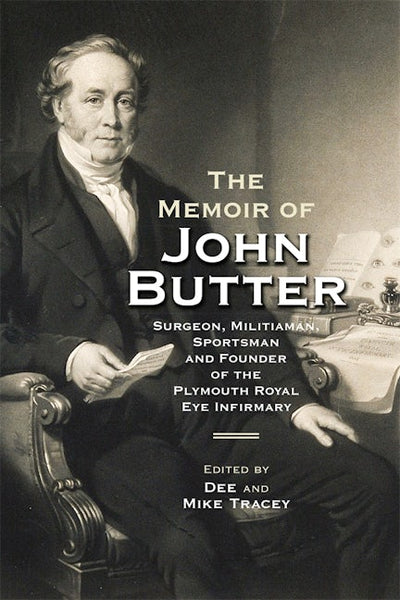


![The Medieval French <i>Ovide moralisé</i> [3 Volume Set]](http://indiepubs.com/cdn/shop/files/9781843846536_a166f7fd-7b8a-47d8-8662-4c84b0219430_400x.jpg?v=1721623170)


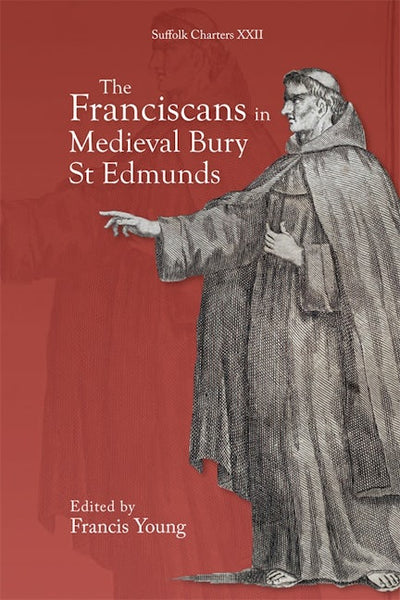


![Thomas of Eccleston's <i>De adventu Fratrum Minorum in Angliam</i> ["The Arrival of the Franciscans in England"], 1224-c.1257/8](http://indiepubs.com/cdn/shop/files/9781837650620_400x.jpg?v=1723035200)


![The African Charter on Human and Peoples’ Rights [2 volume set]](http://indiepubs.com/cdn/shop/files/9781847013804_af310d47-e256-4d27-86c2-ca27a08ffde8_{width}x.jpg?v=1721623452)


![The Medieval French <i>Ovide moralisé</i> [3 Volume Set]](http://indiepubs.com/cdn/shop/files/9781843846536_a166f7fd-7b8a-47d8-8662-4c84b0219430_{width}x.jpg?v=1721623170)


![Thomas of Eccleston's <i>De adventu Fratrum Minorum in Angliam</i> ["The Arrival of the Franciscans in England"], 1224-c.1257/8](http://indiepubs.com/cdn/shop/files/9781837650620_{width}x.jpg?v=1723035200)


